Menu & categories

Redcurrant juice

Fruity juice with an intensely tart aroma and natural vitamin C content.

Wiki about redcurrant juice Nutri-Score C Vegan Yes Gluten-free Yes Lactose-free Yes Nut-free Yes
NUTRITION / 100 ml
50 kcal 0.5 g Protein 12.0 g Kohlenhydrate 0.2 g Fett

Introduction

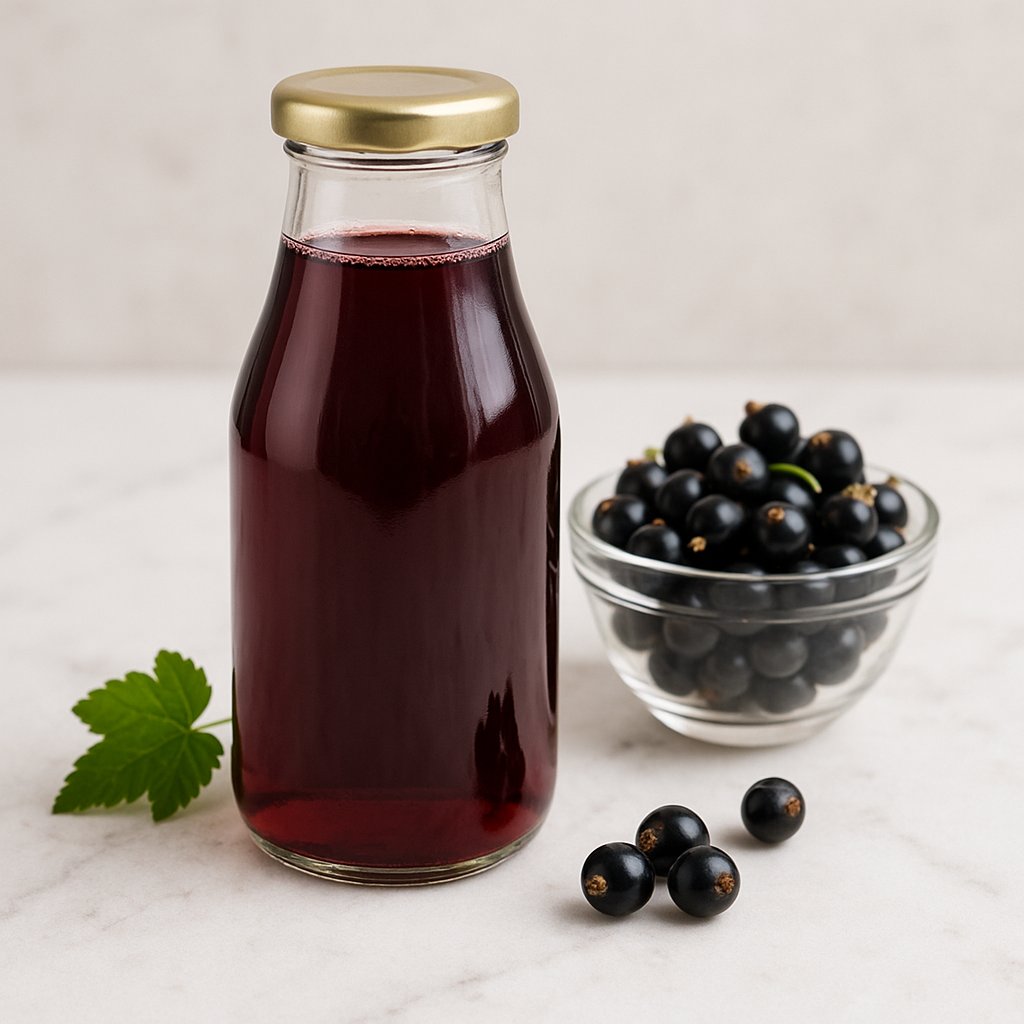
Glass of redcurrant juice with a dark red color
I have a small weakness for aromas that immediately evoke images of summer gardens and Sunday afternoons, and currant juice is at the top of that list. Already at the first sip – somewhat tart, lively and with a clear fruit acidity – I think of my grandmother's garden, a sunny afternoon, the sound of the wind in the bushes. A colleague of mine swears by drinking it neat; I, however, love the versatility this juice displays in the kitchen and at the bar.

Currant juice is mostly obtained from red or black berries; red currants are fresher and more tart, black ones have a deeper, almost tannin-like note. I still remember a market stall where the producer explained to me how important gentle pressing is to preserve the delicate aromas. You can taste the difference.

Practical reasons why I regularly keep the juice in stock:

  • It is a perfect mixer for cocktails and mocktails: a splash of currant juice makes even simple drinks exciting.
  • In dressings and sauces it brings fresh acidity that balances heavy dishes.
  • Desserts also benefit: sorbets, jellies or glazes gain depth and color.
From a health perspective I appreciate that it is rich in vitamin C and secondary plant compounds. The noticeable aroma does not come only from sugar, but from a lively combination of acidity and bitter substances that makes the taste complex and lasting. When shopping I look for undiluted, natural varieties without additives; a small bottle of good quality often lasts a long time because it is used sparingly.

A personal trick: a few tablespoons in mineral water turn my afternoon into a small ritual. Once I served a simple lemonade with currant juice to guests, and the demand was so high that I had to send the recipe later by e‑mail.

For me currant juice remains one of those ingredients that give us a lot of flavor and personality with little effort, whether in everyday life or on special occasions.

Availability & types

Availability and types of currant juice

Currant juice comes from the small berries called currants. These berries grow on bushes and typically have a strong color: black, red or white. The juice is available for purchase almost all year, although the fresh berries are only harvested in summer. You can find currant juice in supermarkets, health-food stores, at the weekly market or online. Some people also make it at home by pressing or cooking the berries.

Origin and growing regions:
Currants prefer cooler regions. In Europe they are widely grown in countries such as Germany, Poland, the Netherlands, France and in Scandinavia. There are also currant plantations in Great Britain and New Zealand. Small farms and hobby gardeners often have their own bushes, which is why regional juice is commonly found at the market. Regional means: from nearby, so the berries were not transported far.

Available varieties and variants:

  • Black currant juice: Very intense in flavor and often a bit tart. It is commonly used for mixing in drinks or for syrup.
  • Red currant juice: Sweeter and fruitier than black juice. Children often like it because it tastes less tart.
  • White currant juice: Lighter and mild in flavor. It is less known but a nice alternative if you want something gentler.
  • Mixed juices: Currant juice is often blended with apple, grape or rhubarb juice to make it sweeter or milder.
  • Direct juice: This juice is bottled directly from freshly pressed berries. It tastes like freshly pressed juice.
  • Juice from concentrate: Here the water is removed from the juice first so it can be transported more easily. Water is added back before sale. It's like a concentrate you dilute at home with water.
  • Nectar: Nectar is often somewhat sweeter or contains fruit juice and additional water or sugar. It is suitable for children or if you prefer a milder taste.
  • Organic versions: In organic currant juice the berries were grown without chemical pesticides. It's similar to organic fruit in the supermarket.
  • Syrups and concentrate bottles: For drinks or desserts there are syrups that are very concentrated and mixed with water.
  • Sparkling drinks and schorle: You can also find fizzy drinks with currant flavor, or schorle where juice is mixed with mineral water.
So if you are looking for currant juice, you can choose between different colors, flavor intensities and production methods. Fresh-pressed tastes different from juice from concentrate, just like homemade apple preserves taste different from canned. Buying regional or choosing organic are good ways to get fresh and gently produced juice.
Details & nutrition

Property Value
Unit ml
Calories per 100 50
Protein per 100 0.5
Carbohydrates per 100 12.0
Sugar per 100 11.0
Fat per 100 0.2
Saturated fat per 100 0.02
Monounsaturated fat 0.03
Polyunsaturated fat 0.10
Fiber per 100 0.2
Vitamin C (mg) per 100 30
Vitamin D (IU) per 100 0
Calcium (mg) per 100 15
Iron (mg) per 100 0.4
Nutri-Score C
CO₂ footprint 0.8 kg CO2e/L
Origin Europe (depending on cultivation and bottling)
Gluten-free Yes
Lactose-free Yes
Nut-free Yes
Vegan Yes
Note Nutritional values may vary depending on the production method (direct juice, from concentrate, sweetened/unsweetened).

Technical & scientific information

Currant juice is the fruit juice obtained from the berries of the genus Ribes; common juices are made from black, red and white currants. It is characterized sensorily by pronounced acidity, fruitiness and – for black currants – dark color tones and a characteristic, intense aroma. Technically, currant juice is produced both as fresh-pressed juice and as a concentrate input material and is used in various fermentation, beverage and food applications.

Chemical composition and nutrients
Currant juice consists predominantly of water (typically 85–92%). The most important dissolved constituents include:

  • Monosaccharides and disaccharides: glucose, fructose and partly sucrose; total sugar contents in reconstituted juice are often in the range of 8–15 g/100 ml, depending on concentration and added sugar.
  • Organic acids: citric and malic acid are dominant; pH usually ranges between 2.8 and 3.5, titratable acidity is typically 3–8 g/L (expressed as citric acid).
  • Vitamins and minerals: Black currants are particularly rich in vitamin C; content in the juice varies widely (depending on fruit quality and processing), typical values range from several tens to over a hundred mg/100 ml. Mineral-wise potassium dominates, followed by calcium and magnesium in smaller amounts.
  • Polyphenols and pigments: anthocyanins (in black and red varieties), flavonoids and other phenolic compounds contribute to color, taste and antioxidant activity. Total phenol concentration varies but can reach several hundred mg gallic acid equivalents per liter.
  • Volatile aroma compounds: esters, terpenes and other volatile compounds determine the characteristic currant aroma.
Processing methods
Technologically, berries are first sorted, washed and crushed. Common processing steps include:

  • Comminution and enzymatic treatment (pectinases) to release juice and reduce viscosity.
  • Pressing and separation of solids by centrifugation or filtration.
  • Clarification or gentle filtration if a clear juice is desired.
  • Pasteurization (thermal short-time treatment) or alternative preservation methods such as high-pressure processing (HPP) to achieve microbiological stability. Heat treatment, however, affects sensitive components such as vitamin C and anthocyanins.
  • Concentration by vacuum evaporation for the production of syrups or concentrate (typical concentrates reach 60–72 °Brix) and subsequent reconstitution.
Analytical methods
For quality control and characterization the following are applied: high-performance liquid chromatography (HPLC) for sugars, vitamins and phenols, spectrophotometry (e.g., pH-differential method) for determination of anthocyanins, gas chromatography–mass spectrometry (GC‑MS) for volatile aromas as well as Folin–Ciocalteu assays for total phenols.

Health aspects
Currant juice provides vitamin C and secondary plant compounds with antioxidant activity; epidemiological data and some intervention studies suggest possible benefits for vascular function, inflammatory markers and antioxidant protection. At the same time, juice contains free sugars, so total calorie intake and glycemic response should be considered. For people with specific medical restrictions (e.g., diabetes) portion size is relevant. Generally, serious interactions with medications are rarely described, however high doses of antioxidant-active extracts could theoretically modulate pharmacological effects.

Use and storage
Currant juice is used as direct juice, as concentrate and as an aroma component in beverages, confectionery and bakery products. Concentrate offers logistical advantages; fresh-pressed juice should be stored refrigerated and protected from light, while pasteurized and aseptically filled products have a significantly longer shelf life. Frozen concentrates preserve flavor and nutrients best over longer time.

Wiki entry for: redcurrant juice
Active now: 24 visitors of which 2 logged-in members in the last 5 minutes