Menu & categories

Red wine mousse

Airy dessert made from red wine with a creamy texture

Wiki about red wine mousse Nutri-Score D Vegan No Gluten-free Yes Lactose-free No Nut-free Yes
NUTRITION / 100 g
210 kcal 4.0 g Protein 25.0 g Kohlenhydrate 9.0 g Fett

Introduction

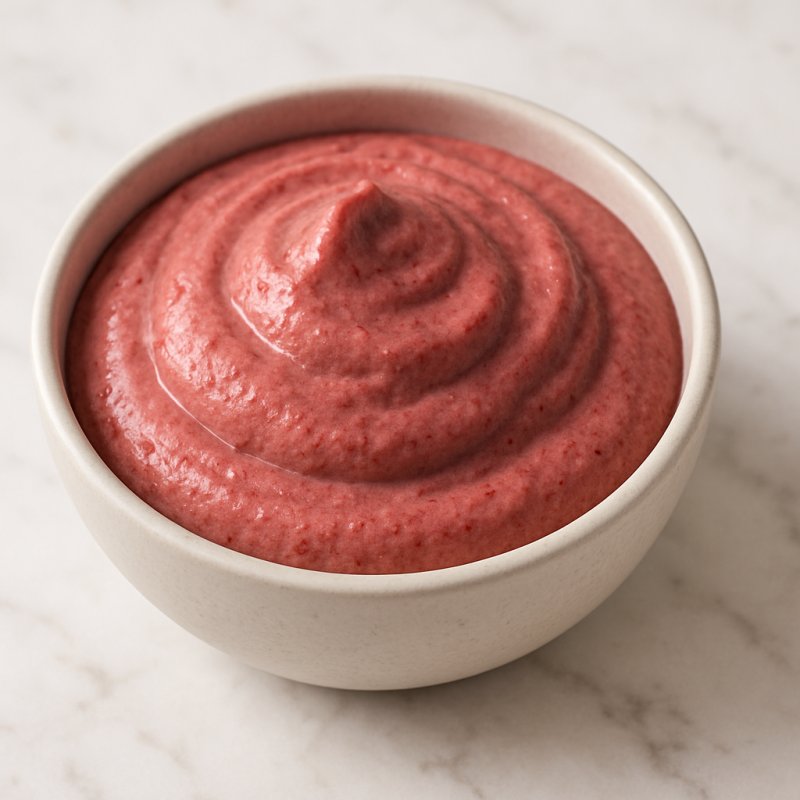
Bowl with creamy red wine mousse
I still remember well the first evening I tried red wine foam: it was at a small wine festival that felt more like chatting than a program, and a friend handed me a tiny bowl with an airy, deep-red delicacy. The texture was surprisingly velvety, the flavor recalled the ripe tannins and dark fruits of the wine, yet everything was at the same time more delicate, almost playful. From that moment the idea of red wine mousse has not left me.

A red wine mousse is not an ordinary dessert; it is a bow to the balance between acidity, sweetness and airiness. It usually consists of few but carefully selected ingredients: good red wine, sugar, egg white or cream and occasionally some gelatin or egg yolk for stabilization. I like it when it remains slightly foamy, so that each spoon almost bursts on the tongue and the wine notes stay fresh and clear.

When I have guests, I often serve the mousse with small compote pieces or crunchy almond crumbs. A colleague once brought caramelized figs, and I swear that simple duo turned the dessert into a secret highlight of the evening. For children or non-drinkers I have learned that you can replace the wine with grape juice without completely losing the soul of the dessert.

The preparation feels almost like a ritual: tasting the wine before cooking so it has the desired depth; whipping the egg whites to airy peaks; folding in gently so the air does not escape. Small mistakes can make big differences — too much heat and the alcohol disappears, too much stirring and the mousse becomes dense instead of fluffy.

I love how a red wine mousse sparks conversation. A friend once asked whether it was more a dessert or an intermezzo; this led to a debate about sweetness and structure in which we laughed more than argued. Such moments are what make the dessert special to me: simple to prepare, elegant in the result and perfect for creating memories.

Availability & types

Availability and types of red wine mousse

A red wine mousse is a creamy dessert preparation where red wine is combined with ingredients like cream, eggs or gelatin so that it tastes airy and sweet. Although it is not stocked in supermarkets like yogurt or pudding, it is still fairly available — either homemade, in patisseries or occasionally in specialty delicatessens and dessert producers. You can find recipes in cookbooks, on websites and in cooking shows; in restaurants it appears more often on upscale menus or at special feasts.

Where does the idea come from?
The idea of putting wine into sweet creams comes from countries with a long wine tradition, such as France, Italy and Spain. Local wines are often used there because the taste of the wine is important. You can think of it like this: if you mix strawberries with vanilla ice cream, the fruit changes the flavor of the ice cream — with red wine the same happens to the mousse.

Growing regions of red wine for the mousse
The wine that goes into a red wine mousse often comes from well-known wine regions. Depending on where the wine is grown, the mousse tastes different. Some important regions are:

  • France – Regions like Bordeaux or Burgundy often provide robust, aromatic red wines.
  • Italy – There are many different red wines here, for example from Tuscany.
  • Spain – Well-known regions like Rioja often produce soft, fruity red wines.
  • Germany – Red wine is also produced in Germany, usually lighter than in southern Europe.
  • New World (e.g. Australia, Chile, USA) – These wines can be very fruity or very full-bodied, depending on the climate.
Available varieties and variants
Red wine mousse does not come in just one form. Depending on the ingredients and preparation, different variants arise that differ in taste, texture and intensity. Here are some typical versions, explained simply:

  • Creamy red wine mousse: Here a lot of cream is used. The mousse is very airy and soft, somewhat like a flavored whipped cream.
  • Egg-based red wine mousse: Often egg yolks or beaten egg whites are used. This makes the mixture more stable and sometimes firmer than the pure cream variant.
  • With gelatin: When gelatin is added, the mousse becomes firmer and can be easily cut into shapes. Gelatin is a gelling agent from animal protein; there are also plant-based alternatives.
  • Light variants: For people who prefer less fat, there are recipes with yogurt or light cream. These taste fresh and are less heavy on the stomach.
  • Fruity mix: Sometimes the mousse is combined with berries or fruit sauces. It's like chocolate with strawberries — the flavors complement each other and make the dessert more colorful.
  • Child-friendly versions: Since red wine contains alcohol, there are non-alcoholic alternatives that use grape juice or dealcoholized wine. This way children or people who don't want alcohol can enjoy similar tasty desserts.
In short: red wine mousse is versatile. Depending on which wine and ingredients you choose, the flavor ranges from light and fruity to strong and velvety. You can find it as a homemade sweet, at patisseries or in sophisticated menus, and there is always a version to suit your preferences.
Details & nutrition

Property Value
Unit g
Calories per 100 210
Protein per 100 4.0
Carbohydrates per 100 25.0
Sugar per 100 23.0
Fat per 100 9.0
Saturated fat per 100 5.5
Monounsaturated fat 2.5
Polyunsaturated fat 0.7
Fiber per 100 0.2
Vitamin C (mg) per 100 0.0
Vitamin D (IU) per 100 0.0
Calcium (mg) per 100 60.0
Iron (mg) per 100 0.7
Nutri-Score D
CO₂ footprint 2.5
Origin Prepared dessert, varies depending on the recipe and the red wine variety
Gluten-free Yes
Lactose-free No
Nut-free Yes
Vegan No
Note Nutritional values for a typical homemade red wine mousse based on red wine, sugar, cream, and eggs; exact values may vary depending on the recipe and ingredients.

Technical & scientific information

Red wine mousse is a culinary ingredient and a dessert base material made from red wine, whipped eggs or cream or gelatin and sugar. The term denotes an airy, foamy consistency achieved by incorporating air into a liquid base. Typical applications range from standalone desserts to cake fillings to accompaniment components in high-end dishes.

Composition and ingredients
The basic components of a red wine mousse are red wine as an aroma carrier, a stabilizer (e.g. gelatin, agar-agar or an egg-yolk–cream emulsion), sweetening agents and possibly flavor additives such as fruit juices, liqueurs or spices. Chemically, red wine contains mainly water (approx. 85–88%), ethanol (typically 11–14% vol.), organic acids (tartaric acid, malic acid), residual sugars, phenolic compounds (polyphenols such as tannins and anthocyanins) and volatile aroma compounds (terpenes, esters, aldehydes). In the mousse these compounds contribute significantly to color, smell and taste.

Physicochemical aspects of texture
The foamy texture of a mousse is based on the stabilization of gaseous bubbles in a continuous liquid or gel phase. In red wine mousse proteins (from egg or dairy products) and polysaccharides (e.g. pectin, agar) take on the role of:

  • Proteins: form a film at the interface between air and liquid that stabilizes bubbles.
  • Fats (e.g. from cream): reduce the tendency of bubbles to coalesce and improve mouthfeel.
  • Gelling agents: increase the viscosity of the continuous phase and limit sedimentation or foam decay behavior.
The alcohol component negatively affects foam formation because ethanol reduces surface tension and can denature proteins. Therefore recipes are adjusted so that part of the alcohol evaporates (by reduction) or is compensated by additives.
Nutritional values and caloric classification
The nutrient composition varies greatly with the recipe and proportion of cream, sugar and gelatin. Typical nutritional values per 100 g are in the range of 150–300 kcal; the calories come mainly from sugar and fat, supplemented by alcohol. Micronutrients depend on the wine used, with polyphenols potentially contributing in small amounts to antioxidant capacity, but amounts in a dessert should not be expected to be clinically relevant.
Manufacturing process
Typical steps for production are:
  • Reduction of the red wine: simmering down to concentrate aroma and partially evaporate alcohol.
  • Addition of sweetness and binders: dissolving sugar and, if applicable, dissolving gelatin or agar.
  • Tempering: cooling to an appropriate temperature to activate emulsifiers or gelling agents.
  • Whipping: incorporating air by mechanical stirring or whipping with beaten egg whites, cream or a light foam carrier.
  • Cooling and setting: firming the structure in the refrigerator to stabilize the foam.
Professional variants use sous-vide or vacuum techniques to extract aromas, as well as emulsifiers (lecithin) or hydrocolloid blends for improved stability.
Food safety and health aspects
Key points are alcohol content, microbiological safety and allergens. Cooking the wine can remove a significant part of the ethanol, but residues often remain. Preparations with raw eggs carry a risk of salmonella; pasteurized products or gelatin/alternatives are safer options. For people with alcohol intolerance, pregnancy, or intolerances to gelatin, dairy products or eggs, specific recipe variants should be chosen. The polyphenols present have shown antioxidant properties in research, however the amounts in a dessert are negligible for health effects.
Sensory and technical challenges
The balance between a strong wine character, sweetness and airy texture is central. Too high alcohol content reduces foam formation, while too much gelling agent can make the texture rubbery. Color and aroma expression depend heavily on grape variety and wine treatment; tannin-rich wines produce a more bitter aftertaste while fruitier wines harmonize well with cream or vanilla notes. Industrial applications require standardized recipes and stabilizers for long shelf life and consistency.
Overall, red wine mousse is an interplay of food technology, sensory design and nutrition-related aspects. The choice of binders, control of alcohol content and targeted treatment of the wine components determine the final result in terms of texture, flavor and safety.
Wiki entry for: red wine mousse
Active now: 14 visitors of which 2 logged-in members in the last 5 minutes