Menu & categories

Red wine cream

Dessert cream based on red wine, sugar and dairy products

Wiki about red wine cream Nutri-Score D Vegan No Gluten-free Yes Lactose-free No Nut-free Yes
NUTRITION / 100 g
180 kcal 4.0 g Protein 20.0 g Kohlenhydrate 8.0 g Fett

Introduction

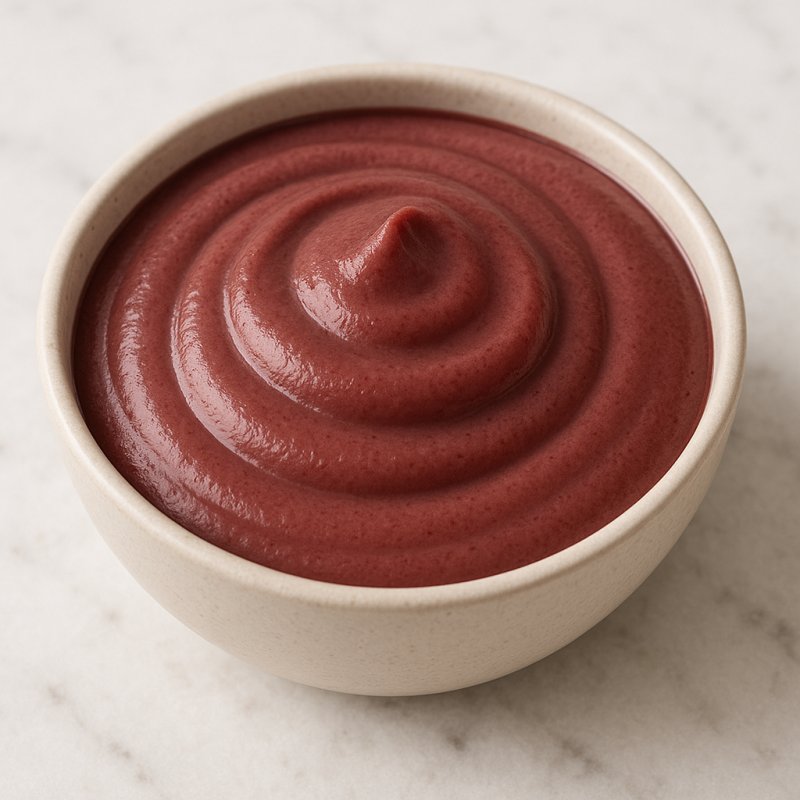
Bowl with red wine cream as a dessert
I still clearly remember the first evening I tried red wine cream: it was at a small family gathering, and someone unexpectedly put this velvety, deep-red bowl on the table. The scent – fruity, with a hint of vanilla and a touch of wine – drew me in immediately, and before I knew it I had already emptied two spoons. Since then red wine cream has been for me one of those ingredients that feels both homely and a little extravagant.

At its core red wine cream is a wine-flavored, often sweet cream used in fine cuisine as a dessert, topping or aromatic element. Typical base ingredients are red wine, sugar, egg yolks or cream and gelling agents like starch or gelatin. I've encountered it in different variants: as a delicate panna-cotta-like mass, as an airy mousse or as an intense fruit gelée that complements chocolate desserts or cheese platters.

What fascinates me about red wine cream is the balance between acidity, sweetness and body. A strong, tannin-rich wine gives depth, while a fruity, lighter vintage contributes bright notes. A colleague of mine swears by the combination with dark chocolate; I, on the other hand, love the contrast with fresh berries or a creamy goat cheese. Red wine cream can be elegant but also rustic – depending on whether it is passed through a sieve to be silky or intentionally left with pieces of fruit.

  • Use: desserts, cake fillings, sauces for dark chocolate, accompaniment to cheese.
  • Textures: mousse-like, pudding-like, gel-like or as a sauce.
  • Tips: reduce the wine before stirring it in to concentrate the aromas; use gelatin sparingly; adjust sugar to the wine's acidity.
I also learned that the best red wine cream often needs time: resting in the refrigerator lets the flavors settle and the texture harmonize. On my first attempt at home I thought more gelatin would speed things up – the result was unfortunately too firm. Since then I proceed with patience and less gelling agent and prefer to add a splash of wine later as a correction. Red wine cream is for me a sensual little luxury that greatly enhances simple desserts and repeatedly surprises with its versatility.

Availability & types

Availability and types

What is red wine cream and where does it come from?
Red wine cream is a soft, often slightly sweet ingredient that can be made from red wine, sugar and a binding ingredient such as cream, pudding mix or gelatin. You can think of it like a jam, but instead of fruit it tastes of red wine. The idea of processing and refining wine comes from regions where wine has long been important, for example parts of Europe like France, Italy and Germany. There people have always cooked with wine and transformed it into sauces, jellies or creams.

Growing regions and origin of the red wine
The most important basis of red wine cream is, of course, the red wine. Red wine is grown in many parts of the world. Well-known regions include, for example:

  • France – regions like Bordeaux or Burgundy are famous for red wine.
  • Italy – for example Tuscany or Piedmont, where very aromatic red wines grow.
  • Spain – regions like Rioja produce robust red wines.
  • Germany – especially in the south there are red wines that are mild and fruity.
  • New World – countries like Australia, Chile or the USA also produce a lot of red wine.
Depending on which wine region the red wine used comes from, the taste of the red wine cream also changes. A French red wine can be more spicy, an Italian one perhaps more fruity.

Available varieties and variants
Red wine cream exists in different forms, similar to how there are different ice cream flavors. Here are the main types:

  • Ready jars from the supermarket – sometimes you can find red wine cream already bottled. This is practical because it is ready to use, for example as a spread or dessert ingredient.
  • Homemade red wine cream – many people make it themselves because they want to adjust the taste precisely. You can use more sugar, more cream or a particular wine.
  • Alcohol-free variants – for children or people who don't want alcohol, there are creams where the wine is replaced by grape juice or dealcoholized wines. The taste approaches the original, but without the intoxicating effect.
  • Refined gourmet variants – in delicatessens you can find special types combined with chocolate, vanilla, cinnamon or fruits. These are often more intense in flavor.
  • Vegan variants – instead of cream plant-based milk or starch is used so that vegans can also eat the cream.
How easy is it to obtain red wine cream?
In larger supermarkets, delicatessens or online red wine cream is often available, especially in regions with many wine products. The easiest version for home is to slightly reduce red wine with some sugar and a cream- or gelling-ingredient. For children or people who avoid alcohol there are grape juice alternatives in some shops or simply as a homemade mixture.

Simple comparison
Imagine red wine cream like a chocolate spread, only that instead of cocoa it tastes of wine. Some varieties are like mild chocolate, others like a robust breakfast spread with a kick. This quickly tells you whether you want a mild or a strong variant.

In summary: red wine cream is available in many variants — from the simple supermarket jar to the homemade specialty. The taste depends greatly on the wine used and additional ingredients. For children or people who don't want alcohol, grape juice or dealcoholized versions are a good alternative, and in delicatessens you often find more exotic flavor combinations.
Details & nutrition

Property Value
Unit g
Calories per 100 180
Protein per 100 4.0
Carbohydrates per 100 20.0
Sugar per 100 18.0
Fat per 100 8.0
Saturated fat per 100 5.0
Monounsaturated fat 2.0
Polyunsaturated fat 0.5
Fiber per 100 0.2
Vitamin C (mg) per 100 0.0
Vitamin D (IU) per 100 0.0
Calcium (mg) per 100 90.0
Iron (mg) per 100 0.3
Nutri-Score D
CO₂ footprint 1.6
Origin Depending on the ingredients used, typically Europe
Gluten-free Yes
Lactose-free No
Nut-free Yes
Vegan No
Note Typical recipe made from red wine, sugar, egg yolk or pudding powder, milk or cream; alcohol content depends on the preparation.

Technical & scientific information

Red wine cream refers to a culinary ingredient or dessert preparation that combines red wine as a flavoring component with a fat-containing cream base. Typically red wine cream consists of reduced red wine or wine reductions, sugar or other sweeteners, and a binding matrix of cream, mascarpone, egg yolk, gelatin or starch. The precise composition varies according to recipe and desired consistency, from spreadable spreads to airy light mousse forms.

Chemical composition and ingredients
Red wine cream contains the organic compounds typical of red wine such as ethanol, organic acids (e.g. tartaric acid, malic acid), phenolic compounds (especially anthocyanins and tannins) as well as aromatic substances (alcoholic esters, terpenes and other volatile compounds). Added are the milk- and egg-derived components of the cream base: triglycerides and free fatty acids from cream or mascarpone, proteins (albumins, caseins) and lecithin-like phospholipids. When gelatin is used collagen peptides appear, in starch-bound preparations amylose and amylopectin.

Nutritional values
The energy-rich composition results in a high calorie density, primarily from fat and sugar. Typical nutritional values per 100 g range depending on recipe between 250 and 450 kcal. Macronutrient distribution (examples): fat 15–40 g, of which saturated fatty acids proportionally; carbohydrates 15–35 g, of which sugar content depends on added sweetener; protein 3–8 g. Alcohol content varies and is usually reduced, however residual alcohol not fully removed is possible unless complete heating or alcohol evaporation has taken place.

Manufacturing and processing methods
Production includes several technical steps:

  • Reduction of the red wine: Red wine is reduced on the stove or under vacuum to evaporate water and concentrate aromas and phenols. Acidity balance and sweetness are adjusted by adding sugar or syrup.
  • Emulsification and structuring: The wine reduction is combined with the cream base. Emulsifiers (e.g. egg yolk, lecithin) stabilize fat-water dispersions, while gelling agents like gelatin or modified starch contribute to firming.
  • Temperature management: Temperature control is important to avoid protein precipitation and to reduce the alcohol content in a targeted manner. Pasteurization steps can be applied for microbial stabilization.
  • Homogenization and maturation: Industrial manufacturing processes use homogenizers to achieve a fine texture; a resting time allows flavor integration and texture development.
Sensory and physical properties
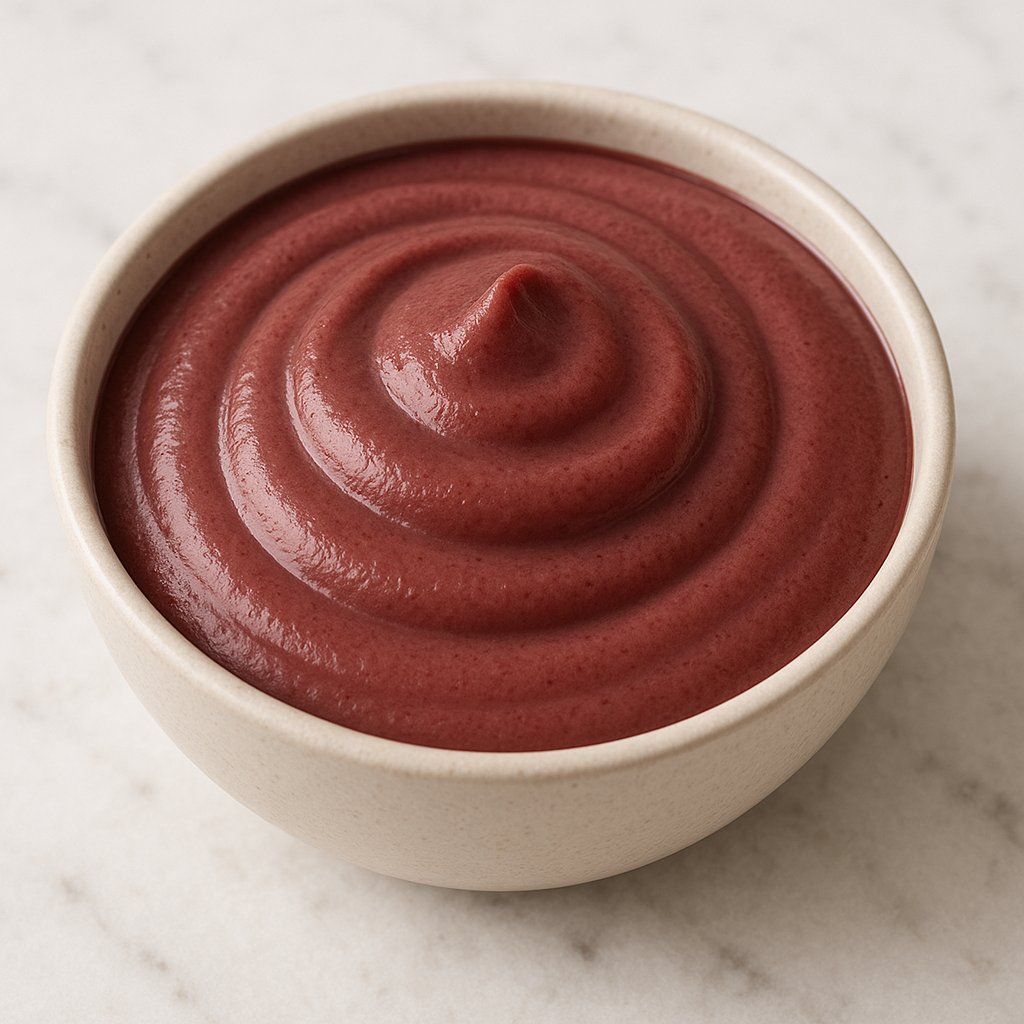
The texture ranges from velvety-creamy to airy-foamy. The color varies depending on the red wine addition from pink-violet to brownish. Viscosity and stability depend on fat content, emulsifier and gelling agent concentration. The wine's phenols influence mouthfeel (astringency) and oxidative stability.

Health aspects
Red wine cream contains both potentially beneficial and undesirable components. Polyphenols from red wine are associated with antioxidant effects, however their positive effects are less relevant in a medium high in sugar and fat. The high energy content can contribute to weight gain with regular consumption. Residual alcohol can be relevant for sensitive individuals, pregnant women or people under medication. Milk- or egg-based preparations carry an allergy and food contamination risk if not handled adequately hygienically and thermally.

Shelf life and storage
Microbiological stability depends on water activity, sugar content, residual alcohol and pasteurization. Without preservative measures refrigerated red wine creams have limited shelf life (days to a few weeks). Preservatives, acidity adjustments and aseptic filling extend shelf life on a commercial scale.

In summary, red wine cream is a versatile product that combines the sensory properties of red wine with a creamy texture; its technical production requires controlled reduction, emulsification and temperature management, while nutritional and microbiological aspects must be considered in formulation and storage. The choice of the wine base, sugar and gelling agents largely determines taste, texture, stability and health impacts.

Wiki entry for: red wine cream
Active now: 17 visitors of which 2 logged-in members in the last 5 minutes