Menu & categories

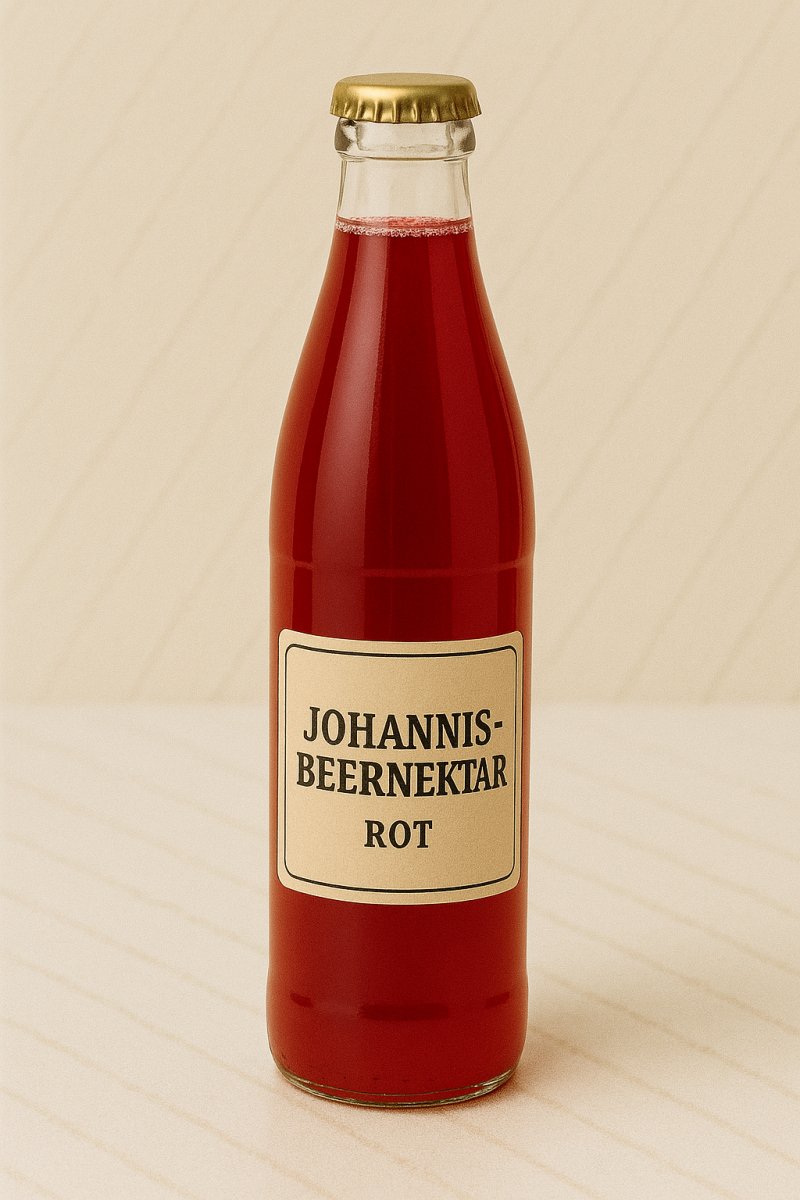
Red currant nectar

Fruity-tart nectar made from red currants.

Wiki about red currant nectar Nutri-Score D Vegan Yes Gluten-free Yes Lactose-free Yes Nut-free Yes
NUTRITION / 100 ml
55 kcal 0.3 g Protein 13.0 g Kohlenhydrate 0.1 g Fett

Introduction

Glass with red currant nectar

I love when a simple sip awakens memories — and red currant nectar can do that like few other drinks. The first taste is usually a small, cheeky tingle of acidity that immediately makes you want more. Then the fruity, slightly tart notes unfold: a mix of red berries, citrus hints and a floral sweetness that varies from subtle to intense depending on the producer. To me this nectar is the epitome of summer in a glass, even on gray days.

I still remember one morning when I accidentally poured a bottle of red currant nectar into the blender instead of orange juice. The result was so refreshing that ever since I've made a habit of adding a few drops to my daily muesli. A colleague of mine swears by the drink as a secret ingredient in his cocktail menu; he mixes it with gin, a splash of lime and lots of ice — simple and outrageously good.

Red currant nectar is not just for drinking. I like to use it in the kitchen because it delivers acidity and fruitiness at once. It goes particularly well with:

  • Desserts: over vanilla ice cream or as a base for fruit jellies;
  • Sauces & marinades: especially with lamb or game when you want a fruity note;
  • Beverages & cocktails: with sparkling water, in long drinks or as a base for sorbets;
  • Breakfast: in yogurt, smoothies or over porridge.
Practical too is the shelf life: unopened nectar can be stored in a cool, dark place; once opened keep it in the refrigerator and use it soon to retain freshness. When shopping I look for the highest possible fruit content and few additives — then you really taste the currant.

In the end red currant nectar is for me a versatile, emotional food: it creates memories, livens up dishes and brings color to everyday life. Anyone who toasts with a glass quickly notices how adaptable and yet unmistakable this nectar is and why it has a permanent place in my kitchen.

Availability & types

Availability and types of red currant nectar

Red currant nectar comes from red currants, small berries that ripen in summer. You can eat the berries fresh, but they are often processed into juice or nectar so they can be enjoyed year-round. Availability here means where and when the nectar can be found, and Types refers to the different kinds of products available.

Where does the nectar come from?
Red currants grow best in cool, temperate regions. In Europe they are frequently cultivated, for example in Germany, Poland, the Netherlands and Scandinavia. Cultivation can also be found in parts of North America and the Caucasus. Many supermarkets sell red currant nectar that is either produced locally or imported from other countries. If a country is listed on the bottle, you know where the fruit came from.

Seasonal and year-round availability
Fresh red currants are usually available only for a short time in summer, often in July and August. It's like strawberries: only during a certain time of year are they particularly sweet or tart straight from the bush. Nectar, on the other hand, is available almost year-round because it is processed and preserved. Producers heat the juice (i.e., pasteurize it), or they make concentrates so the juice does not spoil quickly.


Common packaging and places to buy

  • Supermarkets: in cartons, glass or plastic bottles
  • Health food stores: often as organic nectar without artificial additives
  • Online shops: larger selection, including more unusual varieties
  • Specialty stores: e.g., artisan-made juices or syrups
What types of red currant nectar exist?
There are several variants that differ in taste and composition. Here are some simple explanations:

  • Pure nectar: Made from red currants with some water and sometimes sugar. It is thicker than clear juice because it still contains pulp. You can compare it to a mild fruit juice that is slightly more viscous.
  • From concentrate: The juice has been boiled down to remove water. Water is added back before bottling. This saves space during transport and increases shelf life.
  • Direct juice / Not from concentrate: This juice is pressed and not concentrated. It often tastes fresher.
  • Organic variant: Currants from organic farming without chemical pesticides.
  • Mixed juices: Red currant nectar blended with other fruits like apple, raspberry or elderberry — this mellows the flavor.
  • Light / reduced sugar: Less sugar or with alternative sweeteners, for people who prefer less sweetness.
  • Syrups and liqueurs: Highly concentrated variants often diluted or used as mixers.
In summary: red currant nectar is easy to find, especially in processed form year-round. You can choose between pure nectar, products from concentrate, organic options and blends with other fruits. Check the label to see if the juice is “from concentrate”, “directly pressed” or “organic” — that way you know exactly what is inside.

Details & nutrition

Property Value
Unit ml
Calories per 100 55
Protein per 100 0.3
Carbohydrates per 100 13.0
Sugar per 100 12.8
Fat per 100 0.1
Saturated fat per 100 0.0
Monounsaturated fat 0.0
Polyunsaturated fat 0.0
Fiber per 100 0.1
Vitamin C (mg) per 100 10
Vitamin D (IU) per 100 0
Calcium (mg) per 100 10
Iron (mg) per 100 0.2
Nutri-Score D
CO₂ footprint ca. 0,04 kg CO2e/100 ml
Origin Europe (depending on bottling)
Gluten-free Yes
Lactose-free Yes
Nut-free Yes
Vegan Yes
Note Nectar may contain added sugar; values may vary depending on the manufacturer and fruit content.

Technical & scientific information


Red currant nectar refers to a beverage made from the fruit of the red currant (Ribes rubrum) produced by maceration, dilution and, if necessary, sweetening of fruit juice. Nectars differ from pure juices in that they generally contain a lower fruit content and are supplemented with water and, if needed, with sweeteners, acidulants and preservatives to regulate flavor, consistency and shelf life.

Chemical composition and constituents

  • Macronutrients: the energy content of a red currant nectar results mainly from dissolved carbohydrates, primarily glucose, fructose and partly sucrose. The fiber content is significantly reduced compared to the fruit pulp, as it is often filtered or sieved out.
  • Organic acids: red currants contain mainly citric and malic acid, which produce the characteristic tart taste and a low pH, contributing to microbial stability.
  • Vitamins and minerals: notable is the content of vitamin C and low to moderate amounts of potassium, calcium and magnesium. The actual vitamin C content in the finished product strongly depends on harvest time and thermal processing.
  • Polyphenols and pigments: red currants are rich in anthocyanins, flavonols and tannins, which have antioxidant properties. The concentration of these secondary compounds varies with variety, ripeness and processing conditions.
Processing methods

  • Crushing and maceration of the berries, with possible removal of stems and impurities.
  • Pressing or extraction of the juice, often followed by enzymatic treatment (e.g., pectinases) to reduce viscosity and improve clarification.
  • Filtration or centrifugation to remove fruit solids; nectars usually aim for finer clarification than purees.
  • Additives and adjustment of fruit content: addition of water, sweeteners or acidulants to achieve defined sensory and quality parameters.
  • Heat treatment (pasteurization) or aseptic filling to extend shelf life and ensure microbial stability.
Sensory and physical properties

The appeal of a red currant nectar comes from its pronounced acidity profile, the intense red to ruby coloration from anthocyanins and a fruity-tart aroma. The pH typically lies in the acidic range, which together with soluble solids content (°Brix) determines texture and taste.

Health aspects

The polyphenols and vitamin C contained in red currants contribute to antioxidant processes and may influence inflammatory markers. Clinical evidence for preventive or therapeutic effects is limited and depends on dose and matrix. Consumers should be aware of the sugar content of nectars, as high intake contributes to caloric load and blood sugar effects. The acidity can erode tooth enamel in sensitive individuals or worsen gastroesophageal symptoms. Allergic reactions are rare.

Storage and shelf life

Sealed, pasteurized nectars are relatively stable at room temperature, while opened packages should be refrigerated and consumed promptly to avoid quality loss through oxidation, color fading and microbial growth. Light, oxygen and heat promote the degradation of sensitive components such as vitamin C and anthocyanins.

In summary, red currant nectar is a tart-fruity beverage with characteristic polyphenols and vitamin C, standardized in flavor, color and shelf life by specific processing steps. Its nutritional value depends on fruit content, added sugar and processing intensity, so moderate consumption fits into a balanced diet.

Wiki entry for: red currant nectar
Active now: 14 visitors of which 2 logged-in members in the last 5 minutes