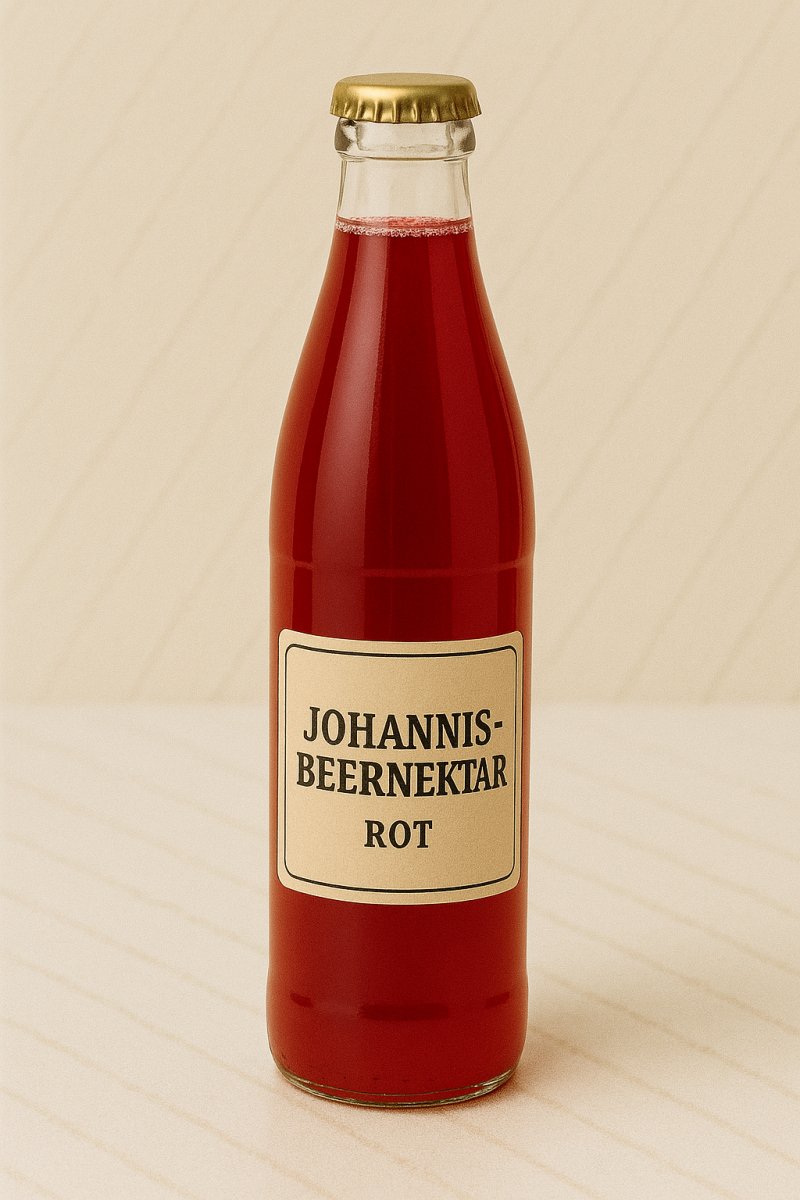
Availability and types of red currant nectar
Red currant nectar comes from red currants, small berries that ripen in summer. You can eat the berries fresh, but they are often processed into juice or nectar so they can be enjoyed year-round. Availability here means where and when the nectar can be found, and Types refers to the different kinds of products available.
Where does the nectar come from?
Red currants grow best in cool, temperate regions. In Europe they are frequently cultivated, for example in Germany, Poland, the Netherlands and Scandinavia. Cultivation can also be found in parts of North America and the Caucasus. Many supermarkets sell red currant nectar that is either produced locally or imported from other countries. If a country is listed on the bottle, you know where the fruit came from.
Red currants grow best in cool, temperate regions. In Europe they are frequently cultivated, for example in Germany, Poland, the Netherlands and Scandinavia. Cultivation can also be found in parts of North America and the Caucasus. Many supermarkets sell red currant nectar that is either produced locally or imported from other countries. If a country is listed on the bottle, you know where the fruit came from.
Seasonal and year-round availability
Fresh red currants are usually available only for a short time in summer, often in July and August. It's like strawberries: only during a certain time of year are they particularly sweet or tart straight from the bush. Nectar, on the other hand, is available almost year-round because it is processed and preserved. Producers heat the juice (i.e., pasteurize it), or they make concentrates so the juice does not spoil quickly.
Fresh red currants are usually available only for a short time in summer, often in July and August. It's like strawberries: only during a certain time of year are they particularly sweet or tart straight from the bush. Nectar, on the other hand, is available almost year-round because it is processed and preserved. Producers heat the juice (i.e., pasteurize it), or they make concentrates so the juice does not spoil quickly.
Common packaging and places to buy
- Supermarkets: in cartons, glass or plastic bottles
- Health food stores: often as organic nectar without artificial additives
- Online shops: larger selection, including more unusual varieties
- Specialty stores: e.g., artisan-made juices or syrups
What types of red currant nectar exist?
There are several variants that differ in taste and composition. Here are some simple explanations:
There are several variants that differ in taste and composition. Here are some simple explanations:
- Pure nectar: Made from red currants with some water and sometimes sugar. It is thicker than clear juice because it still contains pulp. You can compare it to a mild fruit juice that is slightly more viscous.
- From concentrate: The juice has been boiled down to remove water. Water is added back before bottling. This saves space during transport and increases shelf life.
- Direct juice / Not from concentrate: This juice is pressed and not concentrated. It often tastes fresher.
- Organic variant: Currants from organic farming without chemical pesticides.
- Mixed juices: Red currant nectar blended with other fruits like apple, raspberry or elderberry — this mellows the flavor.
- Light / reduced sugar: Less sugar or with alternative sweeteners, for people who prefer less sweetness.
- Syrups and liqueurs: Highly concentrated variants often diluted or used as mixers.
In summary: red currant nectar is easy to find, especially in processed form year-round. You can choose between pure nectar, products from concentrate, organic options and blends with other fruits. Check the label to see if the juice is “from concentrate”, “directly pressed” or “organic” — that way you know exactly what is inside.
