Menu & categories

Blue cabbage, red cabbage

Crisp winter vegetable with a strong color

Wiki about red cabbage Nutri-Score A Vegan Yes Gluten-free Yes Lactose-free Yes Nut-free Yes
NUTRITION / 100 g
31 kcal 1.4 g Protein 7.0 g Kohlenhydrate 0.2 g Fett

Introduction

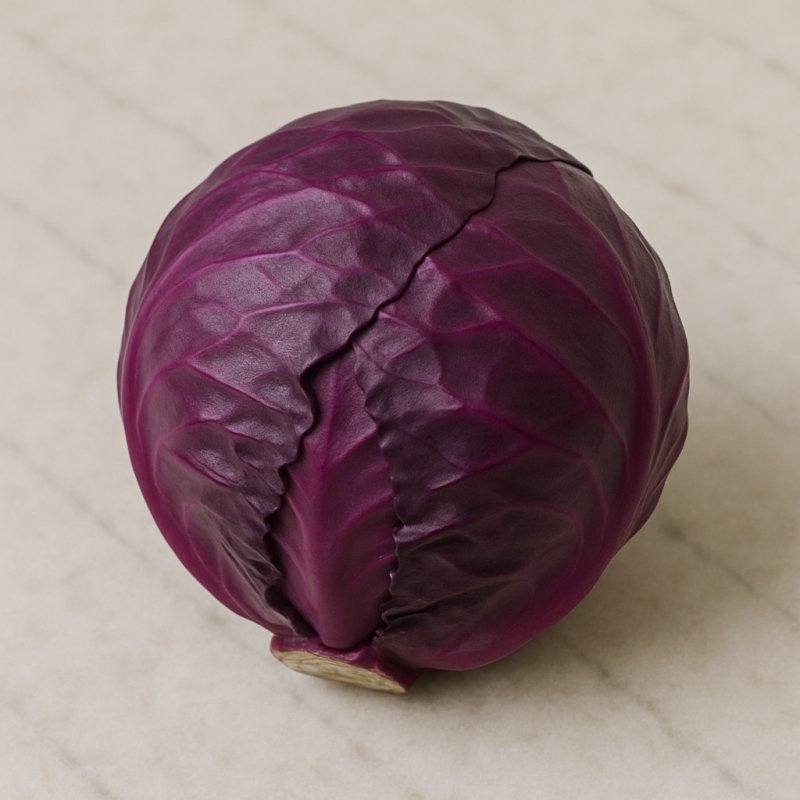
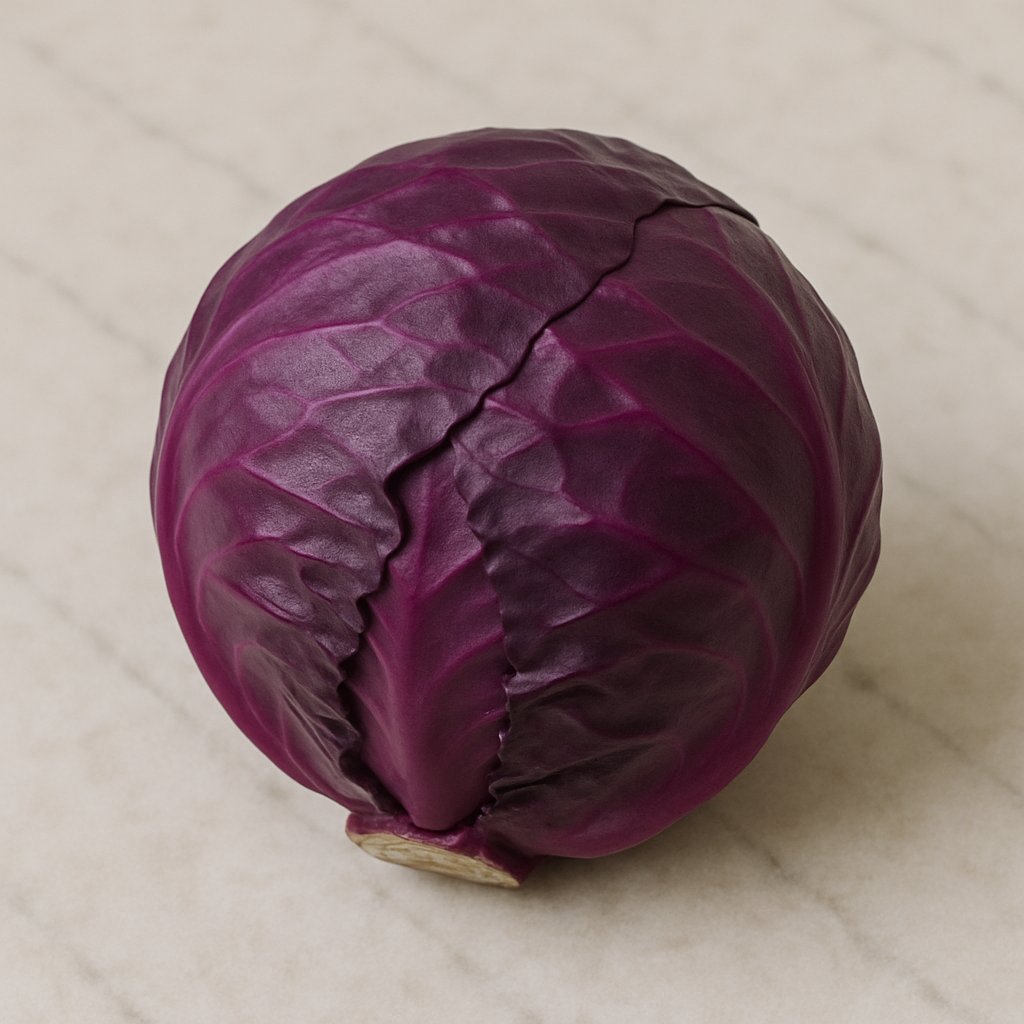
Fresh red cabbage head
Blaukraut, Rotkohl – even the double name already reveals how deeply this ingredient is rooted in European food culture. As a 35-year-old editor who commutes between deadlines and the weekly market, I often catch myself thinking, with a firm, violet-glimmering cabbage in hand, of all the stories that revolve around this vegetable: family celebrations, steaming braising pans, the scent of vinegar in the kitchen and the debate whether it’s called Blaukraut or Rotkohl. Both are correct, and both sound like home – depending on whether you grew up in northern Germany, the Alpine region, the Netherlands or Scandinavia.

The appeal of this cabbage lies in its remarkable versatility. Red cabbage is a classic of winter cooking, yet it can do much more than be a braised side for roasts. Its range extends from crisp salads and fermented delicacies to elegant carpaccios and Asian-inspired wok dishes. A colleague of mine swears by mixing finely shredded red cabbage with sesame, soy sauce and lime – she even convinced notorious cabbage skeptics with it. Another colleague reports how his grandmother in Bohemia always braised the cabbage with apple and lingonberries, because the sweet-and-sour play counteracts the tannins of the Sunday roast. That is exactly what makes Blaukraut so fascinating: it is down-to-earth and sophisticated at the same time.

Botanically it is a cultivated variety of white cabbage. Its distinctive color is owed to anthocyanins, plant pigments that are sensitive to the pH value. A splash of vinegar or apple juice emphasizes the reddish nuance, while alkaline additions like a little baking soda can quickly produce a bluish violet – hence the name Blaukraut. This little kitchen experiment delights not only children but also shows how sensitively flavor and appearance are linked. In my kitchen I almost always add a splash of red wine vinegar when braising, simply because the color then shines and the aroma appears clearer.</

Availability & types

Availability and types of Blaukraut/Rotkohl

Blaukraut, also called red cabbage, is a heading cabbage with strong violet-red leaves. It belongs to the large family of cabbage types. If you shop at the supermarket or market, you will find red cabbage almost all year round. This is because it is very storable. Freshly harvested it is primarily available in late summer and autumn into the winter. Afterwards, storage stock often enters the market, remaining fresh for months in cool, dark rooms. Thus it is almost always available – as whole heads, sliced, pickled or frozen.

Origin
Red cabbage originally descends from wild cabbage species that grew on the coasts of western Europe. Over many centuries it was bred and spread in Europe and became particularly common in Germany, the Netherlands, Poland, the Czech Republic and Scandinavia. Today red cabbage is grown in many temperate countries because it is cold-tolerant and thrives at low temperatures. In Germany it is counted among classic winter vegetables and is a staple of many regional cuisines.

Why is it sometimes blue and sometimes red?
The intriguing thing about Blaukraut is its color. It is determined by pigments called anthocyanins. These react to the acidity of a dish: if the food is acidic (for example from apple, vinegar or lemon), the cabbage appears more reddish. If it is rather neutral or slightly basic (for example with some baking soda or in very soft water), it appears bluish to violet. That is why it is called Blaukraut in some regions and Rotkohl in others – both are correct!

Types and varieties
Red cabbage exists in different varieties that differ in size, color, shape and maturity time. Some varieties are intended for fresh consumption, others for storage or preserving.
Details & nutrition

Property Value
Unit g
Average weight per piece 1000
Calories per 100 31
Protein per 100 1.4
Carbohydrates per 100 7.0
Sugar per 100 3.5
Fat per 100 0.2
Saturated fat per 100 0.03
Monounsaturated fat 0.02
Polyunsaturated fat 0.09
Fiber per 100 2.5
Vitamin C (mg) per 100 45
Vitamin D (IU) per 100 0
Calcium (mg) per 100 45
Iron (mg) per 100 0.8
Nutri-Score A
CO₂ footprint 0.2 kg CO2e pro kg
Origin Europe, regional seasonal autumn/winter
Gluten-free Yes
Lactose-free Yes
Nut-free Yes
Vegan Yes
Note Nutritional values refer to raw red cabbage; vitamin values vary slightly when cooked.

Technical & scientific information

Blaukraut (red cabbage): botanical classification and nomenclature
Blaukraut, in many regions also referred to as Rotkohl or Rotkraut (scientific: Brassica oleracea var. capitata f. rubra), belongs to the family Brassicaceae. This cultivated form is a variety of headed cabbage and is characterized by its compact, densely layered leaves, whose characteristic violet to purplish-red coloration is attributable to anthocyanin-containing vacuoles. Color expression varies depending on pH, soil properties and preparation method, ranging from bluish through purple to intense red.

Morphology and cultivation physiology
Red cabbage forms a round to slightly flattened shoot axis enclosed by overlapping leaves. The tough, wax-coated leaves reduce transpiration and increase storability. The plant is biennial: in the first year the head forms, in the second year it produces inflorescences and seeds. Optimal germination temperatures are between 15 and 20 °C; moderately cool conditions (10–18 °C) are ideal for head development. Red cabbage is relatively frost-tolerant, with temperatures just below 0 °C favoring anthocyanin stability and potentially increasing sugar concentration.

Site requirements and soil influences
Blaukraut prefers deep, humic loam soils with good water-holding capacity. A pH range of 6.0 to 7.2 is favorable; strongly acidic soils can reduce molybdenum availability and promote physiological disorders. Potassium demand is high and correlates with head firmness and storage quality. Balanced nitrogen supply supports biomass formation, but excess can lead to internal hollowing of heads and reduced storage stability. Calcium is essential to prevent inner-leaf necrosis; boron and manganese stabilize quality.

Phytochemistry and color chemistry
The dominant pigments of red cabbage are anthocyanins, mainly cyanidin-3-glucoside and its acylated derivatives

Wiki entry for: red cabbage
Active now: 17 visitors of which 2 logged-in members in the last 5 minutes