Menu & categories

Quark

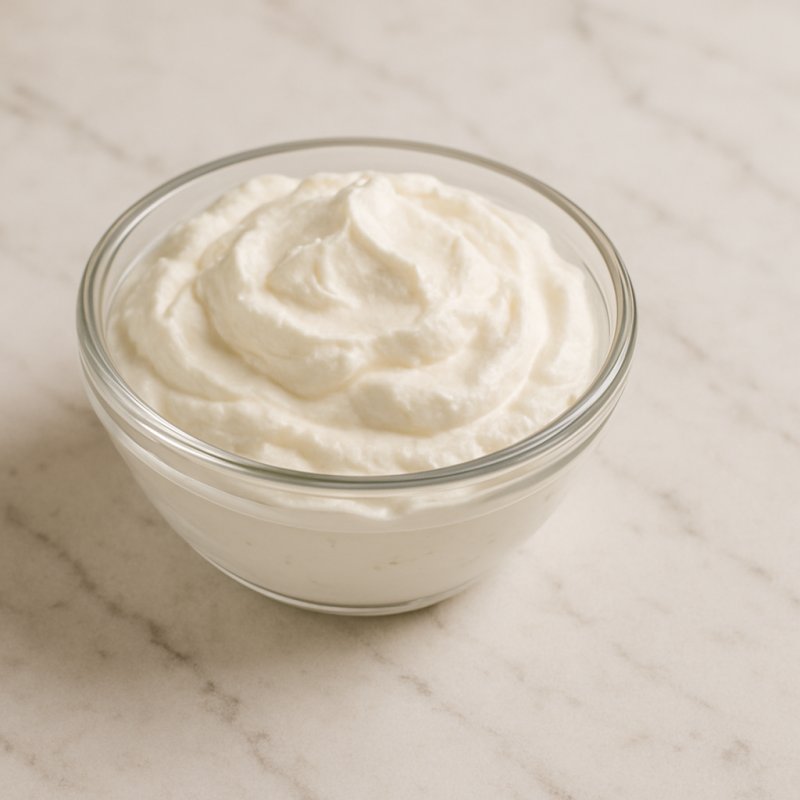
Fresh dairy product with high protein content – ideal for sweet and savory dishes.

Wiki about quark Nutri-Score A Vegan No Gluten-free Yes Lactose-free No Nut-free Yes
NUTRITION / 100 g
67 kcal 12.0 g Protein 4.0 g Kohlenhydrate 0.2 g Fett

Introduction

Quark
I still remember the first scent of fresh quark at the weekly market: tangy, a little milky and unmistakably homely. For me quark is not a simple ingredient but a loyal kitchen companion that shines on bread in the morning, in a dip at midday and in a cake in the evening. It is a mildly fermented fresh product made from pasteurized milk and coagulated by lactic acid bacteria, not by rennet, which gives it its characteristically fine, slightly tangy flavor.

What makes quark so versatile is its texture and the different fat levels. Low‑fat quark feels rather compact and is perfect for protein-rich dishes and for whipping. Cream quark is creamier and makes sweet desserts or creamy sauces particularly smooth. I once even used quark instead of ricotta for a pasta, and the result surprised everyone at the table.

A colleague of mine has been raving for years about the simple combination of quark, herbs and a little lemon zest. It's one of those quick but great solutions for unexpected guests. According to my grandmother, no Sunday cake should be without a quark cheesecake, because it stays moist and light at the same time.

Practical tips I often pass on:

  • For airy desserts, gently fold quark with a little cream.
  • If the quark is very wet, let it drain before baking.
  • As a substitute, quark can be replaced in many recipes by Greek yogurt or ricotta, but taste and texture change slightly.
  • Herbs, garlic and a splash of lemon juice instantly take quark to a new flavor level.
In the end, quark for me is a piece of culinary home that constantly reinvents itself. Whether as a light snack, a base for dips or the heart of a cake, it manages to support dishes without being intrusive. At the next shop I'll certainly reach for a tub again — maybe this time I'll try a combination I've never dared before.

Availability & types

Availability and types of quark

Quark is a fresh dairy product known in many European countries for a long time. It is made from milk by allowing the milk to sour slightly and separating the solid parts (these are called solids) from the liquid. A simple picture: imagine separating yogurt into a firmer part and a clear liquid — that's similar to how quark is produced.

Origin and production areas
Quark mainly comes from Central and Eastern Europe. In Germany, Austria (there it is often called Topfen), Switzerland and countries like Poland or Russia (there called Tvorog) quark is very common. The milk for quark often comes from cows, sometimes from goats or sheep. In rural areas quark is often made directly on small farms or in local dairies, while larger dairies produce it for supermarkets. Quark is available all year round — it is not tied to a particular season.

Where to find quark
You can find quark in most supermarkets in the refrigerated section. Sometimes it is also available at the weekly market or directly from farmers. In some countries outside Europe quark is less well known; there it is more likely to be found in health food stores, at European food retailers or made at home.

Important quark types and varieties
Quark comes in many variants. Here are the main ones, explained simply:

  • Low‑fat quark: Very low in fat and firm. It doesn't taste very creamy, rather tangy. Great for baking or if you want less fat.
  • Quark for everyday use: This is the normal variety for everyday use. Slightly creamier than low‑fat quark and suitable for desserts and dips.
  • Cream quark / Doppelrahmquark: This one is particularly creamy because more fat or cream has been added. It is somewhat reminiscent of fresh cheese and is tasty on bread.
  • Spreadable quark: Already smoothed and meant for spreading – similar to butter or a cream cheese spread.
  • Fruit quark: Quark mixed with fruit, for example strawberry or peach. Sweeter and more like a dessert.
  • Herb quark: With fresh herbs such as chives or parsley – ideal as a dip for vegetables or potatoes.
Special variants
There is also organic quark from ecological farming, lactose‑free quark for people who don't tolerate milk sugar well, and increasingly plant‑based quark alternatives made from soy, oats or almonds for people who don't consume milk. These alternatives resemble the taste and consistency of quark but are made without milk.

In summary: quark is easy to obtain wherever dairy products are popular. It comes in many varieties – from very light to very creamy, plain or flavored. Depending on whether you want to bake, make a dip or spread it on bread, you choose the appropriate type. That way everyone can find the quark they like best.
Details & nutrition

Property Value
Unit g
Calories per 100 67
Protein per 100 12.0
Carbohydrates per 100 4.0
Sugar per 100 4.0
Fat per 100 0.2
Saturated fat per 100 0.1
Monounsaturated fat 0.0
Polyunsaturated fat 0.0
Fiber per 100 0.0
Vitamin C (mg) per 100 0.0
Vitamin D (IU) per 100 0
Calcium (mg) per 100 90
Iron (mg) per 100 0.1
Nutri-Score A
CO₂ footprint 1.2 kg CO2e/kg
Origin Germany/Europe (depending on the origin of the milk)
Gluten-free Yes
Lactose-free No
Nut-free Yes
Vegan No
Note Nutritional values may vary depending on fat content (low-fat, 20%, 40% i.Tr.) and manufacturer.

Technical & scientific information

Quark is a fresh dairy product intended for immediate consumption, produced by acid coagulation of milk. It belongs to the group of fresh cheeses and is characterized by a soft, creamy texture and a mild acidic taste. Technically, quark is formed when milk is acidified by lactic acid bacteria or by adding acids so that casein precipitates and forms a protein gel which is then separated from the whey.

Production process
The production process can be divided into several steps:

  • Milk selection and preparation: Use of skimmed, partially skimmed or whole milk; in industrial processes the milk is pasteurized.
  • Inoculation: Addition of selected lactic acid bacteria or use of rennet is determined according to the desired texture and aroma.
  • Coagulation and acidification: Bacterial fermentation typically reduces the pH to around 4.6, resulting in a protein gel structure.
  • Whey separation: The curd is separated mechanically or by settling from the whey; subsequent stirring or pureeing creates the desired consistency.
  • Standardization and packaging: Fat and moisture content are adjusted for different quark varieties; cooling and packaging follow.
Chemical composition and constituents
Quark consists mainly of water, milk proteins, milk fat and milk sugar (lactose). The protein fraction dominates nutritionally and consists largely of caseins, supplemented by whey proteins. Important components are:

  • Proteins: high biological value due to a complete amino acid profile; casein forms a gel network that determines texture and water binding.
  • Fat: dependent on the variety; fatty acids correspond to those of milk (saturated and monounsaturated fatty acids, traces of short‑ and medium‑chain fatty acids).
  • Carbohydrates: mainly lactose in variable amounts.
  • Minerals and vitamins: relevant amounts of calcium, phosphorus as well as fat‑soluble vitamins and B vitamins, particularly riboflavin (B2) and vitamin B12.
Nutritional values (typical ranges per 100 g)
Nutritional values vary by fat level. Typical values are:

  • Low‑fat quark (approx. 0.1–0.5% fat): Energy approx. 60–75 kcal, Protein 10–13 g, Fat 0–0.5 g, Carbohydrates 3–4 g.
  • Half‑fat quark (approx. 20% fat in dry matter): Energy approx. 130–150 kcal, Protein 8–12 g, Fat 7–10 g.
  • Full‑fat quark: higher energy density due to increased fat content; exact values depend on fat content.
Technofunctional properties
Quark acts as an emulsifier, water binder and structuring agent in formulations. The casein‑rich matrix stabilizes air and fat particles, which is why quark is used in baked goods, sauces and spreads. Upon heating, proteins can denature and cause whey separation (whey‑off), so gentle handling and appropriate formulation are recommended.

Health aspects and safety
Quark provides high‑quality protein, promotes satiety and supports muscle protein synthesis with adequate overall protein intake. The calcium content contributes to bone health. People with milk allergy must avoid quark because it contains milk proteins. For lactose intolerance, low‑lactose options or fermented variants are often better tolerated, but not suitable for all affected individuals. Hygienic control and pasteurization reduce microbiological risk; untreated raw milk products carry a higher risk of pathogenic growth.

Quark is thus a versatile, protein‑rich dairy product with clearly defined chemical and technological properties, widely used both in home cooking and in industrial applications.

Wiki entry for: quark
Active now: 18 visitors of which 2 logged-in members in the last 5 minutes