Menu & categories

Pumpkin seeds

Nutrient-rich seeds with high-quality plant protein and healthy fats

Wiki about pumpkin seed Nutri-Score C Vegan Yes Gluten-free Yes Lactose-free Yes Nut-free Yes
NUTRITION / 100 g
560 kcal 30 g Protein 4 g Kohlenhydrate 49 g Fett

Introduction

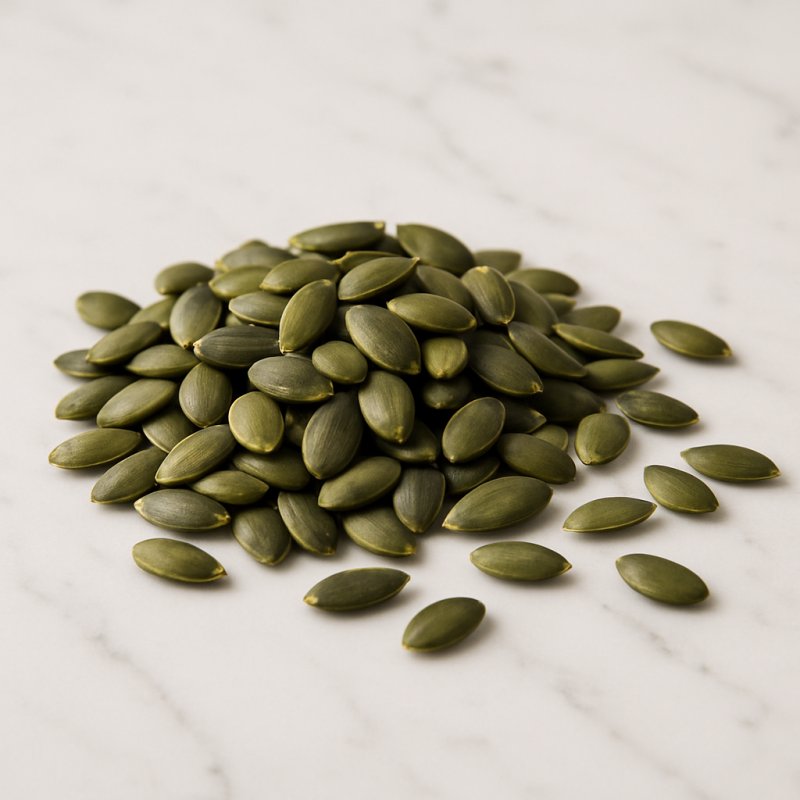
Bowl with green pumpkin seeds
I still clearly remember the first autumn when I rediscovered pumpkin seeds: I had pureed a huge Hokkaido, the soup was perfect, but it lacked that final crunch. A colleague of mine tossed a handful of roasted pumpkin seeds on top, and the simple topping transformed the whole thing. Since then pumpkin seeds have been a small kitchen miracle for me – inconspicuous, but versatile and full of surprises.

Pumpkin seeds, often also known as pepitas, delight me not only for their nutty flavor but also for their culinary adaptability. I sprinkle them over salads, blend them into pestos, grind them coarsely for savory bread crusts, or roast them with a pinch of smoked paprika for a crunchy snack. A small pinch of salt is enough to lift their natural flavor, and when I have guests I like to experiment with maple syrup and chili – a sweet-spicy kick that always sparks conversation.

Apart from flavor I also appreciate the nutrient density of pumpkin seeds. They provide plant protein, healthy fats and minerals like magnesium and zinc. I often tell at dinner parties how a friend, after a long hike, energetically grabbed a bag of roasted seeds and suddenly regained new strength. That's of course told with a wink, but the mix of satiety and nutrients is actually remarkable.

When shopping I pay attention to quality: fresh, green seeds without an unpleasant smell are the best choice. Stored in a jar in the fridge they stay crunchy longer. When I remove the seeds from the pumpkin myself, I enjoy the scraping sound and the little ritual of swirling the bowl clean – it's a simple pleasure often overlooked in kitchens.

In short: pumpkin seeds are for me an indispensable tiny detail with big impact. They bring texture, flavor and nutritional value to so many dishes and always open up new, creative possibilities in the kitchen.

Availability & types

Availability and types of pumpkin seeds

Pumpkin seeds are the small seeds that grow inside a pumpkin. You can find them in many supermarkets, health food stores or at markets. Depending on where you live, they may be offered fresh, dried or roasted. Fresh seeds come straight from the pumpkin and can sometimes still feel slightly moist. Dried seeds are more shelf-stable and are usually the most common form in stores. Roasted seeds are already crunchy and often seasoned with a bit of salt or spices – like chips, only healthier.

Where do pumpkin seeds come from?
Pumpkin seeds come from pumpkins grown in fields in many parts of the world. Well-known growing regions include:

  • Central Europe – Countries like Austria, Germany and the Netherlands grow many pumpkins, especially for regional cuisines.
  • Eastern Europe – States such as Hungary or Slovenia are famous for special pumpkin varieties and their seeds.
  • North America – In the USA and Canada pumpkins are grown both as vegetables and as ornamental pumpkins; many different varieties come together there.
  • Asia and South America – There are also pumpkin fields in these regions, often with particular local varieties.
The origin sometimes affects taste and appearance – much like apples from different countries can taste slightly different.

What varieties and types are there?
Pumpkin seeds are not all the same. They can be distinguished by several characteristics:

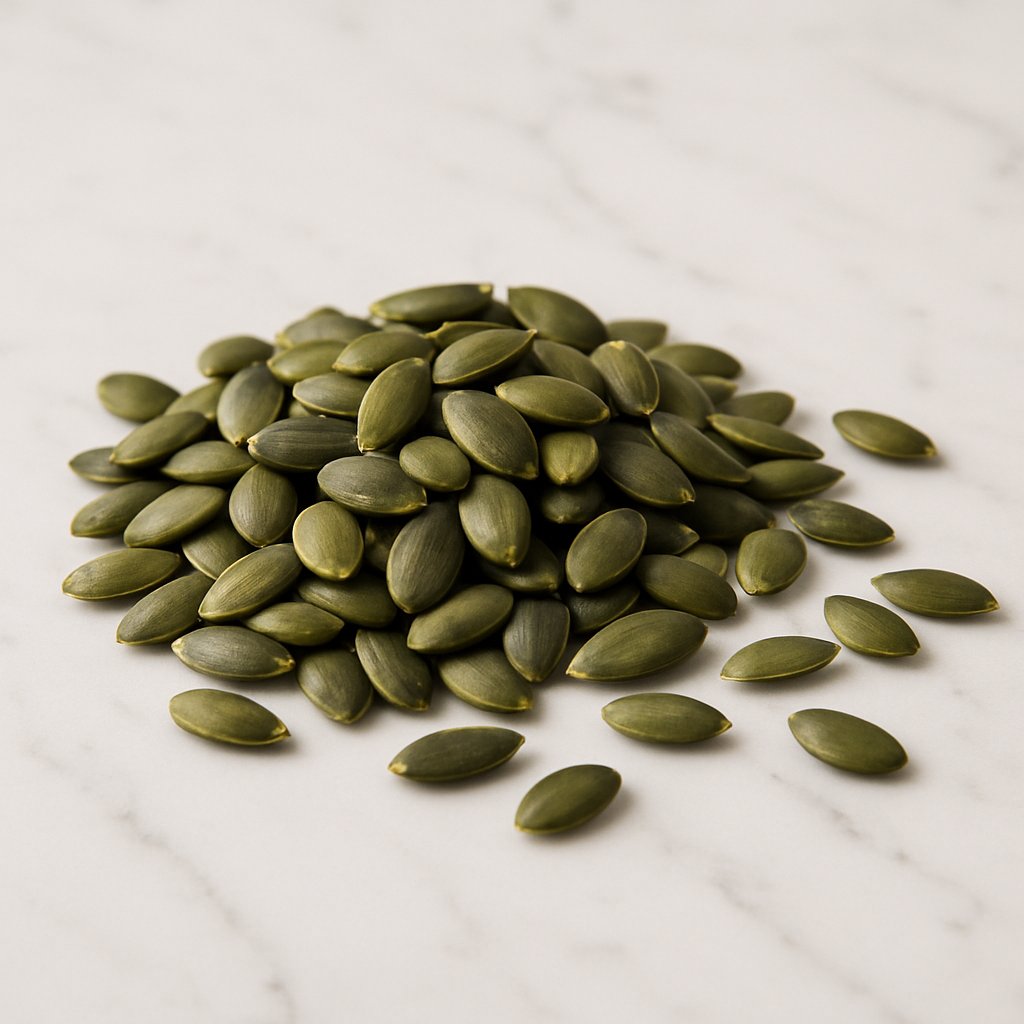
  • Hulled or unhulled: Some pumpkin seeds have a hard, often white or light shell on the outside (this is the "hull"). Others come from special pumpkin varieties and are naturally without a hard shell – these are called hulled or "shelled" seeds. Hulled seeds are usually green and are often used in salads or as a snack because you don't have to crack them.
  • Raw, dried or roasted: Raw seeds are untreated. Dried seeds have had the water removed to make them long-lasting. Roasted seeds have been crisped in an oven or pan and are often lightly salted or seasoned.
  • Organic or conventional: Organic pumpkin seeds come from pumpkins grown without chemical pesticides. Conventional seeds may come from plants that have been treated with fertilizers or crop protection products. Organic is often more expensive, but many people find it more environmentally friendly.
  • Flavored variants: You can also find pumpkin seeds with various flavorings on the market – e.g. paprika, honey, soy sauce or even coated in chocolate. These make nice snack alternatives.
How do you recognize good pumpkin seeds?
Make sure they smell fresh and not musty. Hulled seeds are usually green and look healthy; seeds with shells should be firm and not soft. If the package says "roasted", they are usually crunchy; if "raw", you can roast them yourself.

In summary: pumpkin seeds are available from many countries and in different variants – with or without hull, raw, dried, roasted, organic or flavored. That way you can easily find the type that tastes best to you or suits your dish.
Details & nutrition

Property Value
Unit g
Calories per 100 560
Protein per 100 30
Carbohydrates per 100 4
Sugar per 100 1
Fat per 100 49
Saturated fat per 100 8
Monounsaturated fat 16
Polyunsaturated fat 21
Fiber per 100 6
Vitamin C (mg) per 100 1
Vitamin D (IU) per 100 0
Calcium (mg) per 100 40
Iron (mg) per 100 8
Nutri-Score C
CO₂ footprint 1.8
Origin Worldwide, commonly Europe, China, USA
Gluten-free Yes
Lactose-free Yes
Nut-free Yes
Vegan Yes
Note Nutritional values refer to natural, dried pumpkin seeds without added salt or oil.

Technical & scientific information

Pumpkin seeds are the edible seeds of various pumpkin species (Cucurbita spp.), which botanically occur as nuts in a shell surrounded by fibrous flesh. In culinary and nutritional contexts the unhulled or hulled seeds of the garden pumpkin (Cucurbita pepo) are most commonly used. Raw and roasted they serve as a snack, an ingredient in baked goods or as an oil source. Industrially, pumpkin seeds are processed both whole and into oilcakes.

Chemical composition and nutritional values
Pumpkin seeds are nutrient-dense and provide a combination of macro- and micronutrients. The main components are:

  • Fats: About 40–50 % of the dry weight consists of lipids, predominantly polyunsaturated fatty acids such as linoleic acid (omega-6) as well as monounsaturated fatty acids like oleic acid. The content of saturated fatty acids is relatively low.
  • Proteins: Around 25–35 % of the dry weight are proteins, with a favorable amino acid profile, particularly rich in arginine and glutamic acid. The protein content makes pumpkin seeds a valuable plant protein source.
  • Carbohydrates and fiber: The carbohydrate proportion is lower (below 20 %), with a relevant share being non-digestible fiber that can support gut health.
  • Minerals and trace elements: Pumpkin seeds contain high amounts of magnesium, phosphorus, iron, zinc and manganese. Of particular note is the relatively high zinc content, which is important for immune function and enzyme activity.
  • Vitamins: Present are fat-soluble vitamins such as vitamin E (tocopherols) as well as water-soluble B vitamins, including niacin and folate in moderate amounts.
  • Bioactive compounds: Phytosterols, polyphenols and tocopherols contribute to antioxidant properties. Saponins, triterpenes and certain peptides may modulate further health effects.
Processing methods
Pumpkin seeds are consumed either raw, roasted, salted or further processed into pumpkin oil, flour or protein concentrates. Hulling is performed mechanically or by soaking and abrasion. Heating alters both flavor and chemical properties: roasting improves aroma through Maillard reactions but can reduce antioxidant levels and heat-sensitive vitamins. Cold pressing is the preferred method for obtaining high-quality oils because it largely preserves the fatty acid profile and heat-sensitive secondary plant compounds. Solvent extraction methods increase yield but carry the risk of residues, which is why food-grade quality is strictly regulated.

Health aspects
Numerous studies investigate potential health benefits of pumpkin seeds and their derivatives. The combination of unsaturated fatty acids, proteins, fiber, magnesium and zinc supports cardiovascular health, blood sugar regulation and anti-inflammatory processes. Specific research indicates a positive effect of pumpkin seed oil and extracts in benign prostatic hyperplasia, likely through hormonal and inflammation-modulating mechanisms. Antioxidant constituents may reduce oxidative stress, although the bioavailable amount depends on processing and the food matrix.

Safety and storage aspects
Due to their high fat content, pumpkin seeds are susceptible to oxidation and rancidity. Storage in cool, dry and dark places as well as vacuum or refrigerated storage extends shelf life. During processing microbiological controls are necessary because moisture promotes mold growth. People with nut or seed allergies should be cautious, although specific cross-reactions vary. Because of the high zinc and magnesium content normal consumption amounts are harmless; extremely high dosages of supplements could, however, cause imbalances.

Functional applications
Besides direct consumption, pumpkin seeds are used as a functional ingredient in snacks, mueslis and baked goods. Pumpkin oil finds application in salads, cosmetics and as a source of bioactive lipids. Oilcakes after oil extraction are used as protein-rich animal feed or as a base for flours in gluten-free recipes.

Overall, pumpkin seeds offer a versatile combination of nutrients and bioactive substances. Their nutritional properties, coupled with variable processing techniques, make them an interesting ingredient both in the kitchen and in food science with demonstrated and potential health benefits.

Wiki entry for: pumpkin seed
Active now: 21 visitors of which 2 logged-in members in the last 5 minutes