Availability and types of pumpkin seeds
Pumpkin seeds are the small seeds that grow inside a pumpkin. You can find them in many supermarkets, health food stores or at markets. Depending on where you live, they may be offered fresh, dried or roasted. Fresh seeds come straight from the pumpkin and can sometimes still feel slightly moist. Dried seeds are more shelf-stable and are usually the most common form in stores. Roasted seeds are already crunchy and often seasoned with a bit of salt or spices – like chips, only healthier.
Where do pumpkin seeds come from?
Pumpkin seeds come from pumpkins grown in fields in many parts of the world. Well-known growing regions include:
Pumpkin seeds come from pumpkins grown in fields in many parts of the world. Well-known growing regions include:
- Central Europe – Countries like Austria, Germany and the Netherlands grow many pumpkins, especially for regional cuisines.
- Eastern Europe – States such as Hungary or Slovenia are famous for special pumpkin varieties and their seeds.
- North America – In the USA and Canada pumpkins are grown both as vegetables and as ornamental pumpkins; many different varieties come together there.
- Asia and South America – There are also pumpkin fields in these regions, often with particular local varieties.
The origin sometimes affects taste and appearance – much like apples from different countries can taste slightly different.
What varieties and types are there?
Pumpkin seeds are not all the same. They can be distinguished by several characteristics:
Pumpkin seeds are not all the same. They can be distinguished by several characteristics:
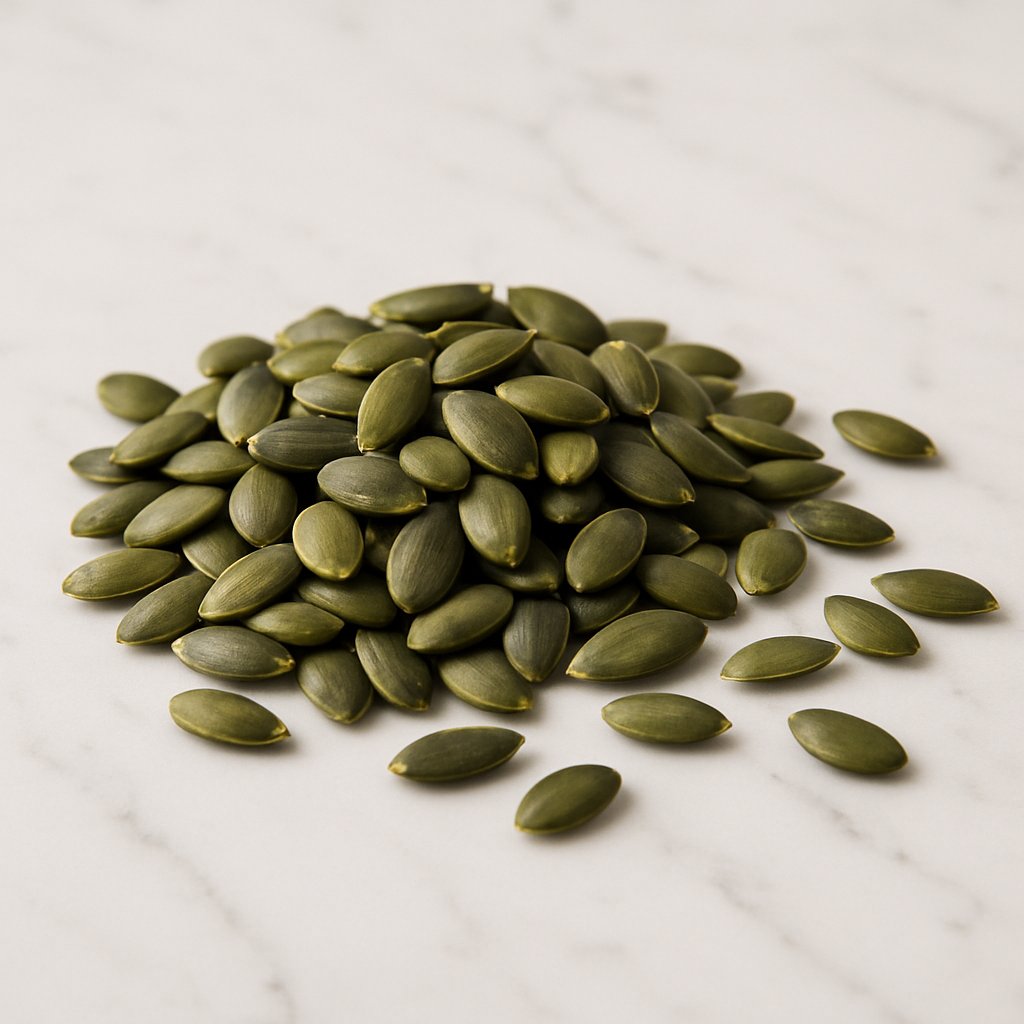
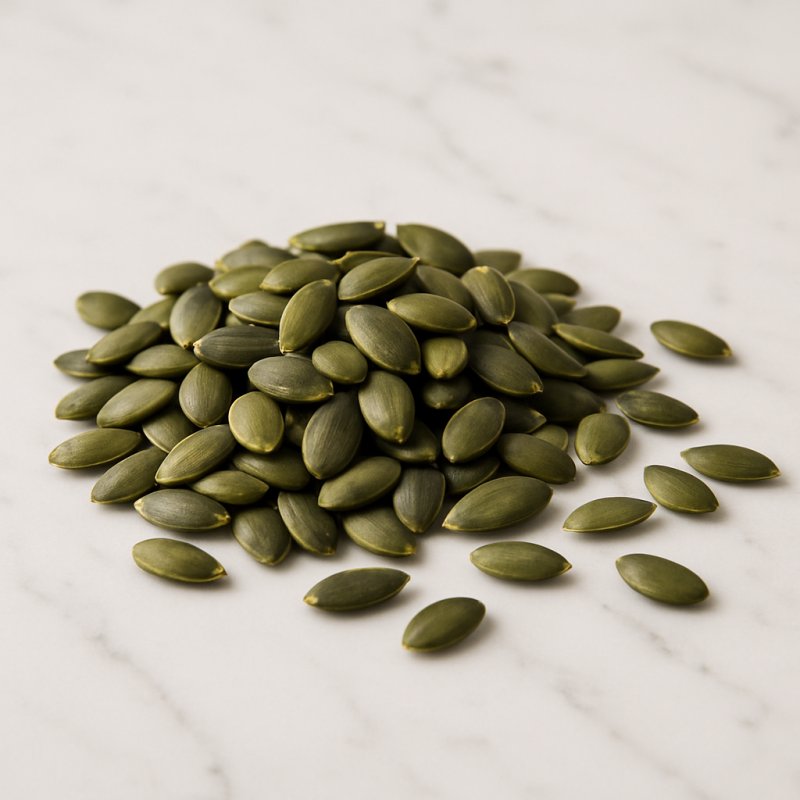
- Hulled or unhulled: Some pumpkin seeds have a hard, often white or light shell on the outside (this is the "hull"). Others come from special pumpkin varieties and are naturally without a hard shell – these are called hulled or "shelled" seeds. Hulled seeds are usually green and are often used in salads or as a snack because you don't have to crack them.
- Raw, dried or roasted: Raw seeds are untreated. Dried seeds have had the water removed to make them long-lasting. Roasted seeds have been crisped in an oven or pan and are often lightly salted or seasoned.
- Organic or conventional: Organic pumpkin seeds come from pumpkins grown without chemical pesticides. Conventional seeds may come from plants that have been treated with fertilizers or crop protection products. Organic is often more expensive, but many people find it more environmentally friendly.
- Flavored variants: You can also find pumpkin seeds with various flavorings on the market – e.g. paprika, honey, soy sauce or even coated in chocolate. These make nice snack alternatives.
How do you recognize good pumpkin seeds?
Make sure they smell fresh and not musty. Hulled seeds are usually green and look healthy; seeds with shells should be firm and not soft. If the package says "roasted", they are usually crunchy; if "raw", you can roast them yourself.
Make sure they smell fresh and not musty. Hulled seeds are usually green and look healthy; seeds with shells should be firm and not soft. If the package says "roasted", they are usually crunchy; if "raw", you can roast them yourself.
In summary: pumpkin seeds are available from many countries and in different variants – with or without hull, raw, dried, roasted, organic or flavored. That way you can easily find the type that tastes best to you or suits your dish.