Menu & categories

Pumpernickel

Dark wholegrain rye bread with long baking time

Wiki about pumpernickel Nutri-Score B Vegan Yes Gluten-free No Lactose-free Yes Nut-free Yes
NUTRITION / 100 g
230 kcal 5.5 g Protein 44 g Kohlenhydrate 1.5 g Fett

Introduction

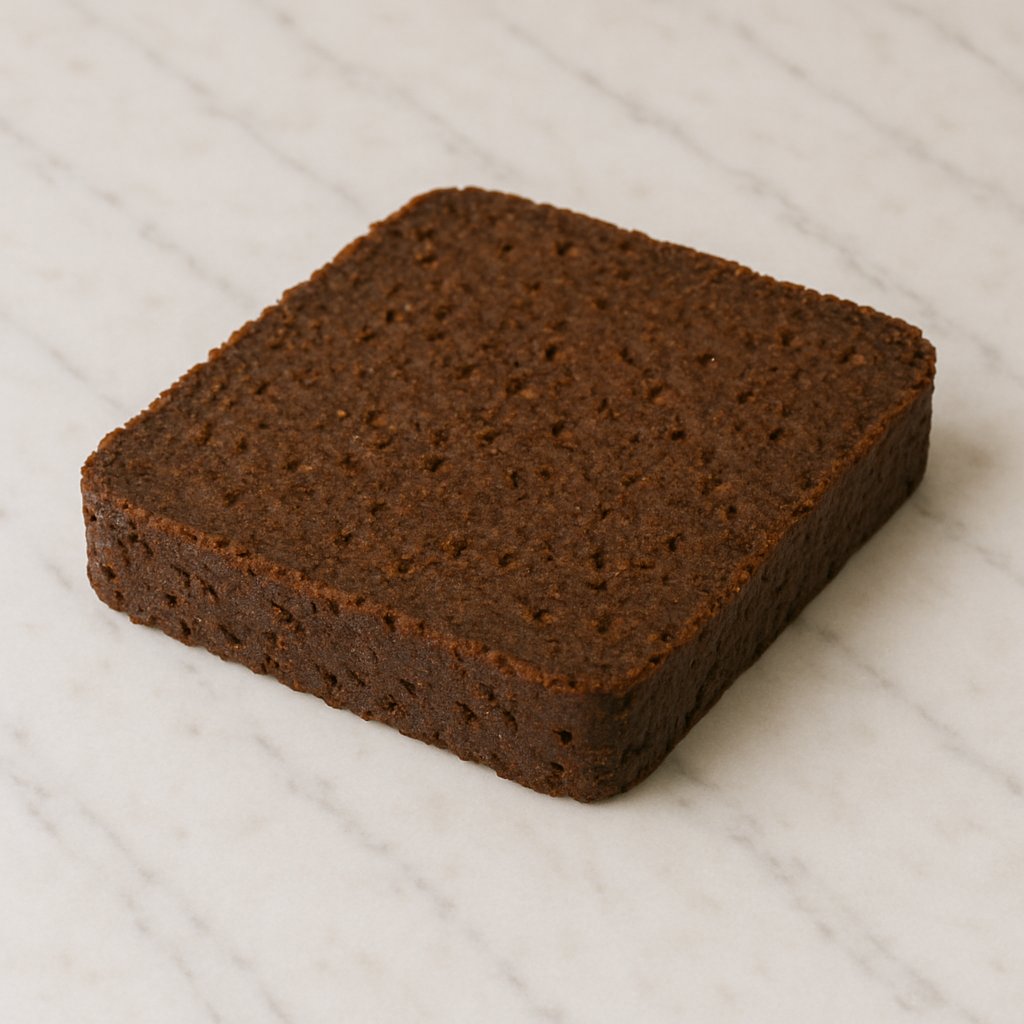
Slices of pumpernickel on a wooden board
I still remember exactly the first bite of pumpernickel I consciously enjoyed: it was at a small weekly market in northern Germany, next to a stall run by grandmothers who treated bread like a family secret. The smell of malty depth and roasted whole grain drew me in, and I was immediately fascinated by the dense, dark crumb that shone almost honey-colored when cut. Since then pumpernickel has had a permanent place in my kitchen and in my memories.

What continually appeals to me about pumpernickel is the blend of simplicity and complexity. At first glance it is just a rye bread, but the long baking time, often at low temperature for hours or even days, transforms the starch granules into a deeply caramelized, almost sweet depth. I once tried to reproduce the same result in a modern oven and had to learn that patience here is not just a virtue, but the actual ingredient.

I like to tell this to colleagues when we talk about traditional baking techniques, because pumpernickel is also for me an example of how craft knowledge is passed down through generations. The grain, the acidity from the sourdough and the dark crust combine to make a bread that goes excellently with strong cheese, smoked fish or simply with butter and sea salt.

When I have guests I often serve it in thin slices with sweet jams and savory pâtés, because the versatility of the bread always surprises. Sometimes I cut it thicker for a rustic sandwich, and sometimes I rub the slices lightly with garlic before frying them — the aroma is then simply overwhelming. For those who do not yet know pumpernickel: try it with a strong mustard and a glass of slightly chilled beer.

  • Typical ingredients: rye flour, water, sourdough, salt.
  • Character: dense, dark, malty-sweet.
  • Use: side dishes, canapés, rustic sandwiches.
To me pumpernickel is a piece of culinary history that on the tongue tells stories of mills, long ovens and patient bakers — and every time I eat a slice I feel a little more rooted in those traditions.

Availability & types

Availability and types of Pumpernickel

Pumpernickel is a dark, dense rye bread that originally comes from Westphalia in Germany. Long before it was sold in supermarkets, people baked it at home and in bakeries because rye often grows here and is well adapted to the region's climate. You can imagine pumpernickel as a very robust, dark bread with a slightly sweet taste — not as airy as white bread, but rather compact and nutty.

Origin
Pumpernickel comes from northwest Germany, especially from the area around the city of Münster in Westphalia. There bakers used to use whole rye grains and long baking times to produce a bread that kept well. "Rye" is the cereal from which pumpernickel is made; it is similar to wheat but hardier and grows in cooler places.

Growing regions
Rye, the main ingredient of pumpernickel, is grown in several regions:

  • Central Europe: Germany, Poland and the Netherlands are major growing regions. In these countries the climate is often cool and humid, which rye prefers.
  • Northern regions: Parts of Scandinavia and the Baltic also grow a lot of rye because it grows better there than wheat.
  • Other countries: Rye is also grown in North America and parts of Asia, but classic pumpernickel usually comes from Europe.
Available varieties and versions
Pumpernickel does not exist in a single version. Depending on the country, bakery or recipe you can find different types. Here are a few simple descriptions to give you an idea:

  • Traditional pumpernickel: This is the classic, very dark bread that is often baked for many hours (sometimes over 12 hours) at low temperature. This makes the crust soft and the color dark brown to almost black. It tastes somewhat sweet and malty.
  • Wholegrain pumpernickel: This variant uses the whole rye grain (this is called "wholegrain"). It is particularly nutritious and has a strong flavor. Wholegrain means that all parts of the grain are included — like a whole nut compared to just a half.
  • Lighter pumpernickel: Sometimes bakers mix rye with wheat or use less dense methods so the bread becomes a bit airier. It resembles pumpernickel but is not as compact.
  • Spice or seed variants: Some pumpernickel types also include sunflower seeds, flaxseed or spices like caraway or fennel. This makes the flavor more interesting and the crust crunchier.
  • Industrial or supermarket pumpernickel: Supermarkets often sell ready-packaged varieties. These are convenient and have a longer shelf life but may taste less intense than fresh, handmade pumpernickel.
How to find pumpernickel?
Today pumpernickel is fairly easy to find. You can buy it in bakeries, supermarkets or at weekly markets. In bakeries you will often find freshly baked variants, while supermarkets offer frozen or packaged types. If you want something truly special, it's worth asking at a traditional bakery or looking for handmade pumpernickel at the market.

Pumpernickel is thus a bread with a clear origin in Germany, made from rye, available in many variants and in many places. Whether very traditional, with seeds or a bit lighter — there is a suitable variety for every taste.
Details & nutrition

Property Value
Unit g
Average weight per piece 25
Calories per 100 230
Protein per 100 5.5
Carbohydrates per 100 44
Sugar per 100 3
Fat per 100 1.5
Saturated fat per 100 0.3
Monounsaturated fat 0.2
Polyunsaturated fat 0.8
Fiber per 100 9
Vitamin C (mg) per 100 0
Vitamin D (IU) per 100 0
Calcium (mg) per 100 35
Iron (mg) per 100 2.5
Nutri-Score B
CO₂ footprint 0.7
Origin Germany
Gluten-free No
Lactose-free Yes
Nut-free Yes
Vegan Yes
Note Values for classic German wholegrain rye pumpernickel without additives such as nuts, seeds or dairy products.

Technical & scientific information

Pumpernickel refers to an originally Westphalian rye bread characterized by a dense texture, dark color and long baking process. Traditional pumpernickel is made from coarsely crushed or whole rye grain, water, salt and sometimes a small proportion of sourdough. Unlike light wheat bread, pumpernickel avoids large amounts of additives like commercial yeast and the peeling of the grain, which preserves particle sizes, fiber and mineral content.

Composition and nutritional values
The chemical composition of pumpernickel mainly reflects the content of the rye grain: carbohydrates (mainly starch and soluble and insoluble fiber), proteins (predominantly rye gluten with other cereal proteins), lipids in small amounts and mineral components. Average nutritional values per 100 g typically range around 200–250 kcal, 40–50 g carbohydrates, 6–9 g protein, 3–5 g fat and 6–8 g fiber, although exact values vary by recipe. Minerals such as magnesium, phosphorus, iron and B vitamins (especially thiamine, niacin and folate) are present in higher concentrations in the wholegrain product than in refined breads.

Processing methods and biochemical processes
The traditional production of pumpernickel is distinguished by slow baking at low temperatures for many hours (up to 16–24 hours). This method promotes partial enzymatic conversion of starch into shorter polymers and maltose, as well as Maillard reactions between reducing sugars and amino acids, which contribute to the dark color and characteristic aroma. The long baking process also promotes hydrolysis of certain polysaccharides, making the crumb particularly compact and moist. When sourdough is used, lactic acid fermentations also occur, lowering pH, improving dough handling and positively influencing flavor and shelf life.

Physics of the crumb and technological influence
The dense structure of pumpernickel results from the combination of wholegrain meal, high moisture content and reduced leavening. Due to the absence of strong yeast fermentation, few large pores form; instead, a fine-pored, compact crumb is produced. The water-binding capacity of rye grain, influenced by beta‑glucans and pentosans, is higher than that of wheat and contributes to juiciness and longer freshness. Industrially produced variants may contain additives such as emulsifiers or enzymes to influence sliceability, texture and production speed.

Health aspects
Due to its wholegrain character, pumpernickel provides relatively high amounts of fiber, which is beneficial for bowel function and satiety. Long-chain fibers and resistant starch modulate the postprandial blood glucose response and can reduce the glycemic load of a meal. The content of secondary plant compounds and minerals contributes to the nutritional quality. People with celiac disease or gluten intolerance should avoid pumpernickel since rye contains gluten. Additionally, the high fiber content can cause bloating in sensitive individuals, so a gradual increase in fiber intake is recommended.

Storage, sensory properties and culinary use
Pumpernickel, due to its moisture and low water activity ratio, stays relatively fresh for a long time; nevertheless, cool and dry storage is recommended to prevent mold growth. Sensorially, pumpernickel shows deep, malty notes, slightly caramelized and roasted aromas and a firm but moist texture. Culinarily it is often used as a base for spreads, for canapés or in combination with fish and cheese preparations, where dense slices are advantageous.

Overall, pumpernickel represents a technologically distinct and nutritionally valuable bread whose characteristic properties are based on the use of whole rye grain, long thermal processes and specific biochemical reactions during baking and fermentation. These factors determine both the nutrient density and the sensory and storage properties of the product.

Wiki entry for: pumpernickel
Active now: 15 visitors of which 2 logged-in members in the last 5 minutes