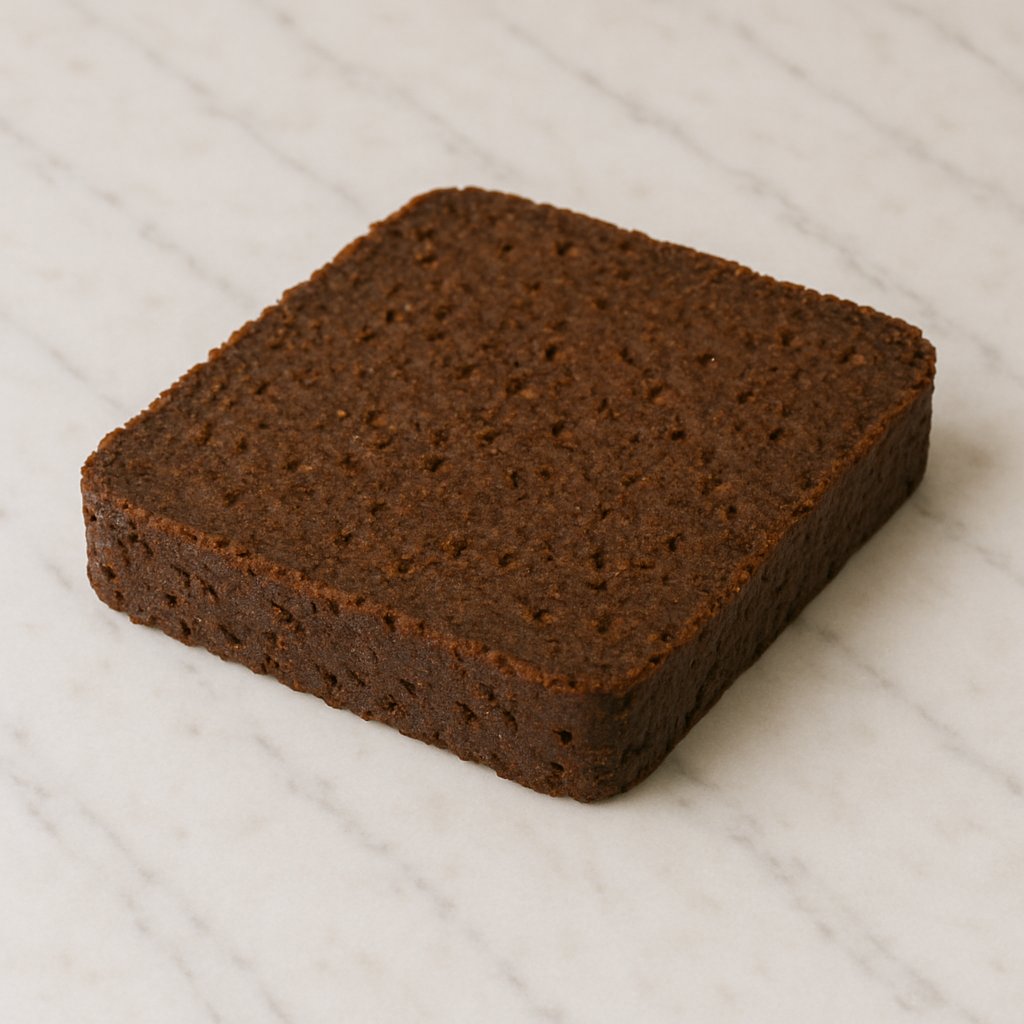
Availability and types of Pumpernickel
Pumpernickel is a dark, dense rye bread that originally comes from Westphalia in Germany. Long before it was sold in supermarkets, people baked it at home and in bakeries because rye often grows here and is well adapted to the region's climate. You can imagine pumpernickel as a very robust, dark bread with a slightly sweet taste — not as airy as white bread, but rather compact and nutty.
Origin
Pumpernickel comes from northwest Germany, especially from the area around the city of Münster in Westphalia. There bakers used to use whole rye grains and long baking times to produce a bread that kept well. "Rye" is the cereal from which pumpernickel is made; it is similar to wheat but hardier and grows in cooler places.
Pumpernickel comes from northwest Germany, especially from the area around the city of Münster in Westphalia. There bakers used to use whole rye grains and long baking times to produce a bread that kept well. "Rye" is the cereal from which pumpernickel is made; it is similar to wheat but hardier and grows in cooler places.
Growing regions
Rye, the main ingredient of pumpernickel, is grown in several regions:
Rye, the main ingredient of pumpernickel, is grown in several regions:
- Central Europe: Germany, Poland and the Netherlands are major growing regions. In these countries the climate is often cool and humid, which rye prefers.
- Northern regions: Parts of Scandinavia and the Baltic also grow a lot of rye because it grows better there than wheat.
- Other countries: Rye is also grown in North America and parts of Asia, but classic pumpernickel usually comes from Europe.
Available varieties and versions
Pumpernickel does not exist in a single version. Depending on the country, bakery or recipe you can find different types. Here are a few simple descriptions to give you an idea:
Pumpernickel does not exist in a single version. Depending on the country, bakery or recipe you can find different types. Here are a few simple descriptions to give you an idea:
- Traditional pumpernickel: This is the classic, very dark bread that is often baked for many hours (sometimes over 12 hours) at low temperature. This makes the crust soft and the color dark brown to almost black. It tastes somewhat sweet and malty.
- Wholegrain pumpernickel: This variant uses the whole rye grain (this is called "wholegrain"). It is particularly nutritious and has a strong flavor. Wholegrain means that all parts of the grain are included — like a whole nut compared to just a half.
- Lighter pumpernickel: Sometimes bakers mix rye with wheat or use less dense methods so the bread becomes a bit airier. It resembles pumpernickel but is not as compact.
- Spice or seed variants: Some pumpernickel types also include sunflower seeds, flaxseed or spices like caraway or fennel. This makes the flavor more interesting and the crust crunchier.
- Industrial or supermarket pumpernickel: Supermarkets often sell ready-packaged varieties. These are convenient and have a longer shelf life but may taste less intense than fresh, handmade pumpernickel.
How to find pumpernickel?
Today pumpernickel is fairly easy to find. You can buy it in bakeries, supermarkets or at weekly markets. In bakeries you will often find freshly baked variants, while supermarkets offer frozen or packaged types. If you want something truly special, it's worth asking at a traditional bakery or looking for handmade pumpernickel at the market.
Today pumpernickel is fairly easy to find. You can buy it in bakeries, supermarkets or at weekly markets. In bakeries you will often find freshly baked variants, while supermarkets offer frozen or packaged types. If you want something truly special, it's worth asking at a traditional bakery or looking for handmade pumpernickel at the market.
Pumpernickel is thus a bread with a clear origin in Germany, made from rye, available in many variants and in many places. Whether very traditional, with seeds or a bit lighter — there is a suitable variety for every taste.