Menu & categories

Puff pastry

Delicate, multilayer pastry made from puff pastry

Wiki about puff pastry pastry Nutri-Score D Vegan No Gluten-free No Lactose-free No Nut-free Yes
NUTRITION / 100 g
420 kcal 6 g Protein 42 g Kohlenhydrate 26 g Fett

Introduction

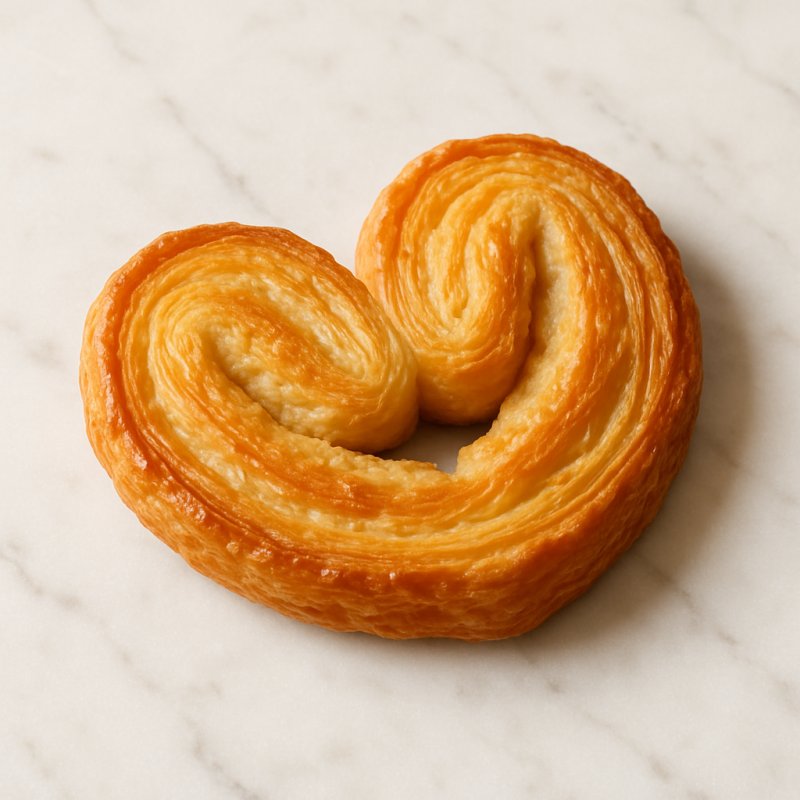
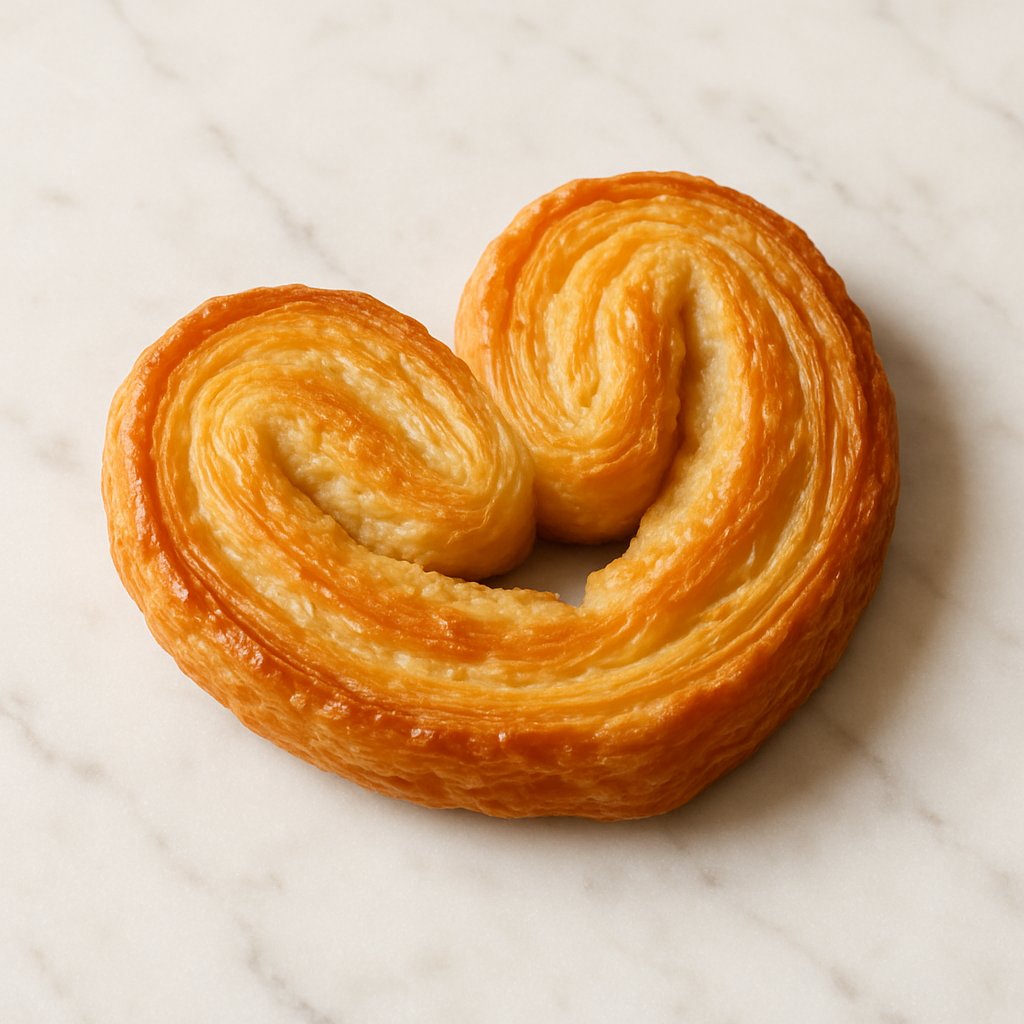
Several golden-brown puff pastries on a plate
I love the smell of freshly baked puff pastry, that buttery, slightly nutty scent that immediately evokes cafés, marketplaces, and Sunday breakfasts. When I see the layers that open up perfectly and turn golden during baking, I think of a small triumph: from simple dough comes texture, crispness, and a touch of luxury. Once I brought a tart to a picnic and, before I could say “Enjoy your meal,” half of it was gone — that is the power of puff pastry.

Puff pastry lives on contrasts: crispy outside, tender inside; simple to prepare, refined in the result. I remember one morning when a colleague, convinced that store-bought dough was a culinary sin, after one bite of my homemade apple turnovers frowned and then slowly smiled. His reaction was a lesson in how technique and patience reward you. Sometimes it is enough to distribute the butter sparingly and evenly between the dough layers to achieve that dramatic flakiness.

The versatility always delights me. Puff pastry can be:

  • used as a sweet temptation, for example in croissants, mille-feuille, or fruit tarts,
  • used as a savory base, for example for quiches, pirogues, or small savory pies,
  • a creative playground when experimenting with fillings, glazes, and spices.
I learned practical tips through countless kitchen experiments: the dough must never get too warm, a cool work surface and occasional chilling help a lot. When rolling out I make sure not to apply too much pressure so the layers remain. And one more thing: patience pays off. I learned it's better to wait a few minutes longer for the perfect browning than to take it out of the oven too early.

In the end puff pastry for me is a mix of technique, sensuality, and nostalgia. It combines craft with pleasure, smells like home and tastes like little celebrations. Anyone who has prepared it properly understands why so many people fall for it — myself included.

Availability & types

Availability and types

What is puff pastry and where does it come from?
Puff pastry is a pastry made of many thin layers of dough and fat (usually butter). When baked, the dough puffs up and becomes light and crispy. This type of pastry has a long history: the technique of layering dough originated in Europe and became especially popular in countries like France and Austria. You can imagine it like a sheet of paper to which you repeatedly apply a thin layer of glue and then place another sheet on top — except here the butter ensures that air gets trapped during baking and the layers remain separated.

Where is puff pastry produced?
Puff pastry itself is not grown in fields, since it is a processed food. However, ingredients like flour, butter, and water come from specific regions:

  • Flour: Mostly derived from wheat. Wheat fields are found in many countries – Europe, North America, Russia, and parts of Asia. Flour is milled in mills and then goes to bakeries or factories.
  • Butter/Fat: Comes from milk. Cows provide the milk from which butter is made. Milk and butter producers are often located in countries with many farms, for example in Europe, North America, or New Zealand.
  • Water and salt: These simple ingredients come from the region where the baking takes place.
What kinds of puff pastry are there?
Puff pastry is very versatile. It can be filled sweet or savory or baked plain. Here are some well-known variants, explained simply:

  • Ready-made puff pastry (chilled or frozen): This is like a “kit” from the package. At the supermarket you can find rolls or sheets that you just roll out and bake. Very convenient because you don't have to make the layers yourself.
  • Handmade puff pastry: Bakers make it by hand or with special machines, often extra crispy and fresh. It's like someone taking a photograph rather than a print — it often feels higher quality.
  • Puff pastry in rolls, sheets, or squares: Depending on the shape they are good for different things: rolls are suitable for spirals, sheets for tart bases, and squares for small pockets or pastries.
  • Sweet variants: For example apple turnovers, chocolate croissants, or pudding tarts. These are often filled with sugar, fruit, or chocolate.
  • Savoury variants: Snacks with cheese, vegetables, meat, or sausage. For example sausage rolls — small rolls that children often like.
  • Puff pastry made with special fats: Some products use vegetable fats instead of butter. This changes the flavor and sometimes makes the pastry last longer. The package may say “with butter” or “with vegetable fat” — that's the difference.
When can you find puff pastry in stores?
Puff pastry is available year-round in supermarkets. Ready-made sheets are usually found in the refrigerated section or frozen in the freezer. Fresh puff pastry goods such as croissants or pastries are found in bakeries, especially in the morning, very fresh. During festive times like Christmas or Easter there are often special shapes and fillings.

Simple example:
Imagine puff pastry is like building blocks: the ready-made sheets are prefabricated blocks that let you build a house quickly. If a baker makes the dough himself, he carves the blocks individually and builds a particularly beautiful house — it takes longer, but often looks better.

Conclusion: Puff pastry is widely available, either as ready-made sheets to bake at home or fresh from the baker. There are many types — sweet, savory, with butter or vegetable fat — and the ingredients come from regions that produce wheat and milk. So there's something for every taste and occasion.
Details & nutrition

Property Value
Unit g
Average weight per piece 35
Calories per 100 420
Protein per 100 6
Carbohydrates per 100 42
Sugar per 100 4
Fat per 100 26
Saturated fat per 100 12
Monounsaturated fat 9
Polyunsaturated fat 3
Fiber per 100 2
Vitamin C (mg) per 100 0
Vitamin D (IU) per 100 0
Calcium (mg) per 100 20
Iron (mg) per 100 1.2
Nutri-Score D
CO₂ footprint 2.8
Origin Europe
Gluten-free No
Lactose-free No
Nut-free Yes
Vegan No
Note Nutritional values for sweet, baked puff pastry without filling; recipe and manufacturer information may vary.

Technical & scientific information

Puff pastry refers to a group of baked goods made from a multilayered dough in which thin layers of dough and fat alternate. The classic method of production aims to generate steam between the layers during baking, causing the layers to separate and creating a characteristic airy and crispy structure. This principle relies on physical processes such as water vapor formation, fat melting, and heat conduction.

Composition and ingredients
Puff pastry essentially consists of four components: wheat flour, water, fat (butter or vegetable fats), and salt. Optionally, sugar, dairy products, egg, or leavening agents are added depending on the recipe. Chemically, the flour mainly provides starch (polysaccharides like amylose and amylopectin) and proteins, with gluten responsible for the dough's extensibility and elasticity. The fat, together with water, forms the phases that during lamination (enclosing and rolling) generate the lamellar structure.

Nutritional values
The nutrient composition of puff pastry depends heavily on the fat source used and portion size. Typically 100 g of puff pastry contains about 400–500 kcal, with a high fat content (25–35 g), moderate amounts of carbohydrates (30–45 g) and low protein (5–8 g). The fat fraction consists, depending on the chosen fat, of saturated, monounsaturated and polyunsaturated fatty acids. Butter-heavy doughs provide more saturated fats and cholesterol-containing components, while vegetable fats can supply a higher share of unsaturated fatty acids.

Processing methods and technology
Industrial and artisanal production of puff pastry follows the principle of lamination: a base dough (detrempe) is prepared, cooled and wrapped around a fat package (beurrage or margarine block). Through repeated rolling and folding (usually in threefold or fourfold folding patterns) numerous thin dough-fat layers are produced. Important influencing factors are temperature, humidity, fat viscosity and flour quality. Low temperatures prevent the fat from melting during processing, while adequate dough hydration and appropriate gluten structure prevent tearing. Industrial plants use laminators and temperature-controlled rooms to achieve reproducible layer counts and consistencies.

Physics and chemistry of layering
During baking the dough heats up, water from the dough matrix evaporates and the steam exerts pressure between the fat-separated dough layers. At the same time the fat melts and reduces surface tension, allowing the layers to separate more easily. The starch in the flour gelatinizes and proteins denature; these processes stabilize the cavities formed. The final texture results from a complex interplay of vapor pressure, fat melting and Maillard reactions on the surfaces, which contribute to browning and flavor development.

Health aspects
Puff pastry, due to its high fat and energy content, should be consumed in moderation. Commonly used fats and heavy processing can lead to an increased share of saturated fatty acids and an energy surplus, which with regular large consumption increases the risk of overweight and cardiovascular disease. Industrial puff pastry may contain trans fats if partially hydrogenated fats were used; modern product development however aims to reduce or eliminate industrial trans fats. Micronutrients are generally low; added fillings (e.g., fruit, nuts, cheese) can provide vitamins, fiber and minerals.

Storage and shelf life
The shelf life of fresh puff pastry products is limited, as moisture uptake and fat rancidity degrade quality. Cool, dry storage slows oxidative processes; freezing the raw product is a common method to extend shelf life, with fat and dough structure preserved if thawed properly. Industrial products sometimes use antioxidants or packaging with low oxygen permeability to delay aroma loss and fat oxidation.

Applications and variants
Puff pastry serves as the basis for a variety of baked goods such as croissants, danishes, pies, tartlets and savory pockets. Recipe variants differ in layer count, fat type (butter, margarine, vegetable fat) and additives, which significantly change texture, flavor and baking behavior. In product development today, besides sensory criteria, nutritional aspects and functional properties such as cold tolerance and machine compatibility are also important.

Overall, puff pastry technology combines physical and chemical processes with artisanal and industrial production steps, requiring a delicate balance between ingredients, temperature control and mechanical handling to achieve the desired light, layered structure and aromatic properties of the pastry.

Wiki entry for: puff pastry pastry
Active now: 12 visitors of which 2 logged-in members in the last 5 minutes