Menu & categories

Cured ham

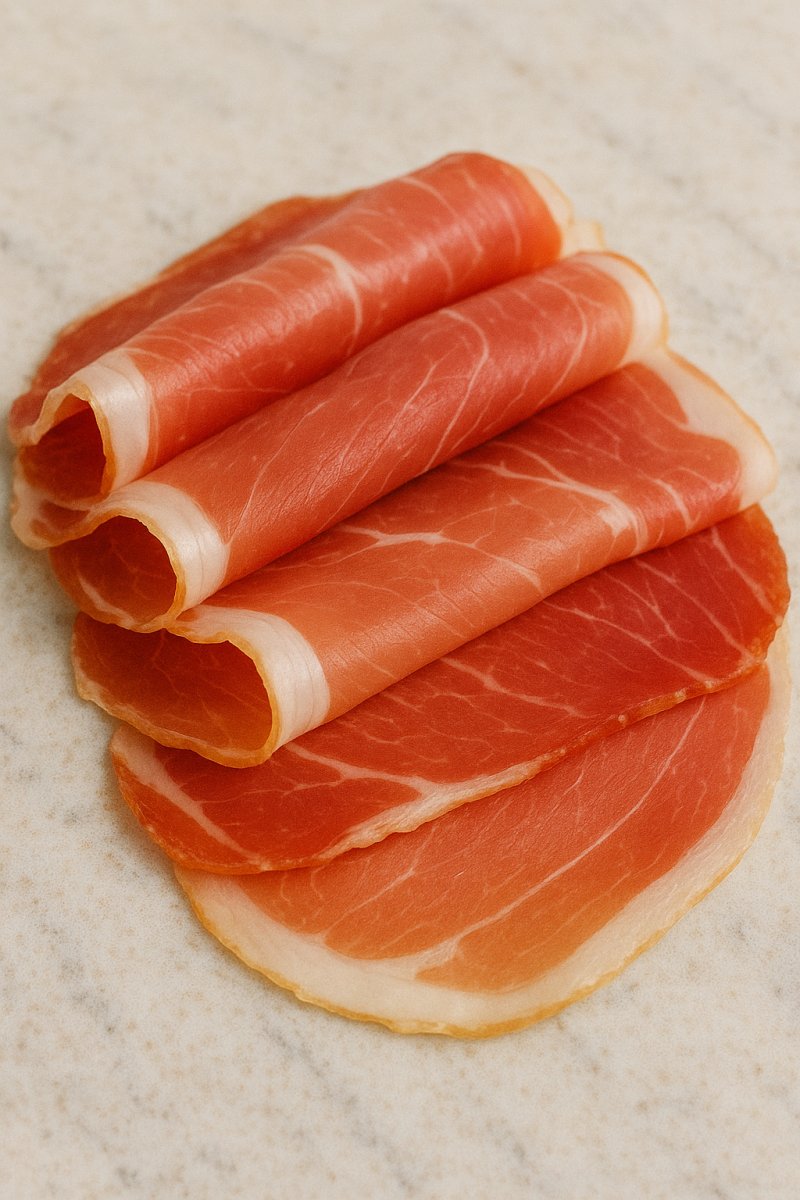
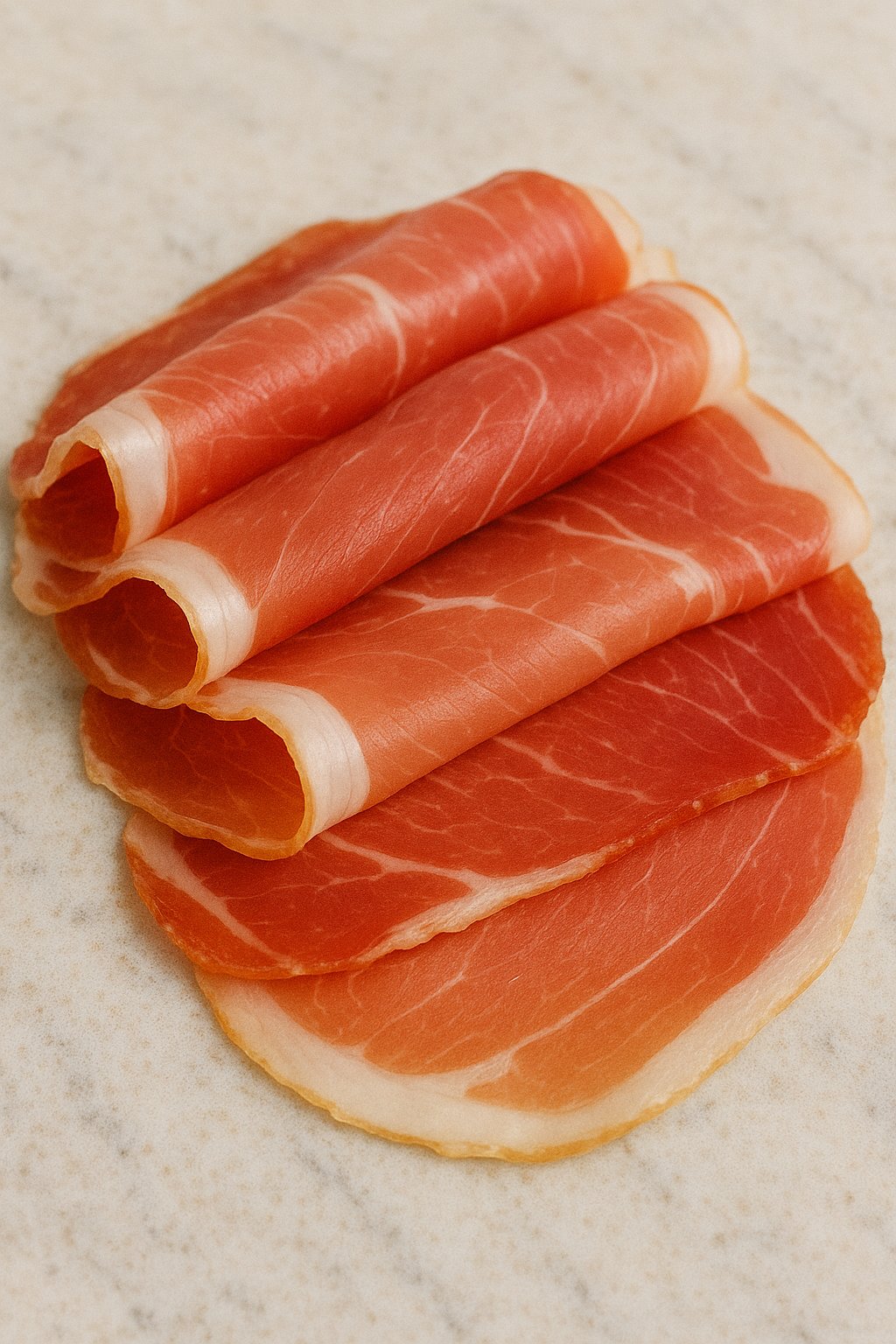
Air-dried, aromatic ham with high protein content

Wiki about prosciutto Nutri-Score D Vegan No Gluten-free Yes Lactose-free Yes Nut-free Yes
NUTRITION / 100 g
250 kcal 30 g Protein 1 g Kohlenhydrate 14 g Fett

Introduction

Thinly sliced raw ham on a wooden board
I still remember my first conscious bite of a real dry-cured ham: it was at a small market in Italy, the air was warm and somewhere a street musician was playing a mandolin. A vendor handed me an ultra-thin slice that lay on my tongue almost like paper, and in that moment I knew that dry-cured ham is more than just sliced meat. It is history, craft and flavor in one.

Dry-cured ham is produced by careful curing and long aging, often in cool, well-ventilated places. The processing requires patience and experience; I watched a butcher who, with seemingly meditative seriousness, wiped the spices and hung the legs on a beam. I was impressed by how much tradition is in every slice. Differences in climate, animal feed and length of aging shape the aroma: from mild and buttery to intensely nutty and slightly salty.

For me dry-cured ham is a versatile companion in the kitchen. I like to spread it on warm ciabatta, place it on crisp arugula or season a simple melon with it, creating a play of sweet and salty that always surprises me. Once I spontaneously decided to fill an omelette with thin slices of dry-cured ham — the result was so good that a colleague wanted the recipe that same evening.

When shopping I pay attention to origin and degree of aging. Labels can give hints, but often my sense of smell gives the best tip: a pleasant, slightly sweet scent is a good sign. Dry-cured ham contains important nutrients like protein and various vitamins; nevertheless I enjoy it in moderation because it also contains salt.

In conclusion I think dry-cured ham is one of the ingredients that spark conversation at the table. It connects countries, recipes and memories. When I arrange a platter of dry-cured ham today, I feel a little back at that market in Italy — and I enjoy sharing that taste with friends, colleagues or new acquaintances.

Availability & types

Availability and types of dry-cured ham

Dry-cured ham is a good friend for people who like savory flavor. Simply put, dry-cured ham is a piece of pork leg that has been salted and dried or aged rather than cooked. You can find it in many countries, and there are different kinds often named after their origin or how they were made. Here you’ll learn in an easy way where dry-cured ham comes from, in which areas it is produced and what varieties exist.

Origin and typical regions
Dry-cured ham is especially popular in Europe. Some areas are famous for their particular ham because climate, tradition and the way pigs are raised come together there. Examples include:

  • Italy: This includes the famous Parma ham (Prosciutto di Parma). It comes from the area around Parma and is aged for a very long time. The dry climate and the experience of the people there make the flavor special.
  • Spain: Jamón, for example Jamón Serrano or the more expensive Jamón Ibérico, comes from Spain. Jamón Serrano is widespread; Jamón Ibérico comes from special pigs that often eat acorns and thus develop a particularly nutty aroma.
  • Germany and Austria: Here too there are dry-cured hams, often called "Schinkenspeck" or regionally named varieties. The climate is often different, but there are also long traditions of curing and aging.
  • Other countries: In France, Switzerland and other parts of Europe there are also local dry-cured ham specialties.
Available kinds and variants
There are many varieties of dry-cured ham. Some differences you can see in the color or shape, some you hear in their name. Important distinctions are:

  • By designation of origin: Some hams have protected names, such as "Prosciutto di Parma" or "Jamón Ibérico". This means they must be produced according to fixed rules and come from a specific region. Similar to a brand name intended to guarantee quality.
  • By pig breed: Some hams come from special pigs, for example the "Ibérico" pig in Spain. These pigs give the ham its own characteristic flavor.
  • By aging time: Ham can be aged for only a few months or for over a year. The longer it ages, the more intense and drier it usually tastes. Sometimes it's like cheese: longer-aged cheese has a stronger flavor.
  • By feeding and rearing: Some animals were fed ordinary feed, others received special things like acorns (this is important for Jamón Ibérico). This affects the taste.
  • Shape and cut: Dry-cured ham can be sold as a whole leg, in pieces or already thinly sliced in the supermarket. Whole legs often need to be sliced at home or in shops; sliced ham is convenient for immediate eating.
How easy is it to obtain dry-cured ham?
You can buy dry-cured ham in supermarkets, delicatessens, at weekly markets or online. Some specialty types are more expensive and not available everywhere. If you're looking for something very special, like a very old Jamón Ibérico, you might have to go to a delicatessen or order online. For everyday use, however, there are often affordable variants that taste similar and are easy to find.

In summary: dry-cured ham mainly comes from regions with a long tradition, there are many kinds depending on origin, pig breed, aging time and cut, and you can buy it everywhere or go to specialists for particular varieties. So there is something for every taste and every budget.
Details & nutrition

Property Value
Unit g
Calories per 100 250
Protein per 100 30
Carbohydrates per 100 1
Sugar per 100 1
Fat per 100 14
Saturated fat per 100 5
Monounsaturated fat 6
Polyunsaturated fat 1
Fiber per 100 0
Vitamin C (mg) per 100 0
Vitamin D (IU) per 100 0
Calcium (mg) per 100 10
Iron (mg) per 100 1.5
Nutri-Score D
CO₂ footprint 5.5
Origin Pork, typically from Europe (e.g., Italy, Spain, Germany, Austria)
Gluten-free Yes
Lactose-free Yes
Nut-free Yes
Vegan No
Note High in sodium and salt; values may vary depending on maturation, fat content and manufacturer.

Technical & scientific information

Dry-cured ham refers to salted and air-dried pork that has been preserved by controlled drying and aging. Typical examples are Parma ham, Serrano and prosciutto crudo. Dry-cured ham is made from whole muscle portions, usually the leg, which after salting hang for several weeks to months, during which enzymatic activity, water loss and microbiological processes shape the texture, flavor and shelf life.

Production process and technology

  • Starting material: defatted pork leg with intact musculature and skin portion, suitable for even aging.
  • Curing: use of dry salt or brine (salt solution), often with nitrite curing salt to inhibit pathogenic microbes such as Clostridium botulinum and to stabilize color by formation of nitrosomyoglobin.
  • Drying and aging: initial cooling and drying phases are followed by temperature- and humidity-controlled maturation periods. During this the water content is markedly reduced, protein structure changes due to proteolytic enzymes, and typical aromatic compounds develop.
  • Microbiology: the surface is colonized by salt-tolerant microorganisms that support rind formation. Controlled hygiene and starter cultures can be used for quality assurance.
Physicochemical properties

  • Water activity (aw): dry-cured ham exhibits reduced water activity, typically between 0.90 and 0.95, which restricts the growth of many spoilage and pathogenic organisms.
  • pH value: after aging the pH is usually between 5.4 and 6.2; proteolysis and lactic acid formation can lead to slight pH shifts.
  • Proteins and lipids: muscle proteins (myosin, actin) are the main components; lipids concentrate in intramuscular fat and influence taste and aroma through lipolysis and oxidative processes.
  • Salt content: final NaCl content varies but is often between 2.5 and 5% in the end product, depending on recipe and curing method.
Nutritional values and constituents

Dry-cured ham provides high-quality animal proteins with a complete amino acid profile. Energy content depends on fat content; lean variants have about 120–180 kcal per 100 g, fattier ones up to 300 kcal/100 g. Typical nutritional values per 100 g are around 20–30 g protein, 4–20 g fat and minimal carbohydrates. Dry-cured ham is a source of vitamins and minerals, including vitamin B12, niacin, iron and zinc.

Health aspects

  • Risks: processed meat products are associated with increased risks for certain diseases when consumed frequently. Nitrite curing salts can contribute to the formation of nitrosamine-like compounds that are potentially carcinogenic. Likewise, attention should be paid to the high salt content, especially with hypertension.
  • Food safety: curing, reduced water activity and aging minimize the risk of clinically relevant foodborne infections. Nevertheless, improper conditions can favor Listeria or mold problems, which is why hygiene standards are essential.
  • Nutritional relevance: when enjoyed in moderation, dry-cured ham contributes to protein intake and to the provision of fat-soluble flavors; however it is not suitable for low-sodium diets.
Sensory aspects and maturation chemistry

During aging, proteolysis produces amino acids and peptides that deliver umami flavors. Lipolysis and oxidation generate volatile compounds such as aldehydes, ketones and free fatty acids that shape the characteristic aroma. Texture changes result from water loss and fibrillar changes in the muscle fibers; the consistency becomes more tender and at the same time more compact.

Quality characteristics and labeling

Quality is measured by appearance, slicing, marbling, smell and taste as well as microbiological safety. In many regions traditional dry-cured hams are regulated by protected designation of origin (PDO, PGI) or controlled production standards that prescribe slaughter age, feeding and aging times.

In summary, dry-cured ham is a meat product preserved by curing and prolonged drying, whose structure, aroma and shelf life rely on complex physicochemical and microbial processes. Its nutrient density makes it a protein-rich ingredient, while salt and nitrite contents and the possible formation of undesirable by-products are health aspects to be considered in consumption and production.

Wiki entry for: prosciutto
Active now: 18 visitors of which 2 logged-in members in the last 5 minutes