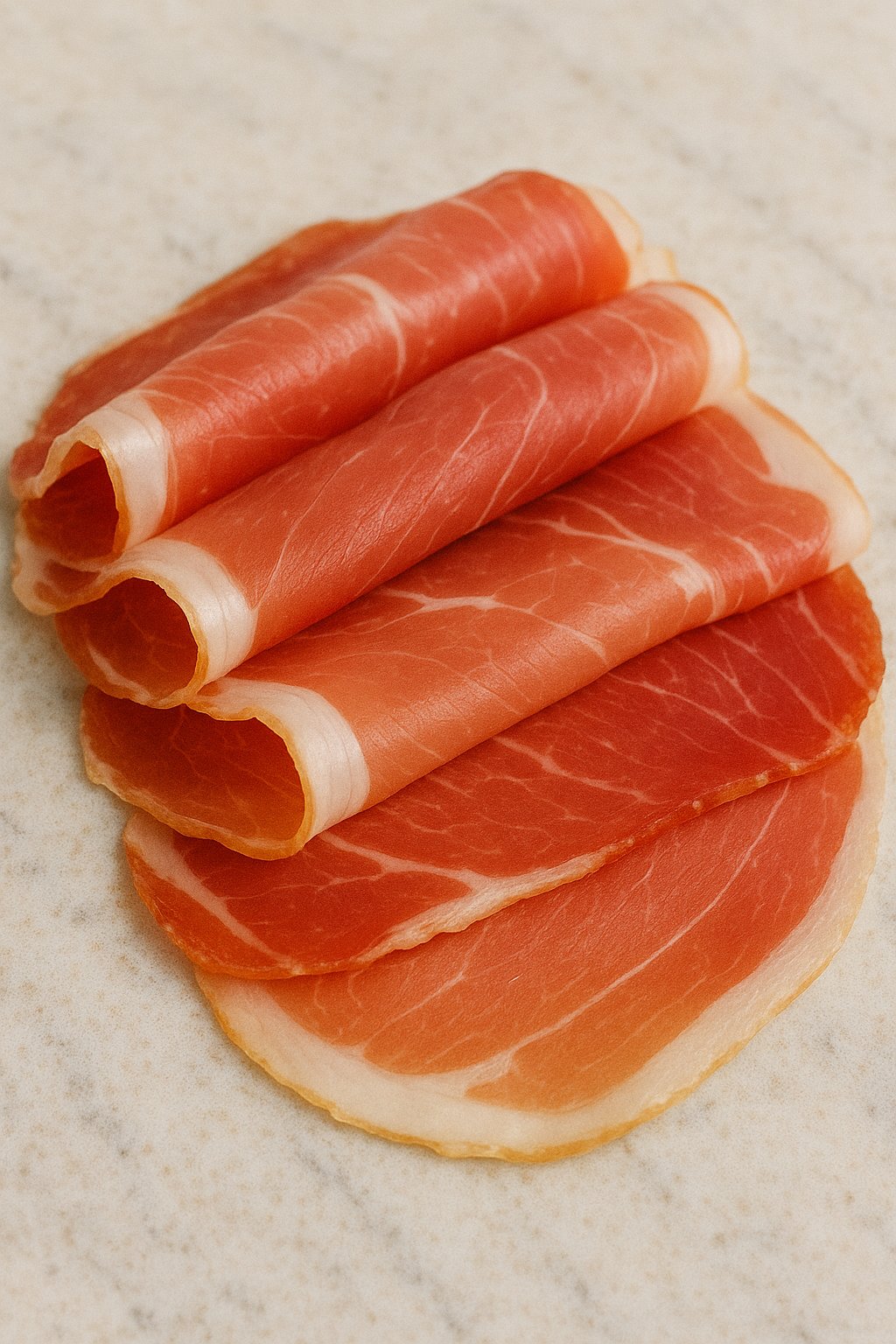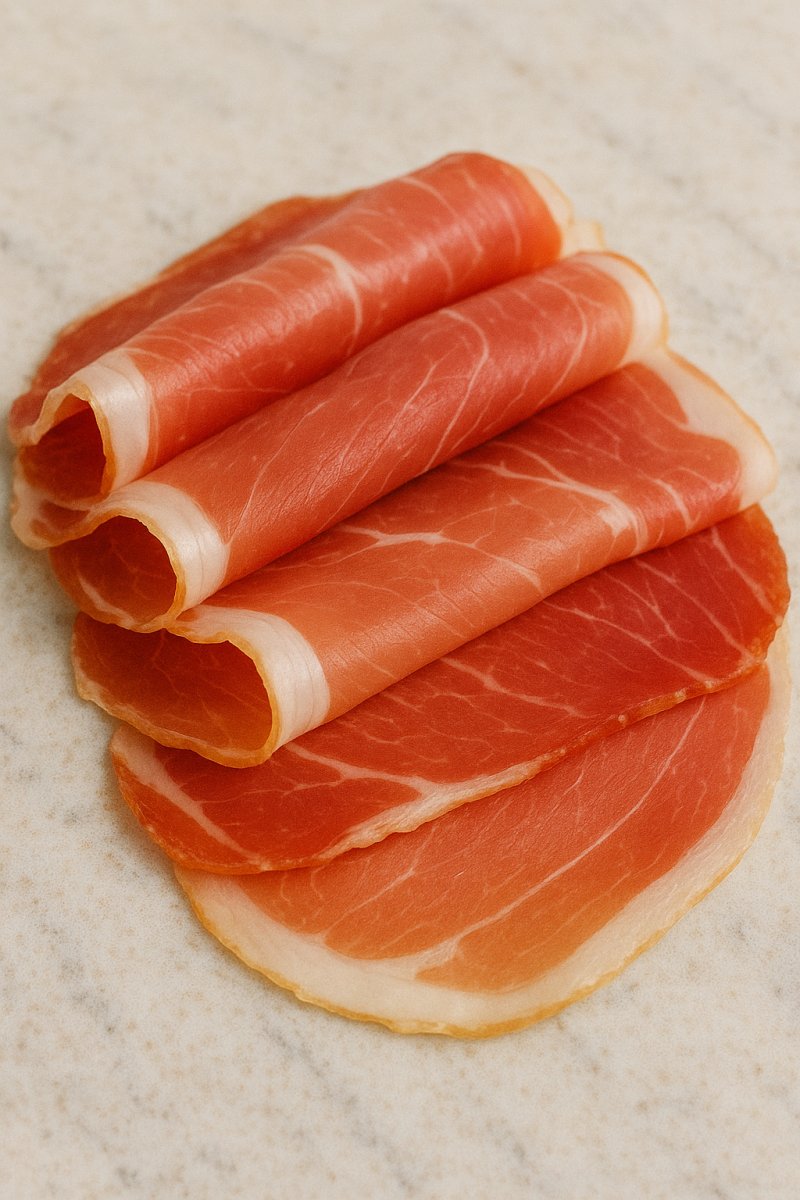
Availability and types of dry-cured ham
Dry-cured ham is a good friend for people who like savory flavor. Simply put, dry-cured ham is a piece of pork leg that has been salted and dried or aged rather than cooked. You can find it in many countries, and there are different kinds often named after their origin or how they were made. Here you’ll learn in an easy way where dry-cured ham comes from, in which areas it is produced and what varieties exist.
Origin and typical regions
Dry-cured ham is especially popular in Europe. Some areas are famous for their particular ham because climate, tradition and the way pigs are raised come together there. Examples include:
Dry-cured ham is especially popular in Europe. Some areas are famous for their particular ham because climate, tradition and the way pigs are raised come together there. Examples include:
- Italy: This includes the famous Parma ham (Prosciutto di Parma). It comes from the area around Parma and is aged for a very long time. The dry climate and the experience of the people there make the flavor special.
- Spain: Jamón, for example Jamón Serrano or the more expensive Jamón Ibérico, comes from Spain. Jamón Serrano is widespread; Jamón Ibérico comes from special pigs that often eat acorns and thus develop a particularly nutty aroma.
- Germany and Austria: Here too there are dry-cured hams, often called "Schinkenspeck" or regionally named varieties. The climate is often different, but there are also long traditions of curing and aging.
- Other countries: In France, Switzerland and other parts of Europe there are also local dry-cured ham specialties.
Available kinds and variants
There are many varieties of dry-cured ham. Some differences you can see in the color or shape, some you hear in their name. Important distinctions are:
There are many varieties of dry-cured ham. Some differences you can see in the color or shape, some you hear in their name. Important distinctions are:
- By designation of origin: Some hams have protected names, such as "Prosciutto di Parma" or "Jamón Ibérico". This means they must be produced according to fixed rules and come from a specific region. Similar to a brand name intended to guarantee quality.
- By pig breed: Some hams come from special pigs, for example the "Ibérico" pig in Spain. These pigs give the ham its own characteristic flavor.
- By aging time: Ham can be aged for only a few months or for over a year. The longer it ages, the more intense and drier it usually tastes. Sometimes it's like cheese: longer-aged cheese has a stronger flavor.
- By feeding and rearing: Some animals were fed ordinary feed, others received special things like acorns (this is important for Jamón Ibérico). This affects the taste.
- Shape and cut: Dry-cured ham can be sold as a whole leg, in pieces or already thinly sliced in the supermarket. Whole legs often need to be sliced at home or in shops; sliced ham is convenient for immediate eating.
How easy is it to obtain dry-cured ham?
You can buy dry-cured ham in supermarkets, delicatessens, at weekly markets or online. Some specialty types are more expensive and not available everywhere. If you're looking for something very special, like a very old Jamón Ibérico, you might have to go to a delicatessen or order online. For everyday use, however, there are often affordable variants that taste similar and are easy to find.
You can buy dry-cured ham in supermarkets, delicatessens, at weekly markets or online. Some specialty types are more expensive and not available everywhere. If you're looking for something very special, like a very old Jamón Ibérico, you might have to go to a delicatessen or order online. For everyday use, however, there are often affordable variants that taste similar and are easy to find.
In summary: dry-cured ham mainly comes from regions with a long tradition, there are many kinds depending on origin, pig breed, aging time and cut, and you can buy it everywhere or go to specialists for particular varieties. So there is something for every taste and every budget.