Menu & categories

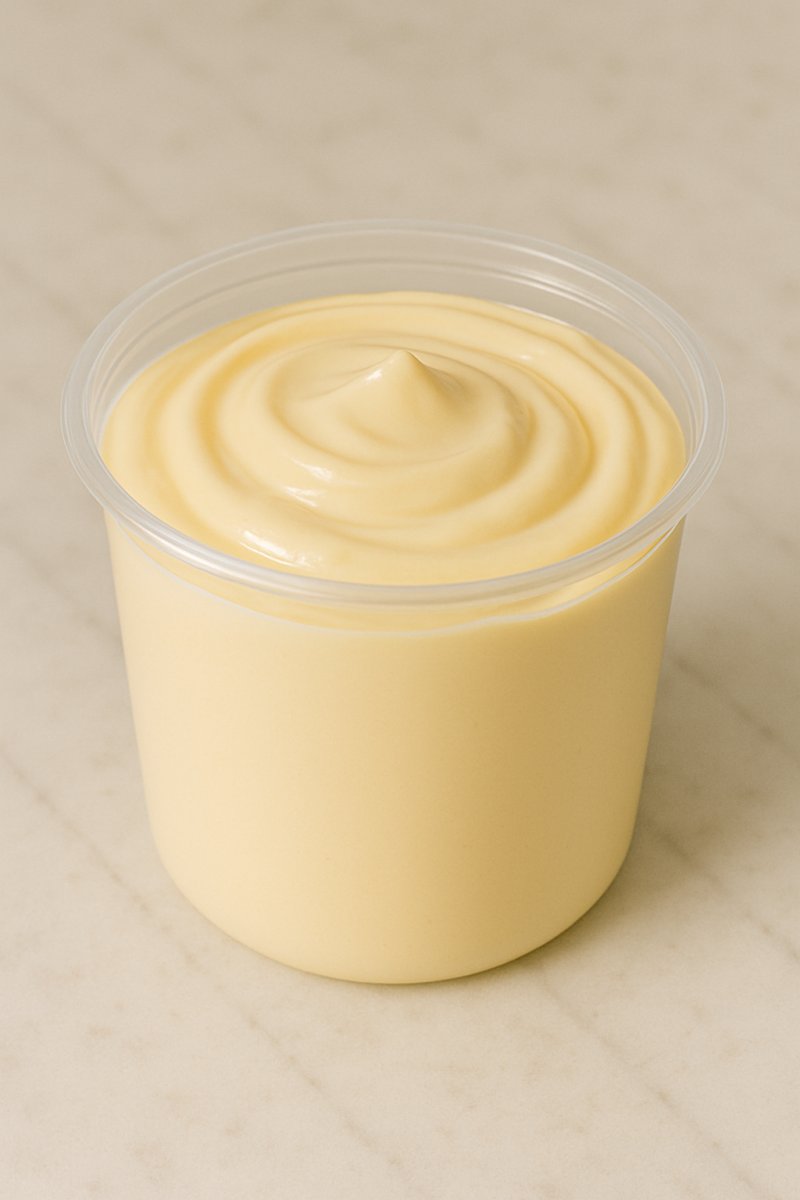
Processed cheese 20% fat in dry matter

Light processed cheese with reduced fat content

Wiki about processed cheese 20% fat in dry matter Nutri-Score D Vegan No Gluten-free Yes Lactose-free No Nut-free Yes
NUTRITION / 100 g
220 kcal 16 g Protein 5 g Kohlenhydrate 14 g Fett

Introduction

Slices of processed cheese on bread
Processed cheese 20% fat in dry matter is a versatile ingredient that has a firm place in many European kitchens – whether as a creamy base for sauces, an easy bread spread or a secret ingredient in soups. As a 35‑year‑old editor who writes a lot about food professionally and cooks with great curiosity privately, I have come to appreciate this cheese category over the years. I am fascinated by how its texture and mildly savory aroma fit into a wide range of dishes without becoming dominant. And yet “20% fat in dry matter” is a puzzle for many. What does it actually mean? It refers to the fat content related to the dry matter, i.e. calculated on the cheese without the water content. In practice a processed cheese with 20% fat in dry matter feels pleasantly light, yet remains creamy enough to give dishes a rounded, binding note.

I clearly remember an editorial breakfast when a colleague – an enthusiastic hobby cook – brought a warm pretzel roll filled with processed cheese and a little chive. Simple, quick and surprisingly elegant. His anecdote: while at university he had invented the perfect “budget fondue” with processed cheese 20% fat in dry matter by mixing it with some mild broth, white wine and nutmeg. The result was not the classic Alpine fondue, but it was creamy, harmonious and ready in ten minutes. Moments like that show me how close this product cooks to our everyday life – accessible, pragmatic and yet enjoyable.

Processed cheese is made from one or more types of cheese that are heated and homogenized with the help of melting salts. The result is a spreadable to sliceable product with a uniform consistency and stable melting properties. The 20% fat in dry matter variant in particular strikes a good balance between lightness and flavor. It provides the typical cheese aroma without weighing dishes down, making it ideal for recipes where balance is required – for example in vegetable sauces, light pasta dishes or savory bakes that should not be too rich.

In my kitchen processed cheese 20% fat in dry matter also has a place in the fridge emergency shelf. When there is little in the evening

Availability & types

Availability and types of processed cheese 20% fat in dry matter

Processed cheese with 20% fat in the dry matter (abbreviated: 20% fat in d.m.) is a particular type of cheese preparation that is widespread in many European countries, especially Germany, Austria and Switzerland. “Fat in d.m.” indicates how much fat is contained in the cheese once all the water is excluded. A cheese with 20% fat in d.m. is therefore relatively low‑fat and contains less fat than many other cheeses. This makes it interesting for people who prefer a lighter diet but still enjoy the creamy taste of cheese.

Where does processed cheese come from?
Processed cheese originated when cheese manufacturers sought a way to make cheese more shelf‑stable and uniformly spreadable. To do this, ordinary cheese (for example Gouda, Emmental or Edam) is finely chopped, heated and mixed with so‑called melting salts. These help bind the proteins in the cheese so that a smooth, creamy mass forms. This makes the cheese easier to spread, melts well and remains stable. Processed cheese became popular in the 20th century because it is practical: it spoils more slowly, is easy to use and tastes mild – ideal for breads, sauces or hot dishes.

Availability in trade
Processed cheese 20% fat in d.m. is available in many supermarkets year‑round. You can find it:

  • in the chilled section with cheeses and spreads,
  • in portion packs (several small wedges),
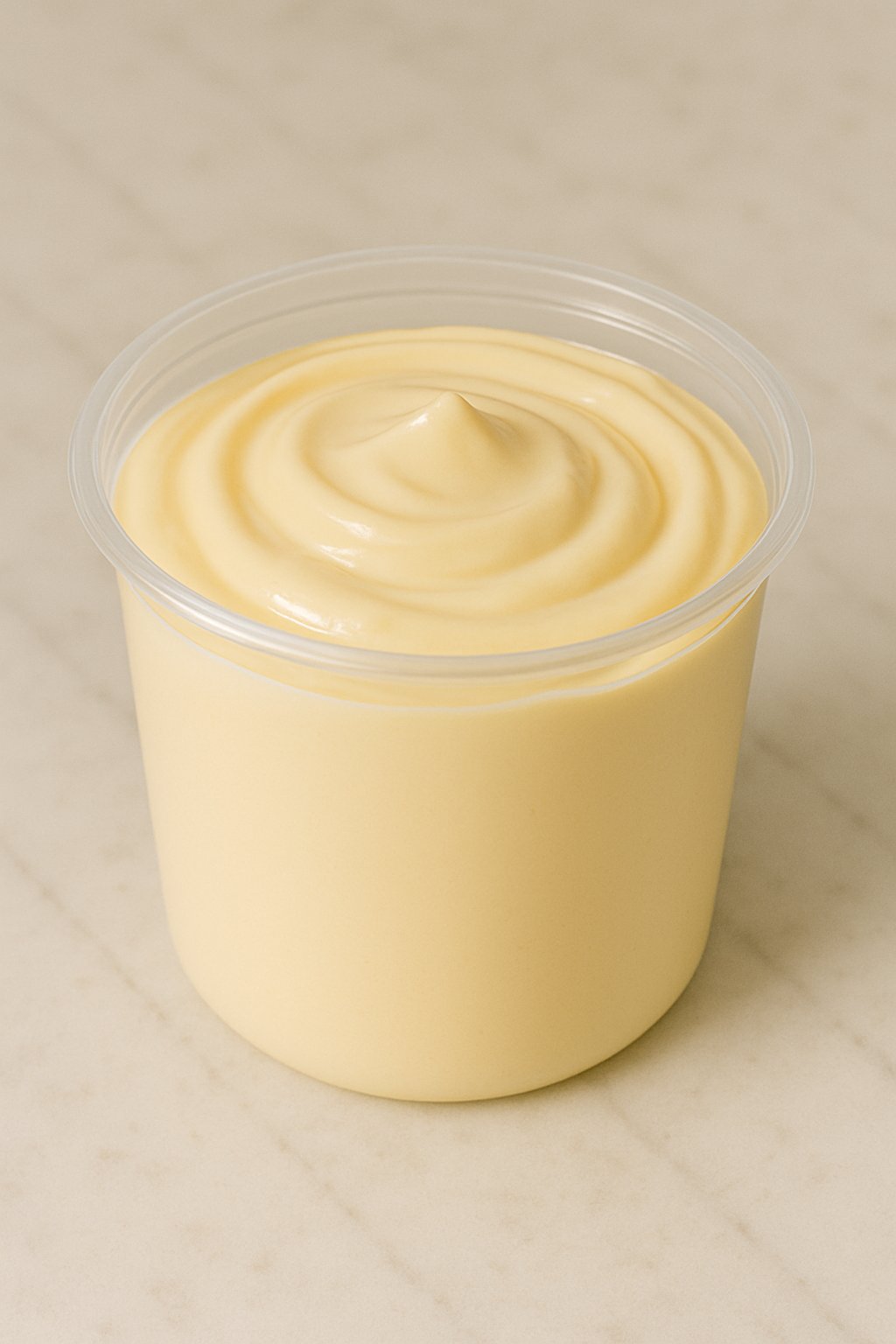
  • as spreadable cheese in a tub,
  • as slices in resealable packs,
  • in cubes or sticks (convenient for cooking).
In larger cities and well stocked markets there are multiple brands and flavours
Details & nutrition

Property Value
Unit g
Average weight per piece 25
Calories per 100 220
Protein per 100 16
Carbohydrates per 100 5
Sugar per 100 3
Fat per 100 14
Saturated fat per 100 9
Monounsaturated fat 3
Polyunsaturated fat 0.5
Fiber per 100 0
Vitamin C (mg) per 100 0
Vitamin D (IU) per 100 40
Calcium (mg) per 100 600
Iron (mg) per 100 0.2
Nutri-Score D
CO₂ footprint 4.5 kg CO2e/kg
Origin EU
Gluten-free Yes
Lactose-free No
Nut-free Yes
Vegan No
Note Processed cheese with melting salts; may contain added salt and stabilizers depending on manufacturer.

Technical & scientific information

Processed cheese 20% fat in dry matter denotes a standardized cheese preparation whose fat content relative to the dry matter is twenty percent. In food technology, processed cheese belongs to the group of thermally treated cheese products made from one or more matured natural cheeses, milk components and optional additives using melting salts. The defined fat content in dry matter (fat in d.m.) allows for precise classification under European and German food law, enabling the consumer to better assess the product’s consistency, taste and nutritional profile.

Definition and legal classification
Processed cheese is a refined product produced by heating and emulsifying cheese with melting salts. The designation “20% fat in d.m.” indicates a low‑fat to partially skimmed character. In the EU processed cheese is subject to the requirements of Regulation (EU) No 1308/2013 and complementary national guidelines. Minimum requirements concern the cheese proportion, permissible additives, physico‑chemical parameters and the labelling of the fat level, so that product quality and consumer transparency are ensured.

Manufacture and process parameters
Production is based on starting cheeses such as Gouda, Edam, Emmental or blends, often of different maturity levels, to achieve a balanced aroma and protein spectrum. Chopped cheese is homogenized in a vacuum melting unit with water or milk, milk protein fractions and melting salts (typically sodium phosphates, citrates). Process temperatures generally range between 75 and 95 °C, with holding times of a few minutes to ensure protein restructuring, microbiological control and emulsion stability. The heating denatures whey proteins, hydrates cheese proteins and enables the melting salts to complex calcium from casein micelles. This causes the micelles to partially dissolve, regulating viscosity and producing a stable fat‑in‑water emulsion. Fine tuning of pH (typically 5.4–5.9), ion concentration and shear energy is critical for

Wiki entry for: processed cheese 20% fat in dry matter
Active now: 24 visitors of which 2 logged-in members in the last 5 minutes