Menu & categories

Potato

Starchy tuber with versatile uses in the kitchen

Wiki about potato Nutri-Score A Vegan Yes Gluten-free Yes Lactose-free Yes Nut-free Yes
NUTRITION / 100 g
77 kcal 2.0 g Protein 17.0 g Kohlenhydrate 0.1 g Fett

Introduction

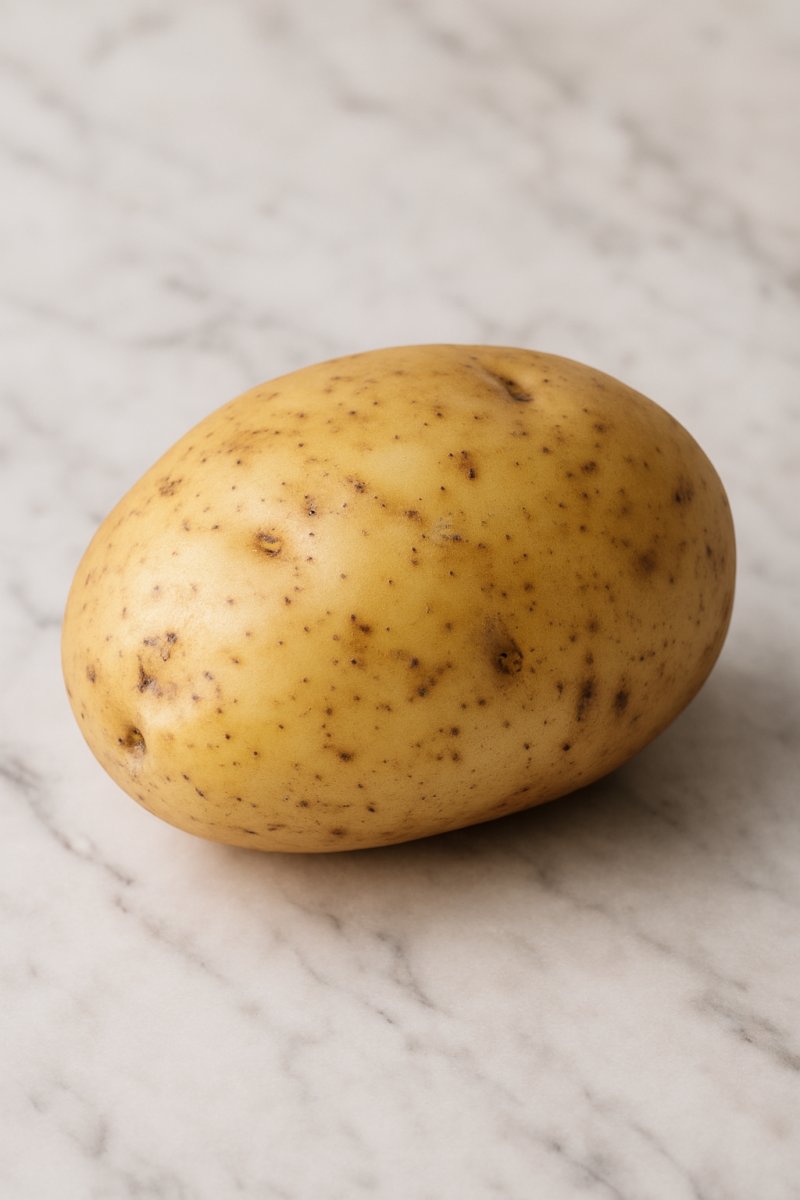
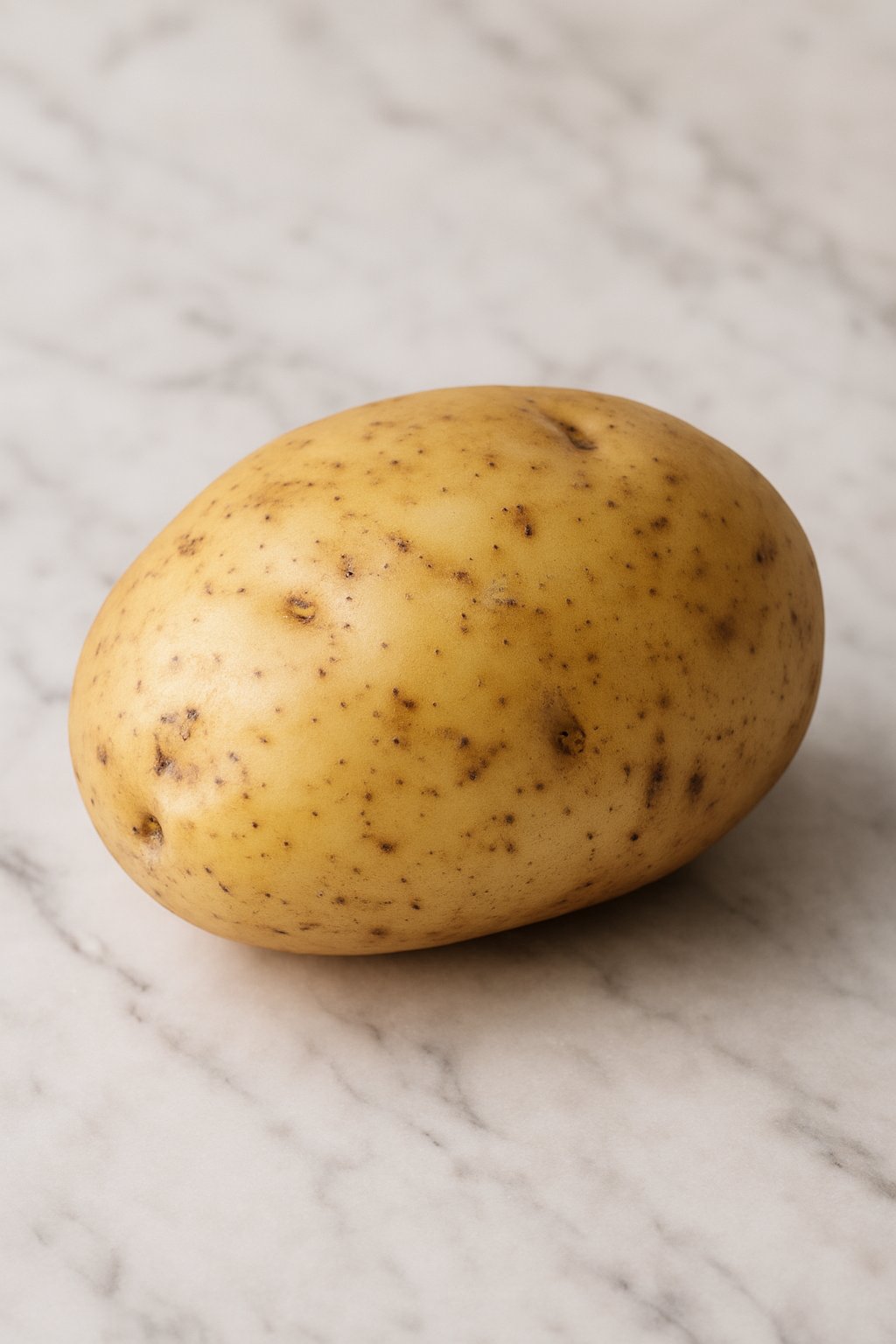
Fresh potatoes with skin
I still remember the smell of freshly baked potatoes from my neighbor's kitchen: it was earthy, warm and somehow comforting. Since then I have felt connected to every potato, as if it were an old acquaintance that holds surprises in every form. The potato accompanies me from simple family meals to experimental evenings with friends, and each time I discover new facets of this unassuming wonder tuber.

What fascinates me about the potato is its transformative nature. It can come velvety and mashed, crispy and golden in the oven or rustic as a jacket potato on the plate. A colleague of mine still swears by salted-butter potatoes after a long day at work; the thought of them regularly makes me weak. The potato is not only versatile in taste but also resilient: it grows almost everywhere, stores well and brings an impressive nutrient density.

Over the years I have developed a number of small rituals to showcase potatoes particularly well. These include thoroughly scrubbing rather than peeling to preserve flavor, and par-cooking before frying so the interior stays tender and the crust becomes crisp. One tip: when mashing, add a little hot cooking liquid – that makes the texture silky.

The cultural significance of the potato is also notable. While traveling I have seen how it belongs on family tables everywhere: as a stew in a mountain village, as a salad at a city festival or as crispy fries on a nocturnal stroll through the city center. This versatility makes it a reliable companion in the kitchen and everyday life.

For me the potato remains a symbol of both down-to-earth simplicity and creativity. It allows me, with few ingredients, to conjure something familiar yet new. Every time I peel a potato or cut it into quarters, I look forward to the moment when simple ingredients merge into a dish that comforts and delights at the same time.

Availability & types

Availability and types

The potato is one of the world's most popular ingredients. Originally from the Andes in South America, it was cultivated thousands of years ago and later brought to Europe, Africa and Asia by explorers and traders. Today it is grown almost everywhere because it can be adapted to many climates and soil types.

The main growing regions are:

  • Europe – Countries such as Germany, Poland, the Netherlands and France grow many potatoes. In these regions potatoes are a staple food.
  • North America – Especially the USA and Canada produce large quantities, often for fresh markets and for the food industry (e.g., fries or chips).
  • South America – In Peru and Bolivia there are still many old varieties that grow in the mountains.
  • Asia – Countries like China and India have large cultivation areas because many people there eat potatoes.
  • Africa – Especially in South Africa, Egypt and Morocco potatoes are cultivated, often in regions with sufficient water.
When buying or following recipes you will encounter different varieties and types of potatoes. They can broadly be divided into groups that differ in shape, size, color and especially starch content. The starch determines whether a potato is more likely to fall apart or remain firm during cooking.

  • Waxy (firm-cooking) potatoes: These stay nicely firm when cooked and are good for salads, fried potatoes or gratins. A comparison: they are like small sponges that do not absorb much water and keep their shape.
  • All-purpose (medium-starch) potatoes: They lie between waxy and starchy. You can use them for almost anything – as a side dish, in stews or mashed.
  • Starchy (floury) potatoes: These fall apart when cooked and are ideal for purée, dumplings or soups because they become very soft. You can imagine them like soft bread that falls apart when soaked.
  • Special colors and shapes: Besides the usual yellow or white potatoes, there are varieties with red or blue skins or blue flesh. These are colorful and can make dishes especially attractive.
In addition to fresh produce, you can find potatoes in many forms in the store:

  • Fresh potatoes – loose or in nets. Look for firm skins without many sprouts or green spots.
  • Cut and ready-made products – like fries, potato sticks or croquettes, usually sold frozen.
  • Pre-cooked potatoes – peeled or in pouches, convenient when you need something quick.
  • Canned and dried products – potato flakes for purée or canned potatoes, which are long-lasting.
It is important to know: potatoes are available year-round, but harvest times vary. Freshly harvested "early potatoes" are more tender and have thinner skins; storage potatoes are sturdier and can keep for several months. When buying potatoes you can ask or check the packaging to see if they are early or storage produce.

In summary: potatoes originate from South America, are now grown worldwide and come in many varieties – waxy, all-purpose and starchy, plus colorful specialty types. You can find them fresh, pre-cooked, frozen or as dried products. That way you can always find the right potato for the dish you want to cook.
Details & nutrition

Property Value
Unit g
Average weight per piece 150
Calories per 100 77
Protein per 100 2.0
Carbohydrates per 100 17.0
Sugar per 100 0.8
Fat per 100 0.1
Saturated fat per 100 0.0
Monounsaturated fat 0.0
Polyunsaturated fat 0.0
Fiber per 100 2.2
Vitamin C (mg) per 100 20
Vitamin D (IU) per 100 0
Calcium (mg) per 100 12
Iron (mg) per 100 0.8
Nutri-Score A
CO₂ footprint 0.2
Origin Worldwide, commonly Europe
Gluten-free Yes
Lactose-free Yes
Nut-free Yes
Vegan Yes
Note Nutritional values refer to raw potatoes with skin; average household value.

Technical & scientific information

Potato (Solanum tuberosum) is a starchy tuber and belongs to the nightshade family. As a cultivated plant it has worldwide importance as a staple food. Botanically, the potato is a shoot organ (tuber) that stores nutrient reserves in the form of starch and serves as an overwintering organ in vegetative propagation. Cultivated and breeding forms differ in size, shape, skin color and starch content.

Chemical composition and constituents: Composition varies with variety, growing conditions and storage; typical average values (based on raw table potato, 100 g) are:

  • Water: 75–80 g – main component, influences texture and weight.
  • Carbohydrates: 15–20 g – mostly as starch (approx. 12–18 g) and small amounts of free sugars (glucose, fructose, sucrose).
  • Dietary fiber: 1–2 g – largely cell wall components such as cellulose and pectins.
  • Protein: 1.5–2 g – low but with a high-quality amino acid profile for a tuber.
  • Fat: < 0.5 g – negligible in the raw state.
  • Vitamins and minerals: Vitamin C (approx. 10–20 mg), B vitamins (especially B6), potassium (approx. 300–450 mg), magnesium, phosphorus and small amounts of iron.
  • Secondary plant compounds: Phenolic compounds, carotenoids (in yellow/orange varieties), anthocyanins (in purple varieties) and alkaloids such as solanine and chaconine in low concentrations.
Starch physics and chemistry: Potato starch consists of two polymer fractions: amylose (linear) and amylopectin (branched). The ratio influences cooking properties and texture; varieties with a higher amylose content tend to produce looser, less sticky structures. When heated in water, starch swells (gelatinization) and forms gels that are sensitive to cooling-induced recrystallization (retrogradation), which determines cut texture of the tuber and aging processes in processed products.

Processing and culinary application: Potatoes are eaten raw (rarely), boiled, baked, fried, made into purée or further processed into starch, flakes and chips. Processing steps include peeling, cutting, par-cooking, drying and starch extraction. Industrial starch production uses wet milling, centrifugation and drying. Thermal treatment affects nutrient values: boiling in water reduces soluble vitamins, while roasting or frying increases fat content and calories considerably.

Health aspects: Potatoes provide rapidly available energy from starch and are a source of essential micronutrients, particularly potassium and vitamin C. High consumption of highly processed potato products (fried or fat-prepared snacks) is associated with increased energy and trans fat intake and can promote weight gain. Alkaloids present, such as solanine, can increase with light exposure or damage; green spots and sprouts should be removed because high doses can be toxic. Glycemic load varies greatly depending on variety and preparation; long-cooked and cooled potatoes develop resistant starch, which has prebiotic properties and can support gut health.

Storage and quality: Storage conditions influence sprouting, starch breakdown and nitrate formation. Tubers stored cool, dark and dry retain their quality; however, very low temperatures (below ~4 °C) convert starch into sugars, which leads to increased browning on heating (Maillard reaction). Pest- and disease-related changes (e.g., rot, sclerotinia-like infections) reduce quality and safety.

Environmental and agronomic aspects: Potato cultivation is sensitive to soil properties, water availability and diseases such as the Colorado potato beetle or Phytophthora infestans. Breeding and agronomic measures aim to increase yields, resistance to pathogens, better storability and optimized nutrient profiles. Sustainable cultivation practices consider crop rotations, soil protection and integrated pest management.

Overall, the potato is a versatile, nutrient-rich crop with complex chemical properties, whose nutritional benefits and technological processing depend strongly on variety, storage and preparation method.

Wiki entry for: potato
Active now: 21 visitors of which 2 logged-in members in the last 5 minutes