Menu & categories

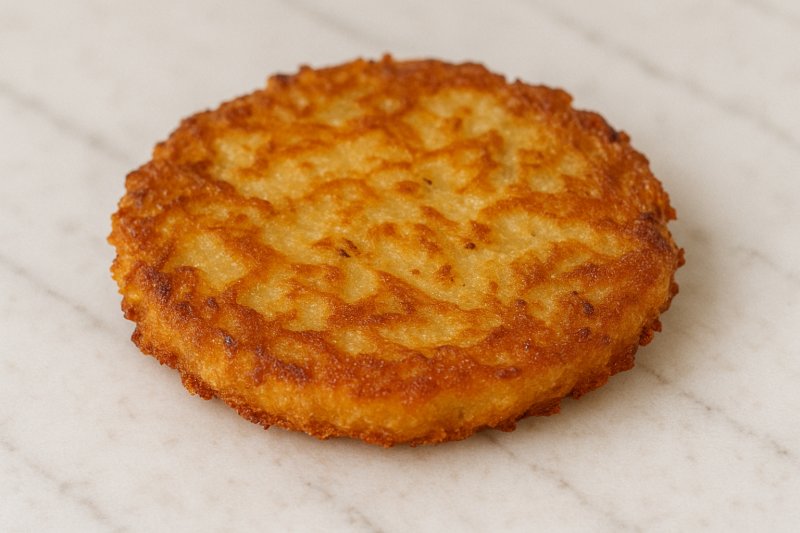
Potato pancakes

Savory pancakes made from grated potatoes, egg and flour

Wiki about potato pancake Nutri-Score C Vegan No Gluten-free No Lactose-free Yes Nut-free Yes
NUTRITION / 100 g
190 kcal 4 g Protein 24 g Kohlenhydrate 9 g Fett

Introduction

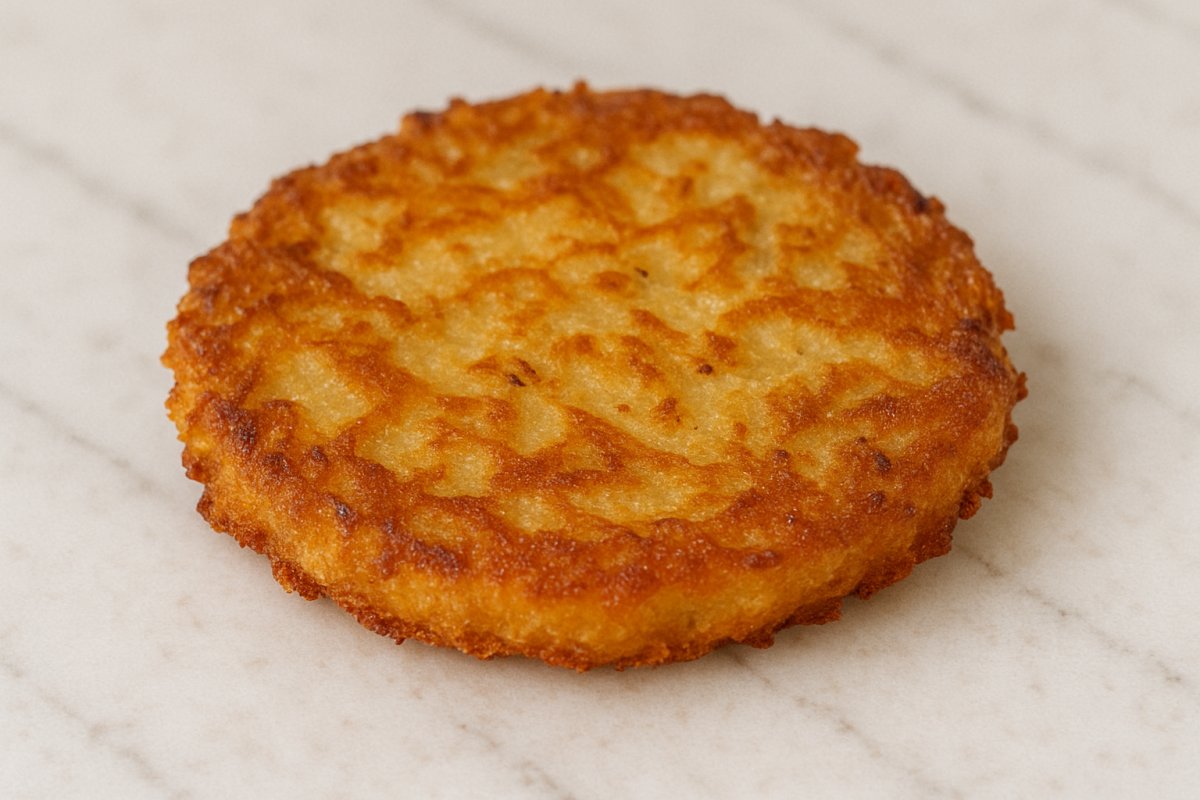
Several golden-brown fried potato pancakes on a plate
I love potato pancakes. For me they are something like a short culinary getaway: simple, rustic and surprisingly versatile. As a child, at home on weekends there was often the scent of freshly grated potatoes in the kitchen, and that smell still for me connects with coziness and the soft crackle of butter in the pan. A colleague once swore that the best potato pancakes only work with a pinch of nutmeg, while another friend insists that applesauce is the only true accompaniment. Both opinions have their merits, and exactly this variety makes the dish so exciting.

The base is simple: potatoes, onion, egg and flour or starch. Still, there is a lot of craft in this simplicity. I remember well an afternoon when I fiddled for hours with an old grater until the texture was perfect. I learned that it is not only the potato variety that matters, but also squeezing out the excess liquid. Too much moisture makes the batter sticky, too dry makes it crumbly — it is a balancing act that I can now master with pleasure.

What makes potato pancakes special for me are the small variations and stories that each preparation brings. Some favorite combinations that I repeatedly serve:

  • Autumn-spiced: Herbs and nutmeg, with a dollop of sour cream.
  • Sweet-traditional: Applesauce and cinnamon — a childhood favorite.
  • Modern: With smoked salmon and dill for an elegant note.
I love playing with toppings and side dishes, because potato pancakes are so transformable. You can serve them as simple home cooking, enjoy them as street food at markets or elevate them to a festive menu. A small anecdote: at a family celebration I once took a large pan full of pancakes, only to find that my aunt had already prepared her secret variant with buckwheat flour — in the end I stood beside her and learned how a tiny flour change can completely alter the taste.

In the end potato pancakes for me are more than just a recipe. They are memories, experiments and enjoyment in one. Every time I hear the first crispy edges, I know: it will be good.

Availability & types

Availability and types

Potato pancakes are a popular dish made from grated or mashed potatoes. They are known in many countries and easy to find. When we talk about availability we mean where and how you can obtain the ingredients or ready-made potato pancakes. We also talk about the different types or variants — that is, the different ways potato pancakes are prepared or sold.

Origin: Potato pancakes have their roots where the potato comes from: South America. The potato was cultivated there by people long ago and later brought to Europe. In Germany and other European countries potato pancakes became very popular because potatoes are cheap, nutritious and easy to store. One could say: potato pancakes are like an "old family recipe" that has changed a bit in many countries but everywhere preserves a similar basic feeling of crispy and savory.

Growing regions: Potatoes, the main ingredient of potato pancakes, grow almost everywhere in the world. Major growing regions are:

  • Europe: Especially in countries like Germany, Poland, the Netherlands and France. Many potatoes for food and industry are grown there.
  • North America: In the USA and Canada there are also huge potato fields, especially in cooler regions.
  • South America: The origin of the potato — countries like Peru and Bolivia have many different potato varieties.
  • Asia and Africa: Potatoes are also grown in many countries here, often in regions with suitable soils and climate.
Availability depends on season, region and purchasing options. Fresh potatoes and homemade potato pancakes are usually available in supermarkets, markets or from farmers. Ready, frozen potato pancakes can be found on many supermarket shelves — practical when you want something warm quickly.

Available kinds and variants: Potato pancakes are not all the same. There are many ways to make them. Here are some simple examples you can imagine as different "models":

  • Classic potato pancakes: Grated potatoes, often with onion, egg and a little flour, then fried in oil. Crispy on the outside, soft inside — this is the best-known variant.
  • Vegetarian and vegan variants: Instead of egg you use for example mashed banana, some water with flour or special egg replacers. This way they remain free of animal products.
  • With added vegetables: Some mix carrots, zucchini or pumpkin with the potatoes. It's like a colorful rainbow in the batter and changes the taste a bit.
  • Frozen ready pancakes: Practical for home: just put in the pan or oven. They have longer shelf life and are quick to prepare.
  • Regional variants: Different countries have their own versions — some are thicker, some thinner, some served with sweet (for example applesauce) and others with savory (like sour cream or salmon).
Imagine potato pancakes like shoe models: there is the simple sneaker version (classic), the vegan version (without leather/egg), colorful special models (with vegetables) and the ready-to-buy shoes (frozen). Whatever the kind, they are usually easy to find in many supermarkets or markets. That makes potato pancakes a very accessible everyday dish.
Details & nutrition

Property Value
Unit g
Average weight per piece 60
Calories per 100 190
Protein per 100 4
Carbohydrates per 100 24
Sugar per 100 1
Fat per 100 9
Saturated fat per 100 1.5
Monounsaturated fat 5
Polyunsaturated fat 2
Fiber per 100 2.5
Vitamin C (mg) per 100 8
Vitamin D (IU) per 100 0
Calcium (mg) per 100 20
Iron (mg) per 100 0.7
Nutri-Score C
CO₂ footprint 1.1
Origin Typical dish of German cuisine, common in Central Europe
Gluten-free No
Lactose-free Yes
Nut-free Yes
Vegan No
Note Nutritional values for potato pancakes fried in vegetable oil with egg and some wheat flour; exact values may vary depending on recipe, oil amount and side dishes.

Technical & scientific information

Potato pancakes are fried or fat-cooked patties made from grated potatoes, often bound with flour and egg. As an ingredient they are a processed potato-based product whose properties are largely influenced by the potato variety, water content, starch fraction and the binders used. Typical raw ingredients are raw potato mass, cooking oil or lard, table salt, occasionally onions as well as flour or potato starch and egg as binding agents.

Chemical composition and constituents
The main component is starch, a polysaccharide consisting of amylose and amylopectin. Raw potatoes contain depending on variety about 15–20% starch on a fresh weight basis; during grating and frying the starch composition changes due to moisture influence and heating. The water content of raw potatoes is typically between 75 and 80%, so the texture-forming processes during cooking strongly depend on water evaporation and starch gelatinization. In addition, potato pancakes supply small amounts of plant protein, fiber and micronutrients such as vitamin C, potassium and B vitamins, although heat treatment and air contact partially lead to losses, particularly of vitamin C.

Nutritional values (typical reference values, portion-dependent)

  • Calories: 200–350 kcal per 100 g finished product, depending on fat uptake during frying.
  • Macronutrients: Carbohydrates (mainly starch) 15–25 g/100 g; Fat 10–25 g/100 g; Protein 2–5 g/100 g.
  • Fiber: 1–3 g/100 g.
  • Minerals: High in potassium, also traces of magnesium, phosphorus and iron.
Processing methods and physical processes
Classic production includes peeling, grating, draining/pressing, mixing with binders and frying in hot fat. During grating cells are opened and starch is released; pressing removes excess water, improving browning and crispness during frying. During heating potato starch undergoes gelatinization: starch granules absorb water, swell and form a viscous gel which, when released and exposed to high temperature, leads to a changed texture. At the same time Maillard reactions and caramelization occur, which are responsible for brown color and aroma. Fat uptake depends on temperature, frying duration and the pancake's porosity; too low oil temperatures favor excessive oil penetration.

Sensory properties and structure
The desired texture is crispy on the outside and soft to slightly fibrous inside. Crispness is created by the formation of a dry, fat-saturated surface layer and by starch cross-linking processes near the surface. Internal moisture and the degree of starch gelatinization determine juiciness and bite; excessive dewatering leads to a dry structure, too little dewatering to an oily-soft product.

Health aspects
Potato pancakes are energy-dense due to their high fat content and frying preparation. Repeated heating of fats at high temperatures can lead to formation of oxidation products and trans fatty acids if low-quality fats are used or oils are overheated. At temperatures above about 120 °C traces of acrylamide can also form, a by-product of the Maillard reaction between asparagine and reducing sugars in starchy foods. Acrylamide levels can be reduced by selecting potato varieties with low reducing sugar content, shortening frying times, applying pre-treatments (e.g. blanching) and controlling frying temperature.

Optimization and variants
Technological adjustments serve to improve quality and reduce health risks: mixing with potato starch or flour to regulate water binding, use of eggs as emulsifiers and protein integrators, use of modern frying technology with temperature control to reduce oil uptake, and pre-treatments like blanching or soaking in lightly salted water to reduce reducing sugars. Industrial variants include pre-baked or pre-fried frozen products with specific additives to stabilize texture.

In summary, potato pancakes are a simple but technically interesting food product whose final quality depends on raw material selection, water and starch content, binders and the physical and chemical processes during heating. With conscious ingredient choices and controlled preparation it is possible to optimize sensory quality and nutrition-related risks in a reasonable balance.

Wiki entry for: potato pancake
Active now: 18 visitors of which 2 logged-in members in the last 5 minutes