Menu & categories

Potato dumpling dough

Potato-based dough for classic Klöße and Knödel.

Wiki about dumpling dough Nutri-Score C Vegan Yes Gluten-free Yes Lactose-free Yes Nut-free Yes
NUTRITION / 100 g
160 kcal 2.5 g Protein 33.0 g Kohlenhydrate 0.5 g Fett

Introduction

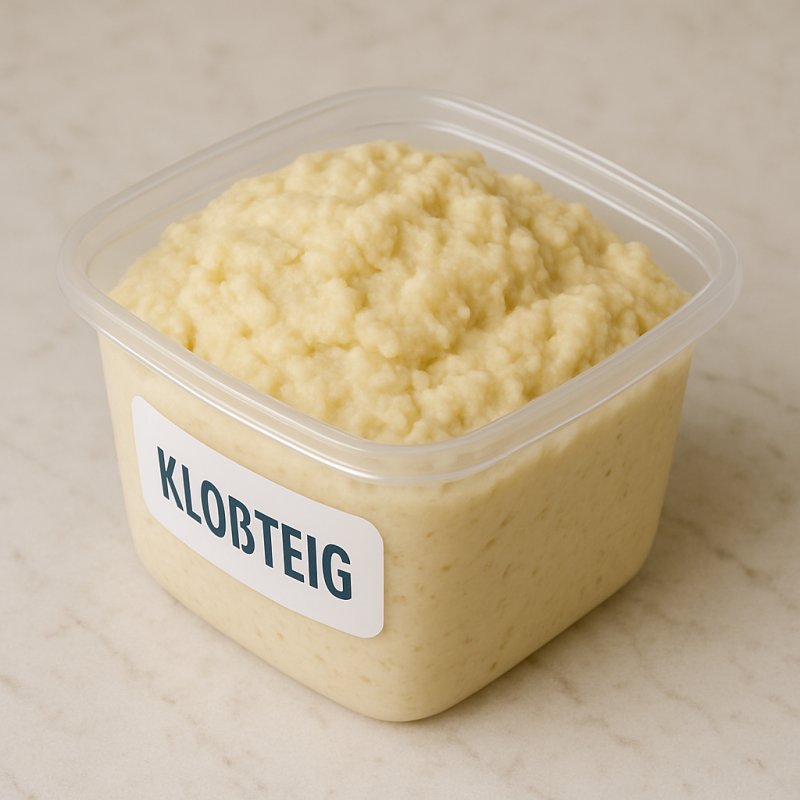
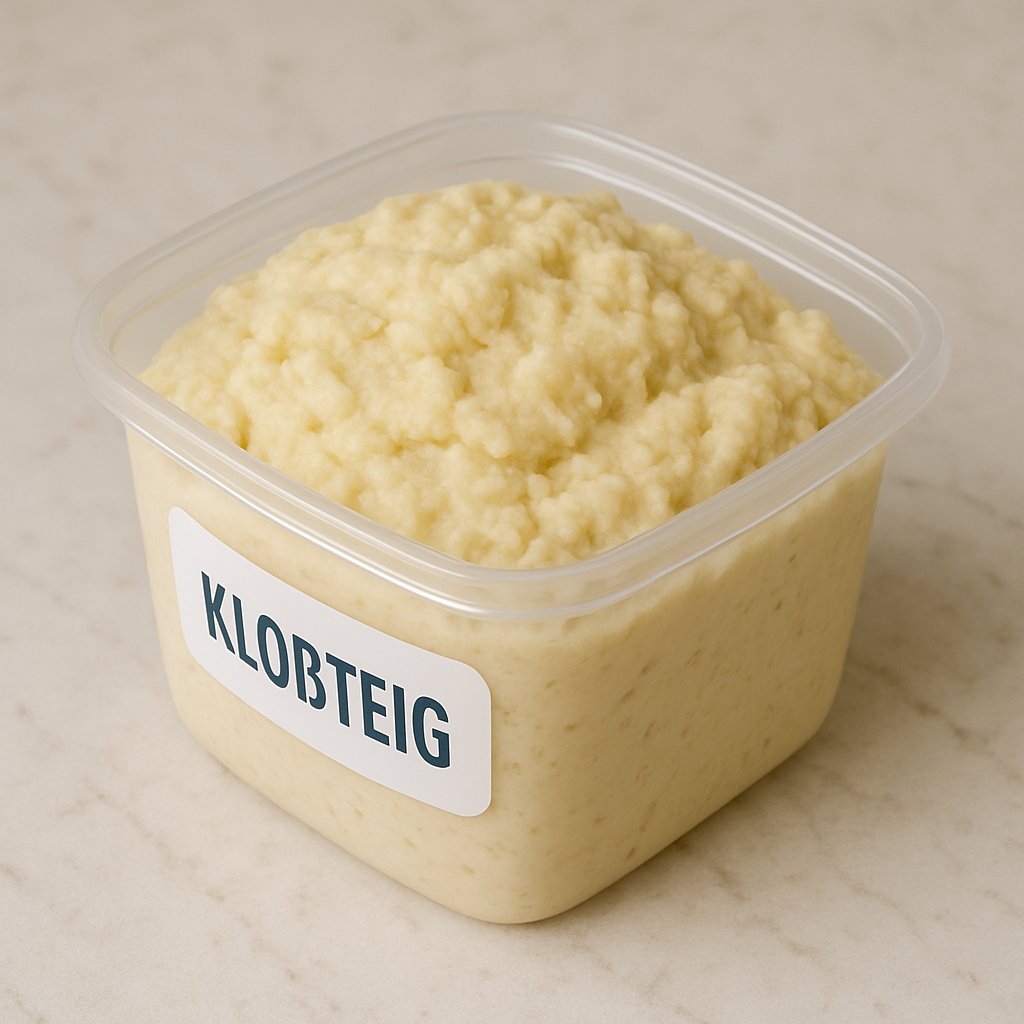
Raw piece of potato dumpling dough on a work surface
I love Kloßteig – this simple but so versatile ingredient that repeatedly creates little moments of happiness in my kitchen. When I think of Kloßteig, I don't just see a mixture of potatoes, flour and egg, but I remember rainy Sundays and the warm dumpling scent that came from the neighbor's apartment. A colleague of mine always claims that Kloßteig is the perfect remedy for homesickness; I think he's not entirely wrong.

Kloßteig comes in many varieties: from grated raw Kloßteig to cooked potato dough to ready-made mixes that sometimes make life immensely easier. What fascinates me is the balance between technique and feeling. If kneaded too firmly the dumpling becomes tough, too loosely and it falls apart while cooking. I once experimented by replacing part of the potatoes with sweet potatoes – a funny misunderstanding in the menu plan that nevertheless surprisingly delighted the guests.

For me a few small rules are indispensable when handling Kloßteig:

  • Choice of potato: waxy or predominantly waxy for cohesive doughs, floury for classic potato dumplings.
  • The consistency: Not too wet, otherwise the dough becomes sticky; an egg helps with binding.
  • Resting time: Let rest briefly, then shape – that makes the dumplings more stable.
I like to fill Kloßteig with herbs, fried onions or a core of bacon. Once I accidentally rolled dumplings that were too big; they looked like small planets, but tasted excellent. I prefer to serve my dumplings with braised dishes or simply with melted butter and nutmeg.

Whether improvised from leftover potatoes or lovingly prepared by hand: Kloßteig is for me a piece of nostalgic cooking that warms both heart and plate.

Availability & types

Availability and types of Kloßteig

Kloßteig is the ready mix from which you form Klöße or Knödel. It is usually based on potatoes, but sometimes on bread, flour or semolina. Its history goes far back: in many regions of Central Europe, for example in Germany, Austria and the countries of Eastern Europe, Klöße have been eaten for centuries. Originally people made dumplings from what they had on the farm – potatoes, bread or milk – and thus many different types arose.

Where do the ingredients come from?
The most important ingredient is often the potato. Potatoes grow in fields in many countries – in Germany, Poland, the Netherlands and many other parts of Europe. They are harvested in late summer and autumn, but because they can be stored well, Kloßteig is practically available all year round. Some Kloßteig mixes also contain flour or breadcrumbs (i.e. dried, crumbled rolls). These ingredients usually come from near the factories or from regional bakeries.

How and where can you buy Kloßteig?

  • Fresh in the chilled section: Many supermarkets sell vacuum-packed or refrigerated packages of fresh Kloßteig.
  • Frozen: Ready frozen dumplings or Kloßteig that you thaw and shape.
  • Dry mixes: Powders or dried mixes in bags that you mix with water, egg or milk.
  • Homemade: You can mash raw or cooked potatoes at home and mix with ingredients – this is often the freshest option.
The main types of Kloßteig
Here are the common variants, explained simply:

  • Raw potato Kloßteig: This is made from raw, grated potatoes. It is very fine and elastic and is often used for dumplings with a smooth exterior.
  • Cooked potato Kloßteig: Made from cooked potatoes. It is softer and has a slightly creamy taste – good for traditional, hearty dumplings.
  • Thuringian Klöße: A specialty with coarse potato pieces inside. Many like them because the small potato pieces are like surprises in the dumpling.
  • Semmelknödel/bread-based Kloßteig: Here bread (rolls) is used. This is practical when you want to use up old bread; the taste is savory and slightly spiced.
  • Flour- or semolina dumplings: For these, flour or semolina is mixed with water and egg. They are simple and quick to prepare.
  • Ready seasoned variants: You can also find Kloßteig with herbs, bacon pieces or even gluten-free ingredients for people who cannot tolerate gluten.
In summary: Kloßteig comes in many forms and can be bought almost everywhere – fresh, frozen or as a dry mix. Which type you choose depends on how you like your dumpling: smooth or chunky, made from potatoes or from bread, quick to prepare or homemade. So almost everyone finds the right variant for their dinner.
Details & nutrition

Property Value
Unit g
Calories per 100 160
Protein per 100 2.5
Carbohydrates per 100 33.0
Sugar per 100 1.0
Fat per 100 0.5
Saturated fat per 100 0.1
Monounsaturated fat 0.1
Polyunsaturated fat 0.2
Fiber per 100 2.0
Vitamin C (mg) per 100 5
Vitamin D (IU) per 100 0
Calcium (mg) per 100 12
Iron (mg) per 100 0.6
Nutri-Score C
CO₂ footprint 0.04
Origin Germany/Europe
Gluten-free Yes
Lactose-free Yes
Nut-free Yes
Vegan Yes
Note Nutritional values may vary depending on the recipe (e.g. with/without wheat flour, half-and-half, addition of starch).

Technical & scientific information

Kloßteig in German cuisine refers to the dough-like ingredient used to make Klöße or Knödel. It is made either fresh from cooked or raw potatoes together with flour and eggs or offered as industrial dry and instant mixes. In both variants the physico-chemical basis is the property of potato starch to swell and form gels when heated, which produces the characteristic elastic to slightly granular texture of dumplings.

Composition and ingredients
Typical components of Kloßteig are:

  • Potato components (grated raw potatoes, cooked and mashed potatoes, potato starch or potato flour). These provide mainly starch (amylose and amylopectin), some fiber, small amounts of protein and minerals such as potassium.
  • Cereal flours (mostly wheat flour, occasionally rye or spelt), which supply starch, proteins (especially gluten) and contribute to binding and structure.
  • Eggs serve as emulsifiers, provide additional protein and fat and improve binding and smoothness of the dough.
  • Salt, spices and sometimes fat (butter or lard) for flavor and mouthfeel.
  • In industrial mixes there can be stabilizers, anti-caking agents (e.g. maltodextrin), leavening aids and preservatives to ensure storage stability and flowability.
Chemical and techno-functional aspects
The most important chemical reaction when making dumplings is starch gelatinization. On heating, starch takes up water, the granules swell and amylose diffuses out of the granules, producing a viscous gel. The relative proportions of amylose and amylopectin influence texture and retrogradation: a higher amylose content promotes firm, sliceable dumplings, while amylopectin yields softer, more elastic structures. Added flour leads to formation of a gluten network that increases dough strength; excessive kneading activates gluten too strongly and can make dumplings tough. Eggs supply lecithins, which act as natural emulsifiers stabilizing fat and water phases.

Preparation and processing steps
Common processing methods are:

  • Production from cooked potatoes: Potatoes are cooked, mashed and mixed with flour and egg. This method yields creamy, uniform dumplings.
  • Production from raw potatoes: Raw potatoes are grated and drained; the remaining starch fractions are processed with further ingredients into dough. These dumplings are often fluffier with a slight graininess.
  • Instant mixes: Dehydrated potato products are combined with dry binding agents and additives. Drying and milling fineness affect rehydration and texture after cooking.
Nutritional values and health aspects
Kloßteig is predominantly carbohydrate-rich. A typical, fully prepared Kloßteig yields dumplings with about 150–220 kcal per 100 g (depending on the recipe), usually 30–45 g carbohydrates, 3–8 g protein, 0.5–5 g fat and 1–3 g fiber. Allergens can be wheat (gluten) and egg; however, gluten-free variants based on potato starch and rice flour exist. Due to the high proportion of rapidly available starch, dumplings have a medium to high glycemic index, so portion size and accompaniments (protein, fat, fiber) are relevant for blood sugar management.

Storage and food safety
Fresh Kloßteig contains a lot of free water and is microbiologically perishable; it should be refrigerated or frozen. Instant mixes are longer shelf-stable due to dryness, but can absorb moisture and clump if stored improperly. When cooking it is important that dumplings cook at low to medium heat just below the boiling point to avoid disintegration and achieve the desired consistency.

Kloßteig combines simple ingredients with complex physico-chemical processes; understanding starch behaviour, gluten formation and water binding helps both in traditional recipes and in industrial mixes to deliberately influence texture, shelf life and nutritional properties.

Wiki entry for: dumpling dough
Active now: 18 visitors of which 2 logged-in members in the last 5 minutes