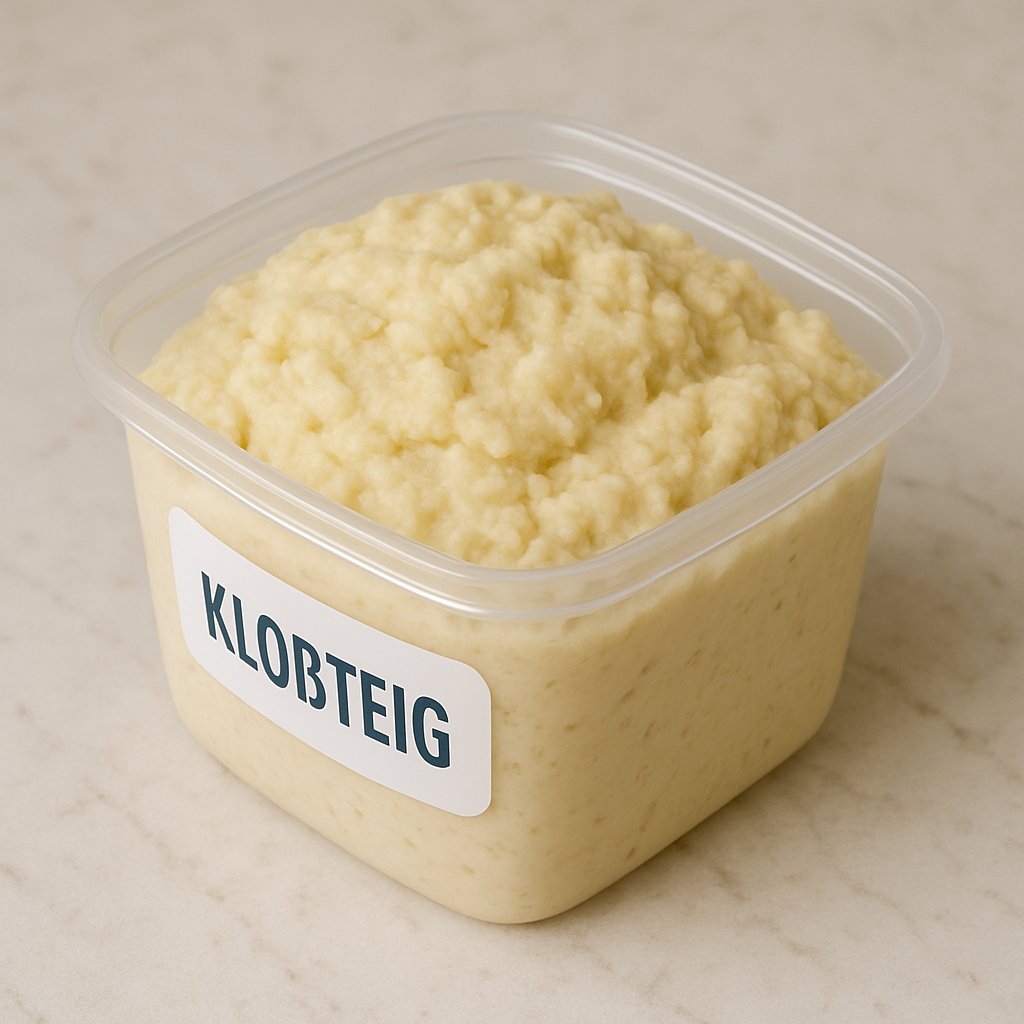
Availability and types of Kloßteig
Kloßteig is the ready mix from which you form Klöße or Knödel. It is usually based on potatoes, but sometimes on bread, flour or semolina. Its history goes far back: in many regions of Central Europe, for example in Germany, Austria and the countries of Eastern Europe, Klöße have been eaten for centuries. Originally people made dumplings from what they had on the farm – potatoes, bread or milk – and thus many different types arose.
Where do the ingredients come from?
The most important ingredient is often the potato. Potatoes grow in fields in many countries – in Germany, Poland, the Netherlands and many other parts of Europe. They are harvested in late summer and autumn, but because they can be stored well, Kloßteig is practically available all year round. Some Kloßteig mixes also contain flour or breadcrumbs (i.e. dried, crumbled rolls). These ingredients usually come from near the factories or from regional bakeries.
The most important ingredient is often the potato. Potatoes grow in fields in many countries – in Germany, Poland, the Netherlands and many other parts of Europe. They are harvested in late summer and autumn, but because they can be stored well, Kloßteig is practically available all year round. Some Kloßteig mixes also contain flour or breadcrumbs (i.e. dried, crumbled rolls). These ingredients usually come from near the factories or from regional bakeries.
How and where can you buy Kloßteig?
- Fresh in the chilled section: Many supermarkets sell vacuum-packed or refrigerated packages of fresh Kloßteig.
- Frozen: Ready frozen dumplings or Kloßteig that you thaw and shape.
- Dry mixes: Powders or dried mixes in bags that you mix with water, egg or milk.
- Homemade: You can mash raw or cooked potatoes at home and mix with ingredients – this is often the freshest option.
The main types of Kloßteig
Here are the common variants, explained simply:
Here are the common variants, explained simply:
- Raw potato Kloßteig: This is made from raw, grated potatoes. It is very fine and elastic and is often used for dumplings with a smooth exterior.
- Cooked potato Kloßteig: Made from cooked potatoes. It is softer and has a slightly creamy taste – good for traditional, hearty dumplings.
- Thuringian Klöße: A specialty with coarse potato pieces inside. Many like them because the small potato pieces are like surprises in the dumpling.
- Semmelknödel/bread-based Kloßteig: Here bread (rolls) is used. This is practical when you want to use up old bread; the taste is savory and slightly spiced.
- Flour- or semolina dumplings: For these, flour or semolina is mixed with water and egg. They are simple and quick to prepare.
- Ready seasoned variants: You can also find Kloßteig with herbs, bacon pieces or even gluten-free ingredients for people who cannot tolerate gluten.
In summary: Kloßteig comes in many forms and can be bought almost everywhere – fresh, frozen or as a dry mix. Which type you choose depends on how you like your dumpling: smooth or chunky, made from potatoes or from bread, quick to prepare or homemade. So almost everyone finds the right variant for their dinner.