Menu & categories

Potash

Traditional leavening agent for gingerbread and heavy doughs.

Wiki about potash Nutri-Score A Vegan Yes Gluten-free Yes Lactose-free Yes Nut-free Yes
NUTRITION / 100 g
0 kcal 0 g Protein 0 g Kohlenhydrate 0 g Fett

Introduction

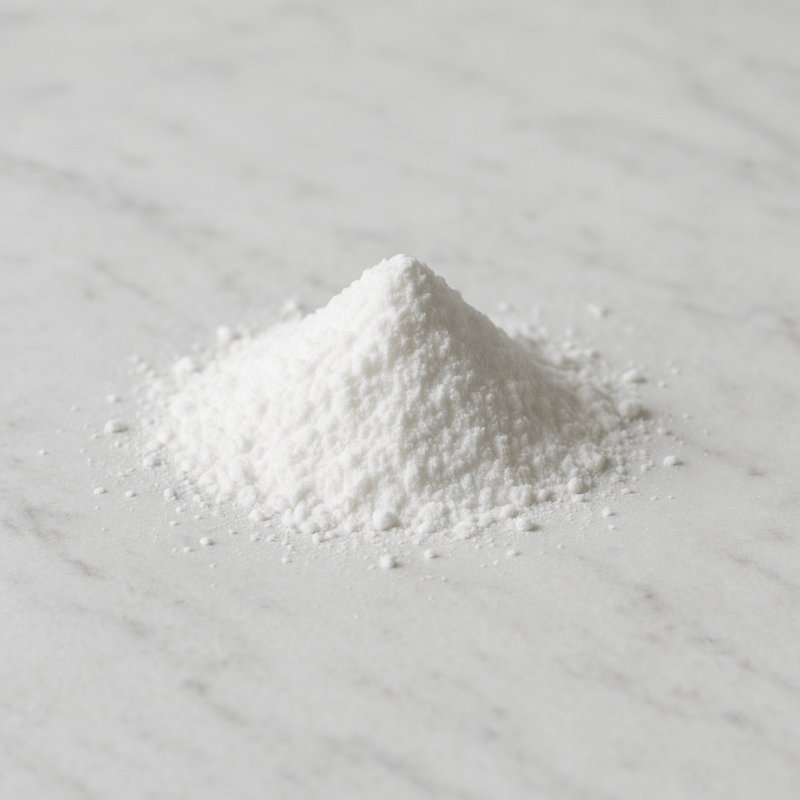
Potash (potassium carbonate) as a white powder in a bowl
I love small, surprising ingredients, and potash is one of them for me because it starts so inconspicuously and then opens whole flavor worlds when baked. Potash is essentially potassium carbonate, more precisely potassium carbonate, and it has a long, almost mythical history: it was once obtained from wood ash in pots, hence the name. I still remember a dusty glass jar in a friend's kitchen that she called "Grandma's secret ingredient," and how skeptical I was until a bite of her gingerbread changed my mind.

In the kitchen, potash acts mainly as a mild lye and leavening aid. It helps doughs develop a particular texture that is crispy on the outside and tender inside. That is why potash is still used in traditional recipes like gingerbread, some Christmas cookies, and certain nut pastries. A colleague of mine swears that the right amount of potash is the difference between "nice" and "legendary."

Apart from baking, potash has historically played many roles. It was used in soap and glass making and found wide application in craft processes. Today it is produced industrially and is permitted as a food additive in very small amounts when declared food-grade.

  • Potash improves browning and texture in certain traditional baked goods.
  • It historically comes from wood ash; today it is mostly industrially produced.
  • Only food-grade potash should be used, and very sparingly.
  • As a mild lye it is alkaline but less caustic than pure sodium hydroxide.
My recommendation is always to respect the ingredient list and measure exactly, because potash's effect is highly dose-dependent. I once used too much and the result was interesting, but not a gift to the taste buds. If you're curious, start with traditional recipes and try how a tiny pinch of old baking craft brings the past into the present.

Availability & types

Availability and types of potash

What is potash?
Potash is an old word for potassium compounds, especially potash carbonate (chemically: potassium carbonate, K2CO3). It used to be produced by leaching wood or plant ash with water and concentrating the liquid. Today potash is often produced industrially or sold as a specific product. It is known from the kitchen (e.g., in gingerbread), from soap or glass production, and as a component of various technical products.

Where does potash come from?
Historically: potash was produced by burning wood and treating the ash with water. That process yielded something like a concentrated juice that then crystallized. It was like cooking down a syrup: you reduced the liquid until something remained.
Modern: today potassium is mostly obtained from large mines or chemical processes. There are also different kinds of potassium products that have different names and uses.

Main mining and production regions (or producing countries)
Potash in the old sense does not grow – it is extracted. The main places where potassium is mined or produced in large quantities are countries with large salt and mineral deposits. These include:

  • Canada – in particular the province of Saskatchewan is a very large producer.
  • Russia and Belarus – there are large potash mines there.
  • Germany – regions with potash deposits also mine and process it locally.
  • China and Poland – also important producers.
What varieties and variants exist?
It is important to know that there are several related substances that often sound similar but are used differently. Simply put, the main variants are:

  • Food potash (potassium carbonate, K2CO3) – this is the variety used in specific baking recipes, for example for traditional gingerbread. It is fine and used in small amounts.
  • Potash lye (potassium hydroxide, KOH) – this is a strong lye, chemically very active. It is used in industry and sometimes in soap making, but it is not suitable for consumption.
  • Potash fertilizers (e.g., potassium chloride, KCl) – this is what farmers often call “potash.” It is used as a fertilizer in large quantities and is not a food product; it has different properties than the potash used for baking.
  • Technical and laboratory grades – for industry and science there are pure substances with different purities: "reagent" for labs, "technical" for industry and "food grade" for food use.
Where can you buy potash?
- Small amounts of food potash can be found in well-stocked baking shops, health food stores, or online.
- Technical or laboratory grades are available from chemical suppliers or specialized vendors.
- Potash fertilizers are sold at garden centers or agricultural suppliers.
Always pay attention to the designation: for baking use only food grade products, do not take anything from the large fertilizer bag or industrial lye into the kitchen.

In summary: potash has a long history from wood ash to modern chemistry. There are different types – from the small packet for gingerbread to the big bag of fertilizer – and the major producing countries are those with salt and potash deposits such as Canada, Russia, China or Germany. When buying, always check which type you need so it can be used safely and correctly.
Details & nutrition

Property Value
Unit g
Calories per 100 0
Protein per 100 0
Carbohydrates per 100 0
Sugar per 100 0
Fat per 100 0
Saturated fat per 100 0
Monounsaturated fat 0
Polyunsaturated fat 0
Fiber per 100 0
Vitamin C (mg) per 100 0
Vitamin D (IU) per 100 0
Calcium (mg) per 100 0
Iron (mg) per 100 0
Nutri-Score A
CO₂ footprint ca. 0,2 kg CO2e pro 100 g
Origin Industrially produced (potassium carbonate, E501), often from EU production
Gluten-free Yes
Lactose-free Yes
Nut-free Yes
Vegan Yes
Note Leavening agent (E501); usually dissolve in a little liquid before use; do not consume pure and use sparingly.

Technical & scientific information


Potash in food and chemical terminology primarily refers to potassium carbonate (chemical formula K2CO3), a basic crystalline substance that was historically obtained from wood ash. The term is used more broadly in industry and generally includes potassium-containing salts, but as a kitchen ingredient potash usually means the finely purified potassium carbonate. It appears as a white, hygroscopic powder that dissolves well in water and forms strongly alkaline solutions.

Chemical properties
Potassium carbonate is a salt of carbonic acid that increases hydroxide ions in aqueous solution and thus produces a high pH. It readily forms hydrates and reacts with acids, releasing carbon dioxide. Its strong basicity makes it reactive toward certain organic compounds, a property exploited in technical processes and food preparation.

Production and processing
Traditionally potash was produced by leaching wood or plant ash with water, evaporating the lye and crystallizing the residues. Industrially potassium carbonate is now mainly produced by converting potassium hydroxide (KOH) with carbon dioxide or by processing potassium-rich salts. For food use the product is further purified to minimize impurities and meet food regulation requirements.

Applications
In the kitchen potash is used as a traditional leavening and baking aid, particularly in certain gingerbread, cookie and pastry specialties. The basic reaction accelerates browning via the Maillard reaction, produces a thinner crust and gives a distinctive texture. Beyond food use, potassium carbonate is used in glass and soap manufacture, as a pH regulator, water softener and in certain industrial processes.

Nutritional values and physiological aspects
Potash primarily supplies potassium ions, an essential electrolyte for the body that plays a role in blood pressure regulation, nerve conduction and muscle function. In baked goods the actual amount of potassium supplied is very small, so potash does not provide significant nutritional value in terms of calories or macronutrients. The potassium content can become relevant with regular and high use, which is why typical recipe amounts should be followed.

Health and safety notes
In concentrated form potassium carbonate is strongly alkaline and irritating to skin, eyes and mucous membranes; it can have corrosive effects. For food use there are maximum permitted levels and purity requirements; in the European Union potassium carbonate is coded as a food additive and approved for certain applications. When used as intended in small amounts it is considered safe, while improper or excessive intake can potentially affect potassium balance, which can be problematic for patients with impaired kidney function.

Storage and handling
Potash should be stored dry, airtight and out of reach of children, as it is hygroscopic and absorbs moisture. When handling it, appropriate protective gloves and goggles are recommended to avoid skin and eye irritation. In recipes the amounts used are usually very small and following dosage instructions is sufficient to avoid health risks.

Summary
Potash is a historically important and technically versatile potassium salt that as potassium carbonate is used in small amounts in traditional baked goods because it influences color, texture and flavor. Chemically it is strongly alkaline, is widely used in industrial applications and does not pose an increased risk in its food-grade form when used properly. However, people with particular health conditions should be cautious about potassium intake.
Wiki entry for: potash
Active now: 18 visitors of which 2 logged-in members in the last 5 minutes