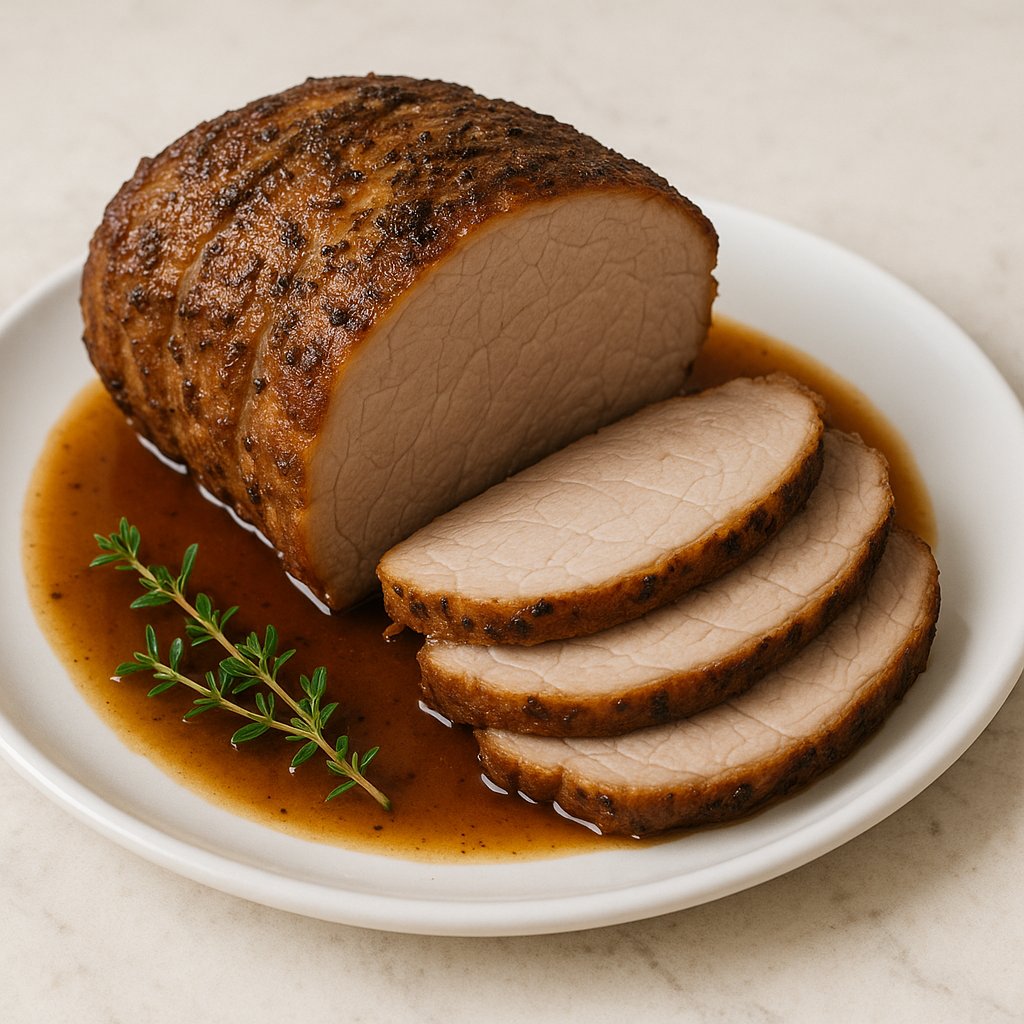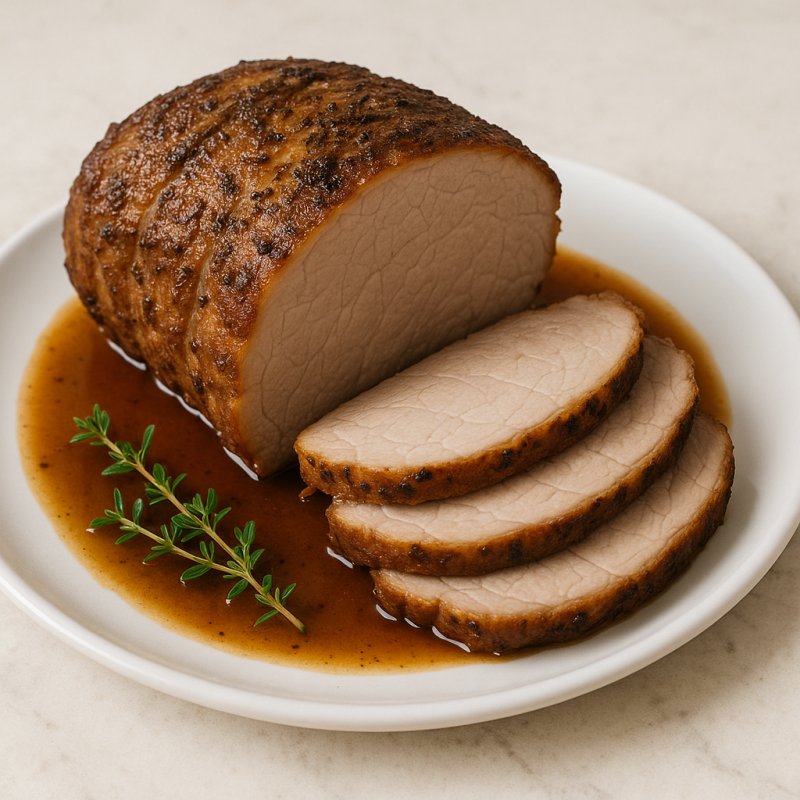
Availability and types of roast pork
Roast pork is a popular dish and the ingredient for it — pork — is widely available year-round in many countries. When talking about origin, this means where the animals were raised. Pigs are bred in many regions of Europe, for example in Germany (especially in states like Lower Saxony, North Rhine‑Westphalia, Bavaria or Schleswig‑Holstein), but also in countries like Denmark, Spain or Poland. Packaging often states which country the meat comes from, so you can see whether it is local or imported.
Growing areas is actually a word used for plants. For pigs one rather speaks of breeding or rearing regions. These regions have fields for feed crops like corn or barley, and farms that keep pigs. Some farms are small and sell directly at markets, others supply large slaughterhouses or supermarkets.
There are different types and variants of roast pork. Here are the main ones, simply explained:
- Pork loin – a lean cut, often tender and suitable for juicy roasts without much fat.
- Pork neck – slightly fattier, therefore very juicy; perfect if the roast should be very tender.
- Pork shoulder – well suited for slow-cooked roasts, it usually falls apart into fibres and has a very intense taste.
- Pork belly – contains a lot of fat and can develop a crispy rind, often called a crust roast.
- Suckling pig – a young, still small pig; the meat is very tender and is often roasted for special celebrations.
There are also different preparation and processing variants you can find in stores:
- Fresh – raw, ready for roasting.
- Marinated – the meat has already been rubbed with spices or sauces so it picks up flavor more quickly.
- Cured or smoked – the meat has been preserved with salt or smoked; a well-known example is Kasseler, which has a slightly salty, smoky flavor.
- Frozen – frozen, so it keeps longer and is available year-round.
Where can you get roast pork? Mostly at:
- Supermarkets – everywhere and often in various cuts.
- Butchers – there you can often specify exactly which cut you want and get expert advice.
- Farmers' markets or farm shops – here the meat often comes from the local area.
- Online butchers – today you can also order on the internet and have the roast delivered to your home.
Labels are also important: Organic means the animals had more space and often better feeding; free‑range means the pigs were able to move outdoors. These terms explain how the animals lived — similar to the difference between a small school and a very large school with a lot going on.
In short: roast pork is available in many variants and almost everywhere. You can choose between different cuts and processing types, and from that tell whether the meat comes from nearby or carries special labels like organic. That way you find the roast that best suits your taste and occasion.