Menu & categories

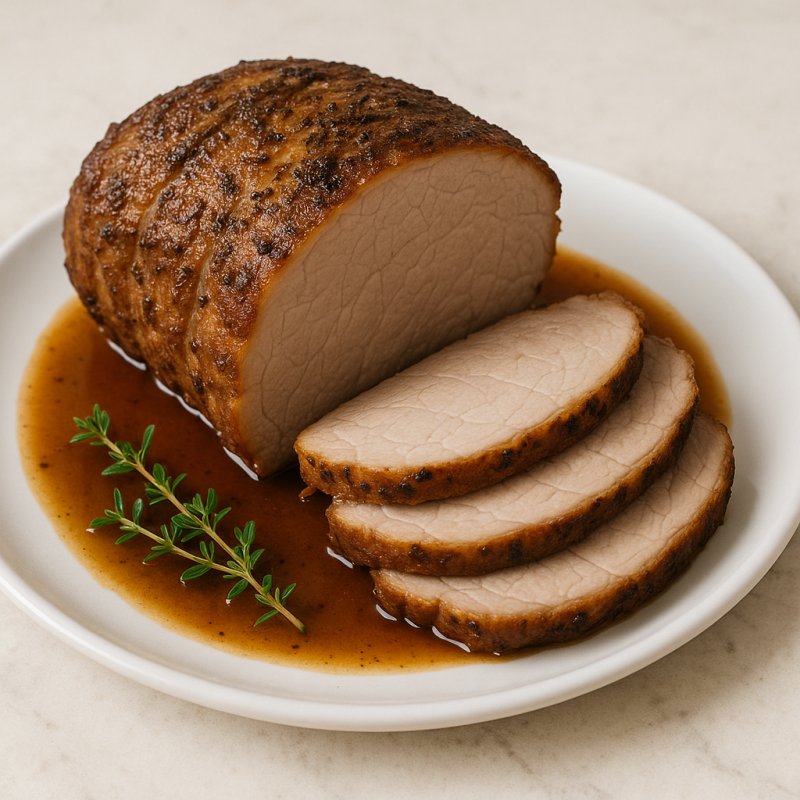
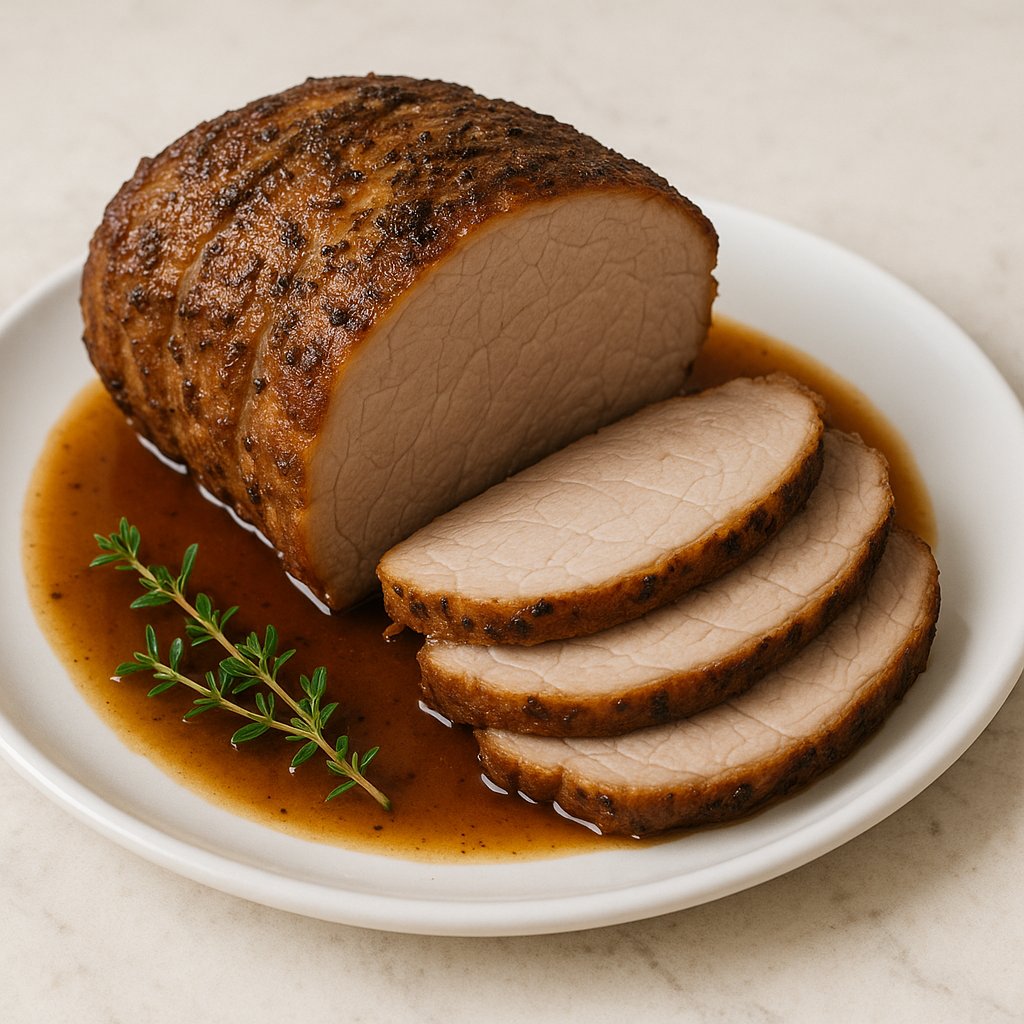
Pork roast

Hearty roast made from pork – juicy, high in protein and versatile.

Wiki about pork roast Nutri-Score D Vegan No Gluten-free Yes Lactose-free Yes Nut-free Yes
NUTRITION / 100 g
240 kcal 27 g Protein 0 g Kohlenhydrate 14 g Fett

Introduction

Pork roast as a roasted piece of pork
Roast pork for me is more than just a piece of meat in the oven; it is a Sunday ritual, a scent that evokes memories, and sometimes the solution for an unexpected visit. I still remember well the first time I tried to get a perfect crust: the neighbor knocked on the door when the roast was on the table and asked if she could stay – she stayed, and her surprisingly loud praises gave me the recipe for better self-confidence.

What fascinates me about roast pork is its versatility. Whether shoulder, neck or the classic crusted roast from the pork loin – each cut has its own character. The shoulder gives a juicy flavor, the neck provides tender fibers, and the rind needs patience and love to become crackling. A colleague of mine swears by an unusual mix of caraway and honey; I myself prefer a simple but effective combo of salt, pepper, garlic and a touch of paprika.

In preparation I have learned a few non-negotiable rules:

  • Score the rind in a crosshatch to get an even crust.
  • Allow the meat to reach room temperature before it goes into the oven.
  • Cook slowly and increase the heat strongly at the end to make the crust pop.
The side dishes bring as much joy as the roast itself. Dumplings, red cabbage or a simple mashed potato offer familiar harmony, while a fresh salad or applesauce provides the necessary contrast. Once I served a roast with orange sauce; the combination of a sweet citrus note and the savory meat was surprising but convincing.

Finally I love the moment when the sauce has reduced and the roast is carved. The quiet sizzle of the crust, the first cut through the juicy meat and enjoying it together are small rituals that show me each time anew why roast pork remains a classic that can be both comfort food and a feast.

Availability & types


Availability and types of roast pork

Roast pork is a popular dish and the ingredient for it — pork — is widely available year-round in many countries. When talking about origin, this means where the animals were raised. Pigs are bred in many regions of Europe, for example in Germany (especially in states like Lower Saxony, North Rhine‑Westphalia, Bavaria or Schleswig‑Holstein), but also in countries like Denmark, Spain or Poland. Packaging often states which country the meat comes from, so you can see whether it is local or imported.

Growing areas is actually a word used for plants. For pigs one rather speaks of breeding or rearing regions. These regions have fields for feed crops like corn or barley, and farms that keep pigs. Some farms are small and sell directly at markets, others supply large slaughterhouses or supermarkets.

There are different types and variants of roast pork. Here are the main ones, simply explained:

  • Pork loin – a lean cut, often tender and suitable for juicy roasts without much fat.
  • Pork neck – slightly fattier, therefore very juicy; perfect if the roast should be very tender.
  • Pork shoulder – well suited for slow-cooked roasts, it usually falls apart into fibres and has a very intense taste.
  • Pork belly – contains a lot of fat and can develop a crispy rind, often called a crust roast.
  • Suckling pig – a young, still small pig; the meat is very tender and is often roasted for special celebrations.
There are also different preparation and processing variants you can find in stores:

  • Fresh – raw, ready for roasting.
  • Marinated – the meat has already been rubbed with spices or sauces so it picks up flavor more quickly.
  • Cured or smoked – the meat has been preserved with salt or smoked; a well-known example is Kasseler, which has a slightly salty, smoky flavor.
  • Frozen – frozen, so it keeps longer and is available year-round.
Where can you get roast pork? Mostly at:

  • Supermarkets – everywhere and often in various cuts.
  • Butchers – there you can often specify exactly which cut you want and get expert advice.
  • Farmers' markets or farm shops – here the meat often comes from the local area.
  • Online butchers – today you can also order on the internet and have the roast delivered to your home.
Labels are also important: Organic means the animals had more space and often better feeding; free‑range means the pigs were able to move outdoors. These terms explain how the animals lived — similar to the difference between a small school and a very large school with a lot going on.

In short: roast pork is available in many variants and almost everywhere. You can choose between different cuts and processing types, and from that tell whether the meat comes from nearby or carries special labels like organic. That way you find the roast that best suits your taste and occasion.
Details & nutrition

Property Value
Unit g
Calories per 100 240
Protein per 100 27
Carbohydrates per 100 0
Sugar per 100 0
Fat per 100 14
Saturated fat per 100 5
Monounsaturated fat 6
Polyunsaturated fat 2
Fiber per 100 0
Vitamin C (mg) per 100 0
Vitamin D (IU) per 100 10
Calcium (mg) per 100 10
Iron (mg) per 100 1.0
Nutri-Score D
CO₂ footprint 0.6 kg CO2e/100 g
Origin Germany
Gluten-free Yes
Lactose-free Yes
Nut-free Yes
Vegan No
Note Nutritional values refer to cooked pork roast without breading; depending on the cut (e.g., shoulder, neck) and fat content, the values may vary.

Technical & scientific information

Roast pork in culinary terms refers to a joint of pork prepared and roasted in the oven. As an ingredient, roast pork is primarily animal muscle tissue with a characteristic composition of water, proteins, lipids and smaller amounts of carbohydrates, minerals and vitamins. Typical starting cuts are neck, shoulder, collar or loin; the chosen cut determines fat content, connective tissue content and thus texture after cooking.

Chemical and physical composition
Muscle proteins such as myosin and actin make up the largest part of the dry weight and provide essential amino acids with high biological value. The connective tissue consists mainly of collagen, which during slow cooking is partly converted into gelatin and thus influences tenderness and juiciness. Lipids are composed of triacylglycerols (neutral fats), phospholipids and cholesterol; the proportion varies greatly depending on the cut and butchery. On a dry basis pork typically contains 60–75% water. Minerals such as iron, zinc and phosphorus as well as B vitamins, especially thiamine (B1), niacin (B3) and B12, contribute to its nutritional significance.

Nutritional values (typical for roasted, trimmed pork, approx. per 100 g)

  • Calories: about 220–300 kcal, depending on fat content
  • Protein: around 25–30 g
  • Fat: about 10–20 g, of which saturated fatty acids 4–8 g
  • Cholesterol: approximately 60–90 mg
  • Sodium: strongly dependent on seasoning and brine
Processing and cooking chemistry
Several chemical processes occur during roasting. Proteins denature and coagulate, water is released and evaporates on contact with hot surfaces, allowing crust formation. The Maillard reaction between reducing sugars and amino acids creates typical roasted aromas and brown color compounds. Longer, moderate cooking leads to hydrolysis of collagen to gelatin, which makes meat more tender; very high temperatures can on the other hand lead to increased lipid oxidation and loss of aroma. Spices, marinades and salt influence water retention capacity and flavor as well as crust formation.

Food safety and health aspects
From a microbiological point of view reaching a sufficiently high core temperature is decisive to inactivate pathogens such as Salmonella, Yersinia or Toxoplasma. Modern recommendations for whole cuts often lie at least at 63 °C with a subsequent resting time; more conservative guidelines call for higher temperatures. High‑temperature cooking also produces in small amounts potentially problematic compounds such as heterocyclic aromatic amines (HCA) or polycyclic aromatic hydrocarbons (PAHs), whose formation can be reduced by shorter cooking times and less direct flame exposure. Roast pork provides high‑quality proteins and micronutrients, but due to its fat and cholesterol content should be consumed in moderation as part of a balanced diet.

Sensory and techno‑functional properties
The juiciness and texture of a roast pork depend on intramuscular fat, collagen content and the cooking protocol. Marinades, vacuum packing (sous‑vide) and controlled low‑temperature cooking are technical methods to improve tenderness and minimize water loss. The outer crust is formed by Maillard reactions and provides a large part of the flavor profile.

Overall, roast pork is a complex food system whose nutritional value, sensory properties and safety aspects can be deliberately influenced by cut selection, seasoning and cooking method.

Wiki entry for: pork roast
Active now: 20 visitors of which 2 logged-in members in the last 5 minutes