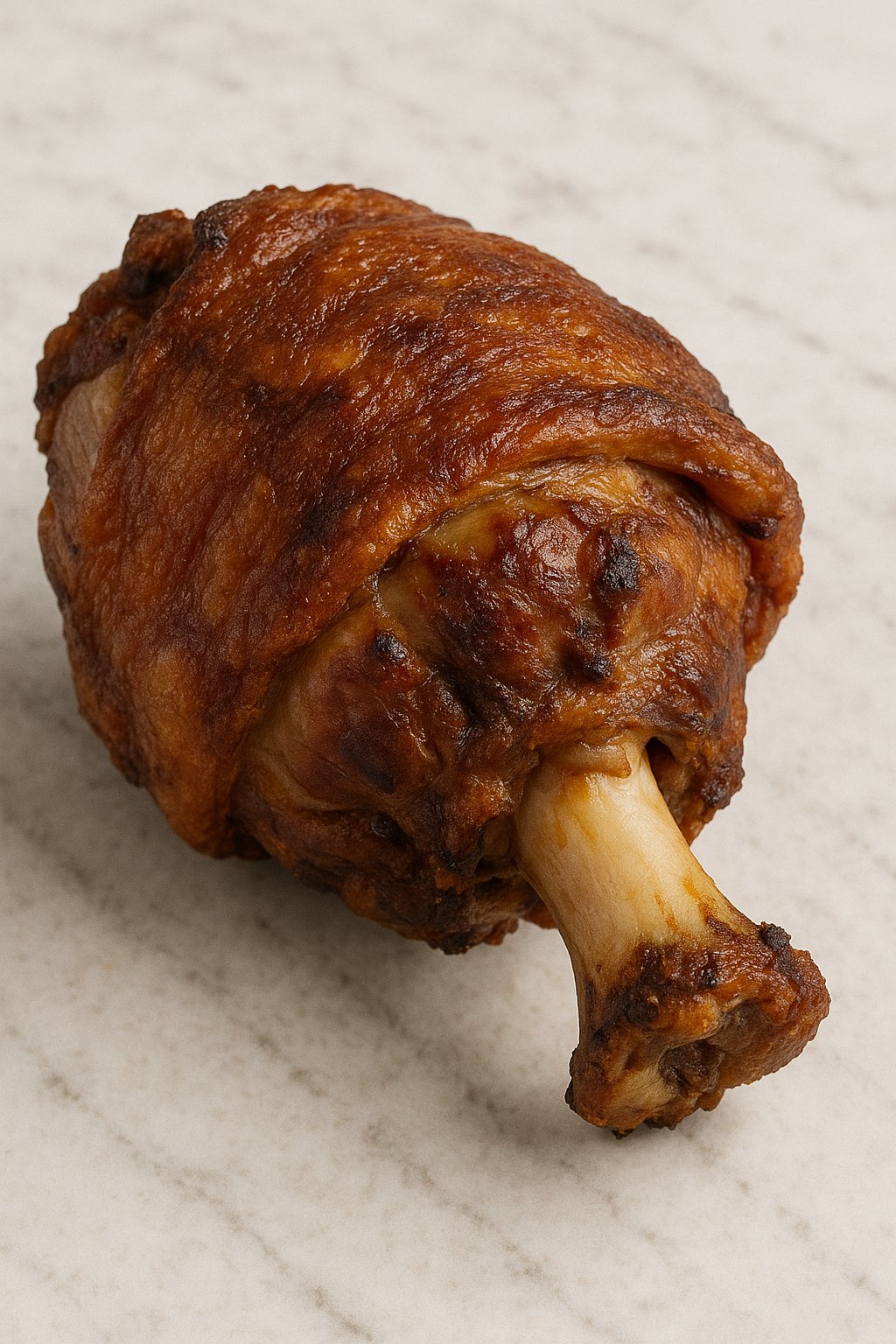
Availability and types of the pork knuckle
The pork knuckle is a very well-known cut of pork and can be found wherever pork is eaten. You can buy it in supermarkets, butcher shops and at weekly markets. In restaurants, especially in Germany, Austria and parts of Eastern Europe, the pork knuckle is often a popular dish. If you imagine it like a shelf in the store: sometimes there are many knuckles, sometimes only a few – that depends on the season, the occasion (for example folk festivals like Oktoberfest) and the butchers' supply.
Origin
The pork knuckle comes from the pig. More precisely, the knuckle is the lower piece of a pig's leg. There are two knuckles per pig: the front knuckle (from the front leg) and the hind knuckle (from the hind leg). The origin of a piece therefore depends on where the animal was raised and how it was kept. Pigs are raised worldwide, but in Europe countries like Germany, Spain, Poland and Denmark are large producers. "Origin" here means both the country and the farm or operation the meat comes from.
The pork knuckle comes from the pig. More precisely, the knuckle is the lower piece of a pig's leg. There are two knuckles per pig: the front knuckle (from the front leg) and the hind knuckle (from the hind leg). The origin of a piece therefore depends on where the animal was raised and how it was kept. Pigs are raised worldwide, but in Europe countries like Germany, Spain, Poland and Denmark are large producers. "Origin" here means both the country and the farm or operation the meat comes from.
Farming areas (better: rearing areas)
Since pigs do not "grow" like plants, one rather speaks of rearing or breeding areas instead of growing areas. These areas are places where pigs are raised. In Germany there are many farms, from small family businesses to large-scale producers. Some farms keep pigs in barns, others provide more space and outdoor access. Animals from different regions sometimes taste slightly different because they are fed differently and kept in different ways – similar to fruit that tastes different depending on the area.
Since pigs do not "grow" like plants, one rather speaks of rearing or breeding areas instead of growing areas. These areas are places where pigs are raised. In Germany there are many farms, from small family businesses to large-scale producers. Some farms keep pigs in barns, others provide more space and outdoor access. Animals from different regions sometimes taste slightly different because they are fed differently and kept in different ways – similar to fruit that tastes different depending on the area.
Available types and variants
There are different kinds of pork knuckles that differ in size, cut and processing. Here are the main variants explained simply:
There are different kinds of pork knuckles that differ in size, cut and processing. Here are the main variants explained simply:
- Front knuckle – comes from the front leg. It is usually somewhat smaller and has less meat but more tendons and connective tissue. That makes it very tender when slow-cooked because the connective tissue softens during cooking.
- Hind knuckle – comes from the hind leg. It is generally larger and meatier. Many people like the hind knuckle because it has more juicy meat.
- Frozen knuckle – sometimes knuckles are offered frozen. That's convenient if you don't want to prepare them immediately. When thawing, make sure it happens slowly in the refrigerator.
- Fresh knuckle – directly from the butcher or supermarket. It often has the best flavor and is ideal if you want to cook it right away.
- Smoked or precooked knuckle – some butchers or producers offer knuckles that are already smoked or precooked. That saves time in preparation because part of the work is already done.
- Organic or free-range knuckle – comes from pigs that have lived under better conditions, e.g. with more space or organic feed. These knuckles are often somewhat more expensive, but some people consider the taste and rearing conditions more important.
A simple comparison: imagine buying bread. There is the small roll (front knuckle), the large loaf (hind knuckle), frozen bread (frozen knuckle) or freshly baked bread (fresh knuckle) as well as organic bread. It's the same with the knuckle – different forms for different wishes.
What to look for when buying: the knuckle should be fresh and well chilled, the skin may be intact and slightly glossy, and it should have a pleasant smell. If you want to know exactly where the meat comes from, ask in the shop or at the butcher – many sellers are happy to provide information. This way you find the right pork knuckle for your meal, whether you want to cook something quick, festive or traditional.