Menu & categories

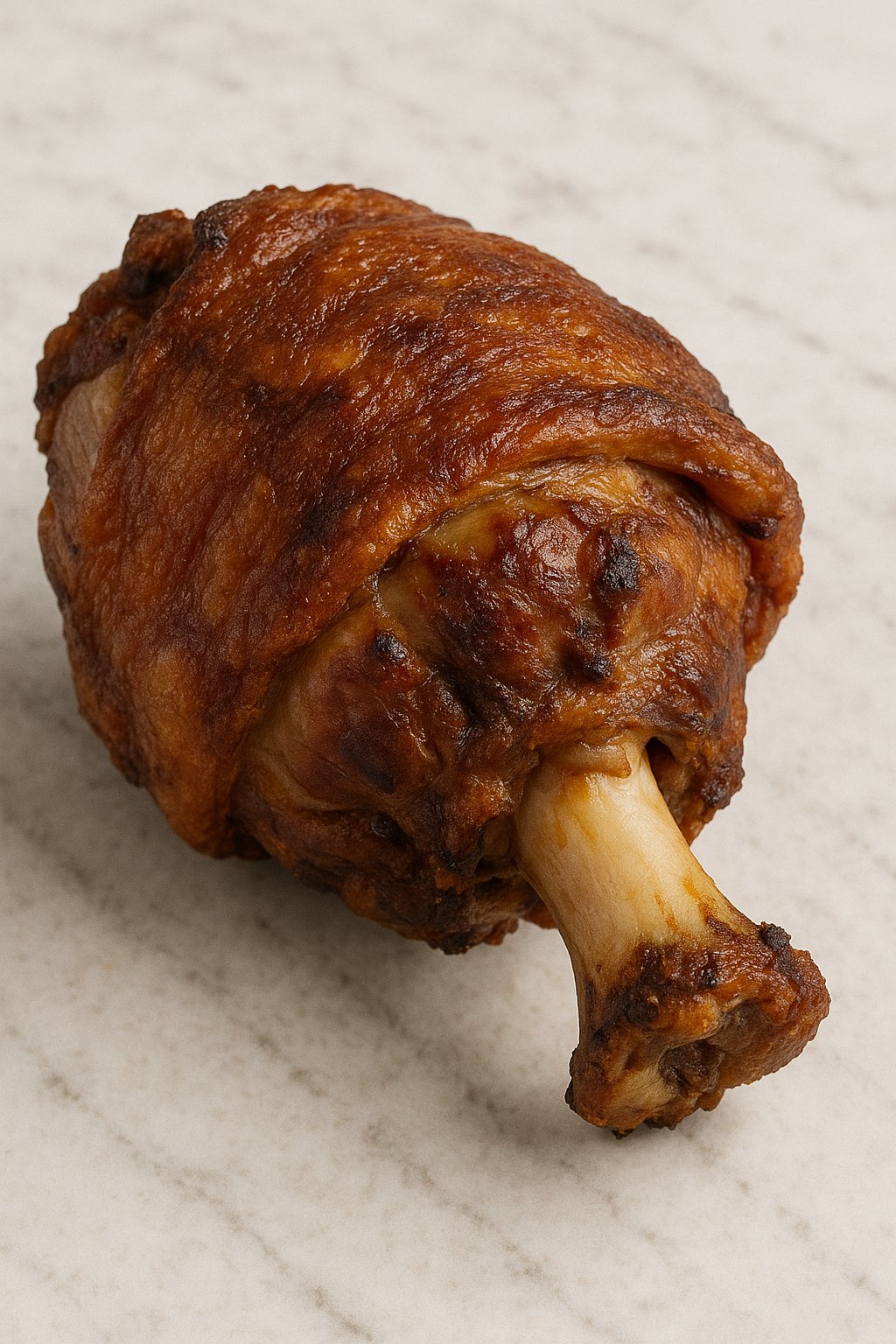
Pork knuckle

Hearty piece of pork, rich in protein and fat

Wiki about pork knuckle Nutri-Score D Vegan No Gluten-free Yes Lactose-free Yes Nut-free Yes
NUTRITION / 100 g
260 kcal 18 g Protein 0 g Kohlenhydrate 21 g Fett

Introduction

Roasted pork knuckle on a plate
I still clearly remember the first intense taste of a perfectly prepared pork knuckle: the loud crack of the crispy rind, the juicy meat beneath that almost tenderly fell away from the bone. Since then this dish has been for me more than just a piece of meat on the plate; it is a celebration, a story and sometimes the reason for spontaneous invitations. A colleague of mine insisted on explaining his recipe with beer, as if knuckles and hops spoke some secret language only true connoisseurs understand.

The pork knuckle comes from traditional European cuisine and is a classic especially in Germany, Austria and parts of Eastern Europe. What makes it so appealing is its versatility: you can braise it slowly, rub it with spices, let it rest before roasting or simmer it in a spicy broth. I have seen how different methods transform the same piece of meat into completely different flavor worlds. At a family dinner I was once surprised by a friend who first cooked the knuckle sous-vide and then briefly caramelized it over an open flame – a texture and aroma combination I had not expected.

For me the pork knuckle requires staging: the large knife, the strong smell of roasted aromas and sharing at the table. When I cook knuckle, I pay attention to a few simple rules I have adopted over the years:

  • Slow cooking for tender, juicy meat.
  • Generous seasoning and occasional basting for an aromatic crust.
  • High-temperature finish so the rind becomes properly crispy.
The pork knuckle is not a dish for quick hunger, but for hours of enjoyment and good company. It tells of traditions, regional variations and small experiments in modern kitchens. I love how a simple piece of pork evokes so many memories and conversations – and how often a large, crispy knuckle quickly turns strangers into friends.

Availability & types

Availability and types of the pork knuckle

The pork knuckle is a very well-known cut of pork and can be found wherever pork is eaten. You can buy it in supermarkets, butcher shops and at weekly markets. In restaurants, especially in Germany, Austria and parts of Eastern Europe, the pork knuckle is often a popular dish. If you imagine it like a shelf in the store: sometimes there are many knuckles, sometimes only a few – that depends on the season, the occasion (for example folk festivals like Oktoberfest) and the butchers' supply.

Origin
The pork knuckle comes from the pig. More precisely, the knuckle is the lower piece of a pig's leg. There are two knuckles per pig: the front knuckle (from the front leg) and the hind knuckle (from the hind leg). The origin of a piece therefore depends on where the animal was raised and how it was kept. Pigs are raised worldwide, but in Europe countries like Germany, Spain, Poland and Denmark are large producers. "Origin" here means both the country and the farm or operation the meat comes from.

Farming areas (better: rearing areas)
Since pigs do not "grow" like plants, one rather speaks of rearing or breeding areas instead of growing areas. These areas are places where pigs are raised. In Germany there are many farms, from small family businesses to large-scale producers. Some farms keep pigs in barns, others provide more space and outdoor access. Animals from different regions sometimes taste slightly different because they are fed differently and kept in different ways – similar to fruit that tastes different depending on the area.

Available types and variants
There are different kinds of pork knuckles that differ in size, cut and processing. Here are the main variants explained simply:

  • Front knuckle – comes from the front leg. It is usually somewhat smaller and has less meat but more tendons and connective tissue. That makes it very tender when slow-cooked because the connective tissue softens during cooking.
  • Hind knuckle – comes from the hind leg. It is generally larger and meatier. Many people like the hind knuckle because it has more juicy meat.
  • Frozen knuckle – sometimes knuckles are offered frozen. That's convenient if you don't want to prepare them immediately. When thawing, make sure it happens slowly in the refrigerator.
  • Fresh knuckle – directly from the butcher or supermarket. It often has the best flavor and is ideal if you want to cook it right away.
  • Smoked or precooked knuckle – some butchers or producers offer knuckles that are already smoked or precooked. That saves time in preparation because part of the work is already done.
  • Organic or free-range knuckle – comes from pigs that have lived under better conditions, e.g. with more space or organic feed. These knuckles are often somewhat more expensive, but some people consider the taste and rearing conditions more important.
A simple comparison: imagine buying bread. There is the small roll (front knuckle), the large loaf (hind knuckle), frozen bread (frozen knuckle) or freshly baked bread (fresh knuckle) as well as organic bread. It's the same with the knuckle – different forms for different wishes.

What to look for when buying: the knuckle should be fresh and well chilled, the skin may be intact and slightly glossy, and it should have a pleasant smell. If you want to know exactly where the meat comes from, ask in the shop or at the butcher – many sellers are happy to provide information. This way you find the right pork knuckle for your meal, whether you want to cook something quick, festive or traditional.
Details & nutrition

Property Value
Unit g
Average weight per piece 800
Calories per 100 260
Protein per 100 18
Carbohydrates per 100 0
Sugar per 100 0
Fat per 100 21
Saturated fat per 100 7
Monounsaturated fat 9
Polyunsaturated fat 2
Fiber per 100 0
Vitamin C (mg) per 100 0
Vitamin D (IU) per 100 20
Calcium (mg) per 100 10
Iron (mg) per 100 1.2
Nutri-Score D
CO₂ footprint 6.0
Origin Pork, typically from European fattening farms
Gluten-free Yes
Lactose-free Yes
Nut-free Yes
Vegan No
Note Nutritional values refer to cooked, unbreaded pork knuckle without sauce; actual values may vary depending on preparation (roasting, grilling, seasonings).

Technical & scientific information

Pork knuckle refers to the cut of meat from the lower pork leg, usually the clearly bone-in shank portion including skin, tendons and surrounding connective tissue. In culinary tradition the knuckle is often prepared roasted, braised or grilled. Anatomically it consists of the distal femur- and tibia-equivalent in the pig, with muscles such as the M. gastrocnemius (calf muscle) and surrounding muscle fibers being dominant. Because of its location in the locomotor apparatus the connective tissue is comparatively pronounced, resulting in texture-defining collagens.

Chemical composition and constituents
Pork knuckle is composed primarily of water, proteins, lipids and a smaller proportion of minerals and soluble carbohydrates. Typical composition (approximate values per 100 g, raw): water 60–70 g, protein 18–22 g, fat 8–20 g, minerals 1–2 g. Proteins consist of myofibrillar proteins (actin, myosin) and extracellular structural proteins such as collagen. Fat is present both intramuscularly (marbling) and subcutaneously and consists of saturated, monounsaturated and polyunsaturated fatty acids. Important minerals include phosphorus, potassium and iron, while B vitamins (particularly B1, thiamine) occur in noteworthy amounts.

Nutritional values and nutritional aspects
The nutritional value varies greatly with the amount of visible fat and the cooking method. Per 100 g roasted the knuckle can provide between 220 and 350 kcal. Proteins supply essential amino acids with high biological value. From a health perspective the product provides important micronutrients such as vitamin B12 and zinc, which are relevant for neurological functions and immune response. At the same time the content of saturated fatty acids and cholesterol should be noted, as regular high consumption can affect cardiovascular risk factors.

Processing methods and culinary transformation
Thermal treatment fundamentally alters the texture and composition of the knuckle. Slow braising or low-temperature cooking promotes hydrolysis of collagen to gelatin, making the meat tender and giving body to the sauce. High, dry heat causes Maillard reactions on the skin surface, which form aroma compounds and create the characteristic crust. Curing and smoking are preservative procedures that also change flavor and, through chemical processes such as nitrite reactions, stabilize proteins. Pretreatment steps such as removing the skin, salting or marinating influence water binding and the salt content of the final product.

Safety and health control
Microbiological safety depends on origin, the cold chain and hygienic processing. Raw pork can contain pathogenic organisms such as Salmonella or Yersinia; thermal treatment to appropriate core temperatures (at least 70 °C depending on guidelines) reduces this risk. Parasitic infections, historically relevant, are in many regions much less common due to modern breeding and control measures, but remain an issue with improper handling.

Sustainability and quality
Quality characteristics include marbling, skin thickness and freshness indicators such as smell and color. Origin and rearing conditions influence fatty acid profile and residue load (e.g. antibiotic residues). Ecological aspects concern the resource efficiency of pig production and animal welfare criteria, increasingly demanded by consumers and regulators.

In summary the pork knuckle is a nutrient-rich, structurally complex cut of meat whose sensory properties depend strongly on connective tissue content and preparation. Biochemical changes during cooking – in particular the conversion of collagen to gelatin and the formation of aroma compounds through Maillard reactions – explain the typical texture and flavor characteristics. At the same time safe and responsible handling of this food requires attention to the cold chain, cooking times and origin information.

Wiki entry for: pork knuckle
Active now: 17 visitors of which 2 logged-in members in the last 5 minutes