Menu & categories

Poppy seeds

Aromatic small seeds with a high fat and mineral content

Wiki about poppy seed Nutri-Score D Vegan Yes Gluten-free Yes Lactose-free Yes Nut-free Yes
NUTRITION / 100 g
525 kcal 18 g Protein 28 g Kohlenhydrate 42 g Fett

Introduction

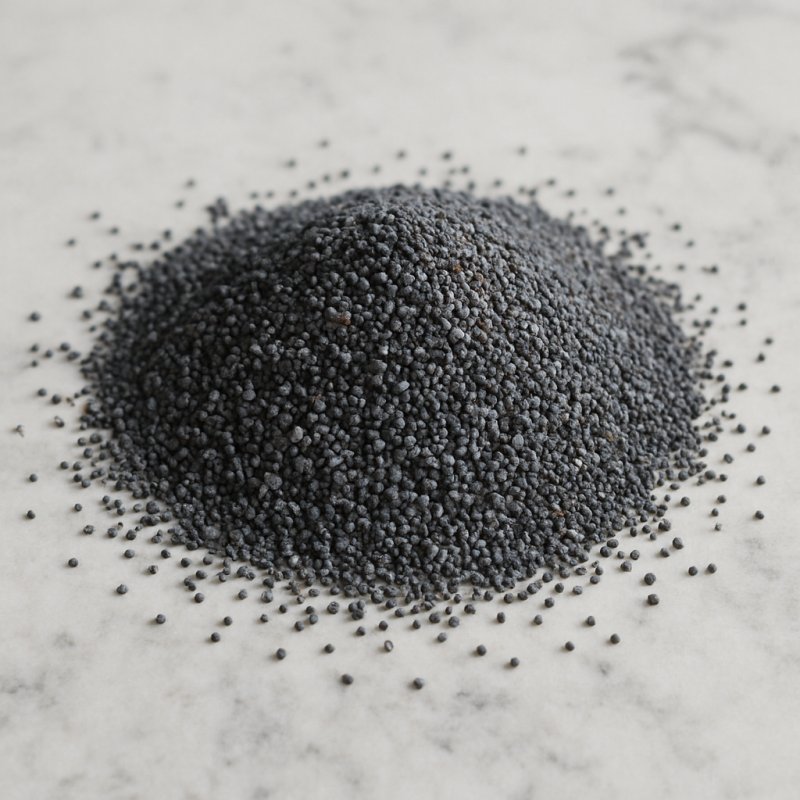
Black poppy seeds in a bowl
I love the scent of freshly baked poppy seed cake – it brings back memories of market days and misty autumn afternoons. Poppy is for me an ingredient full of contrasts: tiny but aromatic; unassuming but versatile. I still remember discovering a bag of poppy seeds in my aunt's kitchen as a child and being fascinated by how those little grains turned into a velvety puree that tasted wonderful on buttered bread and in strudel alike.

Poppy comes from the seeds of the opium poppy and has become established in various cuisines over centuries. It adds a nutty, slightly bitter-spicy note to sweet and savory dishes. In my family poppy was especially present on Sundays: poppy strudel, poppy noodles with butter and sugar, or small poppy rolls fresh from the oven. A colleague of mine swears by poppy in curries; I was skeptical until I tried it and was amazed at how well the seeds bind sauces and add depth of flavor.

There are different ways to use poppy:

  • Whole seeds for texture and appearance, for sprinkling on baked goods.
  • Ground poppy for an intense aroma in cakes and strudels.
  • Poppy paste or puree for fillings with a velvety consistency.
When cooking it's worth lightly toasting poppy so the oils are released and the aroma becomes more intense. I have learned that quality matters: fresh poppy is a little oily and gives off a nutty bouquet, while old poppy tastes flat and bland. Traveling through Eastern Europe I noticed how different poppy dishes are depending on the region — sometimes sweetness dominates, sometimes savory spice.

Poppy is not only appealing in taste, it also has culinary stories to tell. On your next bakery discovery or when experimenting in your own kitchen it's worth playing with poppy: a few toasted seeds over a salad, a poppy filling in a puff pastry parcel, or a poppy-chocolate crunch for dessert. I promise these little seeds can bring great joy.

Availability & types

Availability and types of poppy

Poppy is a plant that grows in many parts of the world and whose small seeds are very popular in cooking and baking. If you've ever eaten a poppy roll, you probably know poppy as the tiny dark beads on the pastry. But poppy does not come in just one kind – there are different varieties and forms, and it is cultivated in many places. Here I explain in simple terms where poppy comes from, where it is grown and which variants you can find in the store.

Where does poppy come from?
Poppy originally comes from regions around the Mediterranean and from Asia. People have cultivated it for a very long time – hundreds or thousands of years ago. In the past people used poppy not only for food but also for medicinal purposes. Today we especially appreciate its seeds as an ingredient in baked goods, salads and desserts.

In which areas is poppy cultivated?
Poppy grows best in places with lots of sun and a relatively warm, but not too humid climate. Significant cultivation areas are:

  • Europe: Many countries in Europe cultivate poppy, especially in Central Europe such as Germany, Austria and the Czech Republic. In summer you often see fields of poppy flowers.
  • Asia: In parts of Asia, for example in Turkey and in some regions of Central Asia, poppy is also widely cultivated.
  • Eastern Europe: Countries like Poland and Romania are also large producers of poppy.
  • North America: Poppy is also grown in some regions of North America, although not as widespread as in Europe and Asia.
Which varieties and variants exist?
Poppy occurs in different colors and forms. The main types you should know are:

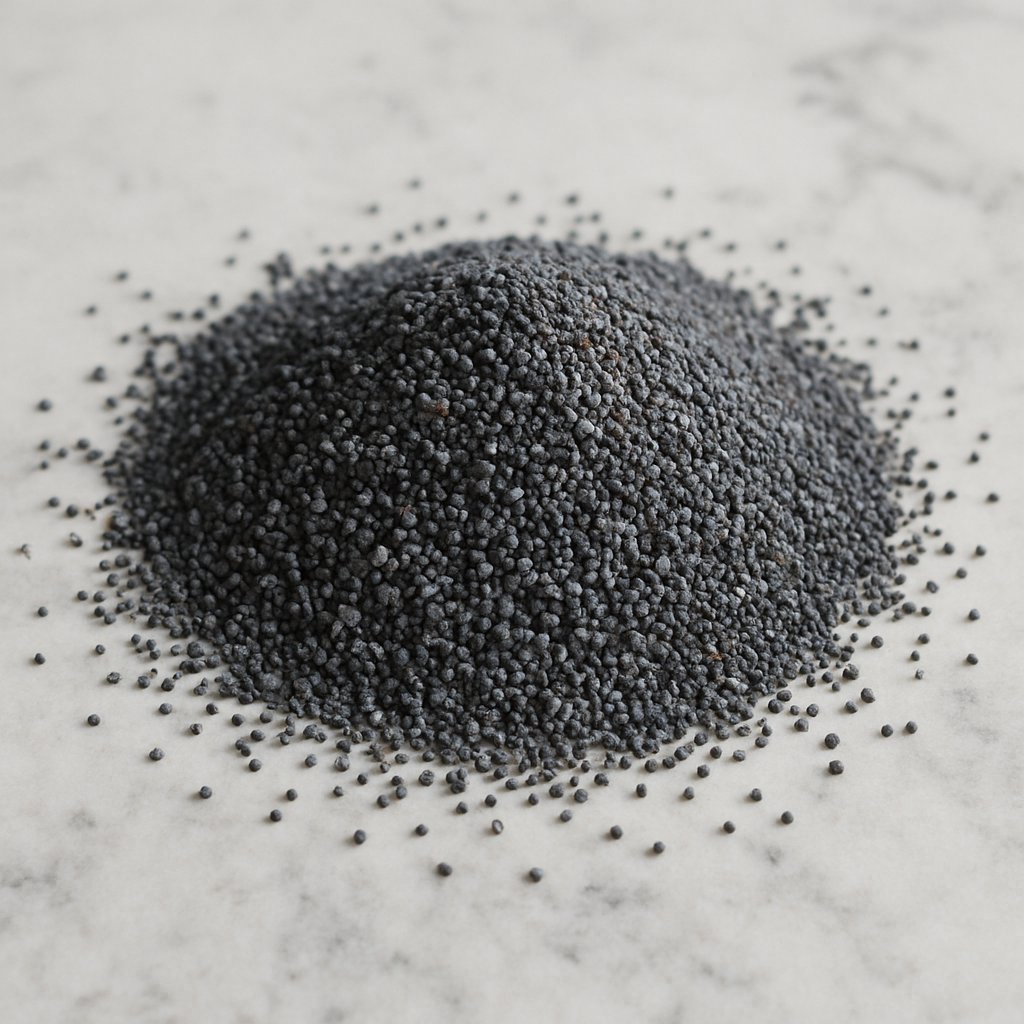
  • Blue or black poppy: These are the dark, blue to black seeds you most often see on rolls. They have a nutty aroma and crack slightly when you bite them.
  • White poppy: These seeds are lighter and are sometimes used in certain baked goods. The taste is similar but a bit milder than black poppy.
  • Ground poppy: Poppy can also be finely ground or made into a paste. Ground poppy is often used for fillings, such as in poppy strudel or poppy roll fillings. This is practical when you want to have a uniform mass.
  • Poppy oil: Oil can be pressed from poppy seeds. The oil has a nutty taste and is sometimes used in cooking or in cosmetic products.
How do you find poppy in the store?
You can get poppy in most supermarkets, health food stores and farmers' markets. You often find it in small jars or bags, either as whole seeds or ground. In bakeries poppy is processed fresh and often used as a filling or topping. If you want to buy it, pay attention to the expiration date – poppy can go rancid over time. Cool storage extends its freshness.

A simple comparison:
Think of poppy like small spheres, similar to tiny marbles, that give a cake or bread a crunchy, nutty sensation. The dark ones are like chocolate beads, the light ones more like small pearls – both make baked goods tasty, but the flavor is slightly different.

In summary: poppy grows in many parts of the world, especially in Europe and Asia. It exists in dark and light variants, as whole seeds, ground or as oil. You can easily buy it in the supermarket or at the baker's, and it brings a pleasant, nutty flavor to many recipes.
Details & nutrition

Property Value
Unit g
Calories per 100 525
Protein per 100 18
Carbohydrates per 100 28
Sugar per 100 3
Fat per 100 42
Saturated fat per 100 4.5
Monounsaturated fat 6
Polyunsaturated fat 30
Fiber per 100 20
Vitamin C (mg) per 100 1
Vitamin D (IU) per 100 0
Calcium (mg) per 100 1430
Iron (mg) per 100 9
Nutri-Score D
CO₂ footprint 2.4
Origin Worldwide, especially Europe and Asia
Gluten-free Yes
Lactose-free Yes
Nut-free Yes
Vegan Yes
Note Poppy seeds are very high in calcium and fat; in baked goods they may occur together with gluten-containing cereals, but the seeds themselves are gluten-free.

Technical & scientific information

Poppy refers to the seed plant Papaver somniferum and the seeds obtained from it, which are used in cuisine, baking and industry. Botanically the opium poppy belongs to the family Papaveraceae. The seeds mature in a capsule-like fruit and are small, round to oval, externally usually colored blue-gray to black or whitish. Poppy seeds are dry, oil- and starch-rich and are used in many ways because of their nutty aroma and physical properties.

Chemical composition and constituents
The main component of poppy seeds is the oil, which depending on the variety can make up 30–50% of the seed weight. This oil consists mainly of unsaturated fatty acids, particularly linoleic acid (omega-6) and oleic acid (omega-9). The proportion of saturated fatty acids is markedly lower. In addition to lipids, poppy seeds contain about 20–25% proteins, with a good amino acid profile for plant-based use. They also provide 20–30% fiber, mainly indigestible cell wall components such as cellulose and hemicelluloses. Mineral-wise, poppy seeds are rich in calcium, magnesium, iron, phosphorus and trace amounts of zinc.

Important secondary plant compounds
Poppy contains a number of secondary plant compounds, including small amounts of alkaloids such as codeine and morphine, which occur mainly in the milky sap (opium) and in the seed coat. Concentrations in commercially available poppy seeds are regulated in most countries and are generally very low, but can vary depending on cultivation and processing. Traces of phenolic compounds and antioxidant substances are also present, which help protect the oil from oxidation.

Nutritional values (typical values per 100 g)

  • Energy: about 500–560 kcal.
  • Fats: 40–50 g, mostly unsaturated fatty acids.
  • Proteins: 20–25 g.
  • Carbohydrates: 10–20 g, including 20–30% fiber.
  • Minerals: high content of calcium and magnesium as well as iron and phosphorus.
Processing methods
Commercial processing includes cleaning, dehulling (partial), roasting, grinding and, if needed, oil pressing. During dehulling the seed husks are largely removed to change taste and texture; unhulled seeds are more nutrient-dense as the hull contains many fibers and minerals. Mechanical cold pressing is preferred to obtain oil, to preserve heat-sensitive fatty acids and aromatic compounds. Ground poppy is often briefly roasted before processing, releasing volatile compounds and intensifying the nutty aroma. In the food industry extraction methods using solvents are also used, particularly for large-scale production of vegetable oil.

Health aspects
Poppy seeds provide valuable nutrients and can be part of a balanced diet in moderate amounts. The abundant unsaturated fatty acids and fiber support cardiovascular health and digestion. Due to their high calcium and magnesium content, poppy seeds can contribute to mineral intake. It should be noted that raw, untreated seeds and especially poppy products from uncontrolled cultivation can contain traces of opium alkaloids. These traces can be detectable in sensitive drug tests and, in extreme cases, cause unwanted effects. Cleaning, dehulling, heat treatment and industrially controlled processing can significantly reduce alkaloid levels.

Safety and quality issues
Food regulations in many countries regulate maximum allowed alkaloid values in poppy and poppy products. To ensure quality, batch analyses, residue controls and origin declarations are used. Deterioration of poppy seeds occurs mainly through oxidation of the oil; storage in a cool, dark, dry environment and airtight packaging minimize the risk of rancidity. Roasted or ground poppy should be consumed promptly, as the grinding process increases the surface area susceptible to oxidative processes.

In summary, poppy seeds are a nutrient-rich, oil-containing food with a characteristic aroma and versatile processing possibilities. Their nutritional benefits go alongside regulatory and technological issues, particularly regarding alkaloid levels and oxidation stability, which must be considered during cultivation, processing and storage.

Wiki entry for: poppy seed
Active now: 14 visitors of which 2 logged-in members in the last 5 minutes