Availability and types of poppy
Poppy is a plant that grows in many parts of the world and whose small seeds are very popular in cooking and baking. If you've ever eaten a poppy roll, you probably know poppy as the tiny dark beads on the pastry. But poppy does not come in just one kind – there are different varieties and forms, and it is cultivated in many places. Here I explain in simple terms where poppy comes from, where it is grown and which variants you can find in the store.
Where does poppy come from?
Poppy originally comes from regions around the Mediterranean and from Asia. People have cultivated it for a very long time – hundreds or thousands of years ago. In the past people used poppy not only for food but also for medicinal purposes. Today we especially appreciate its seeds as an ingredient in baked goods, salads and desserts.
Poppy originally comes from regions around the Mediterranean and from Asia. People have cultivated it for a very long time – hundreds or thousands of years ago. In the past people used poppy not only for food but also for medicinal purposes. Today we especially appreciate its seeds as an ingredient in baked goods, salads and desserts.
In which areas is poppy cultivated?
Poppy grows best in places with lots of sun and a relatively warm, but not too humid climate. Significant cultivation areas are:
Poppy grows best in places with lots of sun and a relatively warm, but not too humid climate. Significant cultivation areas are:
- Europe: Many countries in Europe cultivate poppy, especially in Central Europe such as Germany, Austria and the Czech Republic. In summer you often see fields of poppy flowers.
- Asia: In parts of Asia, for example in Turkey and in some regions of Central Asia, poppy is also widely cultivated.
- Eastern Europe: Countries like Poland and Romania are also large producers of poppy.
- North America: Poppy is also grown in some regions of North America, although not as widespread as in Europe and Asia.
Which varieties and variants exist?
Poppy occurs in different colors and forms. The main types you should know are:
Poppy occurs in different colors and forms. The main types you should know are:
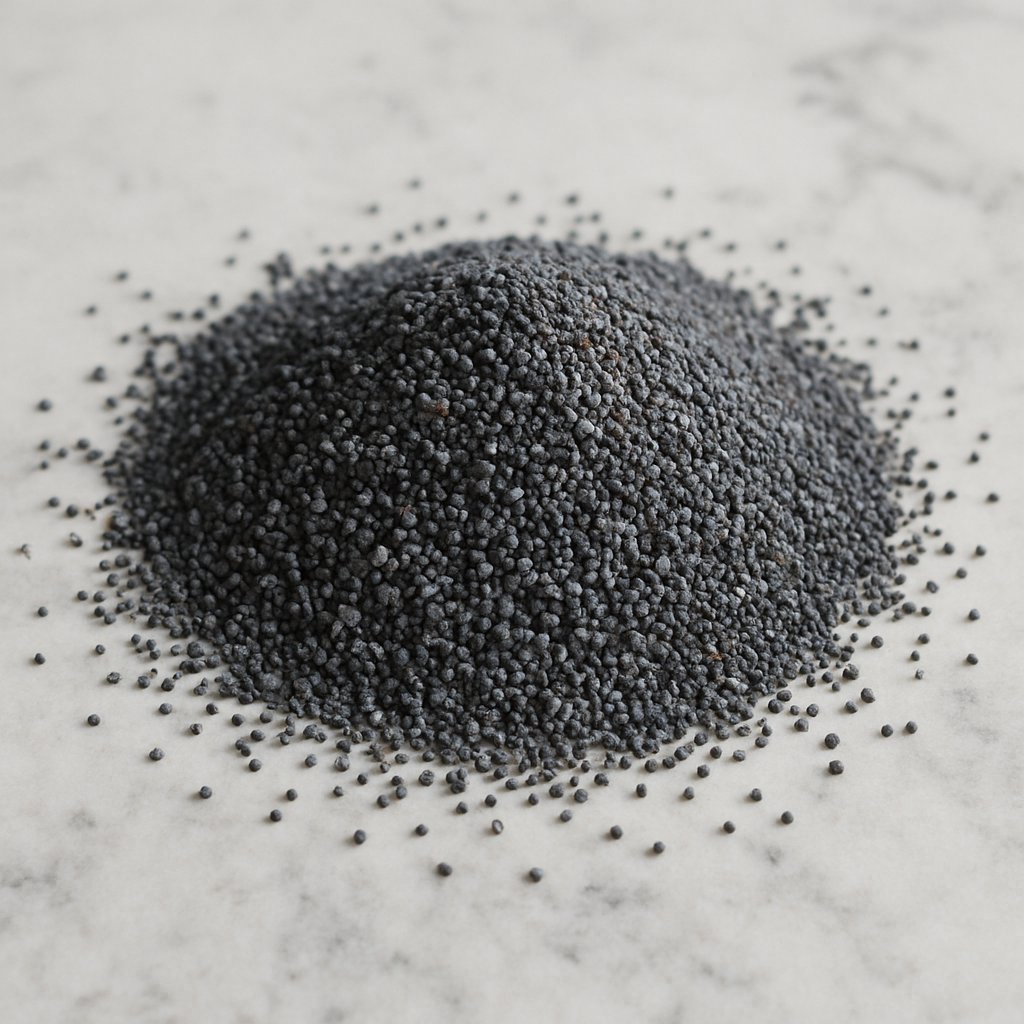
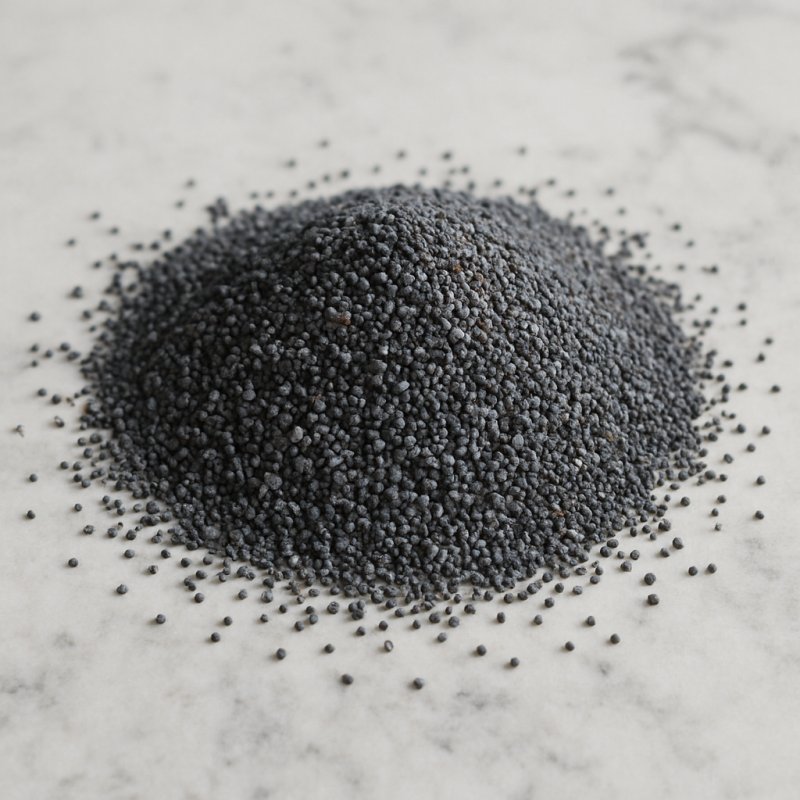
- Blue or black poppy: These are the dark, blue to black seeds you most often see on rolls. They have a nutty aroma and crack slightly when you bite them.
- White poppy: These seeds are lighter and are sometimes used in certain baked goods. The taste is similar but a bit milder than black poppy.
- Ground poppy: Poppy can also be finely ground or made into a paste. Ground poppy is often used for fillings, such as in poppy strudel or poppy roll fillings. This is practical when you want to have a uniform mass.
- Poppy oil: Oil can be pressed from poppy seeds. The oil has a nutty taste and is sometimes used in cooking or in cosmetic products.
How do you find poppy in the store?
You can get poppy in most supermarkets, health food stores and farmers' markets. You often find it in small jars or bags, either as whole seeds or ground. In bakeries poppy is processed fresh and often used as a filling or topping. If you want to buy it, pay attention to the expiration date – poppy can go rancid over time. Cool storage extends its freshness.
You can get poppy in most supermarkets, health food stores and farmers' markets. You often find it in small jars or bags, either as whole seeds or ground. In bakeries poppy is processed fresh and often used as a filling or topping. If you want to buy it, pay attention to the expiration date – poppy can go rancid over time. Cool storage extends its freshness.
A simple comparison:
Think of poppy like small spheres, similar to tiny marbles, that give a cake or bread a crunchy, nutty sensation. The dark ones are like chocolate beads, the light ones more like small pearls – both make baked goods tasty, but the flavor is slightly different.
Think of poppy like small spheres, similar to tiny marbles, that give a cake or bread a crunchy, nutty sensation. The dark ones are like chocolate beads, the light ones more like small pearls – both make baked goods tasty, but the flavor is slightly different.
In summary: poppy grows in many parts of the world, especially in Europe and Asia. It exists in dark and light variants, as whole seeds, ground or as oil. You can easily buy it in the supermarket or at the baker's, and it brings a pleasant, nutty flavor to many recipes.