Menu & categories

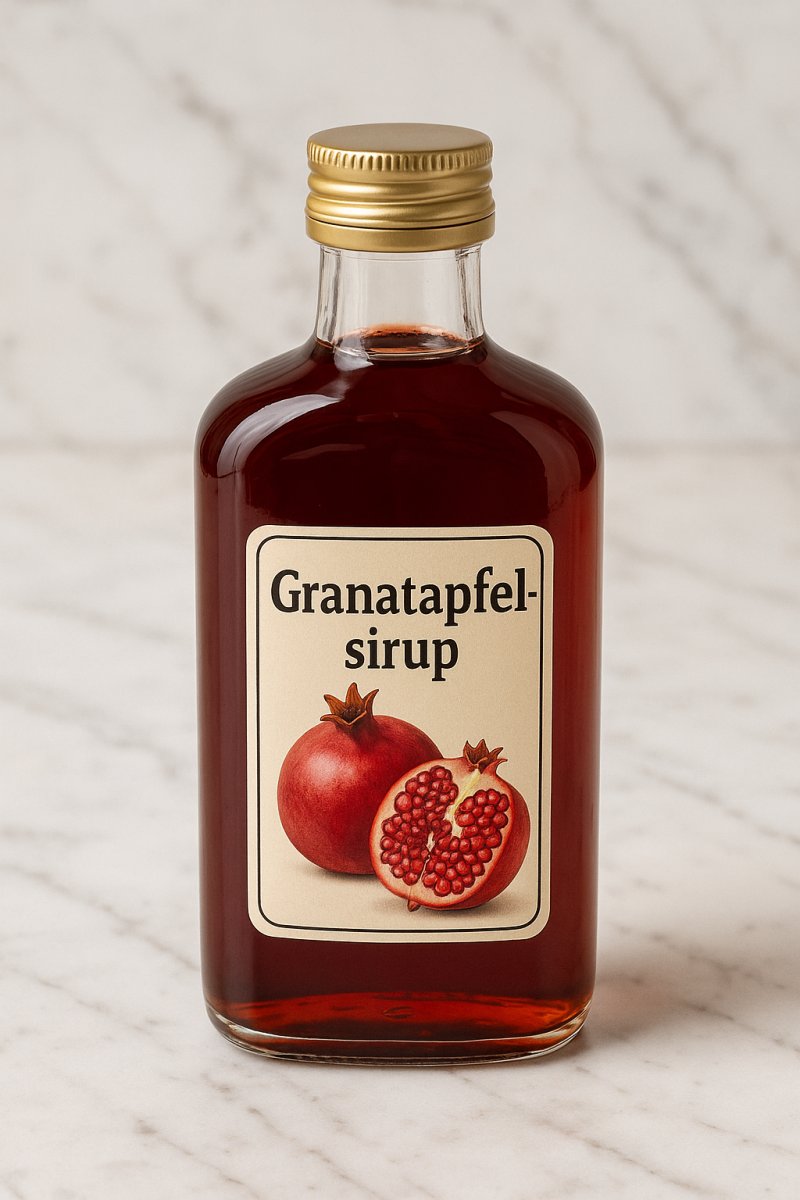
Pomegranate syrup

Fruity-tart syrup made from pomegranate, ideal for dressings and marinades.

Wiki about pomegranate syrup Nutri-Score D Vegan Yes Gluten-free Yes Lactose-free Yes Nut-free Yes
NUTRITION / 100 ml
270 kcal 0.3 g Protein 68 g Kohlenhydrate 0.1 g Fett

Introduction

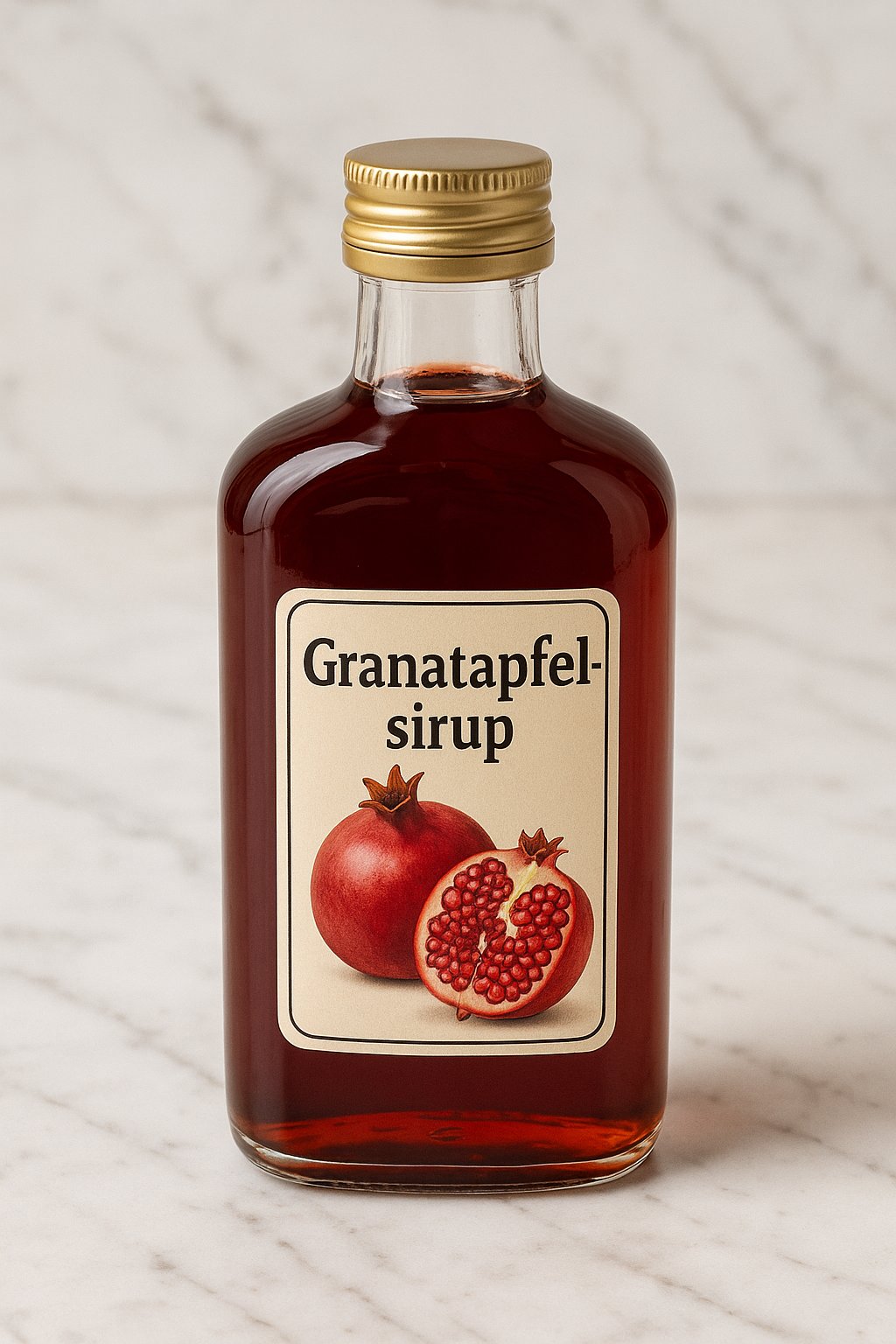
Dark pomegranate syrup in a small bottle
I fell in love with pomegranate syrup because it is so contradictory and yet so unmistakable: tart and sweet, dark and bright, familiar and exotic at the same time. I tried my first shot at a market stall in a small town, laughed at the vendor and thought how unfair it was that something so multilayered fits in such a small bottle. I still remember a colleague of mine who was skeptical at first, but five minutes later secretly dressed his salad with the last drop.

Pomegranate syrup is basically reduced pomegranate juice, often concentrated to a syrupy consistency. In different regions it is called Nar Ekşisi, Rummo or simply pomegranate syrup, and preparations range from sweet to tart. The color spans from deep ruby red to almost black, and the aroma suggests a mix of red berries, citrus and a hint of molasses.

In my kitchen pomegranate syrup is an all‑rounder. It turns a simple yogurt dressing into something special, perks up marinated eggplant and gives sauces for meat or chicken a fine, fruity depth. I like to combine it with nuts and fresh herbs because the combination feels crunchy, fresh and rounded.

  • For seasoning: As a glaze for lamb or duck.
  • In salads: With olive oil and lemon juice on arugula or lamb's lettuce.
  • In drinks: As an unusual ingredient in cocktails or non‑alcoholic lemonades.
  • For sweets: Over vanilla ice cream or in yogurt desserts.
A simple tip: If you want to make syrup yourself, reduce freshly pressed juice slowly with a little sugar and lemon juice. Store the result cool and dark; once opened it keeps for several weeks. Buy from a reputable vendor or try different countries of origin, because each batch has its own character.

In the end, pomegranate syrup for me is a small culinary adventure on the shelf that transforms everyday dishes with a few drops and brings bright eyes from guests.

Availability & types

What is pomegranate syrup?
Pomegranate syrup is a thick, sweet‑and‑sour juice from the pomegranate that has been cooked down until concentrated. You can pour it like honey, but it tastes fruity and a bit tart, similar to a mix of grape juice and lemon juice. It is often used in salads, drinks or as a seasoning for meat.

Where does it come from and where are pomegranates grown?
Pomegranate trees originally come from the Near East and South Asia. Today they grow in many warm regions of the world. Important growing areas include:

  • Iran and Turkey: Traditionally large producers, often for very flavorful syrup.
  • Mediterranean countries: Spain, Italy, Greece and Israel – here the fruits ripen in the sun and are popular in cooking.
  • North Africa: Countries like Morocco and Tunisia also supply many fruits.
  • California: In the USA pomegranates are mainly grown in warm California and processed into syrup.
Imagine that pomegranate trees like conditions similar to cacti: warm and sunny, but they also need enough water to form many juicy arils.

Which types and variants of pomegranate syrup exist?
Pomegranate syrup is not always the same. There are different kinds and flavor profiles:

  • Pomegranate molasses (Pomegranate molasses): Very thick and intense in flavor, often used in Middle Eastern cuisine. It is like a very concentrated fruit sauce.
  • Lighter syrup: More fluid, well suited for beverages and cocktails because it dissolves more easily.
  • Sweeter vs. tarter variants: Some are very sweet, others rather sour. That depends on the fruit variety and how long they were reduced.
  • With additives: There are syrups with honey, sugar or lemon juice, sometimes also with spices like cinnamon or rose water.
  • Organic or conventional: Organic syrup comes from fruit grown without chemical pesticides.
  • Grenadine: A similar product often made from other fruits and sugar. Real pomegranate syrup is usually more natural.
Where can you buy it and how do you store it?
You can find pomegranate syrup in supermarkets, delicatessens, Turkish or oriental markets and online. Although pomegranates are fresh only in autumn, syrup is available year‑round because it keeps well. After opening, store it preferably in the refrigerator; this way it stays good longer, similar to ketchup or jam.

Tip for trying it out: If you've never tried pomegranate syrup, start with a milder variety and try small amounts in yogurt, on ice cream or in a spritz drink. That way you'll quickly notice whether you like the intense flavor.

So pomegranate syrup is versatile, comes from many warm countries and is available in thick, thin, sweet and tart variants – something for every taste.
Details & nutrition

Property Value
Unit ml
Calories per 100 270
Protein per 100 0.3
Carbohydrates per 100 68
Sugar per 100 68
Fat per 100 0.1
Saturated fat per 100 0
Monounsaturated fat 0
Polyunsaturated fat 0
Fiber per 100 0.2
Vitamin C (mg) per 100 1
Vitamin D (IU) per 100 0
Calcium (mg) per 100 10
Iron (mg) per 100 0.3
Nutri-Score D
CO₂ footprint ca. 2.5 kg CO2e/kg (je nach Herkunft und Verarbeitung)
Origin Turkey / Middle East (depending on producer)
Gluten-free Yes
Lactose-free Yes
Nut-free Yes
Vegan Yes
Note High sugar content; use sparingly. Nutritional values may vary depending on the recipe (with/without added sugar).

Technical & scientific information

Pomegranate syrup (also known as pomegranate concentrate, pomegranate molasses or by regional names such as “nar ekşisi”) is a viscous, sweet‑and‑sour product made by evaporation and/or concentration of pomegranate juice. It is used both as a seasoning in cooking and as an ingredient in beverages and as a traditional preservation form. Technically, it is a reduced fruit juice concentrate with high solids and phenol glycoside concentration.

Chemical composition
The main components are water, fermentable sugars (predominantly glucose and fructose), organic acids (primarily malic and citric acid in varying proportions), as well as a complex matrix of phenolic compounds. Characteristic are high levels of ellagitannins (e.g. punicalagin) and free ellagic acids, furthermore anthocyanins (cyanidin‑, delphinidin‑ and pelargonidin‑glycosides) as main colorants. Minerals such as potassium are present in moderate amounts; vitamin C is present originally but is partially destroyed by heating. The pH typically lies in the acidic range (approx. 2.5–3.5).

Manufacturing process

  • Juice extraction: mechanical pressing of the arils; alternative extraction steps (e.g. enzymatic pectinolyis) improve yield and clarity.
  • Clarification: use of centrifugation or filtration to remove solids and turbidity.
  • Concentration: gentle evaporation under vacuum or reverse osmosis to reduce water content; target parameters are often 60–70 °Brix for commercial syrups.
  • Post‑treatment: pasteurization for microbial stabilization, possible addition of sweeteners, acids or sorbates to standardize and preserve.
Processing technical aspects
Heat treatment affects sensory properties, color and nutrient content. At high temperatures anthocyanins can degrade and Maillard reactions and caramelization can occur, which keep flavor and color darker. Vacuum concentration reduces thermal damage and better preserves volatile aroma compounds.

Nutritional values (typical per 100 g, variable)

  • Energy: approx. 250–320 kcal
  • Carbohydrates: 60–75 g, with sugars (glucose/fructose) as the main fraction
  • Fat: negligible
  • Protein: low
  • Fiber: minimal in filtered syrup
Health aspects and bioactivity
Pomegranate products contain phenolic compounds with antioxidant activity, particularly punicalagins and anthocyanins, which show radical‑scavenging capacity in vitro. Ellagitannins are metabolized in the gut by microorganisms to urolithins, which are systemically bioavailable and may have potential inflammation‑modulating effects. Clinical studies show heterogeneous findings on blood pressure reduction or lipid profiles; robust conclusions on therapeutic effects are limited. Due to the high sugar content caution is advised in diabetes. Reports of drug interactions (enzyme inhibition in the cytochrome‑P450 system) are less well documented than for grapefruit juice, but potential interactions should be considered.

Quality, storage and use
Important quality parameters are Brix, titratable acidity, pH, color intensity and total phenolic content. Storage in a cool, light‑protected place extends shelf life; microbiological stability is achieved by low water activity and pasteurization. Pomegranate syrup is used in savory and sweet sauces, marinades, dressings, beverages and as a finishing ingredient. Commercial products vary widely in purity; some “grenadines” are flavored sugar syrups without a high fruit content.

In summary, pomegranate syrup is a technologically produced fruit concentrate with a characteristic phenolic composition and a high sugar‑acid profile. Its nutritional and pharmacological properties are the subject of active research, which is why product quality, production conditions and moderate consumption are relevant for consumers.

Wiki entry for: pomegranate syrup
Active now: 15 visitors of which 2 logged-in members in the last 5 minutes