Menu & categories

Polished rice

Mild, versatile classic side dish made from hulled and polished rice.

Wiki about polished rice Nutri-Score B Vegan Yes Gluten-free Yes Lactose-free Yes Nut-free Yes
NUTRITION / 100 g
365 kcal 7.1 g Protein 80.0 g Kohlenhydrate 0.7 g Fett

Introduction

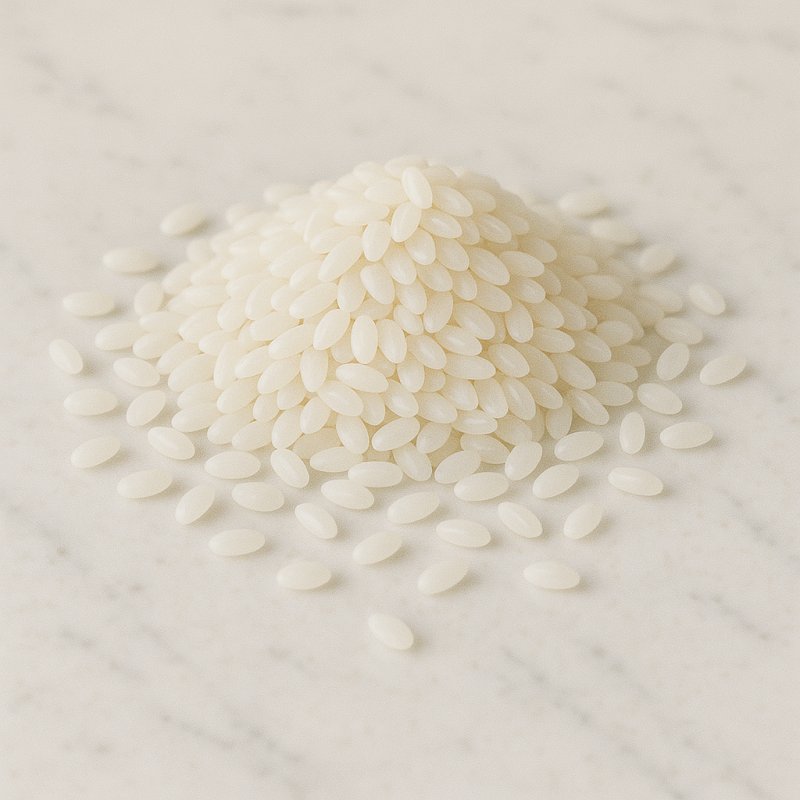
Polished white rice in a bowl
I still remember the first trip to a small village in the rice belt, where I watched in wonder as grains lay in the sun and farmers proudly spoke from harvest to harvest. There I learned the difference between whole grain and polished rice. Polished rice is essentially rice that has been hulled and additionally milled, with the outer layers – bran and germ – removed. The result is a lighter, smoother grain that cooks faster and has a longer shelf life.

I have often cooked with the milled grain when time was short, appreciating how evenly it binds and how versatile it is in the kitchen. A colleague of mine swears by polished rice for creamy risottos, while a friend prefers parboiled varieties because they remain firm during cooking. These small preferences show: flavour and texture matter as much as nutrients.

It is important to know that polished rice contains fewer fibres, vitamins and minerals than whole grain rice. This affects nutrient density, but not culinary possibilities. I therefore like to add complements such as legumes, roasted vegetables or a few nuts to make dishes more balanced.

  • Advantages: quick cooking, long shelf life, neutral flavour.
  • Disadvantages: lower fibre and vitamin content.
  • Tips: rinse the rice briefly before cooking and cook with a water-to-rice ratio of about 1:1.5 to 1:2.
When I have guests, I often pair polished rice with aromatic sides like lime, fresh herbs and a drizzle of olive oil so the dish not only fills but also delights. Sometimes it serves as a simple base for Asian stir-fries, other times it becomes the velvety foundation of a rice pudding dessert. Its versatility makes it one of the unassuming but reliable heroines of my kitchen.

Availability & types

What is “polished rice”?
“Polished rice” usually refers to what many know as white rice. In this rice the outer layers of the grain have been removed – similar to peeling the skin off an apple. The grain becomes lighter, but it does not stay fresh as long and loses some of its nutrients. Because the outer layer is missing, polished rice cooks faster and often tastes milder.

Where does polished rice come from?
Rice grows mainly in warm, humid regions. The largest producing countries are:

  • China and India – the two countries produce most of the world’s rice together.
  • Thailand and Vietnam – known for varieties like Jasmine rice and other fragrant rices.
  • Pakistan – famous for Basmati, a long, aromatic rice.
  • USA (e.g. California) – supplies rice to many international markets, often medium and short grain varieties.
These countries have many rice fields that often look like large green carpets. Farmers plant rice in spring and usually harvest it a few months later. In many regions there are multiple harvests per year, so rice is typically available in stores year-round.

What types and variants of polished rice are there?
Polished rice comes in various forms, easy to remember with simple comparisons:

  • Long-grain rice (e.g. Basmati, Jasmine) – the grains are long like spaghetti. They remain separate after cooking and do not stick together much. Basmati smells slightly nutty, Jasmine lightly floral.
  • Medium-grain rice – slightly thicker than long-grain, good for stews or rice dishes that should be a bit creamier.
  • Short- or round-grain rice (e.g. sushi rice) – the grains are round and stick well together, so rice can be eaten with chopsticks or shaped easily.
  • Glutinous / sticky rice – extremely sticky, important in many Asian sweets and festive dishes.
  • Parboiled (pretreated) rice – this rice was steamed before polishing, so more nutrients remain in the grain and it becomes firmer when cooked. You can compare it to uncooked peas that remain firmer after cooking.
  • Instant or quick-cook rice – already precooked and dried, therefore very quick to prepare.
  • Enriched (fortified) rice – vitamins have been added back to the rice after polishing to make it healthier.
Availability in trade
Polished rice can be found practically everywhere: in supermarkets, health food stores, Asian markets or in bulk at wholesalers. There are different packaging sizes – from small 500 g bags to large family sacks. You can also look for special labels such as “organic” or “Fair Trade” if environmental and social aspects matter to you. Overall, polished rice is very easy to obtain and is a staple in many kitchens around the world.

In summary: polished rice is the whiter, popular rice that comes from many countries of origin, is available in numerous varieties from long-grain to sticky, and is found in supermarkets worldwide year-round. Each variety has its own flavour and cooking properties, so you can choose the suitable type depending on the dish.

Details & nutrition

Property Value
Unit g
Calories per 100 365
Protein per 100 7.1
Carbohydrates per 100 80.0
Sugar per 100 0.1
Fat per 100 0.7
Saturated fat per 100 0.2
Monounsaturated fat 0.2
Polyunsaturated fat 0.2
Fiber per 100 1.3
Vitamin C (mg) per 100 0
Vitamin D (IU) per 100 0
Calcium (mg) per 100 10
Iron (mg) per 100 1.2
Nutri-Score B
CO₂ footprint 2.7 kg CO2e/kg
Origin Asia (depending on variety and growing region)
Gluten-free Yes
Lactose-free Yes
Nut-free Yes
Vegan Yes
Note Nutritional values refer to raw (uncooked) polished rice; when cooked the values per 100 g are significantly lower due to water absorption.

Technical & scientific information

Polished rice refers to rice where, after removing the inedible husk (hull), the outer bran and germ layers have been largely removed. The result is common white rice, which receives a smooth, shiny surface through smoothing and polishing. Polished rice is a globally widespread staple food with specific physical, chemical and nutritional properties that differ significantly from whole grain rice (brown rice).

Processing methods
Industrial processing includes several steps: drying of harvested grains, dehusking or removal of the hull (hulling), a subsequent debranning step to remove bran and germ (milling), and a polishing step for surface finishing. Variants such as parboiled (pre-cooked and pressure-treated) alter the structure of the endosperm and lead to better nutrient retention and changed cooking characteristics. The proportion of endosperm remaining after polishing determines the degree of milling and thus the nutrient losses.

Chemical composition and nutritional values
Polished rice consists predominantly of carbohydrates in the form of starch (endosperm). The starch composition is determined by the ratio of amylose to amylopectin, which affects texture, stickiness and the glycaemic effect. Typical nutritional values vary depending on moisture content; raw polished rice contains high carbohydrate levels and moderate protein amounts, while fibres, vitamins (especially B vitamins) and minerals are greatly reduced compared to whole grain rice. Typical reference values for cooked polished rice are roughly medium to high energy density, low fat content and low fibre content.

Physical and technological properties
During cooking the starch matrix gelatinises at temperatures between approximately 60 and 75 °C, causing the grain to swell and absorb water. Amylose content controls the swelling behaviour: high amylose leads to loose, separate grains; high amylopectin to sticky rice. On cooling retrogradation can occur, forming resistant starch that partly acts as fermentable fibre and can lower the glycaemic index.

Health aspects
Significant nutritional consequences of polishing are the loss of essential micronutrients such as thiamine (vitamin B1), niacin, vitamin B6, folate and some minerals. That is why many countries run rice fortification programs to prevent deficiency diseases. Polished rice generally has a higher glycaemic index compared to whole grain rice, which is relevant for people with insulin resistance or diabetes. On the other hand, removing the bran also reduces certain antinutritional substances such as phytic acid, which inhibits mineral absorption, and decreases the levels of some lipophilic contaminants.

Safety, contaminants and storage
Rice can accumulate inorganic arsenic; levels vary by rice variety, growing region and processing. Polishing partially reduces arsenic load because some concentrates in the outer grain layers. Removal of the germ also extends shelf life by reducing lipids, which in the germ can become oxidatively rancid. Proper storage (cool, dry, protected from light) minimises spoilage and microbial growth.

Conclusion
Polished rice is technologically optimised for shelf life, digestibility and culinary properties, but it involves significant losses of fibre and micronutrients. From a nutritional perspective whole grain variants or fortified white rice are superior for micronutrient supply and metabolic effects, while parboiled or special processing methods offer compromises between nutrient retention and storability. The choice between polished and unpolished rice should therefore consider nutritional needs, cultural preferences and safety aspects such as arsenic content.

Wiki entry for: polished rice
Active now: 18 visitors of which 2 logged-in members in the last 5 minutes