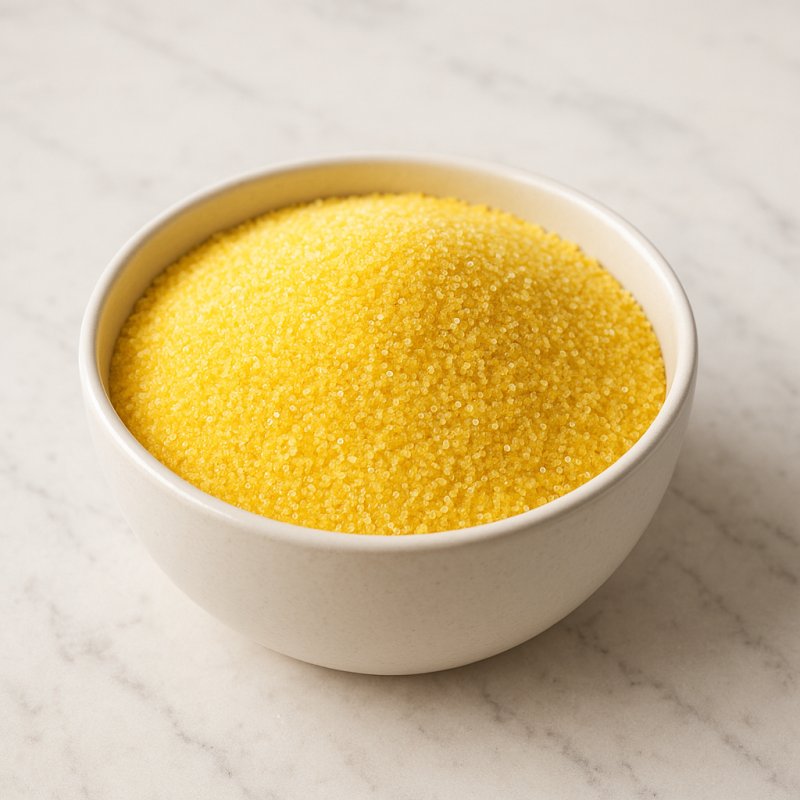
Polenta is a simple, flavorful dish made from corn and an ingredient you can find in many kitchens. Think of polenta like a warm corn porridge, similar to oatmeal but made with corn instead of oats. It originates from Europe, especially northern Italy, but the corn used to make polenta originally comes from the Americas. After people in Europe brought corn from the Americas, it became so popular in Italy that polenta developed.
Origin and cultivation
Corn grows well in warm climates and needs enough sun and water. That is why corn for polenta is grown in many places:
- Northern Italy (regions such as Veneto, Lombardy and Piedmont): polenta has a long tradition there and many different varieties are produced.
- Europe in general: corn is also grown in France, Germany and Eastern Europe and processed into polenta or similar corn dishes.
- The Americas: in the USA and South America there are vast cornfields. Corn is grown there for many purposes, including food products like polenta.
- Other growing areas: in warmer countries such as Spain or Portugal you can also find cornfields that can supply corn for polenta.
Available types and variants
Polenta comes in several forms. Sometimes it looks very fine, sometimes coarse like small grains. Here are the main variants, explained simply:
Polenta comes in several forms. Sometimes it looks very fine, sometimes coarse like small grains. Here are the main variants, explained simply:
- Coarse grind: this polenta has larger grains and takes longer to cook. It is firm and has more bite, almost like small potato pieces in the porridge.
- Medium: a mix of coarse and fine grains. It is versatile and often used for classic polenta dishes.
- Fine grind: this polenta cooks faster and becomes very creamy, almost like pudding.
- Pre-cooked / instant: this variant is precooked and then dried. You only need to rehydrate it with hot water or milk — very practical when you need something quick.
- Stone-ground: here the corn is slowly ground between stones. This preserves more flavor and makes the polenta particularly aromatic. It is often described as more artisanal.
- Degerminated or whole-grain kernels: some polenta is made from corn that has parts removed to increase shelf life. Other variants contain the whole kernel and have a slightly nuttier taste.
- Color differences: there is yellow and white corn. Yellow polenta is the most common, white has a milder taste.
- Regional variants: in Italy there is, for example, Polenta taragna (mixed with buckwheat) or polenta stirred with cheese — this changes flavor and texture.
- Ready polenta slabs: precooked slabs or slices that you can cut, fry or grill. Handy for takeaway or quick dishes.
Where to find polenta
Polenta is available in supermarkets, health food stores, Italian delis and online. Check the label: "instant" means quick to prepare, "coarse polenta" takes more time. If you want more flavor look for "stone-ground" or "organic". Polenta is also gluten-free, so it is suitable for people who cannot eat gluten.
Polenta is available in supermarkets, health food stores, Italian delis and online. Check the label: "instant" means quick to prepare, "coarse polenta" takes more time. If you want more flavor look for "stone-ground" or "organic". Polenta is also gluten-free, so it is suitable for people who cannot eat gluten.
Polenta is therefore versatile: from coarse to fine, from quick to traditional, from different countries and in different colors. There is a suitable variant for every preference.
