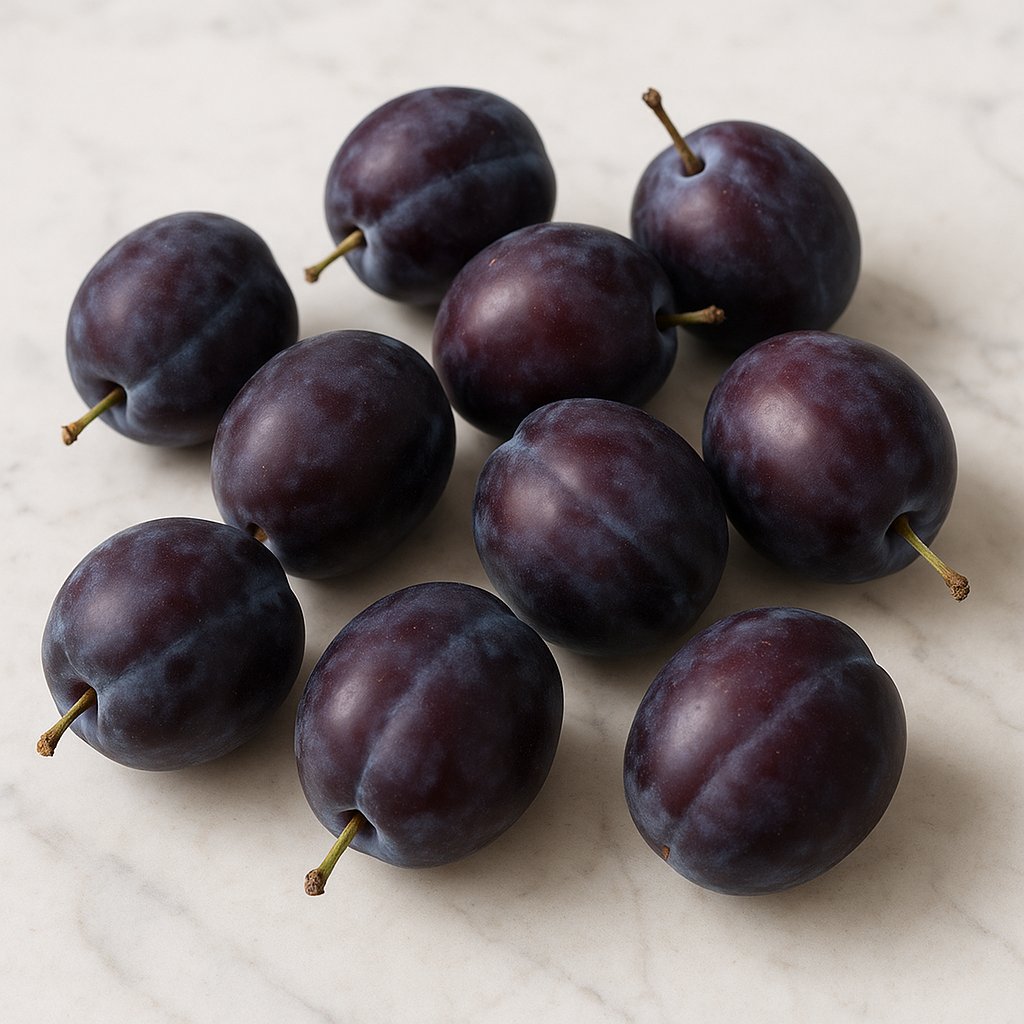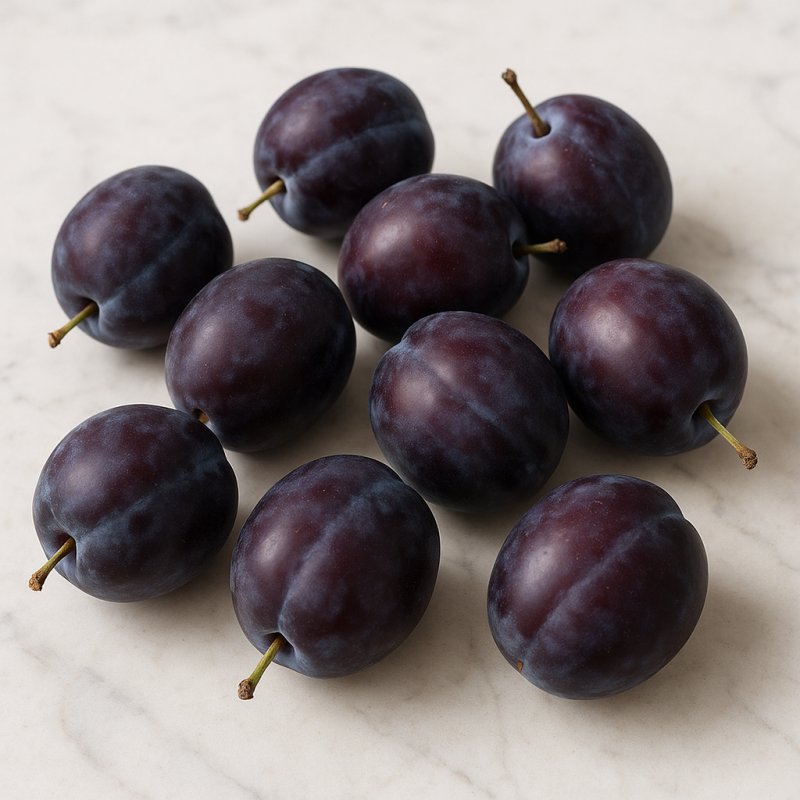
Availability and types of plums – that is: where they come from, when you can buy them and which varieties there are – is actually quite simple to understand. Zwetschgen are a type of plum, but you can often tell the difference: they are usually more elongated, have firm flesh and are particularly good for baking. They are often called a 'baking plum' because they do not get mushy so quickly when cooked.
Origin: Zwetschgen originally come from countries east of Europe – many plum species first grew in Central Asia. Long ago people brought the trees to Europe, where they thrived. Today zwetschgen are found in many gardens and farms across Central Europe. One can therefore say: their family comes from far away, but they feel very much at home in our gardens.
Growing regions: In Germany zwetschgen grow especially well in regions with warm, sunny summers and cool winters. These include parts of Baden-Württemberg, Rhineland-Palatinate and Bavaria. Many are also grown in Austria and Switzerland as well as in countries such as France, Italy, Spain and Balkan states. These places have the right climate and often many orchards where the trees stand.
Available varieties: There are many different zwetschgen varieties. Some ripen early in the year, others later. Here are a few well-known types and how you can distinguish them:
- Hauszwetschge – the classic: dark blue to purple, firm flesh and good flavor. Often found in gardens.
- Bühler Frühe – an early variety that ripens already in summer. Good if you prefer to have zwetschgen earlier.
- Bühler Späte – ripens later in the year, so the season lasts longer.
- Stanley – a variety well suited to drying (dried plums are also called 'prunes' or 'dried plums').
- Victoria – actually more of a round plum, good for eating fresh; useful as a comparison because zwetschgen are usually longer and firmer.
Forms in trade: You won't find zwetschgen only fresh. Many forms are available year-round:
- Fresh in supermarkets and at markets – the main season is from July to October, depending on variety.
- Dried (dried plums) – keep a long time and are sweet. Great for snacking or in muesli.
- Preserved as compote, jam or in jars – this way you can enjoy zwetschgen outside of the season.
- Frozen – in the freezer they stay almost as good as fresh, only softer when thawed.
- In drinks and spirits – zwetschgen are also used to make brandies (spirits) or syrups.
Tips for buying and storing: Look for firm skin and the white 'bloom' (that is a natural protective film). If they smell sweet they are usually ripe. In the refrigerator zwetschgen stay fresh for a few days; for freezing you should remove the stone (pit), then they are easier to use.
Zwetschgen are therefore very versatile: different varieties for different times of the year, and many processing methods so you can enjoy the fruit's aroma all year round.