Menu & categories

Plums

Juicy stone fruit with a mildly sweet-tart flavor – ideal for cakes, compote and snacks.

Wiki about plum Nutri-Score A Vegan Yes Gluten-free Yes Lactose-free Yes Nut-free Yes
NUTRITION / 100 g
46 kcal 0.7 g Protein 11.4 g Kohlenhydrate 0.3 g Fett

Introduction

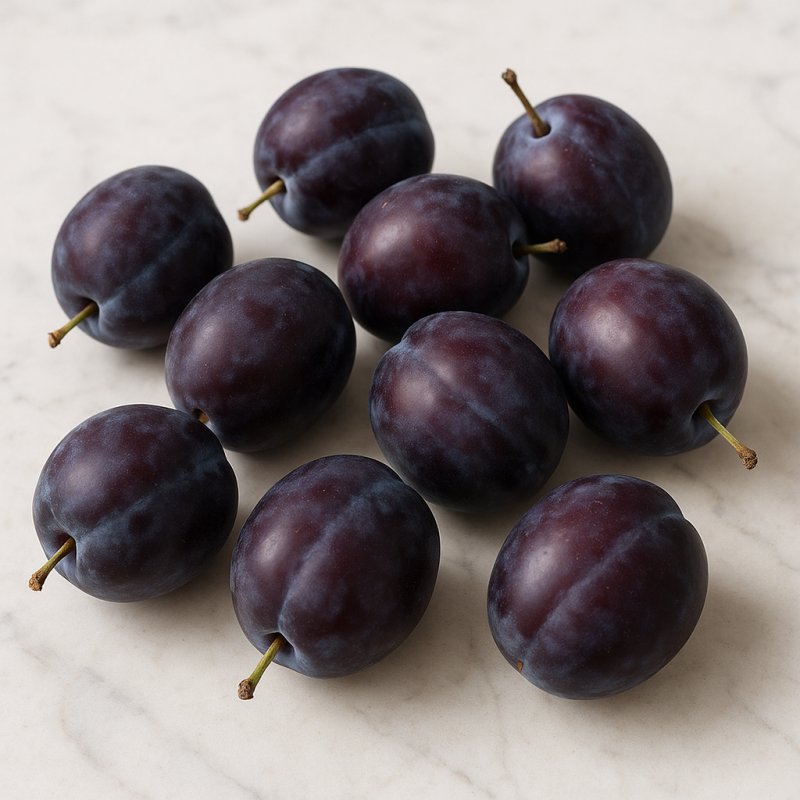
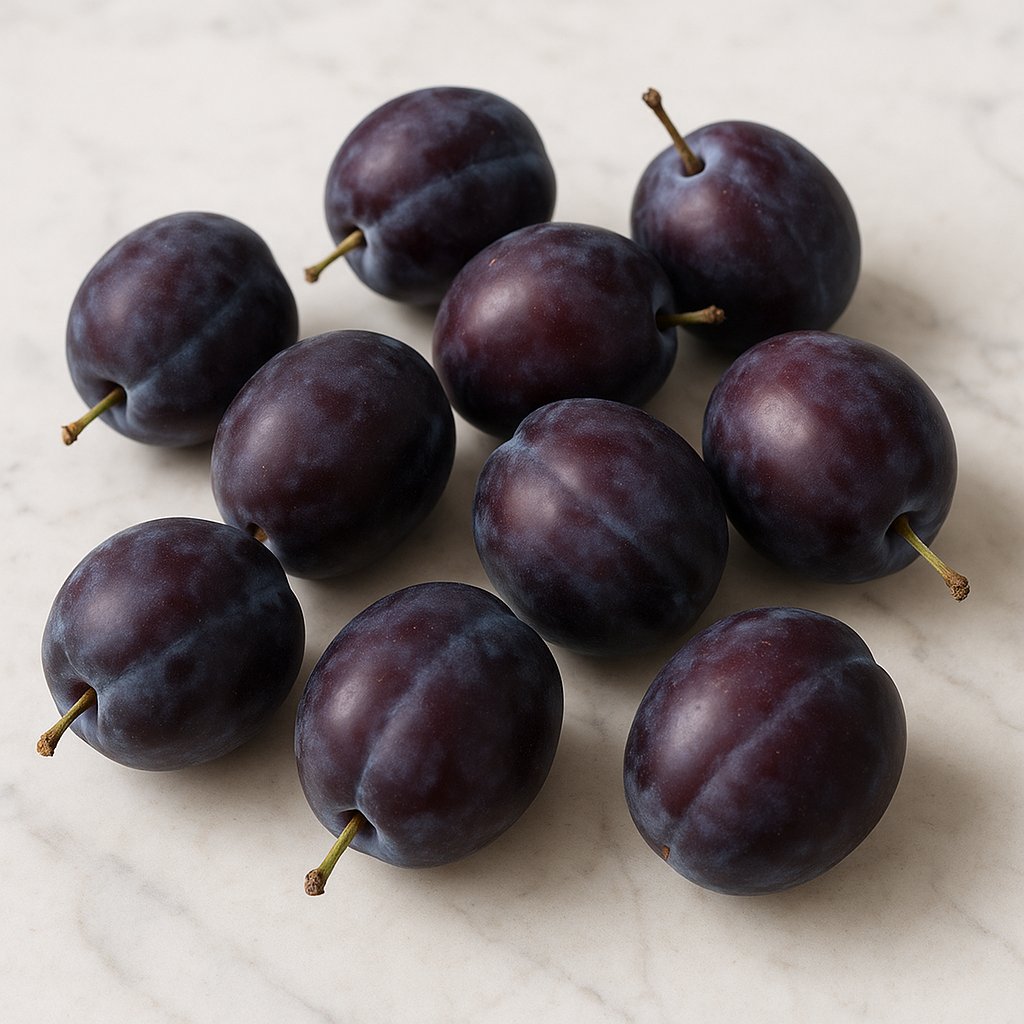
Fresh plums with dark blue skin
I have a soft spot for plums, and it's not just for nostalgia. The very first bite reminds me of sunny afternoons at the farmer's market: the narrow, slightly elongated shape, the deep-blue skin and that firm, juicy flesh that is sweet and at the same time pleasantly tart. Once, at a summer fair, I watched a woman with calm routine pit kilogram after kilogram and turn them into a cake that immediately silenced all conversation.

Plums are solid all-rounders in the kitchen. They are excellent for baking because they retain their shape when cooked, and they make wonderful compotes, purées and liqueurs. I remember a colleague proudly bringing a jar of plum brandy; the scent recalled grandma's pantry and we discussed whether a dash of it in a winter punch would be outrageously good.

A few practical things I've learned on the way:

  • Season: Mainly late summer to autumn, perfect for harvest festivals and jam nights.
  • Shelf life: In the refrigerator plums keep for a few days; to ripen them it's best to leave them at room temperature.
  • Culinary strengths: Ideal for baking, for compote, plum jam, dumplings and spirits.
  • Health: They provide vitamins, fiber and of course fruit sugars; with too many fresh fruits the sorbitol can have a mild laxative effect.
I love how plums bring out the best in simple ingredients: a basic yeast dough, a layer of plums, some streusel and the cake is done, bringing friends to the table faster than any invitation. Sometimes I experiment with cinnamon, sometimes with a pinch of cardamom, and once a tiny tablespoon of balsamic vinegar provided such a surprising counterpoint that everyone fell quiet before asking for a second slice.

If I wish for anything, it's that more people recognize the plum as the versatile, down-to-earth jewel it is; it is humble, reliable and has a charm of its own that instantly elevates any dish.

Availability & types

Availability and types of plums – that is: where they come from, when you can buy them and which varieties there are – is actually quite simple to understand. Zwetschgen are a type of plum, but you can often tell the difference: they are usually more elongated, have firm flesh and are particularly good for baking. They are often called a 'baking plum' because they do not get mushy so quickly when cooked.

Origin: Zwetschgen originally come from countries east of Europe – many plum species first grew in Central Asia. Long ago people brought the trees to Europe, where they thrived. Today zwetschgen are found in many gardens and farms across Central Europe. One can therefore say: their family comes from far away, but they feel very much at home in our gardens.

Growing regions: In Germany zwetschgen grow especially well in regions with warm, sunny summers and cool winters. These include parts of Baden-Württemberg, Rhineland-Palatinate and Bavaria. Many are also grown in Austria and Switzerland as well as in countries such as France, Italy, Spain and Balkan states. These places have the right climate and often many orchards where the trees stand.

Available varieties: There are many different zwetschgen varieties. Some ripen early in the year, others later. Here are a few well-known types and how you can distinguish them:

  • Hauszwetschge – the classic: dark blue to purple, firm flesh and good flavor. Often found in gardens.
  • Bühler Frühe – an early variety that ripens already in summer. Good if you prefer to have zwetschgen earlier.
  • Bühler Späte – ripens later in the year, so the season lasts longer.
  • Stanley – a variety well suited to drying (dried plums are also called 'prunes' or 'dried plums').
  • Victoria – actually more of a round plum, good for eating fresh; useful as a comparison because zwetschgen are usually longer and firmer.
Forms in trade: You won't find zwetschgen only fresh. Many forms are available year-round:

  • Fresh in supermarkets and at markets – the main season is from July to October, depending on variety.
  • Dried (dried plums) – keep a long time and are sweet. Great for snacking or in muesli.
  • Preserved as compote, jam or in jars – this way you can enjoy zwetschgen outside of the season.
  • Frozen – in the freezer they stay almost as good as fresh, only softer when thawed.
  • In drinks and spirits – zwetschgen are also used to make brandies (spirits) or syrups.
Tips for buying and storing: Look for firm skin and the white 'bloom' (that is a natural protective film). If they smell sweet they are usually ripe. In the refrigerator zwetschgen stay fresh for a few days; for freezing you should remove the stone (pit), then they are easier to use.

Zwetschgen are therefore very versatile: different varieties for different times of the year, and many processing methods so you can enjoy the fruit's aroma all year round.
Details & nutrition

Property Value
Unit g
Average weight per piece 35
Calories per 100 46
Protein per 100 0.7
Carbohydrates per 100 11.4
Sugar per 100 9.9
Fat per 100 0.3
Saturated fat per 100 0.1
Monounsaturated fat 0.1
Polyunsaturated fat 0.1
Fiber per 100 1.4
Vitamin C (mg) per 100 5
Vitamin D (IU) per 100 0
Calcium (mg) per 100 6
Iron (mg) per 100 0.2
Nutri-Score A
CO₂ footprint 0.4 kg CO2e/kg
Origin Germany/Europe (seasonal)
Gluten-free Yes
Lactose-free Yes
Nut-free Yes
Vegan Yes
Note Nutritional values refer to raw, edible portions without the stone; values may vary depending on variety and ripeness.

Technical & scientific information


Zwetschgen are a cultivated form of the European plum (botanically often assigned to Prunus domestica) and are characterized by an elongated to elliptical fruit shape, a firm, juicy fruit mass and comparatively firm flesh. They ripen late from summer to autumn and in Central Europe are traditionally processed fresh, dried, into jams, compotes or distillates. Typical cultivar groups differ in skin colour, acidity and storage potential.

Composition and macronutrients
Fresh zwetschgen consist mainly of water (approximately 80–87%). The main energy source is carbohydrates, particularly simple sugars such as glucose and fructose as well as the sugar alcohol sorbitol, the content of which is decisive for the laxative effect of dried fruits. Typical values (per 100 g fresh weight) are in the range of:

  • Calories: about 40–70 kcal
  • Carbohydrates: 8–12 g (of which sugars 8–10 g)
  • Fiber: 1–3 g
  • Protein: approx. 0.5–1 g
  • Fat: < 0.5 g
Secondary plant compounds
Zwetschgen contain a diverse mix of phenolic compounds. The skin is particularly rich in anthocyanins (mainly cyanidin derivatives), which are responsible for dark to purple colour hues. Other relevant substances are flavonols (e.g. quercetin), chlorogenic acid as well as hydrolysable and condensed tannins. These polyphenols contribute to oxidative stability, flavour and possible health-promoting properties.

Vitamins and minerals
Fresh zwetschgen provide vitamin C in moderate amounts (typically 5–10 mg/100 g), small amounts of provitamin A (carotenoids) and vitamin K. Important minerals include potassium (commonly ~150–250 mg/100 g), traces of magnesium, calcium and phosphorus. When dried these nutrients concentrate proportionally to the water loss.

Processing technology
Common procedures include cooling for storage, heating (pasteurisation) to stabilise compotes and jams and thermal treatment in baked goods. Heating leads to losses of heat-labile vitamins (especially vitamin C) and to chemical changes such as Maillard reactions and polyphenol oxidation, which affect colour and aroma. Drying (at 50–70 °C or by freeze-drying) concentrates sugars and fibers; dried plums (zwetschgen-based dried fruits) are often used as a natural laxative. For high-quality colour and flavour retention modern methods such as vacuum drying or gentle pasteurisation are used. Distillation to fruit brandies (e.g. plum brandy) extracts volatile aroma compounds and ethanol.

Health aspects
The combination of fiber, sorbitol and polyphenols explains the positive effect on bowel function; sorbitol draws water into the intestine, soluble fibers are fermented by gut bacteria to short-chain fatty acids that can support intestinal health. Antioxidant polyphenols may have anti-inflammatory effects. Zwetschgen have a moderate glycaemic load, so they should be considered in moderation when monitoring blood sugar. Allergic individuals should note that stone fruit can trigger oral allergy symptoms and the pits contain small amounts of amygdalin, which at very high intake can lead to cyanide release; however eating pits is uncommon and not recommended.

Storage and ripening behaviour
Zwetschgen are climacteric fruits; they produce ethylene and can further ripen after harvest. Cooling reduces metabolism and extends storage life; optimal storage is at low temperatures and moderate relative humidity to avoid shrivelling and mold. Industrial processing takes respiration, effective hygiene measures and packaging atmosphere into account to extend shelf life.

Overall zwetschgen are nutritionally valuable fruits with a favourable nutrient profile, specific secondary plant compounds and versatile processing options that are relevant both culinarily and for health.

Wiki entry for: plum
Active now: 50 visitors of which 2 logged-in members in the last 5 minutes