Menu & categories

Plums

Juicy stone fruits with a delicate sweetness – ideal for cakes, purée and snacks.

Wiki about plum Nutri-Score A Vegan Yes Gluten-free Yes Lactose-free Yes Nut-free Yes
NUTRITION / 100 g
46 kcal 0.7 g Protein 11.4 g Kohlenhydrate 0.3 g Fett

Introduction

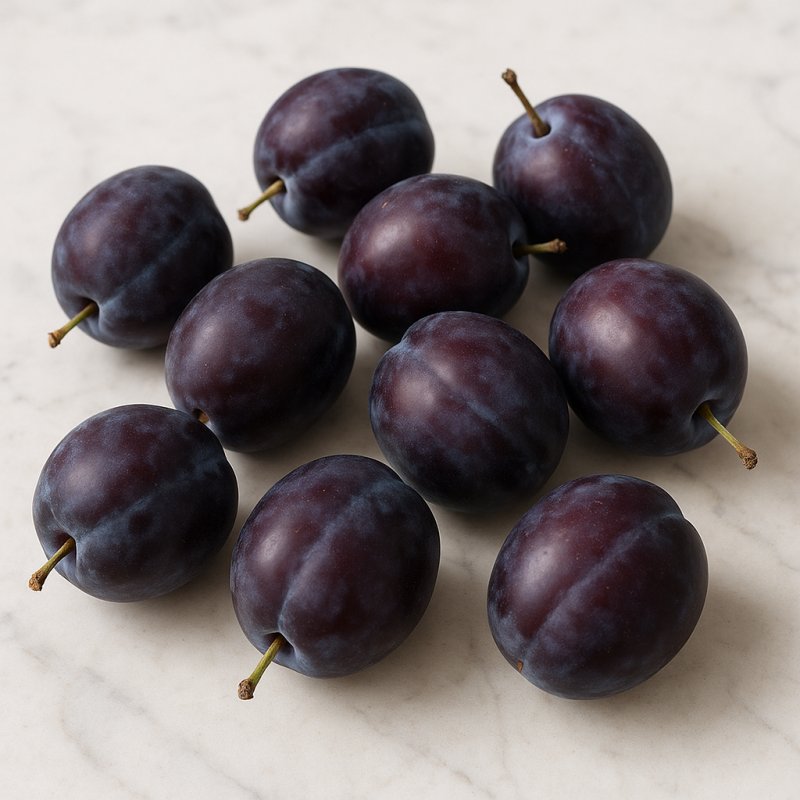
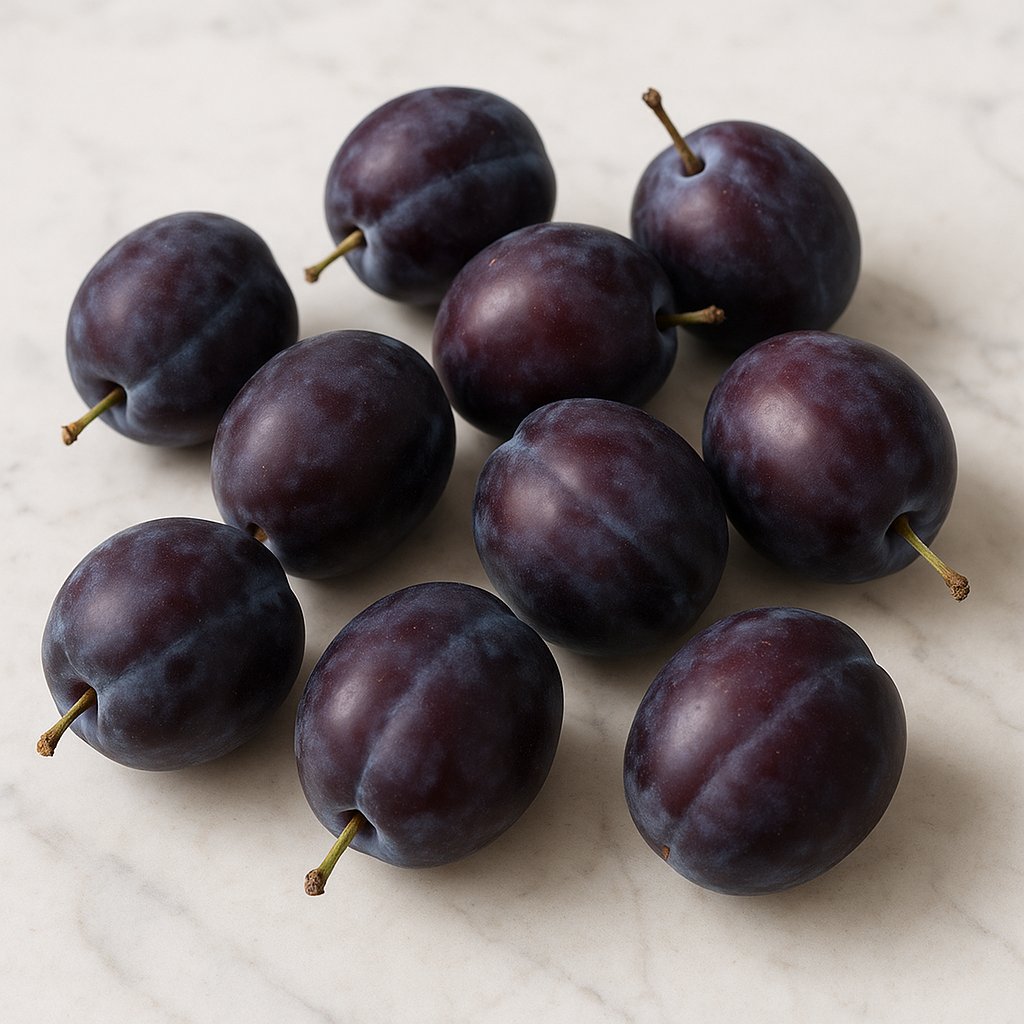
Fresh, dark purple plums with smooth skin

I have a particular weakness for the zwetsche. Even the smell at the weekly market – a mix of sun-warmed sweetness and a slight tart note – immediately puts me in the mood to cook. Once a colleague brought a crate of zwetsches to the office, and we improvised a small tasting break: some ate them plain, others with a dollop of quark. I still remember how surprised we all were by how versatile this fruit is.

For clarity: zwetsches are more closely related to plums, but usually have an elongated shape, firm flesh and separate beautifully from the stone. That makes them perfect for cakes, compote and jam. My favourite image remains the classic zwetschgen cake with streusel – the combination of a juicy fruit base and a crunchy top is simply unbeatable. One weekend when I had nothing to do ended with me baking three trays by myself and the whole street asking about the scent.

Important points in brief:

  • Season: late summer to early autumn.
  • Culinary uses: baking, preserving, spirits (zwetschgengeist) and savory dishes with game or pork.
  • Storage: cool and well ventilated; for longer shelf life freeze or preserve in jars.
I like to experiment: a little cinnamon and vanilla in the compote, lemon zest in the jam, or a splash of red wine when braising. A tip I got from a friend in the neighbouring village: briefly blanch zwetsches in hot water, then the skin peels off more easily – ideal when you want an especially fine texture. Sometimes I even mix them into salad with goat cheese and walnuts – the play of sweet, salty and nutty always works.

In the end the zwetsche remains for me one of the most charming fruits of late summer: down-to-earth, honest and full of possibilities. It brings memories, aromas and many small culinary adventures, and every time I slice one I already have a good idea which recipe will come next.

Availability & types

Availability and types of zwetsches

Zwetsches are a particular kind of plum. They are recognised by their elongated shape, thin skin and firm flesh. They are especially popular for baking, preserving and drying because they do not break down as much when heated as some round plums. Here I explain in simple terms where zwetsches come from, where they are grown and which varieties and forms exist.

Origin
Zwetsches originally come from Europe and the area around present-day Anatolia (which is part of southeastern Europe and western Asia). Many centuries ago people selected the best trees and propagated them – this produced different varieties. You can imagine it like with dogs: from a basic type, many different "breeds" with different characteristics arose through selection.

Growing regions
Zwetsches grow best where summers are warm and winters not too severe. Typical growing regions in Europe are:

  • Germany: regions like the Palatinate, Baden-Württemberg, Rheinhessen and the Rhineland.
  • Austria and Switzerland: many home gardens and smaller plantations.
  • France: particularly the area around Agen (known for dried plums).
  • Eastern Europe: countries like Hungary, Romania and some Balkan states.
  • Turkey and the USA: there are also larger cultivation areas there.
Zwetsches are also found in many gardens: they are popular fruit trees for home use.

Available varieties and types
Zwetsches come in many varieties. Some ripen early in summer, others only in autumn. Here are the main types, explained so children can understand:

  • Early varieties: these zwetsches ripen earlier, often already in July or August. They are practical if you want to eat zwetschgen cake early.
  • Late varieties: ripen later, usually in September or October. They often have a stronger flavour.
  • Drying varieties (baking and drying zwetsches): certain varieties are particularly suitable for drying. When water is removed from the fruit, dried plums or "baking zwetsches" are produced, which are more shelf-stable.
  • Garden or table varieties: these are juicier and taste good fresh from the tree.
Examples of variety names you might hear in trade or from fruit growers are 'Hauszwetschge', 'Bühler Frühzwetschge' or 'Agen', but names may vary by region. Importantly: zwetsches are usually dark blue to purple and firm inside, making them excellent for cakes, compotes and jam.


Season and availability
Fresh zwetsches are mainly available from late summer to autumn. Outside this time you can buy them as preserved (i.e. in jars) or dried fruit – these variants are available year-round. Frozen zwetsches are also a practical choice when you want to bake or cook later.
In summary: zwetsches come from Europe and surrounding areas, grow in many countries and come in many varieties – for fresh eating, baking or drying. If you want to eat zwetsches out of season you will find them fresh in season or processed all year round.
Details & nutrition

Property Value
Unit g
Average weight per piece 35
Calories per 100 46
Protein per 100 0.7
Carbohydrates per 100 11.4
Sugar per 100 9.9
Fat per 100 0.3
Saturated fat per 100 0.1
Monounsaturated fat 0.1
Polyunsaturated fat 0.1
Fiber per 100 1.4
Vitamin C (mg) per 100 6
Vitamin D (IU) per 100 0
Calcium (mg) per 100 6
Iron (mg) per 100 0.2
Nutri-Score A
CO₂ footprint 0.3 kg CO2e/kg
Origin Seasonal Germany/Europe (depending on growing region)
Gluten-free Yes
Lactose-free Yes
Nut-free Yes
Vegan Yes
Note Remove the stone before eating; well suited for compote, jam and baked goods.

Technical & scientific information

Zwetsches (often also zwetschge or regionally called plum) are fruits from the genus Prunus, characterised by an elongated-oval shape and firm flesh. Botanically they belong to the European plum group (Prunus domestica), with the "zwetsche" variety valued for its dense texture and slightly sweet-sour taste. Zwetsches are eaten fresh, cooked, dried or processed into spirits and baked goods and play an important role in Central European cuisines.

Chemical composition and nutritional values. Zwetsches consist mainly of water (approx. 80–87 %). The main macronutrients per 100 g of flesh are approximately in the following ranges: Energy 40–50 kcal, carbohydrates 9–12 g (of which simple sugars 8–10 g), fibre 1.5–2.5 g, protein 0.6–1 g and fat < 0.5 g. Minerals and vitamins include mainly potassium (approx. 150–200 mg/100 g), magnesium, traces of iron and phosphorus as well as vitamins such as vitamin C (about 5–10 mg/100 g) and vitamin K in small amounts.

Secondary plant compounds. Zwetsches contain a spectrum of phenolic compounds that are nutritionally relevant. These include anthocyanins (especially in dark varieties), flavonols such as quercetin, and phenolic acids (e.g. chlorogenic acid). These substances contribute to the fruit's antioxidant potential and affect colour, taste and stability during processing. Zwetsches also contain relatively high amounts of sorbitol, a sugar alcohol that can contribute to their mild laxative effect.

Processing and technological aspects.

  • Fresh storage: Zwetsches are climacteric fruits that produce ethylene after harvest; cooling and controlled atmospheres delay ripening and spoilage.
  • Drying: Removing water increases the sugar content per unit mass, the texture changes, and the concentration of phenols relatively increases. Sulphite-containing preservatives are often used for dried plums (baking plums) to prevent browning.
  • Heating: Canning and pasteurization reduce vitamin C content and affect the availability of gelling agents (pectin). At the same time, microorganisms are inactivated.
  • Pitting: When crushing or milling, care is needed because breaking the stone can allow the release of amygdalin from the pit; amygdalin can be converted to cyanide and is of health relevance.
Health aspects. Zwetsches can, due to their fibre and sorbitol content, promote intestinal motility; in sensitive individuals excessive consumption can lead to gas or diarrhea. The phenolics present contribute to antioxidant effects, which in studies have been associated with lower markers of oxidative stress; however, claims about specific disease prevention should be assessed with nuance. Dried plums have been linked in some studies to positive effects on bone density, although mechanisms are still under investigation.

Safety and storage. Fresh zwetsches should be stored cool and consumed within a few days. In industrial processing, measures to inactivate enzymes such as polyphenol oxidase and to prevent microbial spoilage are common. When handling pits, caution is advised to avoid unintended release of pit constituents.

Overall, zwetsches are valuable, low-calorie fruits with a favourable nutrient profile, accompanying antioxidant compounds and versatile processing properties that make them useful both in fresh consumption and in industrial products and traditional recipes.

Wiki entry for: plum
Active now: 17 visitors of which 2 logged-in members in the last 5 minutes