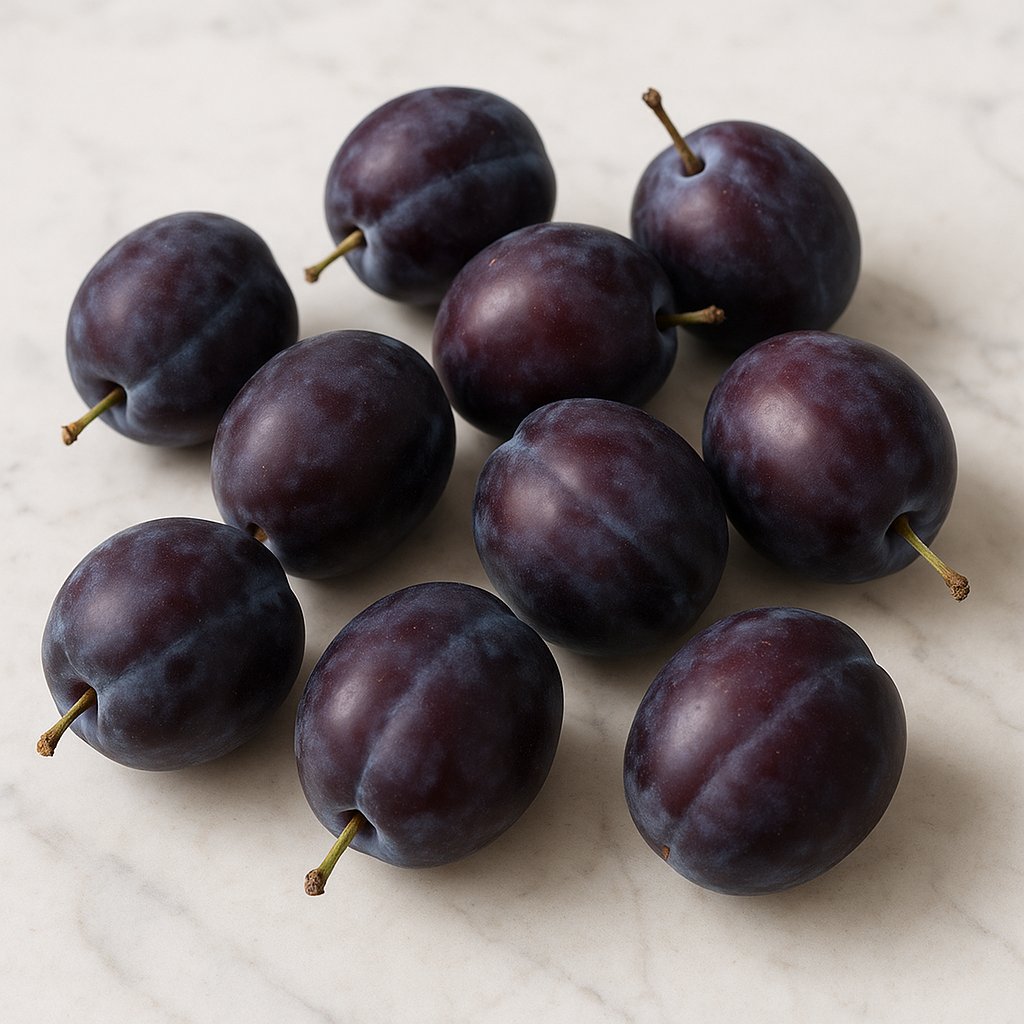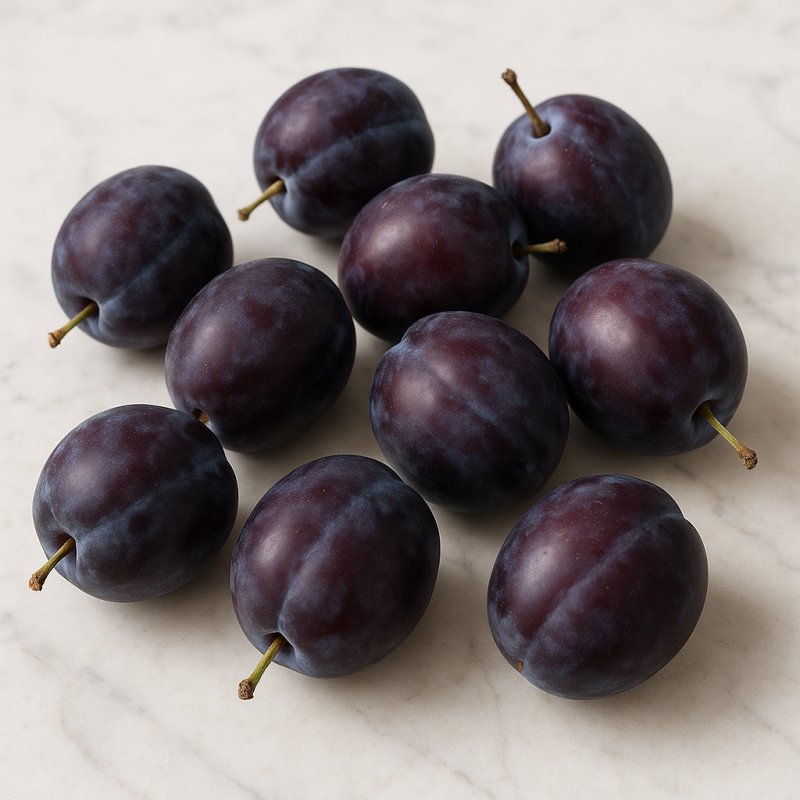
Zwetgen (sometimes also called Zwetschgen) are a type of plum especially popular in Central Europe. Picture a Zwetschge like a small blue egg: it is elongated, has a firm skin and fairly firm flesh. The name “Zwetgen” is a regional pronunciation, but it refers to the same fruit. They taste mildly sweet with a slightly tart note and are great for baking, preserving or simply snacking.
Origin
Zwetgen originally come from Europe and West Asia. People have cultivated them for a very long time because they store well and are easy to process. In Germany and neighboring countries zwetgen have grown for centuries in gardens, on traditional orchards and in fruit plantations. You can imagine them as old fruit trees that often stand in the same place for a long time and produce many fruits each year.
Zwetgen originally come from Europe and West Asia. People have cultivated them for a very long time because they store well and are easy to process. In Germany and neighboring countries zwetgen have grown for centuries in gardens, on traditional orchards and in fruit plantations. You can imagine them as old fruit trees that often stand in the same place for a long time and produce many fruits each year.
Growing regions
Zwetgen thrive in warm, sunny locations but also tolerate colder winters. Important growing regions include:
Zwetgen thrive in warm, sunny locations but also tolerate colder winters. Important growing regions include:
- Germany: regions such as Rheinhessen, Pfalz, Baden and Bavaria.
- Austria and Switzerland: especially sunny valleys and hilly areas.
- France: particularly in Alsace and the southwest (where the famous “Prune d’Agen” is grown).
- Other countries: Hungary, Croatia and parts of the USA also cultivate zwetgen.
Available varieties and types
There are many different varieties of zwetgen, just as there are many varieties of apples. Some ripen early, others late. This means:
There are many different varieties of zwetgen, just as there are many varieties of apples. Some ripen early, others late. This means:
- Early varieties: these ripen already in summer (e.g. July). They are often somewhat juicier.
- Late varieties: these ripen in autumn (September/October) and are often very aromatic and firm.
- Typical varieties: names like “Hauszwetschge” (a classic, well-known variety), “Bühler Frühzwetschge” (early) or the French “Prune d’Agen” (good for drying) are examples. You don't need to remember them all – the important thing is: there are varieties for fresh eating, baking or drying.
Forms available in trade
You can find zwetgen not only fresh but also in many other forms, so they are nearly available year-round:
You can find zwetgen not only fresh but also in many other forms, so they are nearly available year-round:
- Fresh: only in season (summer/autumn) at markets, supermarkets or from farmers.
- Dried: as dried plums or “baking prunes” – long-lasting and sweet.
- Preserved: jam, compote or fruit purée – this way you can eat zwetgen all year round.
- Frozen or canned: convenient when you need zwetgen out of season.
Selection tip
When buying fresh zwetgen, look for firm skin and a slightly matte, blue appearance – that is a good sign. At weekly markets you often find local varieties that are particularly fresh. If you want to store them longer, dried or preserved forms are practical.
When buying fresh zwetgen, look for firm skin and a slightly matte, blue appearance – that is a good sign. At weekly markets you often find local varieties that are particularly fresh. If you want to store them longer, dried or preserved forms are practical.
In summary: Zwetgen are hardy, aromatic fruits from Europe, grown in many varieties and available fresh, dried or preserved. Whether you want them for baking, compote or simply snacking – there is almost always a suitable form throughout the year.