Menu & categories

Plums

Juicy stone fruit – ideal for baking, preserving and snacking.

Wiki about plum Nutri-Score A Vegan Yes Gluten-free Yes Lactose-free Yes Nut-free Yes
NUTRITION / 100 g
46 kcal 0.7 g Protein 11.4 g Kohlenhydrate 0.3 g Fett

Introduction

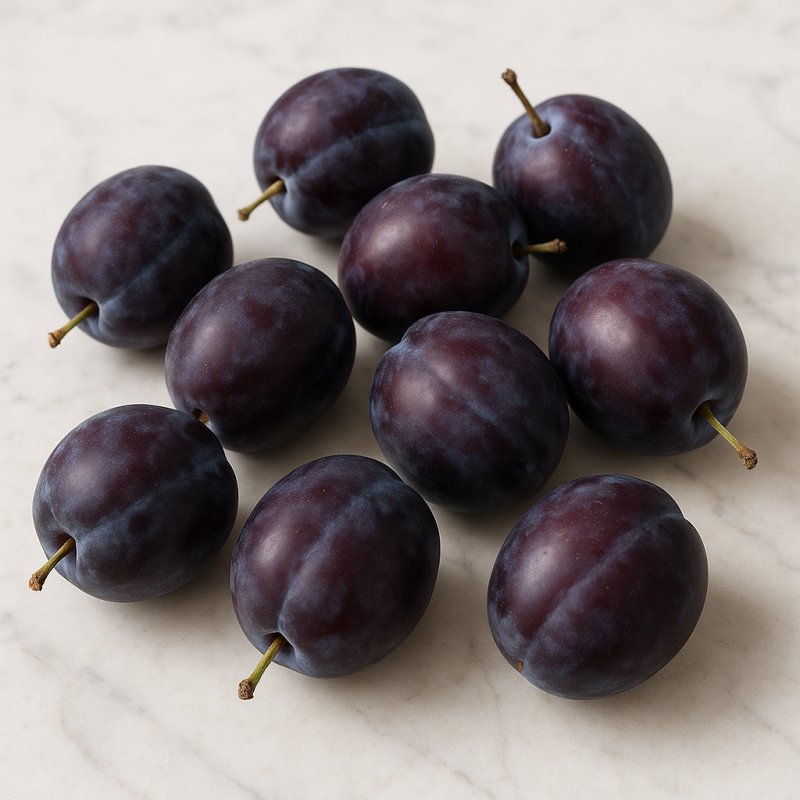
Fresh plums (Zwetschgen) with bluish-purple skin
I love zwetgen – or, as most people call them, plums. These small, oval plums with their velvety skin feel to me both familiar and surprising. I still remember a late-summer market where an old fruit grower pressed a handful into my hand and said, "Try one, then you'll understand." The first bite was a little explosion: sweet, tart, a bit bitter and incredibly aromatic.

What I especially appreciate about zwetgen is their versatility. They are sturdy enough for cakes and compotes, but delicate enough to be enjoyed raw. A colleague once brought freshly baked zwetgen cake to the office, and the aroma alone made us all seem an hour more productive – at least that's what I believe.

In my kitchen zwetgen appear frequently. I like them roasted with honey and thyme, as a silky spread on warm bread, or as a fruity filling for seasonal dumplings. They forgive mistakes: a little too long on the stove? No problem, it will simply become an aromatic purée. A dollop of crème fraîche or a strong cheese always goes well with them.

  • Backen: zwetgen cake, crumb cake, galettes.
  • Einmachen: jam, chutney, zwetgen compote.
  • Brennen & Trocknen: spirits, baking prunes, drying for winter desserts.
I also find that zwetgen tell stories: of grandma's garden, weekends in the countryside and spontaneous visits that end with a piece of cake. The best conversations come while eating, and zwetgen have the wonderful ability to accompany exactly those moments. When I see them, I reach for them – not just for the taste, but because they evoke memories and new ideas at the same time. An ingredient can be this simple and this great.

Availability & types

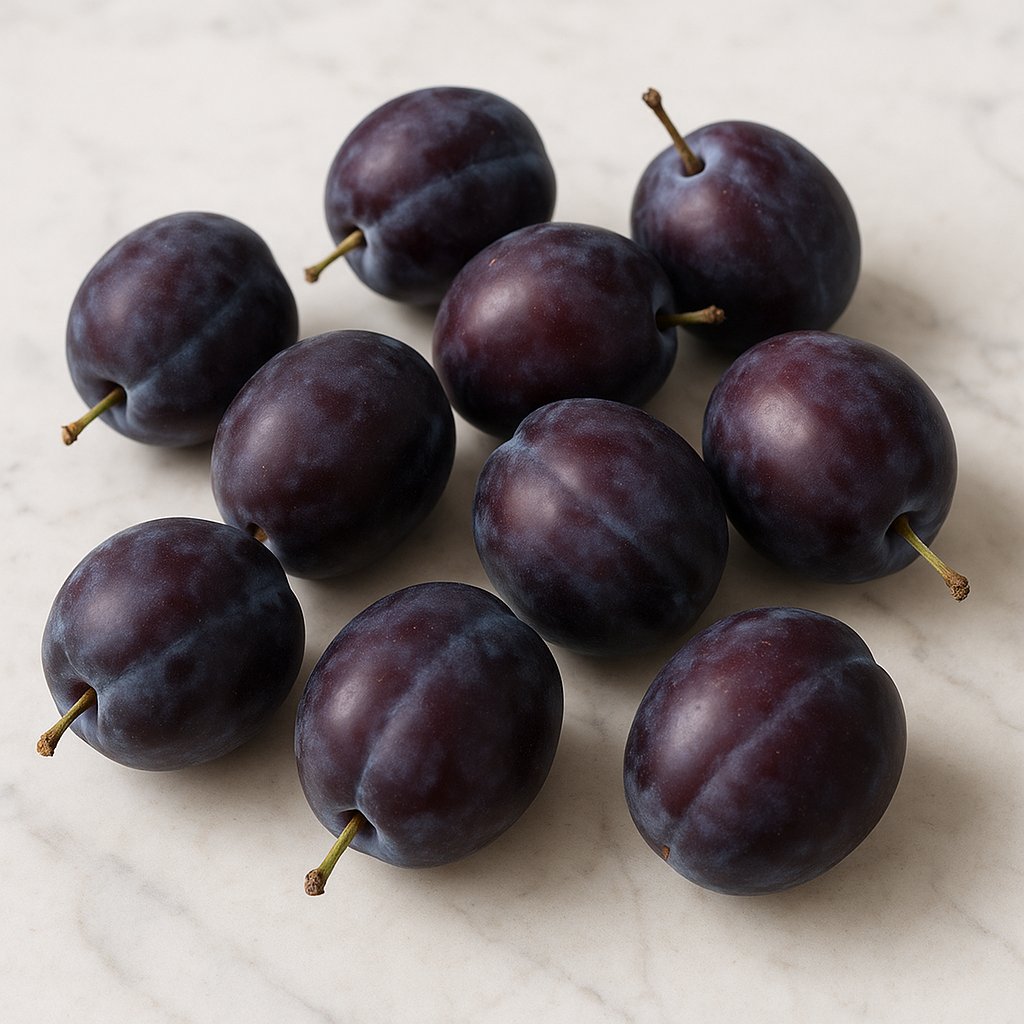
Zwetgen (sometimes also called Zwetschgen) are a type of plum especially popular in Central Europe. Picture a Zwetschge like a small blue egg: it is elongated, has a firm skin and fairly firm flesh. The name “Zwetgen” is a regional pronunciation, but it refers to the same fruit. They taste mildly sweet with a slightly tart note and are great for baking, preserving or simply snacking.

Origin
Zwetgen originally come from Europe and West Asia. People have cultivated them for a very long time because they store well and are easy to process. In Germany and neighboring countries zwetgen have grown for centuries in gardens, on traditional orchards and in fruit plantations. You can imagine them as old fruit trees that often stand in the same place for a long time and produce many fruits each year.

Growing regions
Zwetgen thrive in warm, sunny locations but also tolerate colder winters. Important growing regions include:

  • Germany: regions such as Rheinhessen, Pfalz, Baden and Bavaria.
  • Austria and Switzerland: especially sunny valleys and hilly areas.
  • France: particularly in Alsace and the southwest (where the famous “Prune d’Agen” is grown).
  • Other countries: Hungary, Croatia and parts of the USA also cultivate zwetgen.
Available varieties and types
There are many different varieties of zwetgen, just as there are many varieties of apples. Some ripen early, others late. This means:

  • Early varieties: these ripen already in summer (e.g. July). They are often somewhat juicier.
  • Late varieties: these ripen in autumn (September/October) and are often very aromatic and firm.
  • Typical varieties: names like “Hauszwetschge” (a classic, well-known variety), “Bühler Frühzwetschge” (early) or the French “Prune d’Agen” (good for drying) are examples. You don't need to remember them all – the important thing is: there are varieties for fresh eating, baking or drying.
Forms available in trade
You can find zwetgen not only fresh but also in many other forms, so they are nearly available year-round:

  • Fresh: only in season (summer/autumn) at markets, supermarkets or from farmers.
  • Dried: as dried plums or “baking prunes” – long-lasting and sweet.
  • Preserved: jam, compote or fruit purée – this way you can eat zwetgen all year round.
  • Frozen or canned: convenient when you need zwetgen out of season.
Selection tip
When buying fresh zwetgen, look for firm skin and a slightly matte, blue appearance – that is a good sign. At weekly markets you often find local varieties that are particularly fresh. If you want to store them longer, dried or preserved forms are practical.


In summary: Zwetgen are hardy, aromatic fruits from Europe, grown in many varieties and available fresh, dried or preserved. Whether you want them for baking, compote or simply snacking – there is almost always a suitable form throughout the year.
Details & nutrition

Property Value
Unit g
Average weight per piece 45
Calories per 100 46
Protein per 100 0.7
Carbohydrates per 100 11.4
Sugar per 100 9.9
Fat per 100 0.3
Saturated fat per 100 0.1
Monounsaturated fat 0.1
Polyunsaturated fat 0.1
Fiber per 100 1.4
Vitamin C (mg) per 100 6.4
Vitamin D (IU) per 100 0
Calcium (mg) per 100 6
Iron (mg) per 100 0.2
Nutri-Score A
CO₂ footprint 0.3 kg CO2e/kg
Origin Germany/Europe (seasonal)
Gluten-free Yes
Lactose-free Yes
Nut-free Yes
Vegan Yes
Note Nutritional values for raw, edible portions. Do not eat the pit; wash and pit before processing.

Technical & scientific information


Zwetgen (often also referred to as Zwetschgen; botanically usually Prunus domestica) are a cultivated form of the European plum, characterized by an elongated-oval fruit shape, a firm flesh structure and a relatively dry texture. The fruit has a smooth, usually blue-violet to dark-blue epidermis, which is protected by a waxy coating (epidermal bloom). Zwetgen are consumed fresh as well as processed in dried, preserved or distilled forms (e.g. zwetgen brandy).

Chemical composition and constituents: composition depends on variety and ripeness. Average nutritional values for fresh zwetgen per 100 g are about 46 kcal energy, 11–12 g carbohydrates (of which 8–10 g are simple sugars), 1.4–2.4 g dietary fiber, 0.6–1.0 g protein and 0.2–0.4 g fat. Important micronutrients include vitamin C (typically 5–10 mg/100 g), vitamin K (several µg/100 g) and minerals such as potassium (approx. 150–200 mg/100 g), magnesium and traces of iron.

Zwetgen also contain a range of bioactive secondary plant compounds. These include:

  • Anthocyanins (e.g. cyanidin derivatives), which are responsible for the blue-violet color and have antioxidant properties.
  • Flavonols such as quercetin and kaempferol, which can modulate inflammatory processes.
  • Sorbitol and other sugar alcohols, which have osmotic effects and can have a laxative effect in sensitive individuals.
  • Pectins and other soluble fibers, which support gel formation during cooking and may have prebiotic effects.
  • Tannins in less ripe fruits, which taste astringent.
Food technology properties and processing methods: zwetgen are suitable for making jams, cake toppings, compotes and dried products due to their relatively high pectin content and firm texture. Common processing steps are washing, sorting, pitting, heating and concentration. Drying uses both conventional hot-air methods and gentler techniques such as freeze-drying or osmotic dehydration. For color and quality stabilization, industrial processes sometimes employ antioxidants or SO2 for sulfitation, while organic products avoid these treatments.

Postharvest physiology and storage: zwetgen are climacteric fruits and show ethylene-driven ripening processes. Storability can be extended by rapid cooling, controlled atmosphere (reduced oxygen, elevated CO2) and hygienic handling. Mechanical bruise damage and microbial spoilage (by fungi such as Monilinia) are typical problems that can be reduced by gentle harvesting and precise temperature control.

Health aspects: consumption of zwetgen can promote bowel activity due to their fiber content and sorbitol and may be helpful in cases of constipation. The polyphenols present act as antioxidants and are associated with positive effects on cardiovascular markers and oxidative stress, although evidence from human studies varies in strength. The glycemic index is moderate, so zwetgen can be part of a balanced diet. It should be noted that the pits contain amygdalin and can release cyanide if crushed; therefore pits should not be consumed in large quantities.

Use in cuisine and industry: culinarily zwetgen are mainly used for baked goods (e.g. plum cake), jams, compotes, dried fruit and distillates. Industrially they play a role in fruit juice concentrates, fruit purées and as a natural source of color and aroma.

Overall, zwetgen are a nutrient-rich, versatile-to-process fruit with specific chemical properties (pectin and anthocyanin content, sorbitol fraction) that are valuable both culinarily and nutritionally. Proper storage and processing reduce losses and undesirable microbiological effects, while moderate integration into the diet can be accompanied by positive effects on digestion and antioxidant status.

Wiki entry for: plum
Active now: 15 visitors of which 2 logged-in members in the last 5 minutes