Menu & categories

Plum jam

Fruity plum spread – sweet, aromatic and versatile.

Wiki about plum jam Nutri-Score D Vegan Yes Gluten-free Yes Lactose-free Yes Nut-free Yes
NUTRITION / 100 g
240 kcal 0.8 g Protein 60 g Kohlenhydrate 0.2 g Fett

Introduction

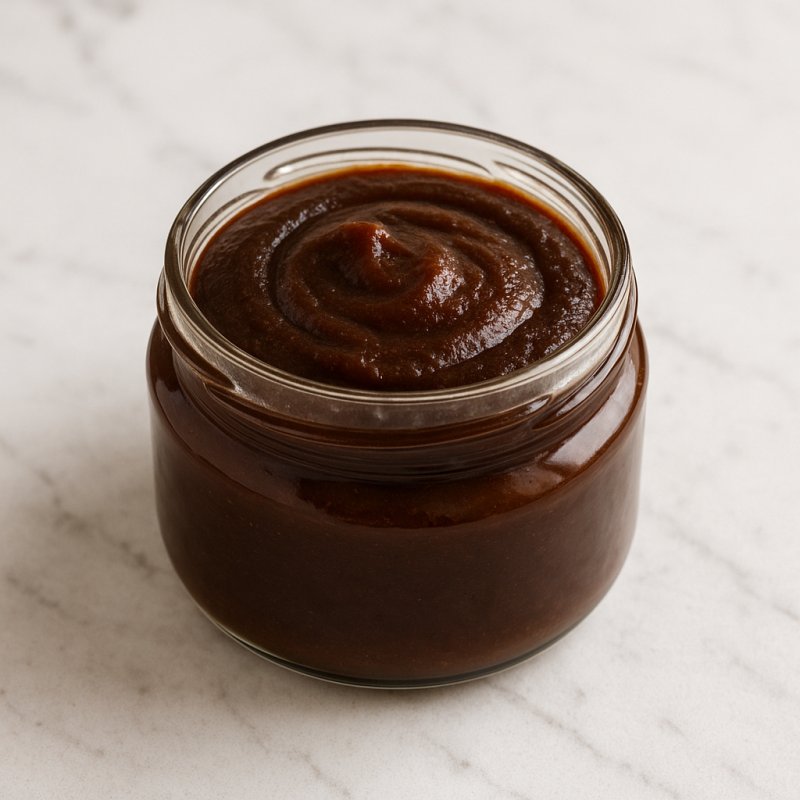
Jar of plum jam made from ripe plums
Plum jam (or plum butter) for me is a small culinary wonder that in its simplicity carries so much warmth. I still remember rainy Sundays when the scent of stewed damsons spread through the flat and everyone suddenly appeared in the kitchen, drawn by something that was both sweet and savory. This spread is not a technical masterpiece, but a piece of everyday life that unfolds wonderfully with just a few ingredients.

What I especially love about plum jam is its versatility. Damsons or plums, some sugar, possibly a squeeze of lemon juice and spices like cinnamon or vanilla are enough to conjure a result that works equally well on bread, with pancakes or as an accompaniment to game dishes. A colleague of mine swears by refining his plum jam with a splash of red wine; it sounds extravagant, but it works surprisingly well.

The preparation is a little meditation: peel, pit, simmer and stir occasionally. I like it when chunks remain because I prefer that texture. Others prefer a velvety, finely puréed jam. Both approaches are right, because plum jam is driven by personal preference.

Some practical tips I've gathered over the years:

  • Less sugar is often sufficient, especially when the fruit is ripe.
  • Play with spices: cloves, star anise or a bit of cinnamon add depth.
  • Shelf life: Cleanly filled jars keep for several months; once opened, store in the refrigerator.
  • Variation: Experiment with orange or ginger zest for freshness.
I like to think of plum jam not just as a mere preserve, but as an invitation to experiment. A simple jar can evoke memories, be a gift or channel a cozy Sunday. When I bring a jar to friends, it's always also a piece of my kitchen — and usually it immediately prompts requests for more.

Availability & types


Availability and types of plum jam are easier to understand than they sound. Plums originally come from Europe and Asia; people have cultivated different plum species for many centuries. The best-known European variety is called the Zwetschge (sometimes also just 'Zwetschg’') and it is often used to make the typical plum jam. There is also the Japanese plum, which yields larger, juicier fruits, and different variants arise from it.

Growing regions – where does plum jam come from? In Europe many plum trees grow in regions with a mild climate. Especially many plums come from:

  • Germany: regions such as the Pfalz, Rheinhessen, Baden-Württemberg and Hessen are known for plums and zwetschgen.
  • Central Europe: countries like Poland, Austria and Switzerland also produce many plums.
  • Southeast and Central Asia: these are the origins of plums, and many varieties still come from these countries today.
Fresh plums are mainly available in late summer and early autumn. That is the best time to make plum jam at home. Filled jars and industrial products are available year-round in supermarkets.

Available types and variants – plum jam is not always the same. You can buy it or make it yourself in different ways. Some important differences are:

  • By fruit variety: Zwetschgenmus (from zwetschgen) is dense and aromatic; plum jam can be made from other plum types and often tastes somewhat fruitier or sweeter.
  • Consistency: there is smooth jam (without pieces) and chunky jam (with small fruit pieces). Smooth jam is reminiscent of applesauce but is usually darker and more intense.
  • Sugar content: some variants are very sweet, others contain less sugar or are made with honey or sweeteners.
  • Seasonings: plum jam is often flavored with cinnamon, vanilla or a bit of rum. That gives the jam a warm note – similar to holiday baked goods.
  • Organic and regional: there are organic varieties where chemical inputs are avoided in cultivation, and small producers often offer regional plum jam made in-house.
  • Special editions: some jars contain nuts, orange peel or are extra concentrated (thicker) – like a spread with a special addition.
Where to find plum jam? You can buy it in supermarkets, at farmers' markets, in farm shops or online. Fresh plum jam from farmers often tastes more intense than mass-market products. It is usually packaged in glass jars (easy to see and reusable), but sometimes also in tubes or small portion jars.

One last simple tip: if you open a jar and store it in the refrigerator, it will stay good for several weeks. Unopened, plum jam often keeps for a long time in the pantry. That way you always have the fruity jam on hand — whether for bread, pancakes or as a sweet side for cakes.

Details & nutrition

Property Value
Unit g
Calories per 100 240
Protein per 100 0.8
Carbohydrates per 100 60
Sugar per 100 50
Fat per 100 0.2
Saturated fat per 100 0
Monounsaturated fat 0
Polyunsaturated fat 0.1
Fiber per 100 3
Vitamin C (mg) per 100 2
Vitamin D (IU) per 100 0
Calcium (mg) per 100 15
Iron (mg) per 100 0.6
Nutri-Score D
CO₂ footprint 0.8 kg CO2e/kg
Origin Germany/EU (depending on manufacturer)
Gluten-free Yes
Lactose-free Yes
Nut-free Yes
Vegan Yes
Note Typically made from plums (prune plums) and sugar; depending on the product may contain lemon juice/concentrate or pectin. Nutritional values can vary depending on sugar content.

Technical & scientific information

Plum jam is a cooked fruit preparation made from various plum varieties (Prunus domestica and related species), reduced to a homogeneous, spreadable paste. Chemically and sensorily, plum jam is characterized by a high content of soluble carbohydrates, specific sugar alcohols, organic acids, soluble fibers (especially pectin) as well as secondary plant compounds such as phenols and anthocyanins, which determine color and antioxidant properties.

Composition and nutritional values: The exact composition varies with variety and manufacturing process; typically, however, the nutritional values per 100 g fall within the following ranges:

  • Energy: approx. 200–300 kcal.
  • Carbohydrates: predominantly sugars, total 40–70 g; main components are fructose, glucose and sucrose.
  • Fiber: 1–6 g, depending on the proportion of pulp and skin residues.
  • Sorbitol: increased especially when using dried plums (prunes); values can reach several grams per 100 g.
  • Vitamins and minerals: small amounts of vitamin K, provitamin A-carotenoids and traces of vitamin C; more notable mineral contents are mainly potassium and magnesium.
These values are indicative; industrial products often contain added sugar, which increases energy density.
Important chemical components are:
  • Organic acids such as malic (malate) and citric acid, which influence sour taste and microbiological stability.
  • Pectin – structural polysaccharide responsible for viscosity and gel formation; pectin behavior depends on its degree of esterification and pH.
  • Phenolic compounds (e.g. chlorogenic acid) and anthocyanins (e.g. cyanidin derivatives), which provide color, antioxidant activity and possible health-related effects.
Manufacturing processes: Production includes washing, pitting, crushing and heating. Common processing steps are:

  • Maceration of the fruit to release juice and aromas.
  • Cooking under vacuum or atmospheric pressure for concentration and gelation; prolonged heating reduces water content and increases shelf life.
  • Addition of sugar, optionally pectin, acidulants or antioxidants (e.g. ascorbic acid) to stabilize color and structure.
  • Pasteurization or canning procedures for microbiological safety and shelf-life extension.
Technical variants use enzymes to preserve aroma and increase efficiency in fruit breakdown.
Food technology and microbiological aspects: Due to low water activity and acidic pH, plum jam is less susceptible to pathogenic microbes; however yeasts and molds can grow with insufficient preservation. Industrial products are therefore standardized to certain °Brix values and pH ranges to ensure shelf life and safety.
Health aspects: Plum jam delivers rapidly available energy via sugars, so high consumption is caloric from a nutritional perspective. At the same time fibers, pectin and sorbitol regulate bowel movements and can be helpful in cases of fruit-related constipation. Phenolic constituents contribute antioxidant properties and may have metabolic-modulating effects, which are however offset by the high sugar content. People with fructose or sorbitol intolerance should limit consumption. After opening, plum jam should be stored chilled to avoid quality loss and mold growth.
Wiki entry for: plum jam
Active now: 20 visitors of which 2 logged-in members in the last 5 minutes