Menu & categories

Pizza dough

Basic dough for pizza made from flour, water, yeast, salt and oil

Wiki about pizza dough Nutri-Score C Vegan Yes Gluten-free No Lactose-free Yes Nut-free Yes
NUTRITION / 100 g
260 kcal 8.0 g Protein 50.0 g Kohlenhydrate 3.0 g Fett

Introduction

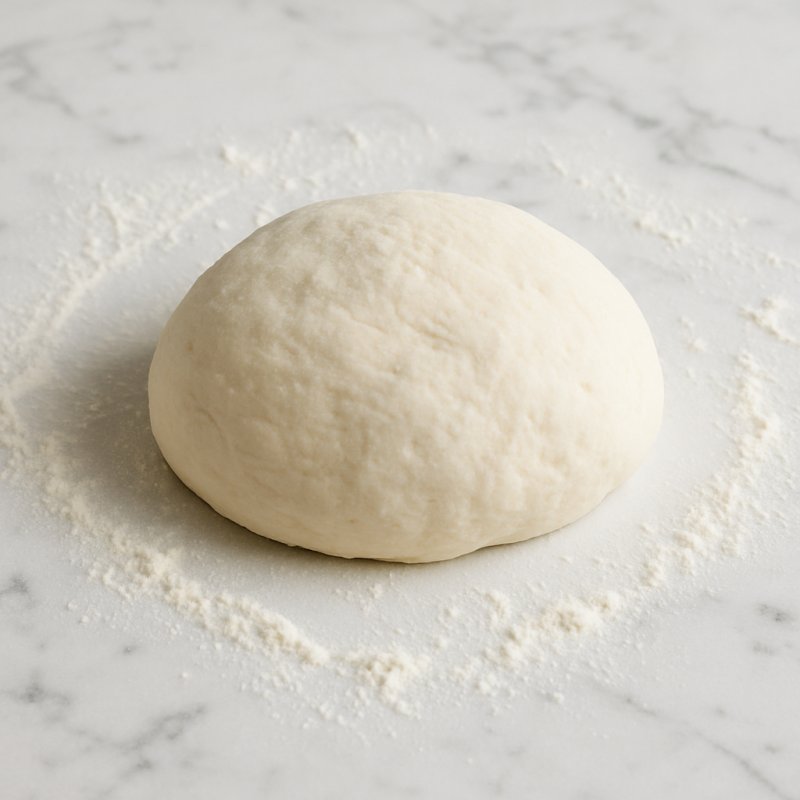
Raw rolled-out pizza dough on a floured work surface
I still remember the first evening when I consciously worked with pizza dough: it was a rainy Friday, and a friend rang the doorbell unexpectedly with fresh tomatoes and mozzarella. We only had flour, water, yeast and salt – and a large dose of curiosity. Since then pizza dough has felt a bit magical to me; it is uncomplicated yet full of possibilities, a simple basic ingredient that turns any kitchen into a small laboratory.

What I love about pizza dough is its mix of patience and reward. A good dough needs time: kneading, proofing, possibly cold maturing. When I expect guests I often make the dough the night before and let it work slowly in the refrigerator. The waiting pays off, because the flavor gets deeper, the crumb airier and the crust crispier. A colleague of mine swears by the simple hydration ratio of 60–65 percent, while another friend insists on the classic 50 percent; in the end it's always a bit of personal preference.

Technique and ingredients are less mysterious than many think. I like to explain the basics:

  • Flour: Type 00 or a good all-purpose flour work fine.
  • Water: Temperature affects yeast activity.
  • Yeast: Fresh or dry – both give great results when used correctly.
  • Salt and a bit of olive oil: For flavor and elasticity.
When kneading I often go by the feel of the dough: it should be smooth, not too sticky and springy. I enjoy trying different baking methods: stone in the oven, a hot pan, or even the grill. Each method produces different textures and makes experimenting so exciting. A small anecdote: once I forgot to check the dough under the oven light, and it puffed up like a balloon – we laughed so much that the pizza almost became secondary.

To me pizza dough is not only the base of every pizza, but also an invitation to experiment: sweet versions, stuffed edges, or mini calzones. It is simple, versatile and always ready for new stories – just like the evenings when we shape and enjoy it.

Availability & types

Availability and types

Pizza dough is a very common kitchen ingredient that you can buy almost anywhere or make yourself. It is usually made from flour, water, yeast, salt and a little oil. Because these basic ingredients are easy to obtain, pizza dough comes in many variants: fresh, frozen, par-baked or as a ready mix. If you go to a supermarket you will often find several types side by side – similar to different kinds of bread. Bakeries or pizzerias often prepare dough fresh, while supermarkets tend to offer simple, quick-to-use forms.

Origin and growing regions

The most important raw material for pizza dough is wheat flour. Wheat is grown in fields all over the world: in Europe, North America, South America, Asia and Australia. In Europe countries like France, Germany and Italy are large wheat producers. Italy is especially well known because the classic pizza originated there. You can imagine it like apples: depending on where they grow they taste slightly different – the same applies to wheat. The flour made from the wheat determines much of the dough's flavor and structure.

Available types and variants

There are many kinds of pizza dough. Here are some you will easily recognize:

  • Regular wheat dough: The classic pizza dough, soft and elastic. It is often used in pizzerias and is suitable for most pizzas.
  • Whole grain dough: Made from wholemeal flour – flour that uses the whole grain including the bran. Whole grain dough is slightly darker and has a nuttier flavor. It is healthier because it contains more fiber.
  • Spelt dough: Instead of wheat, spelt flour is used. Spelt is a type of grain that some people tolerate better. The dough has a slightly different taste, often a bit milder.
  • Gluten-free dough: For people who cannot tolerate gluten, there are doughs made from rice, corn, buckwheat or mixed gluten-free flours. These crusts are different in texture, sometimes crumblier, but still tasty.
  • Frozen ready dough: Practical for home: it is already prepared and only needs to be rolled out or thawed. It saves time.
  • Par-baked bases (backtrays): These bases have been baked once and only need to be reheated. They are like ready-made cake bases – quick and easy.
  • Fresh dough from the bakery: If you care about flavor, buy fresh dough at the bakery or pizzeria. It is usually more aromatic and can proof better (that is: become light and airy).
  • Special variants: Some doughs are flavored with herbs, garlic or olive oil. There are also thick “Sicilian” or thin “Neapolitan” doughs – the shape and thickness change the mouthfeel, similar to thin crêpes compared to thick pancakes.
Overall pizza dough is very versatile: you can make it yourself, buy it ready, or choose special forms – depending on how much time you have and how you like your pizza. That way almost everyone finds the dough that fits their preferences.
Details & nutrition

Property Value
Unit g
Calories per 100 260
Protein per 100 8.0
Carbohydrates per 100 50.0
Sugar per 100 1.5
Fat per 100 3.0
Saturated fat per 100 0.5
Monounsaturated fat 1.8
Polyunsaturated fat 0.7
Fiber per 100 2.5
Vitamin C (mg) per 100 0
Vitamin D (IU) per 100 0
Calcium (mg) per 100 15
Iron (mg) per 100 1.2
Nutri-Score C
CO₂ footprint 0.6
Origin Europe
Gluten-free No
Lactose-free Yes
Nut-free Yes
Vegan Yes
Note Typical pizza dough is made from wheat flour, water, yeast, salt and a small amount of oil; nutritional values may vary slightly depending on the recipe and hydration.

Technical & scientific information

Pizza dough is an hydrated dough mass based on wheat flour, water, yeast and salt that is transformed by physical and biochemical processes into an elastic, bakeable structure. Its primary structure is formed by the gluten contained in the flour, a network made up of the storage proteins glutenin and gliadin. Gluten gives the dough extensibility and gas retention capacity, which during baking produces a porous crust and crumb structure.

Composition and ingredients

  • Carbohydrates: Mainly starch (amylose, amylopectin) in the flour; partially gelatinized during baking.
  • Proteins: Gluten proteins (glutenin, gliadin) and other storage proteins responsible for elasticity and strength.
  • Fats: Low content in standard flour; oils or fats can be added to the recipe and influence flavor and texture.
  • Water: Crucial for hydration of proteins and starch, acts as a plasticizer and enables enzymatic activity.
  • Yeast and sugars: Biotic leavening agents (Saccharomyces cerevisiae) ferment sugars to CO2 and ethanol; sugar serves as a substrate and affects browning.
  • Salt and additives: Salt regulates gluten development and flavor; improvers like ascorbic acid, enzymes or malt extract modify crumb color, gas retention and dough stability.
Physico-chemical processes during processing

During mixing, flour proteins hydrate and are linked by mechanical shear, leading to the formation of the gluten network. The hydration level, expressed as the dough's hydration (%) (weight of water relative to flour weight), influences elasticity and baking volume: higher hydration yields a more open, airy crumb, lower hydration gives denser structures. Fermentation by yeasts produces CO2, which is trapped in the gluten network and causes volume increase. At the same time microorganisms and endogenous enzymes (e.g. amylases, proteases) initiate conversions that change starch and proteins and influence aroma and texture.

Baking physics

When heated, starch gelatinizes and proteins denature, fixing the dough structure. Moisture evaporates, and Maillard reactions as well as caramelization contribute to browning and the formation of aromatic compounds. Baking temperature and time, especially for traditional pizzas (often 400–500 °C in wood-fired ovens), determine crust characteristics: short, very hot baking times produce thin, crispy edges with characteristic leopard-like spotting.

Nutritional values and health aspects

  • A standard pizza dough is composed predominantly of carbohydrates; caloric content depends heavily on flour type (e.g. type 405 vs whole grain) and added fats.
  • Whole grain flours increase fiber, micronutrients and the share of slowly digestible carbohydrates, lowering the glycemic index.
  • Gluten-containing doughs are unsuitable for people with celiac disease or non-celiac gluten sensitivity; gluten-free flour blends exist whose functional properties are compensated by binders such as xanthan or hydroxypropyl methylcellulose.
  • During fermentation secondary metabolites and organic acids can be produced; longer, cool fermentation times promote flavor development and can increase digestibility.
Variants and technological adaptations

Pizza doughs vary by flour type (grades, protein content), hydration, fat addition and fermentation profile. Industrial doughs often use dough improvers, emulsifiers and enzymes for standardization. Artisan recipes rely on long cold fermentation that leverages the microflora and enzymatic activity to optimize flavor and texture. Technological developments include the use of sourdough starter cultures, optimized dough temperature control and precise hydration measurement for reproducible results.

Overall pizza dough is a complex, biophysically governed product whose properties are determined by raw materials, processing steps and thermal treatment. Understanding the underlying chemical and physical mechanisms allows targeted control of texture, flavor and nutritional profile.

Wiki entry for: pizza dough
Active now: 18 visitors of which 2 logged-in members in the last 5 minutes