Menu & categories

Pistachios

Aromatic green kernels high in protein, fiber and unsaturated fatty acids.

Wiki about pistachio Nutri-Score C Vegan Yes Gluten-free Yes Lactose-free Yes Nut-free No
NUTRITION / 100 g
562 kcal 20.2 g Protein 27.2 g Kohlenhydrate 45.3 g Fett

Introduction

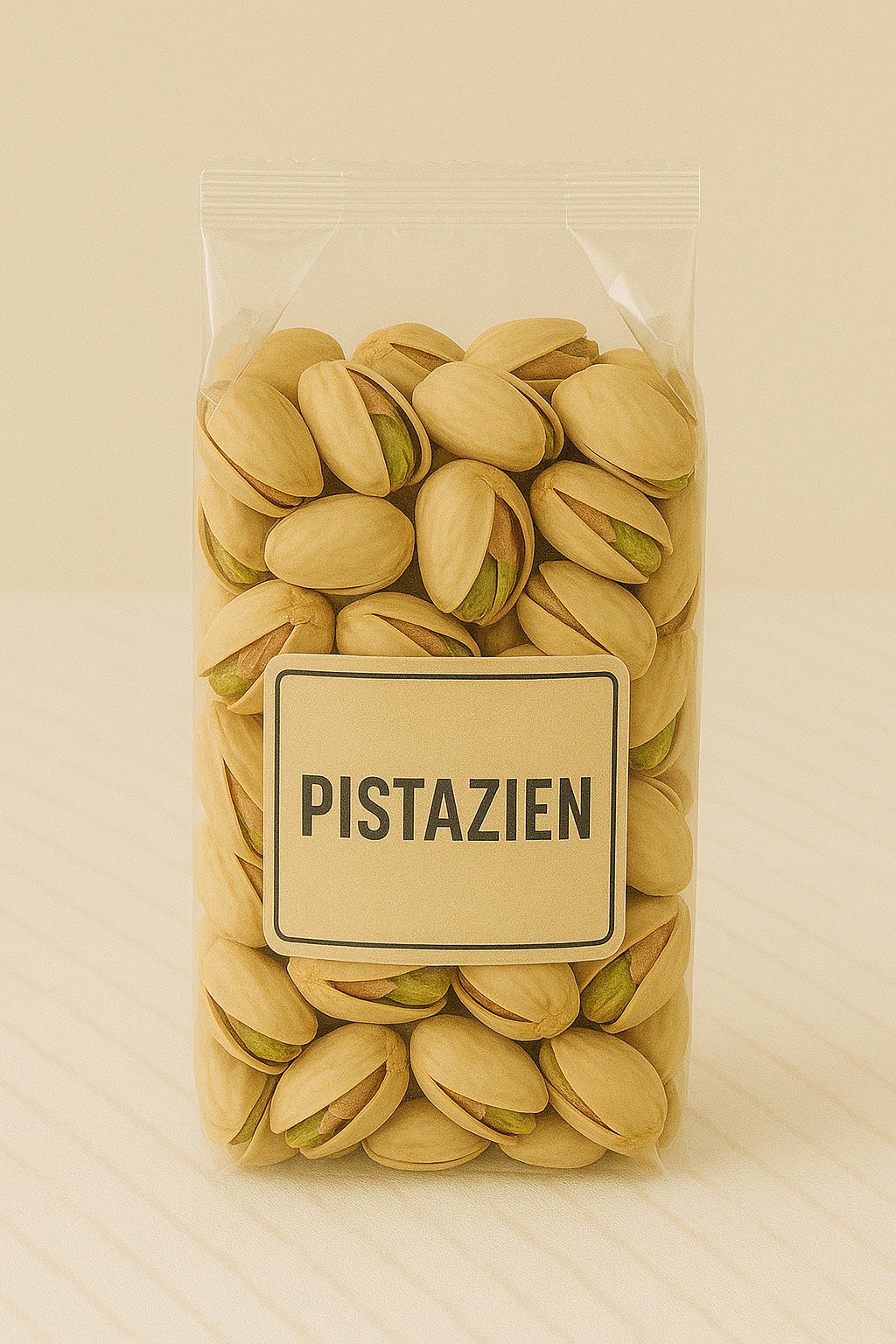
Roasted pistachio kernels
I love pistachios because they have that unmistakable mix of nuttiness, salt and a quiet, almost floral sweetness that should not be missing from any pantry. When I crack open a handful, I always feel a little bit like a child opening a small treasure chest. I still remember a rainy afternoon when I watched an old woman shell pistachios at the market and learned more about origins and varieties than I ever learned from books.

Pistachios are surprisingly versatile. They pair with sweet and savory, give desserts that characteristic green note and can turn a simple salad into something special in no time. A colleague of mine swears by sprinkling a few coarsely chopped pistachios over his braised dish to add texture and freshness. I like to try small experiments, such as pistachio pesto instead of basil variations or a pinch of ground pistachio in bread dough.

What sets them apart:

  • Taste: nutty, slightly sweet, with a fine buttery note.
  • Color: the typical green instantly makes dishes more attractive.
  • Texture: from finely ground to coarsely crunchy – ideal for diverse uses.
In the kitchen I use pistachios in many ways:
chopped over salads, as crunch in yogurts, as a base for ice cream, in sauces or turned into a velvety pistachio paste. For baking, roasted, lightly salted kernels are recommended for even more flavor. Those wanting something exotic can try them in oriental sweets or as a filling for pastries.

A practical tip: pistachios stay freshest when stored airtight and cool. And when I have guests, I often serve them in bowls – they look inviting and encourage casual conversation. I make sure to recommend portions and not to overdo it, and to point out possible allergies, because enjoyment is only pleasant when it is safe.

Availability & types


Availability and types of pistachios

Pistachios are small green nuts that come from warm countries. Their origin is mainly in Central Asia and the Middle East. Long before supermarkets existed, people gathered pistachios in countries like Iran, Turkey and Greece. Today they are cultivated in many parts of the world so we can buy them almost year-round.

Origin and growing regions
The best-known producing countries are:

  • Iran: One of the oldest and largest producers. Many pistachios from Iran are very aromatic.
  • USA (California): California has large plantations. The USA supplies much for supermarkets worldwide.
  • Turkey: Turkey also has a long tradition of pistachio cultivation.
  • Syria, Greece, Italy and Spain: These countries also grow pistachios, often in smaller quantities with special varieties.
Pistachios like a lot of sun and little water, so they grow well in warm, rather dry regions. Harvest time is usually late summer to autumn, but through storage and imports pistachios are available year-round.

Common varieties and their differences
Pistachios come in different varieties. Here are some you often find:

  • Kerman: This variety is very popular in California. The nuts are large and have a mild taste.
  • Ahmad Aghaei (Iran): A traditional Iranian variety with an intense aroma.
  • Siirt (Turkey): Smaller, often very aromatic kernels appreciated in Turkey.
  • Fahregh, Badami: Other local varieties that can taste different depending on the region.
You can think of varieties like different apple types: some are large and sweet, others small and very aromatic. Which type is better is often a matter of taste.

Variants available in stores
Pistachios are available in many forms, not just whole and raw. Common variants include:

  • In shell: These are the classic pistachios you open with your hands. They are popular as a snack.
  • Shelled kernels: Without shell, practical for baking or as a snack.
  • Roasted and salted: Often more intense in flavor. They can also be flavored with spices or sugar.
  • Pistachio paste (pistachio butter): Finely ground pistachios used in ice cream, pastries or creams.
  • Pistachio flour or powder: For cakes and pastries, similar to almond flour.
  • Pistachio oil and butter: Specialty products used for cooking or as spreads.
Many supermarkets also offer snacks with pistachios, chocolate with pistachios or traditional sweets like baklava with pistachio filling.

Tips on availability
Fresh pistachios from the harvest season taste best, but through storage and imports they are available year-round. If you want to keep them for a long time, store them cool and dry – preferably in the refrigerator if you keep them for a long period.

In summary: pistachios come from warm countries like Iran, USA and Turkey, they come in many varieties like Kerman or Siirt and are available in forms like in shell, roasted, paste or flour. That way almost everyone can find a type of pistachio they like.
Details & nutrition

Property Value
Unit g
Average weight per piece 0.6
Calories per 100 562
Protein per 100 20.2
Carbohydrates per 100 27.2
Sugar per 100 7.7
Fat per 100 45.3
Saturated fat per 100 5.6
Monounsaturated fat 23.3
Polyunsaturated fat 14.4
Fiber per 100 10.6
Vitamin C (mg) per 100 5.6
Vitamin D (IU) per 100 0
Calcium (mg) per 100 105
Iron (mg) per 100 3.9
Nutri-Score C
CO₂ footprint 3.0 kg CO2e/kg
Origin USA, Iran, Turkey (depending on harvest/batch)
Gluten-free Yes
Lactose-free Yes
Nut-free No
Vegan Yes
Note Nutritional values refer to unsalted, dried pistachio kernels; roasted/salted variants may differ.

Technical & scientific information

Pistachios (Pistacia vera) are the edible seeds of a deciduous tree in the family Anacardiaceae. Botanically considered fleshy drupes, they present the kernel and a hard shell; the typically splitting shell signals physiological ripeness. Cultivated plants are predominantly from regions with hot, dry summers and cool winters, with the most important producing countries being California, Iran and Turkey.

Chemical composition and nutritional values
The nutrient density of pistachios is high. Per 100 g they contain roughly 560 kcal, about 45–50 g fat, 20–21 g protein, 25–30 g carbohydrates and around 10 g fiber. The fat profile is predominantly unsaturated: monounsaturated fatty acids (mainly oleic acid) and polyunsaturated fatty acids (mainly linoleic acid) dominate. Pistachios are rich in minerals such as potassium, phosphorus, magnesium and contain calcium and iron in smaller amounts. Important vitamins include vitamin E (tocopherols) and vitamin B6 (pyridoxine), as well as tocopherol analogs and B vitamins in moderate amounts.

Phytochemistry and bioactive components
Pistachios provide a range of secondary plant compounds, including polyphenolic compounds, flavonoid antioxidants and carotenoids such as lutein and zeaxanthin, which contribute to the green to yellow‑green coloring of the kernels. They also contain free amino acids such as L‑arginine, which as a precursor for nitric oxide can support vascular function.

Processing and storage processes
  • Harvest: Mechanical or manual, followed by immediate dehulling/shell removal and drying to avoid mold formation.
  • Further processing: Drying, roasting (dry or with oil), salting, blanching or grinding into flour, paste or oil.
  • Safety: Pasteurization (e.g. steam inactivation) reduces microbiological risks; storage in a dry, cool, low‑oxygen environment minimizes lipid oxidation.
  • Quality issues: Aflatoxin production by Aspergillus species with insufficient drying is a relevant hazard.
Health aspects
Due to the favorable fatty acid profile, high proportion of plant protein, fiber and secondary plant compounds, pistachios are associated in clinical and epidemiological studies with positive effects on cardiovascular risk factors, including lowering LDL cholesterol and improving endothelial function. Fiber and protein contribute to satiety, which in controlled studies is compatible with moderate weight management. Evidence also points to beneficial effects on blood sugar regulation and a positive influence on the gut microbiota. At the same time, pistachios are energy‑dense; excessive consumption can lead to caloric excess. Allergic reactions to tree‑nut proteins are possible and can be severe.

Sensory properties and culinary use
The characteristic, slightly nutty taste and the greenish color make pistachios a valued ingredient in sweets, ice cream, baked goods, pestos and in industrial oil production. Texture varies with roast level and processing from soft to crunchy.

Overall, pistachios are a nutrient‑rich food with a complex chemical composition and demonstrated health benefits when consumed in moderation; however hygienic processing and portion‑aware consumption are important to minimize risks from molds, oxidation and caloric excess.

Wiki entry for: pistachio
Active now: 18 visitors of which 2 logged-in members in the last 5 minutes