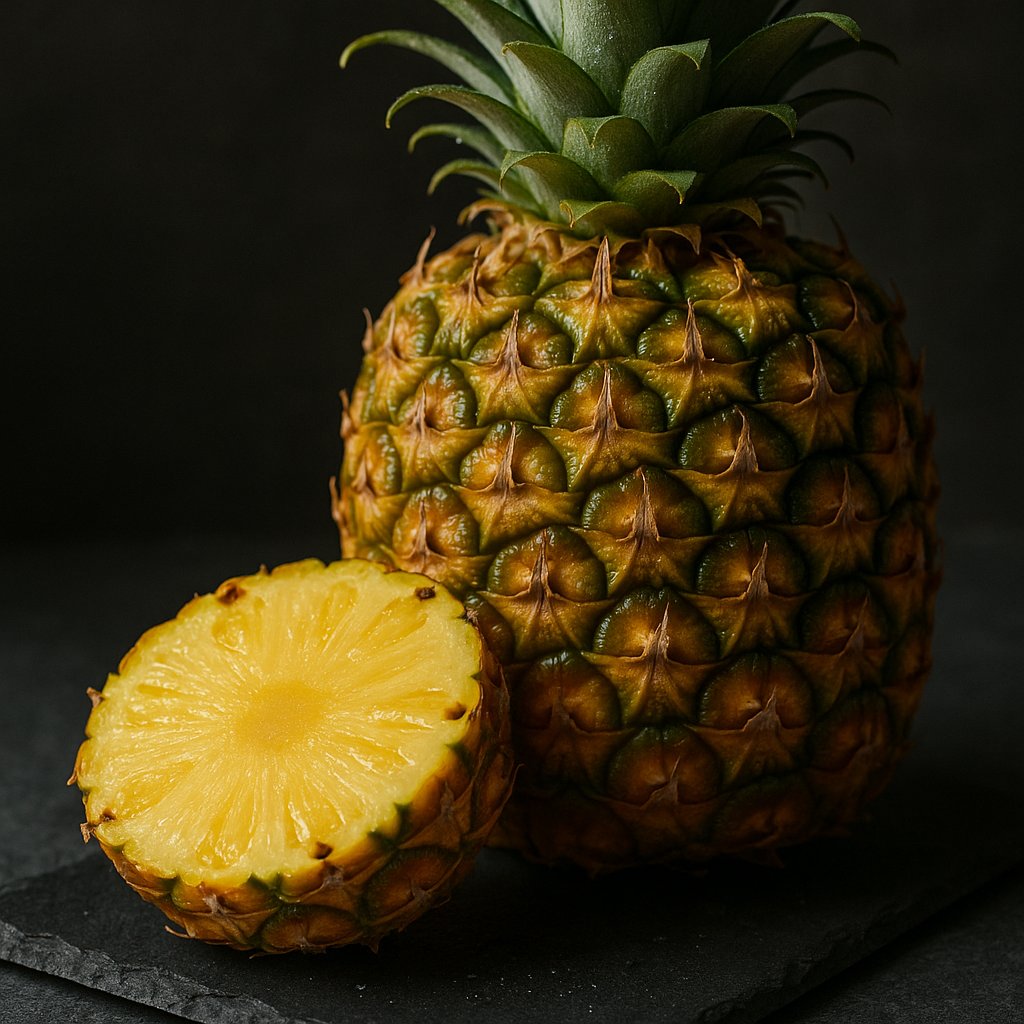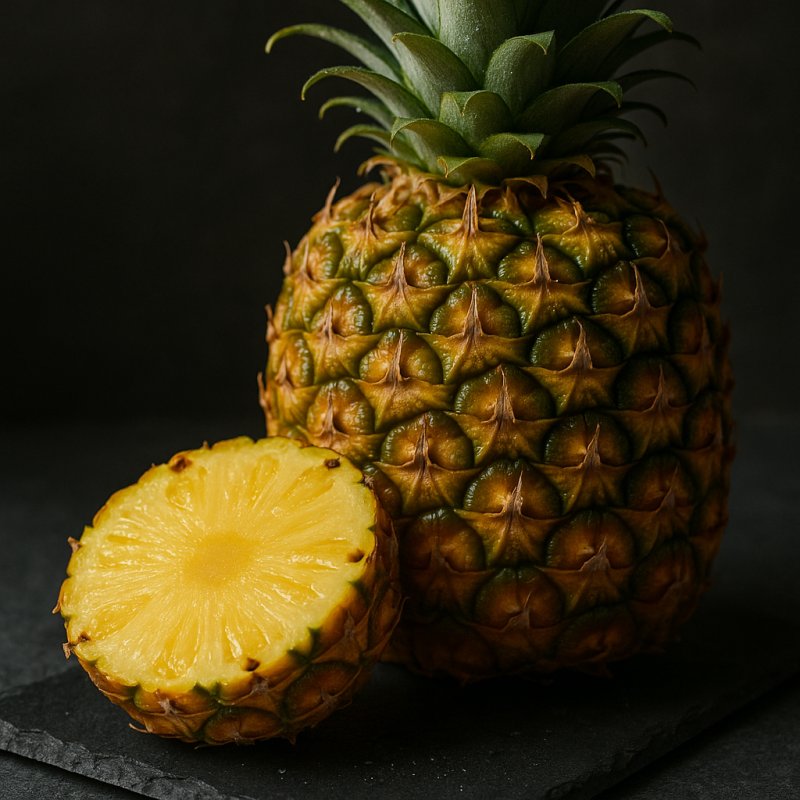
Pineapple is a tropical fruit valued worldwide for its sweet taste and unique appearance. In this section we will take a closer look at the availability and the different types of pineapple.
Origin
The pineapple originally comes from South America, more precisely from the areas between Paraguay and Brazil. Indigenous peoples discovered the fruit long before the arrival of Europeans. Today pineapple is grown in many tropical and subtropical regions, including countries such as Thailand, the Philippines, Costa Rica and Hawaii.
Availability
Pineapples are available year-round, although the best season varies depending on the growing region. In the main producing countries the pineapple flowers and grows in the warm months, usually from March to July. Thanks to modern transportation, however, we can find pineapples in supermarkets throughout the year.
Types and varieties
There are different varieties of pineapple that differ in taste, texture and color. Here are some of the best-known types:
- MD2: This variety is one of the most popular worldwide. It is characterized by its sweet and juicy fruit with a golden-yellow color. MD2 pineapples have lower acidity, which makes them particularly aromatic.
- Kritsch: Also known as the classic pineapple with the heavy, spiky exterior. It has a balanced taste of sweetness and acidity and is very aromatic.
- Queen: This variety is smaller and has a more intense color. It is particularly sweet and juicy, though less tart than other varieties.
- Pernambuco: A variety from Brazil that is particularly sweet and has a strong aroma. It is less widespread but very flavorful.
- Gold Rush: This pineapple has very high sweetness and low acidity. It is often grown in the USA and has a bright yellow color.
Pineapple variants
Besides the different varieties, there are also various forms in which pineapple is presented and used:
- Fresh pineapple: Usually consumed immediately after purchase or used for fresh juices and smoothies.
- Cut pineapple: Pre-cut and often canned, ideal for quick preparations like fruit salads or desserts.
- Dried pineapple: This variant is preserved by drying and is excellent as a snack or for baking.
- Pineapple syrup: An aromatic syrup made from pineapple, which can be used in drinks or desserts.
- Pineapple juice: Freshly pressed or industrially produced juice, consumed on its own or used in cocktails.
Cultivation and care
Growing pineapple requires warm temperatures and plenty of sunlight. The plant grows slowly and needs about 18 to 24 months to bear a full fruit. Pineapples are often cultivated in plantations where conditions are controlled to ensure high quality and consistent yields.
Sustainability and environment
Pineapple cultivation can be environmentally friendly when done sustainably. Some farmers use organic farming without harmful pesticides and adopt methods that protect the soil and local biodiversity. Consumers can recognize sustainably grown pineapples by product labels or certifications such as Fair Trade.
Conclusion
The pineapple is a diverse and popular fruit available in many different varieties and forms. Its origin in tropical regions makes it a sought-after treat throughout the year. Whether fresh, cut or as juice – pineapple offers something for every taste and is easy to incorporate into everyday life.