Menu & categories

Peppercorns

Dried, whole pepper fruits used as an aromatic spice

Wiki about peppercorn Nutri-Score A Vegan Yes Gluten-free Yes Lactose-free Yes Nut-free Yes
NUTRITION / 100 g
255 kcal 10.4 g Protein 64.8 g Kohlenhydrate 3.3 g Fett

Introduction

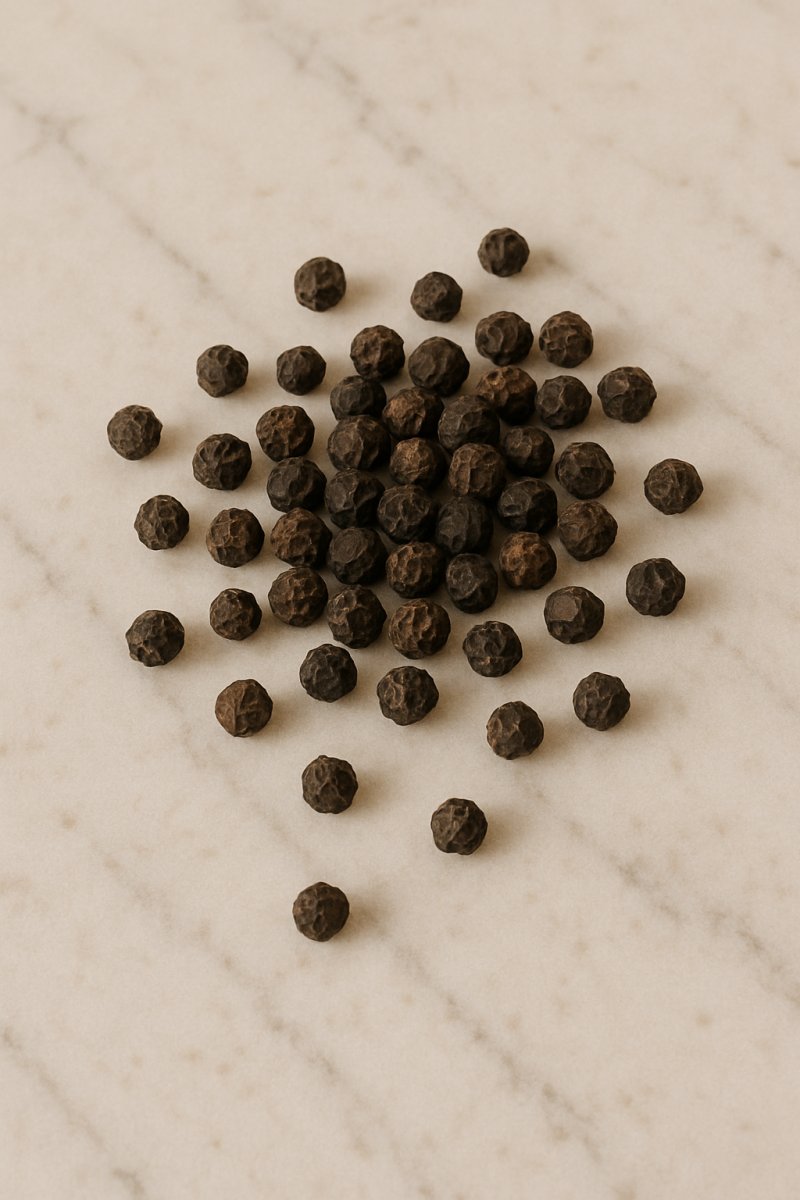
Whole black peppercorns
I still remember well the first evening when peppercorns set the tone in my small, improvised cooking studio: a simple risotto that threatened to remain unfinished until I sprinkled a handful of freshly ground berries over it. The scent, that sharp, warm pulse, changed the dish in that moment. Since then peppercorns have had a permanent place in my pantry and in my memories.

Peppercorns are not just spices; they are little flavor bombs with an astonishing range. I like to think about the differences between varieties: black berries are warm and piquant, white bring a subtle heat without external bitterness, and green radiate a fresh, almost herbaceous note. A colleague of mine swears by red peppercorns for braised dishes because they add a sweetish depth that creates surprises.

The way you use pepper changes everything. Freshly ground it releases an explosive aroma that gives butter sauces, grilled meats or salads the necessary tension. Whole berries are excellent for stocks and stews: I sometimes cook them in a tea filter so I can remove them easily later without losing intensity. Sometimes I grind only part and leave the rest whole to retain texture and moments of surprise in the mouth.

I like that pepper is so versatile: it supports sweet as well as savory components, balances acidity and fat, and can turn an everyday dish into something special. I've learned to handle it modestly—too much can dominate, too little leaves potential unused. When I cook for friends I often ask how spicy they like it; pepper is highly personal in that regard.

  • Storage: Dark and dry, ideally whole.
  • Use: Freshly ground for finishing, whole for long cooking.
  • Pairing: Citrus, garlic, cream, dark meats, root vegetables.
In the end pepper is a small kitchen miracle to me: down-to-earth, surprising and indispensable. Each berry tells a story of land, climate and craft—and when I grind it I tell my own, anew with each dish.

Availability & types

Availability and types of peppercorns

Peppercorns are easy to find in many supermarkets, spice shops and farmers' markets. They come from a climbing plant that grows mainly in warm, humid regions. You can buy pepper as whole berries, ground, or as a blend. Whole berries are practical because they stay fresh longer and, when ground just before cooking, release their aroma — it's like nuts: whole they remain crunchy longer, ground they go "flat" faster.

Origin and growing regions

Pepper originally comes from tropical Asia. The best-known growing regions today are:

  • India – especially the Kerala and Malabar regions are famous for their black pepper.
  • Vietnam – is one of the world's largest producers and supplies much pepper to global markets.
  • Indonesia – here you can find pepper with its own, often robust flavor.
  • Brazil and other countries in South America – also produce pepper that can differ in taste.
The pepper plant likes warmth, plenty of rain and a bit of shade. Farmers often plant it next to trees that the vines can climb — it's like a climbing plant using a ladder or tree to reach the light.

Available varieties and variants

Pepper comes in various types that differ in color, flavor and use. Here are the main ones, explained simply:

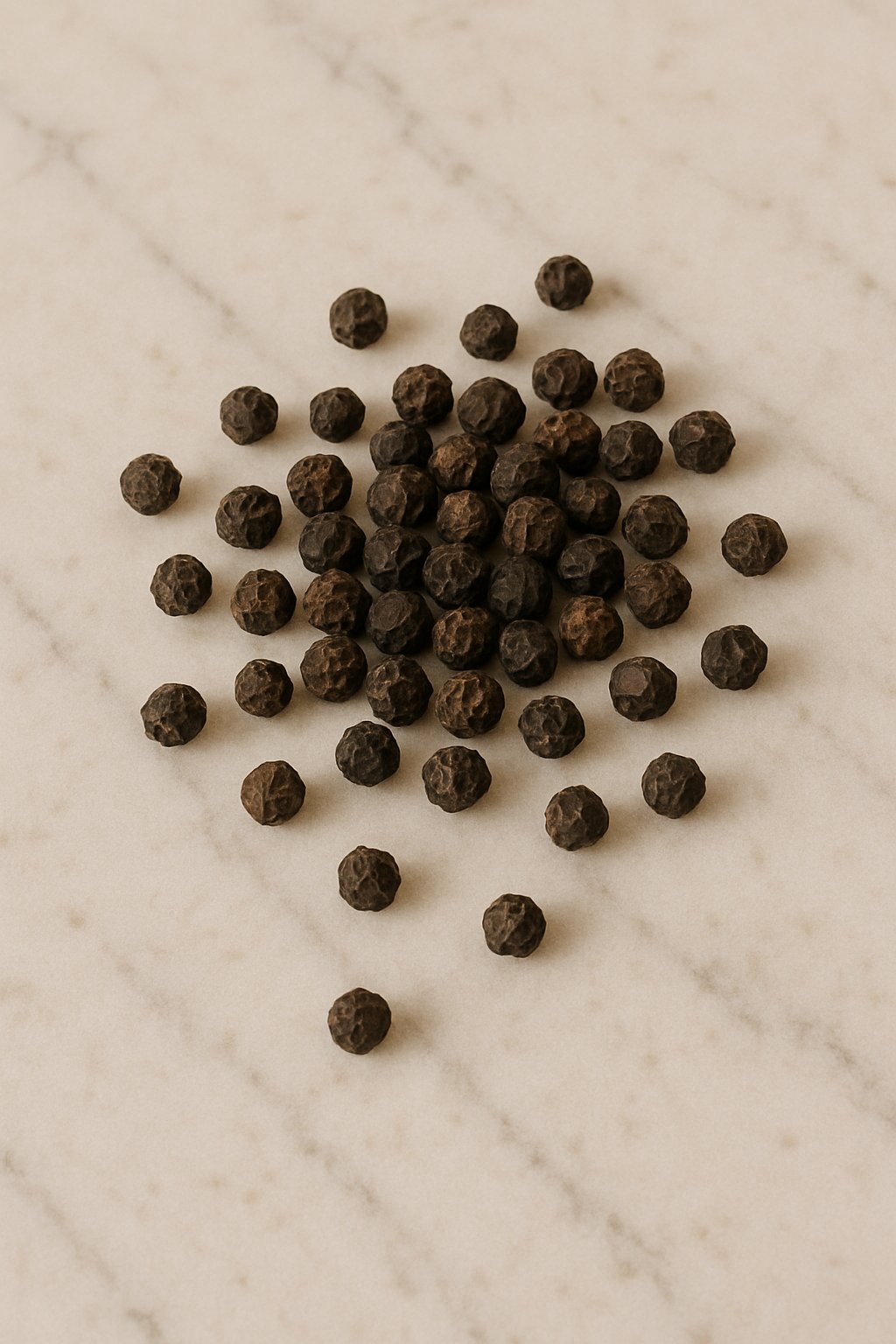
  • Black pepper: The green berries are harvested when nearly ripe and then dried. During drying the skin darkens and wrinkles. Black pepper is sharp and aromatic and pairs with almost everything.
  • White pepper: These are ripe, red berries whose outer skin has been removed, leaving only the pale seed. White pepper is milder visually and is often used in light sauces or soups so the dish does not look "speckled."
  • Green pepper: These berries are harvested unripe and typically pickled or dried. They are milder and have a fresh aroma that goes well with fish, poultry or salads.
  • Red or pink pepper: Sometimes you see red berries that can be very aromatic and slightly sweet. Important: the true red peppercorns are often the ripe fruits of the same plant; “pink pepper” in supermarkets can also come from a different plant — it will then taste somewhat different and be more delicate.
  • Special varieties with origin names: Some peppers are named after their region, for example “Malabar” or “Tellicherry” from India. It's similar to apple varieties: depending on where they grow they develop their own small flavor profile.
Tips for selection and shelf life

Whole peppercorns last longer and retain their aroma better than ground pepper. If you want fresher flavor, grind the berries shortly before cooking. Ground pepper is convenient for quick recipes, but loses aroma after months. When buying, look for airtight packaging and store pepper in a dark, dry place — this keeps the strong aroma as long as possible.

In summary: peppercorns come in many variants — black, white, green and red — and they come from different warm regions of the world. Each variety has its own taste and preferred use, and whole berries are usually the best choice if you want to keep the aroma fresh for longer.
Details & nutrition

Property Value
Unit g
Average weight per piece 0.05
Calories per 100 255
Protein per 100 10.4
Carbohydrates per 100 64.8
Sugar per 100 0.6
Fat per 100 3.3
Saturated fat per 100 1.4
Monounsaturated fat 0.8
Polyunsaturated fat 1.0
Fiber per 100 25.0
Vitamin C (mg) per 100 21
Vitamin D (IU) per 100 0
Calcium (mg) per 100 440
Iron (mg) per 100 9.7
Nutri-Score A
CO₂ footprint 4.0
Origin Tropical and subtropical growing regions, especially India, Vietnam and Indonesia
Gluten-free Yes
Lactose-free Yes
Nut-free Yes
Vegan Yes
Note Values refer to dried black peppercorns; spices are used in very small amounts, so the actual nutrient intake per serving is low.

Technical & scientific information

Peppercorns are the dried fruits of various pepper plants of the genus Piper, with black, white and green pepper coming from the berries of the species Piper nigrum. Botanically they are small drupes (false berries) that grow in clusters on climbing plants. Color and flavor differences arise mainly from harvest time and different post-harvest treatments such as drying, fermentation or pickling.

Chemical composition and constituents
Key bioactive components include the alkaloid piperine, essential oils (e.g. Sabinen, Pinene, Linalool), resins, fiber and various polyphenolic compounds. Piperine is responsible for the characteristic pungency of black pepper; it is present in dried pepper at about 4–9%. Essential oils make up a smaller mass fraction but influence aroma and volatile fragrance notes. Small amounts of minerals such as potassium, calcium and magnesium are also present, as well as trace elements and secondary plant compounds with antioxidant properties.

Nutritional values
Peppercorns are usually used in small amounts as a spice, so their contribution to daily energy intake is small. Per 100 g of dried black pepper there are roughly 250–300 kcal, about 10–12 g protein, 60–65 g carbohydrates (of which a large share is fiber) and about 3–5 g fat. The fiber content is notably high, while vitamins occur only in limited amounts.

Processing methods

  • Black pepper: harvest of nearly ripe green fruits, subsequent sun-drying or mechanical drying, during which the skin oxidizes, darkens and intensifies in color and pungency.
  • White pepper: fully ripe red fruits are soaked (soaking or fermentation), the outer pericarp layer is removed and only the pale seed is dried, producing a milder but often earthy-spicy aroma.
  • Green pepper: harvested unripe and either freeze-dried, preserved in brine or stabilized by treatment with sulfur dioxide to retain the green color and a fresh aroma.
  • Red pepper: rarer form; fully ripe fruits are dried or processed.
Sensory characteristics and application
The aroma of peppercorns results from the interplay of pungency (piperine-related), warmth perception and volatile aromatic compounds. Black pepper is frequently used to season savory dishes, marinades and sauces, while white pepper is preferred in light sauces and delicate preparations to avoid dark specks. Green pepper is found in fresher, slightly acidic dishes.

Health aspects
In moderate amounts pepper is safe for most people and can have positive effects. Piperine has been shown in studies to improve the bioavailability of certain nutrients and drugs by affecting enzymes and transporters in the gut. Pepper has antioxidant properties and can stimulate digestion by promoting saliva and gastric juice secretion. In sensitive individuals high consumption can, however, cause stomach irritation, heartburn or allergic reactions. Because it can influence drug metabolism, caution is advised when taking certain medications concurrently.

Storage and quality
Peppercorns release their aroma best when stored whole and freshly ground just before use. Light, heat and moisture lead to loss of volatile oils and aromatic degradation. Quality indicators are an intense smell, glossy berries (for black pepper) and a high proportion of whole, intact fruits without foreign matter.

In summary, peppercorns are a complex spice with characteristic pungency due to piperine, complemented by a diverse bouquet of volatile aromatic compounds. Their various processing forms produce different sensory profiles, while nutritionally they mainly contribute fiber and secondary plant compounds and pharmacologically can affect the absorption of other substances.

Wiki entry for: peppercorn
Active now: 12 visitors of which 2 logged-in members in the last 5 minutes