Menu & categories

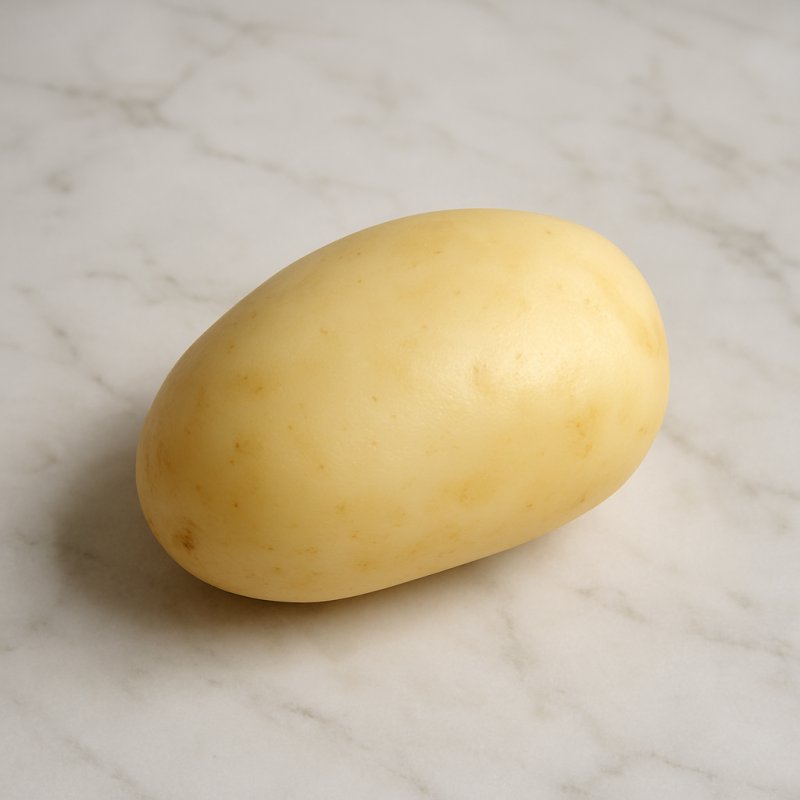
Potato without skin

Starchy root vegetable with complex carbohydrates

Wiki about peeled potato Nutri-Score A Vegan Yes Gluten-free Yes Lactose-free Yes Nut-free Yes
NUTRITION / 100 g
77 kcal 2.0 g Protein 17.0 g Kohlenhydrate 0.1 g Fett

Introduction

Potato without skin
I have an intimate relationship with the potato without skin, simple as it may sound. In my kitchen it is a faithful shape-shifter: sometimes a velvety base for a purist mash, sometimes a crispy star on the plate when I slice it thin and roast it in the oven. I still remember a rainy Sunday afternoon when a friend dropped by spontaneously and with nothing but potatoes, salt and a tiny leftover of butter we conjured a late-night feast. Without the skin potatoes can be processed quickly, they absorb flavors immediately and at the same time give that familiar earthy warmth I love in those moments.

The potato without skin is not only practical, it is also surprisingly versatile. Peeling removes a small portion of fiber and vitamins, but at the same time opens up a range of textures and preparation methods. I especially like this simple approach:

  • Quick cooking: Cut peeled potatoes into equal-sized pieces for even cooking.
  • Mashing: Drain the hot water and mash with a touch of milk and butter — the result is silky and comforting.
  • Pan-frying/roasting: Thinly sliced and fried in hot fat they become irresistible.
A little anecdote must not be missing: a colleague of mine swore by the skin for years until I persuaded him to try my version. He arrived skeptical and hungry, and left my living room a true convert — convinced that the peeled potato had given the dish a certain nobility. Moments like that show me how food connects people and how even the simplest ingredient can tell stories.

Practically speaking, peeled potatoes are easier to portion and look more elegant in some dishes. They are excellent for refined soups, gratins with a velvety crust or classic mashed potatoes. When I expect guests at short notice, I often reach for the peeled potato: it is reliable, adaptable and forgives small cooking mistakes with stoic ease. At the end of the day it remains for me a small culinary hero — unassuming, but always ready to perform great things.

Availability & types

Availability and types

The potato without skin is a very common ingredient in kitchens around the world. The potato originally comes from South America, particularly from the area that is now Peru and Bolivia. People there began cultivating potatoes many hundreds to thousands of years ago. From there the plant reached Europe and quickly became popular in many countries because it grows well and can feed many people.

Today potatoes are grown in almost every country. Major growing regions include, for example:

  • Europe – Countries such as Germany, the Netherlands, France and Poland grow very large quantities of potatoes. They often have cool temperatures and good soils that potatoes prefer.
  • North America – There are also large potato fields in the USA and Canada, especially in regions with plenty of space and suitable climate.
  • Asia – Countries like China and India also produce a lot of potatoes, because many people live there and potatoes are suitable as a staple food.
  • South America – In the countries of origin many traditional varieties are still cultivated.
If you buy or prepare potatoes without skin, there are different varieties and variants to be aware of. Potatoes differ in shape, size, color and taste. Here are the main types explained in simple terms:

  • Waxy potatoes: These remain firm during cooking and do not fall apart. They are perfect for potato salad, fried potatoes or recipes where pieces should keep their shape. You can compare their texture to apples or carrots that do not become mushy.
  • All-purpose / medium-starch potatoes: These are between waxy and floury. They are very versatile and suitable for many dishes such as mash, baked potatoes or stews. Think of them as an all-round option for many preparations.
  • Floury (mealy) potatoes: These become soft and "mealy" when cooked. They are ideal for mashed potatoes, soups or dumplings because they mash easily. You can compare them to cooked cereal flakes that become nicely soft.
  • Specialty varieties: There are also colorful potatoes with red, purple or yellow skins and even colored flesh. These look distinctive and can make dishes more colorful.
If potatoes are already peeled, you can find them fresh in the supermarket, pre-cooked or frozen. Fresh peeled potatoes are the most flexible, but must be used quickly because they turn brown otherwise. Pre-cooked or frozen variants are practical when speed is needed, for example for fries, croquettes or ready potato dishes.

When shopping or cooking you can therefore choose which variety best suits the recipe: waxy for salad, floury for mash and pre-cooked or frozen variants if you want to save time. That way you always find the right potato without skin for your dish.

Details & nutrition

Property Value
Unit g
Average weight per piece 150
Calories per 100 77
Protein per 100 2.0
Carbohydrates per 100 17.0
Sugar per 100 0.8
Fat per 100 0.1
Saturated fat per 100 0.03
Monounsaturated fat 0.00
Polyunsaturated fat 0.04
Fiber per 100 2.2
Vitamin C (mg) per 100 20
Vitamin D (IU) per 100 0
Calcium (mg) per 100 12
Iron (mg) per 100 0.8
Nutri-Score A
CO₂ footprint 0.2
Origin Europe
Gluten-free Yes
Lactose-free Yes
Nut-free Yes
Vegan Yes
Note Nutritional values for raw potato without skin, average values; actual values may vary depending on variety and cultivation.

Technical & scientific information

Potato without skin refers to the tuber flesh of the potato (Solanum tuberosum) after removal of the outer layer. Peeling alters some chemical and microbial properties of the tuber and affects nutrient composition as well as storage and processing behavior. Peeled potatoes consist mainly of water and starch; proteins, fiber, vitamins and minerals are present in smaller amounts.

Chemical composition
The water content of peeled potatoes is typically around 75–80% by weight. The main non-liquid fraction is starch, present as granules in parenchyma cells and, depending on the variety, can make up 12–20% of the fresh mass. Starch is composed of amylose and amylopectin; their ratio influences cooking behavior and texture. Protein contents are moderate (approx. 1.5–2.5% fresh mass) and contain all essential amino acids in moderate amounts. Residual fiber (mainly soluble hemicelluloses and pectic substances) is reduced in peeled potatoes compared with unpeeled ones, since part of the fiber is concentrated in the skin.

Vitamins and minerals
Important micronutrients in peeled potatoes include vitamin C, B vitamins (notably niacin, B6) as well as potassium, magnesium and phosphorus. Because vitamin C and some B vitamins are heat- and light-sensitive, significant losses occur during peeling and subsequent processing (e.g. cooking) and during prolonged storage in water. Potassium concentration remains relatively stable but is partially reduced by long soaking or cooking in large amounts of water due to exchange processes.

Enzymatic and microbiological aspects
After peeling tissue cells are exposed to oxygen, which can lead to enzymatic browning (polyphenol oxidase-mediated oxidation of phenolic compounds). This reaction produces o-quinones and brownish pigments that are relevant aesthetically and partially sensorily. To minimize this, brief immersion in cold water or pH-lowering agents (e.g. citric acid) is often used. Microorganisms on the skin are largely removed by peeling, but with improper handling freshly peeled potatoes can serve as a growth medium for bacteria; therefore cooling and rapid further processing are important.

Processing methods
Peeled potatoes are treated differently in industrial and household settings: mechanical peeling using drums or blades, chemical peeling with lye in large industrial processes, and steam peeling are common. After peeling, cutting, blanching, immersion in water, freezing or drying often follow. Blanching inactivates enzymes, reduces microbial load and improves texture; at the same time nutrient losses occur. For production of french fries, mash or chips, variety, starch content and the amylose/amylopectin ratio significantly influence the final product.

Health aspects
Peeled potatoes provide rapidly available carbohydrates in the form of digestible starch, which can lead to a moderate to high glycemic effect depending on preparation and cooling (retrogradation can increase the resistant starch fraction). The reduction of fiber by peeling can lessen fiber-related benefits for gut health. Glycemic and micronutrient-related effects are context-dependent: as part of a balanced diet peeled potatoes supply energy, potassium and B vitamins, but frequent consumption in highly processed forms (fried, heavily salted) is associated with negative health outcomes.

Sensory and culinary technique
Without the skin potatoes exhibit a more uniform mouthfeel, a finer texture after mashing and greater flexibility for even processing. The absence of skin also reduces certain bitter or earthy notes that in some cultivars are concentrated in the skin. Storage of peeled potatoes requires refrigeration and protection from light to minimize quality loss and prevent sprouting or microbial growth.

Overall the potato without skin is a versatile food with a high starch reserve and useful micronutrients, whose nutritional and technological properties strongly depend on variety, processing and storage conditions. The choice to use peeled or unpeeled potatoes should therefore be made based on nutritional goals, sensory preferences and food-technical requirements.

Wiki entry for: peeled potato
Active now: 12 visitors of which 2 logged-in members in the last 5 minutes