Menu & categories

Pearl sugar

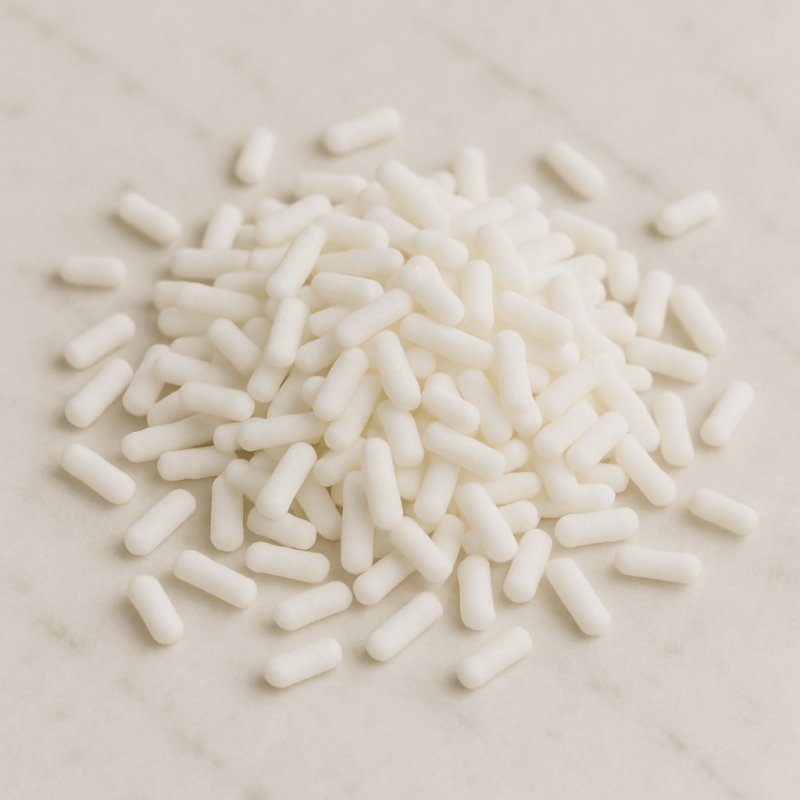
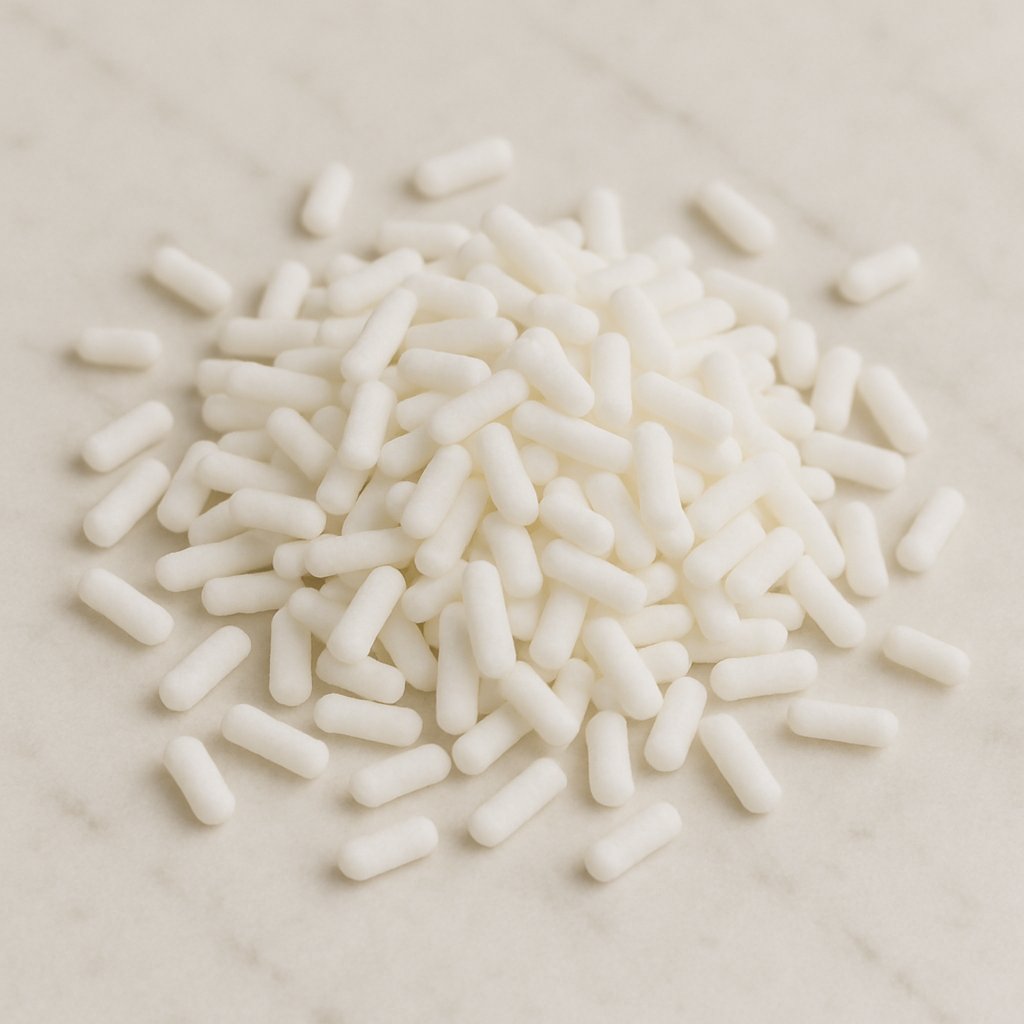
Coarse crystal sugar for decorating and sweetening baked goods

Wiki about pearl sugar Nutri-Score E Vegan Yes Gluten-free Yes Lactose-free Yes Nut-free Yes
NUTRITION / 100 g
400 kcal 0 g Protein 100 g Kohlenhydrate 0 g Fett

Introduction

Pearl sugar in large white crystals
I still remember exactly the afternoon when I held real pearl sugar in my hands for the first time: a small paper bag that crunched like snow when opened. The scent was only faintly sweet, but the appearance – those thick, white crystals – promised more than just sugar. Since then pearl sugar has been for me more than an ingredient; it is a little festive solid in the kitchen that turns simple baked goods into something cheerful.

Pearl sugar consists of coarse, pressed sugar beads that keep their shape during baking. That makes it ideal as a decoration because it does not melt or become sticky, but forms a crispy, pale crust when baked. I particularly like to use it on cinnamon rolls, waffles and traditional yeast doughs. A colleague once brought brioches with pearl sugar to the office and the coffee break immediately turned into a small taste expedition.

What I love about pearl sugar is its simplicity and versatility. It is practically already portioned in shape and size, so I don't have to worry about glazes or complicated sugar work. At the same time the result is always charming and professional. For frosty Sunday afternoons, when guests come or you just want to lift the mood, it's my little secret getaway on a baking sheet.

A few practical tips I've learned:

  • Pearl sugar remains stable during baking and provides a crispy surface.
  • It does not dissolve completely, so it is excellent as a decoration.
  • At very high temperatures it can brown slightly; therefore it's best to sprinkle it on shortly before the end of the baking time.
In conclusion: pearl sugar is not a must-have, but a real mood booster. It saves time, looks pretty and delivers that little, satisfying crunch that makes simple baked goods much more inviting. So, next time you want an uncomplicated but effective ingredient, try pearl sugar — and feel free to keep an extra bag in the pantry for those moments when a bit of sparkle on the table works wonders.

Availability & types

Availability and types of pearl sugar

Pearl sugar is a sweet ingredient often seen on waffles, rolls or cakes – those white, solid sugar granules that crunch when baked. Where this sugar comes from is actually quite simple: it is made from ordinary table sugar. Table sugar in turn usually comes from two plants: sugar beets and sugar cane. Both plants grow in fields, but in different parts of the world.

Growing regions
- In many parts of Europe, for example Germany, France and Poland, sugar beet is grown mainly. This plant resembles more a large, thick root that grows underground.
- In warmer countries like Brazil, India or parts of Africa sugar cane grows mainly. It looks like a tall, bamboo-like grass and grows in warm, humid regions.
Whether from beet or cane, the sugar obtained is purified and then processed into the small grains we know as pearl sugar.

Available varieties and variants
Pearl sugar is not always exactly the same. There are different kinds that differ in shape, size and color. Here are some well-known variants, explained simply:

  • Coarse pearl sugar: this is the classic variety with round or angular, solid sugar granules. They are relatively large and remain clearly visible and crunchy during baking.
  • Fine pearl sugar: these granules are somewhat smaller and almost resemble coarse powdered sugar. They dissolve more easily and are good for delicate pastries.
  • Pearl or glaze sugar: these sugar pieces are very shiny and look like small pearls. They are often used on pastries because they look particularly pretty.
  • Colored pearl sugar: sometimes pearl sugar is available in different colors – pink, blue or multicolored. It's the same sugar, only dyed with food coloring and popular at children's birthday parties or special occasions.
  • Protected pearl sugar: some manufacturers offer special varieties processed so that they remain crunchy longer during baking. These are practical when baked goods need to be transported or stored for a longer time.
Pearl sugar is easy to find in most supermarkets. You can find it in the baking aisle, usually in small bags or tins. Bakeries also put it directly on freshly baked rolls or cinnamon rolls. If you look for special varieties, such as colored sugar or large pearls, you can also check specialty baking shops or online. There is often a wider selection there.

Important: pearl sugar is very sweet and mainly provides flavor and appearance. If a recipe calls for “pearl sugar”, you can usually choose the type you want – depending on whether you want more crunch, a finer look or colorful decoration. This way pearl sugar remains a simple but effective ingredient that is widely available and comes in many variants to bring joy to baking.
Details & nutrition

Property Value
Unit g
Calories per 100 400
Protein per 100 0
Carbohydrates per 100 100
Sugar per 100 100
Fat per 100 0
Saturated fat per 100 0
Monounsaturated fat 0
Polyunsaturated fat 0
Fiber per 100 0
Vitamin C (mg) per 100 0
Vitamin D (IU) per 100 0
Calcium (mg) per 100 1
Iron (mg) per 100 0
Nutri-Score E
CO₂ footprint 0.6
Origin Sugarcane or sugar beet, produced in Europe
Gluten-free Yes
Lactose-free Yes
Nut-free Yes
Vegan Yes
Note Pearl sugar consists almost entirely of sucrose and is mainly used as a decoration and sweetener for pastries and baked goods.

Technical & scientific information

Pearl sugar is a decorative sugar preparation used mainly in confectionery and bakery to decorate baked goods such as cinnamon rolls, rolls and sugar dough. It consists predominantly of pure sucrose crystals and is easily recognized by its characteristic coarse, irregular grain and white, shiny appearance. Technically, it is mechanically broken or agglomerated crystals that are treated so they retain their shape and size at the temperatures commonly used in baking.

Chemical composition and ingredients: Pearl sugar is composed primarily of sucrose (C12H22O11), a disaccharide of glucose and fructose. Pure pearl sugar contains only very small amounts of foreign substances; possible additives are anti-caking agents such as calcium carbonate or magnesium carbonate in trace amounts, which improve flowability and stability during storage. Colorings or flavorings are normally not included. The product's moisture content is low (<1 %), thereby minimizing crystal solidification and microbial growth.

Nutritional values and energy: From a nutritional standpoint pearl sugar provides almost exclusively utilizable carbohydrates in the form of sugar. Per 100 g it typically contains about 400 kcal (≈1700 kJ) and around 99–100 g of available carbohydrates, virtually all of which are sucrose. Protein, fat, fiber, vitamins and minerals are negligible unless additives are present. The glycemic effect corresponds to that of table sugar: a rapid rise in blood glucose after consumption.

Manufacturing and processing methods: There are several industrial processes for producing pearl sugar. Traditionally sugar is first crystallized into larger pieces and then mechanically broken or cut to obtain the known coarse grain. Alternatively, sugar is built up in drums by repeated spraying so that layers form which later aggregate into granules. Important process parameters are crystal size, temperature and drying to ensure a low residual moisture. After shaping, sieving is carried out to classify by grain size and, if necessary, a surface treatment to prevent caking.

Physical properties: Pearl sugar shows high hardness and low water activity, so the crystals retain their shape in baking up to a certain temperature. At temperatures above the melting point of sucrose (approx. 186 °C under normal conditions, although thermal changes due to caramelization already occur from around ~160 °C) the surface begins to melt and caramelize, changing gloss and texture. The white coloration is based on light scattering at crystal boundaries and possible air gaps.

Health considerations: As a pure sugar product, pearl sugar should be consumed in moderation. Excessive consumption of sucrose is associated with increased risk of dental caries, overweight and metabolic diseases such as type 2 diabetes. Allergic reactions are not expected unless additives are present. For industrially treated pearl sugar, labeling requirements must be observed, especially if anti-caking agents or other additives are used.

Practical notes on storage and use: Due to its hygroscopicity pearl sugar should be stored dry and airtight to prevent clumping from moisture uptake. When used on yeast dough or laminated pastries it is usually sprinkled on just before baking; on very moist surfaces it can partially dissolve during baking. For visual effects pearl sugar can also be used as a sprinkling decoration after baking, as long as it does not come into contact with moist glazes.

Overall pearl sugar is a technically simple but functionally useful product: its physical stability, neutral composition and intense sweetness make it a standardized decorative agent in both artisanal and industrial bakery production.

Wiki entry for: pearl sugar
Active now: 17 visitors of which 2 logged-in members in the last 5 minutes