Menu & categories

Pear juice

Mild, fruity pear juice – ideal for drinking and for flavoring.

Wiki about pear juice Nutri-Score C Vegan Yes Gluten-free Yes Lactose-free Yes Nut-free Yes
NUTRITION / 100 ml
47 kcal 0.2 g Protein 11.5 g Kohlenhydrate 0.1 g Fett

Introduction

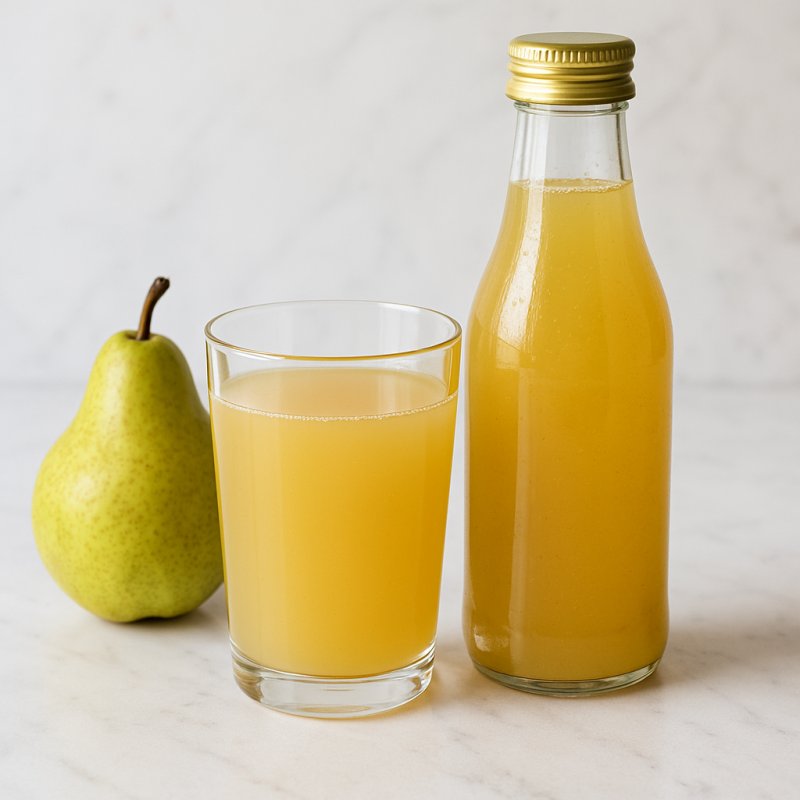
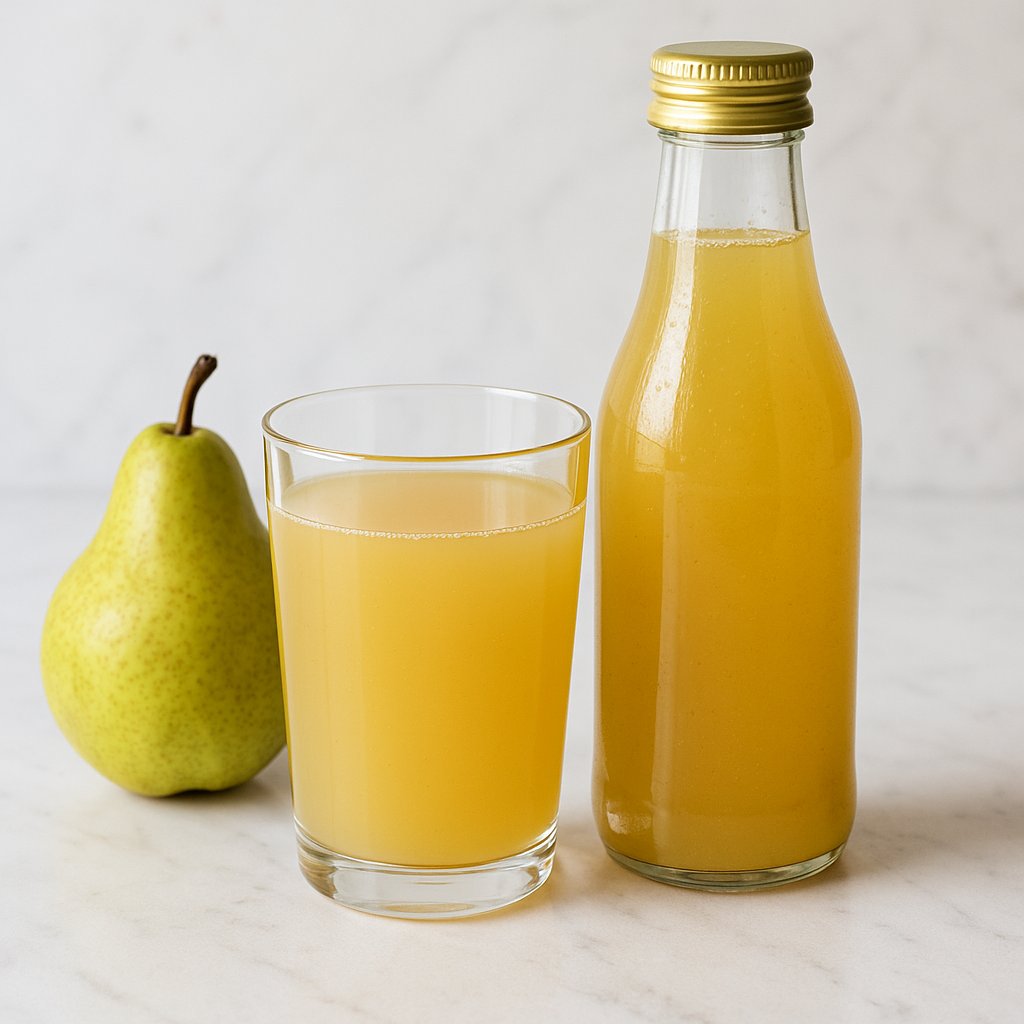
Glass with pale yellow pear juice and fresh pears beside it
I have a weakness for simple ingredients that can do more than they promise at first glance, and pear juice is such a candidate. When I think of the first glass I consciously wanted to taste, I remember a rainy afternoon when a colleague brought me a bottle from his homeland. The aroma was immediate: sweet, slightly floral and with a silky note that surprisingly warmed my heart. Since then pear juice has a permanent place in my kitchen.

Pear juice is not just a thirst-quencher, it's versatile. It suits sweet desserts as well as savory dishes. I like to mix it into dressings, reduce it to a glaze for roasted vegetables, or combine it with a tangy cheese to play the fruitiness against the saltiness. Once I experimented with a marinade of pear juice, mustard and rosemary — the result was so good a friend tried to claim the recipe.

What makes pear juice special:

  • It has a mild sweetness that is less intrusive than some apple juices.
  • The texture is often silkier, especially in full-bodied varieties.
  • It harmonizes excellently with spices like ginger, cinnamon or vanilla.
Health-wise pear juice brings some advantages: it contains naturally occurring vitamins and is a pleasant source of hydration, especially when fresh fruit is used. I like that it works well in mixes — a splash in an herbal tea or as a base for non-alcoholic cocktails often creates surprisingly subtle flavor depths. A colleague once swore by combining pear juice with mineral water to give a tired afternoon more lightness.

When buying, I pay attention to origin and ingredient list. A good product ideally consists only of pear juice, without added sugar or preservatives. Finally: don't shy away from small experiments. A little pear juice in pancake batter or as a finish on baked brie can turn a simple meal into something special. I hope my little stories and tips inspire you to give this often underrated ingredient more space.

Availability & types

Availability and types

Pear juice is a widespread ingredient that is easy to find in many countries. The pear grows mainly in temperate regions, so where it is neither too hot nor too cold. Large production areas include, for example, Europe (especially countries like France, Italy and Germany), North America (particularly the United States) and parts of Asia. You can think of it like apple orchards: pear trees are often in orchards or plantations and are tended until the fruit is ripe.

The season for fresh pears is usually late summer and autumn. That means when the trees are full of fruit in autumn, the freshly pressed pear-juice season is at its best. In supermarkets pear juice is available year-round because it is often pasteurized (briefly heated to extend shelf life) or bottled or packaged in Tetra Paks. Also, pear juice is sometimes made from frozen or concentrated juice, so it remains available outside the harvest season.

What varieties and types exist?

  • Direct juice: This is juice produced directly from pressed pears and usually only lightly heated. It often tastes fresh and natural, almost like freshly pressed juice from a market.
  • Concentrate juice: In this variant some of the water is removed from the juice to make it smaller and easier to transport. Later water is added again to make it drinkable. This is practical for long-distance transport.
  • Clear vs. cloudy juices: Clear juices have been filtered so that they look transparent. Cloudy juice contains more small fruit particles and fiber, so it appears more opaque and often tastes more intense.
  • Sweetened or unsweetened variants: Some pear juices have added sugar to make them sweeter. Others are unsweetened and contain only the natural fruit sugars of the pear. For children who don't like things too sweet, the unsweetened variant is often better.
  • Mixed juices: Pear juice is often mixed with other juices, for example apple, grape or lemon juice. It's like mixing colors: you get a new taste that can be refreshing or milder.
  • Organic variants: Organic pear juice comes from trees grown without synthetic pesticides or artificial fertilizers. For some people this is important because they prefer natural farming methods.
  • Sparkling or still variants: Some drinks with pear juice are carbonated (they fizz, like lemonade), others are still (without bubbles). Children often like the sparkling variants, adults also enjoy the still juices.
If you want to buy pear juice you will usually find it in the juice section of the supermarket or among organic products. At a farm shop or market you can often get freshly pressed juice directly from the producer — which often tastes particularly intense. Check the label: it states whether it is direct juice, from concentrate or a mixed juice and whether sugar has been added.

In summary: pear juice comes in many variants and is available almost everywhere. It comes from regions where pear trees grow well, and it can be offered fresh, from concentrate, clear or cloudy, with or without sugar, alone or mixed, and in organic quality. That way almost everyone finds the kind of pear juice they like best.
Details & nutrition

Property Value
Unit ml
Calories per 100 47
Protein per 100 0.2
Carbohydrates per 100 11.5
Sugar per 100 10.0
Fat per 100 0.1
Saturated fat per 100 0.0
Monounsaturated fat 0.0
Polyunsaturated fat 0.0
Fiber per 100 0.2
Vitamin C (mg) per 100 1
Vitamin D (IU) per 100 0
Calcium (mg) per 100 5
Iron (mg) per 100 0.2
Nutri-Score C
CO₂ footprint 0.04 kg CO2e/100 ml
Origin EU (depending on the manufacturer)
Gluten-free Yes
Lactose-free Yes
Nut-free Yes
Vegan Yes
Note Nutritional values may vary depending on the proportion of direct juice vs. concentrate and the manufacturer.

Technical & scientific information

Pear juice is a juice obtained from the flesh of pears, available both as freshly pressed and industrially processed as a beverage, ingredient in blends or as concentrate. The composition of pear juice follows the chemical and biochemical nature of the pear (genus Pyrus): the juice consists mainly of water, soluble carbohydrates, organic acids, free amino acids, minerals, vitamins and a variety of secondary plant compounds such as polyphenols and flavonoids.

Chemical composition and nutritional values
Typical nutritional values for 100 milliliters of commercial pear juice fall in the following ranges: energy 40–50 kcal, carbohydrates 9–13 g (of which sugars 8–12 g), protein 0.1–0.3 g and fat <0.1 g. The main carbohydrates are glucose, fructose and sucrose; their relative share varies depending on variety and ripeness. Important organic acids include malic acid, citric acid and, to a lesser extent, tartaric acid, whose concentration influences pH and thus flavor and microbiological stability. Minerals such as potassium, calcium, magnesium and phosphorus are present in moderate amounts. Vitamin C (ascorbic acid) is present but sensitive to light, heat and oxygen.

Phytochemical constituents
Pear juice contains secondary plant compounds, including polyphenols (e.g. flavanols, hydroxycinnamic acid derivatives) and flavonoids, which have antioxidant properties. The concentration of these compounds depends on variety, growing conditions and processing. Moreover volatile aroma compounds such as aldehydes, esters and terpenes can determine the sensory profile. These compounds are more pronounced in freshly pressed juice than in thermally treated products.

Processing methods
Industrial production includes cleaning, chopping/crushing, pressing, clarification and, where appropriate, pasteurization or thermal treatment for preservation. Clarification is achieved by centrifugation or by use of enzymes (pectinases) that break down pectin and reduce suspended solids. For long shelf life concentration by evaporation and aseptic filling are used; gentle temperature control is important to preserve nutrients and aroma. Alternatively the juice is cold-pressed and microfiltered to achieve different quality profiles.

Sensory properties and stability
The characteristic taste of pear juice results from the interplay of sugar-acid ratio, aroma substances and texture-giving components such as dissolved solids. Oxidation processes, enzymatic browning and microbial spoilage are central challenges. To reduce enzymatic browning measures such as sulfite addition, heating or enzyme inactivation are used. Microorganisms, especially yeasts and acid-loving bacteria, can ferment unpasteurized juice, which is why heat treatment or aseptic processes are common.

Health aspects
Pear juice provides rapidly available energy from simple sugars and contributes to fluid intake. The polyphenols it contains may have antioxidant effects, although actual effects depend on consumed amounts and bioavailability. People with fructose intolerance or generally high sugar consumption should moderate their intake. For infants pear juice is not a substitute for breast milk or specialized infant formulas; cautious use is recommended for toddlers, as fruit sugar doses can damage tooth enamel and promote diarrhea. Regarding allergies, pears are rare triggers, but birch pollen allergic individuals can experience cross-reactions.

Storage and quality control
Quality tests include measurements of Brix (sugar content), titratable acidity, pH, microbiological tests and sensory analyses. Storage stability depends on filling, packaging material (light-blocking vs transparent), temperature and oxygen exposure. Cooling extends freshness, while pasteurization and aseptic packaging allow shelf-stable storage without refrigeration.

Overall pear juice is a nutrient-rich, flavorfully diverse product with well-researched technological processing routes. Its nutritional benefits must be considered in the context of sugar content and processing; the choice between freshly pressed and industrially processed juice affects nutrient content, aroma and shelf life.

Wiki entry for: pear juice
Active now: 15 visitors of which 2 logged-in members in the last 5 minutes