Availability and types
Pear juice is a widespread ingredient that is easy to find in many countries. The pear grows mainly in temperate regions, so where it is neither too hot nor too cold. Large production areas include, for example, Europe (especially countries like France, Italy and Germany), North America (particularly the United States) and parts of Asia. You can think of it like apple orchards: pear trees are often in orchards or plantations and are tended until the fruit is ripe.
The season for fresh pears is usually late summer and autumn. That means when the trees are full of fruit in autumn, the freshly pressed pear-juice season is at its best. In supermarkets pear juice is available year-round because it is often pasteurized (briefly heated to extend shelf life) or bottled or packaged in Tetra Paks. Also, pear juice is sometimes made from frozen or concentrated juice, so it remains available outside the harvest season.
What varieties and types exist?
- Direct juice: This is juice produced directly from pressed pears and usually only lightly heated. It often tastes fresh and natural, almost like freshly pressed juice from a market.
- Concentrate juice: In this variant some of the water is removed from the juice to make it smaller and easier to transport. Later water is added again to make it drinkable. This is practical for long-distance transport.
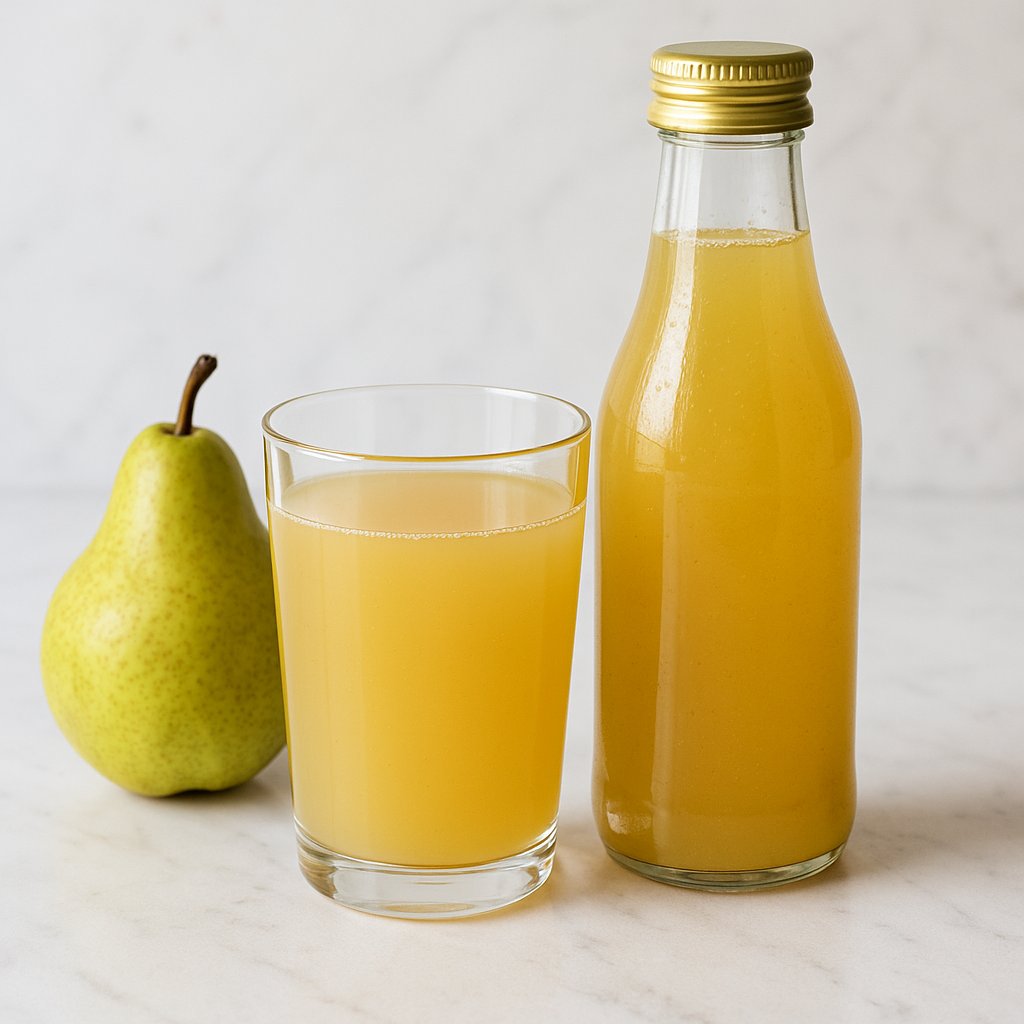
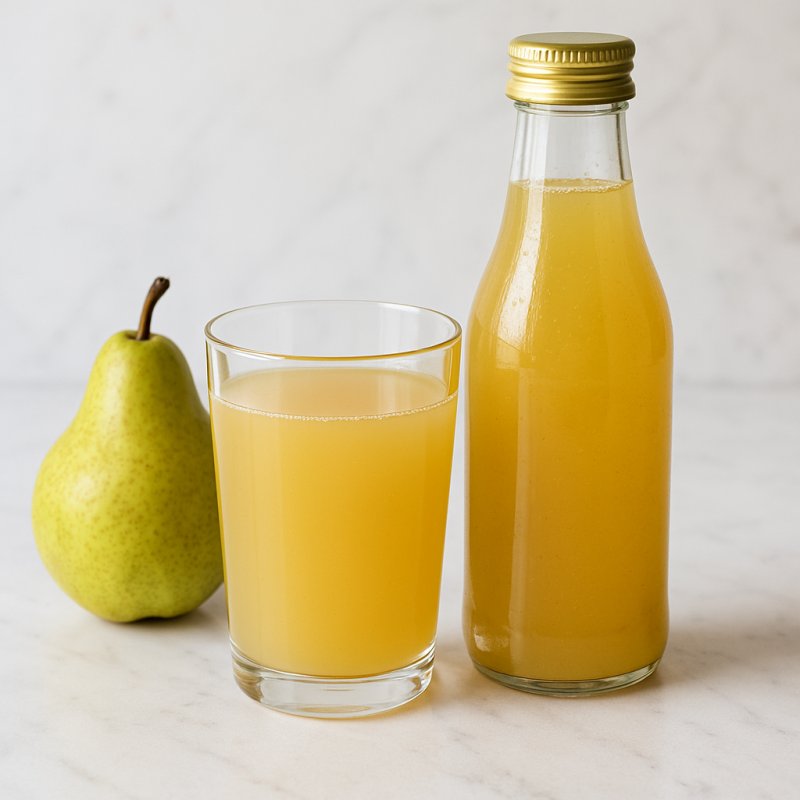
- Clear vs. cloudy juices: Clear juices have been filtered so that they look transparent. Cloudy juice contains more small fruit particles and fiber, so it appears more opaque and often tastes more intense.
- Sweetened or unsweetened variants: Some pear juices have added sugar to make them sweeter. Others are unsweetened and contain only the natural fruit sugars of the pear. For children who don't like things too sweet, the unsweetened variant is often better.
- Mixed juices: Pear juice is often mixed with other juices, for example apple, grape or lemon juice. It's like mixing colors: you get a new taste that can be refreshing or milder.
- Organic variants: Organic pear juice comes from trees grown without synthetic pesticides or artificial fertilizers. For some people this is important because they prefer natural farming methods.
- Sparkling or still variants: Some drinks with pear juice are carbonated (they fizz, like lemonade), others are still (without bubbles). Children often like the sparkling variants, adults also enjoy the still juices.
If you want to buy pear juice you will usually find it in the juice section of the supermarket or among organic products. At a farm shop or market you can often get freshly pressed juice directly from the producer — which often tastes particularly intense. Check the label: it states whether it is direct juice, from concentrate or a mixed juice and whether sugar has been added.
In summary: pear juice comes in many variants and is available almost everywhere. It comes from regions where pear trees grow well, and it can be offered fresh, from concentrate, clear or cloudy, with or without sugar, alone or mixed, and in organic quality. That way almost everyone finds the kind of pear juice they like best.