Menu & categories

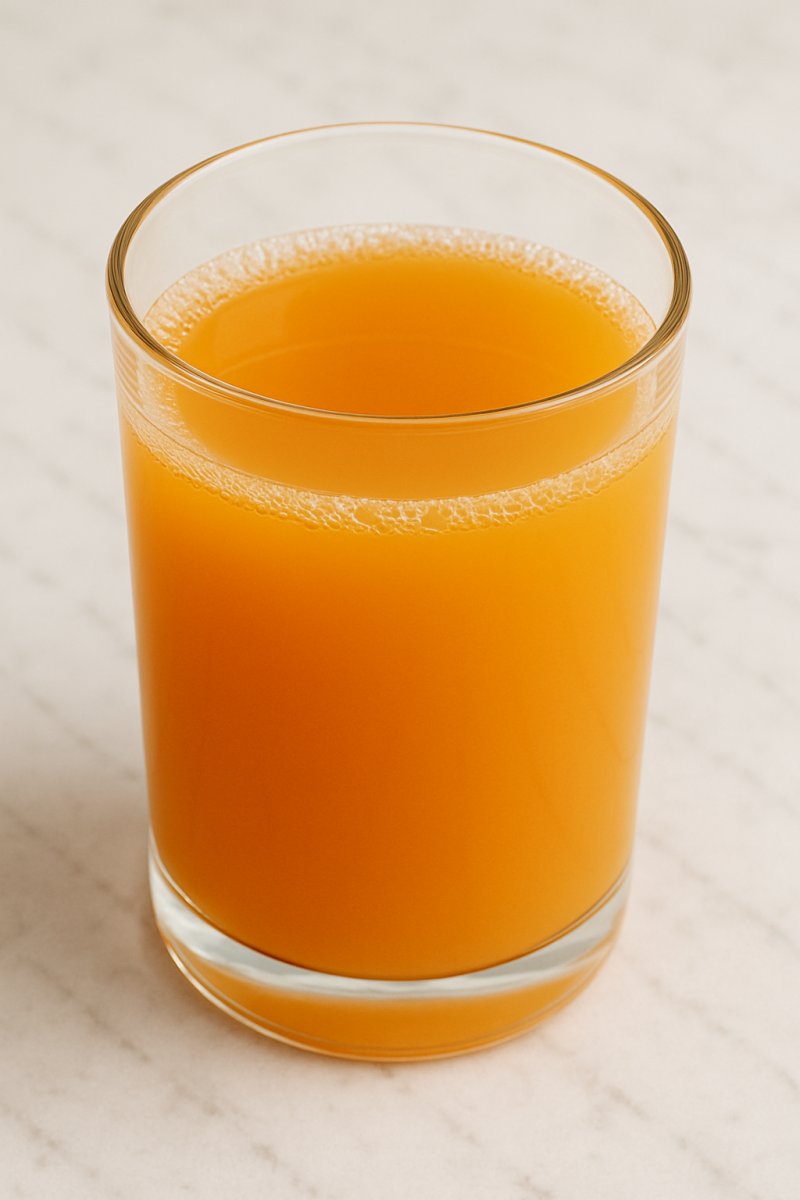
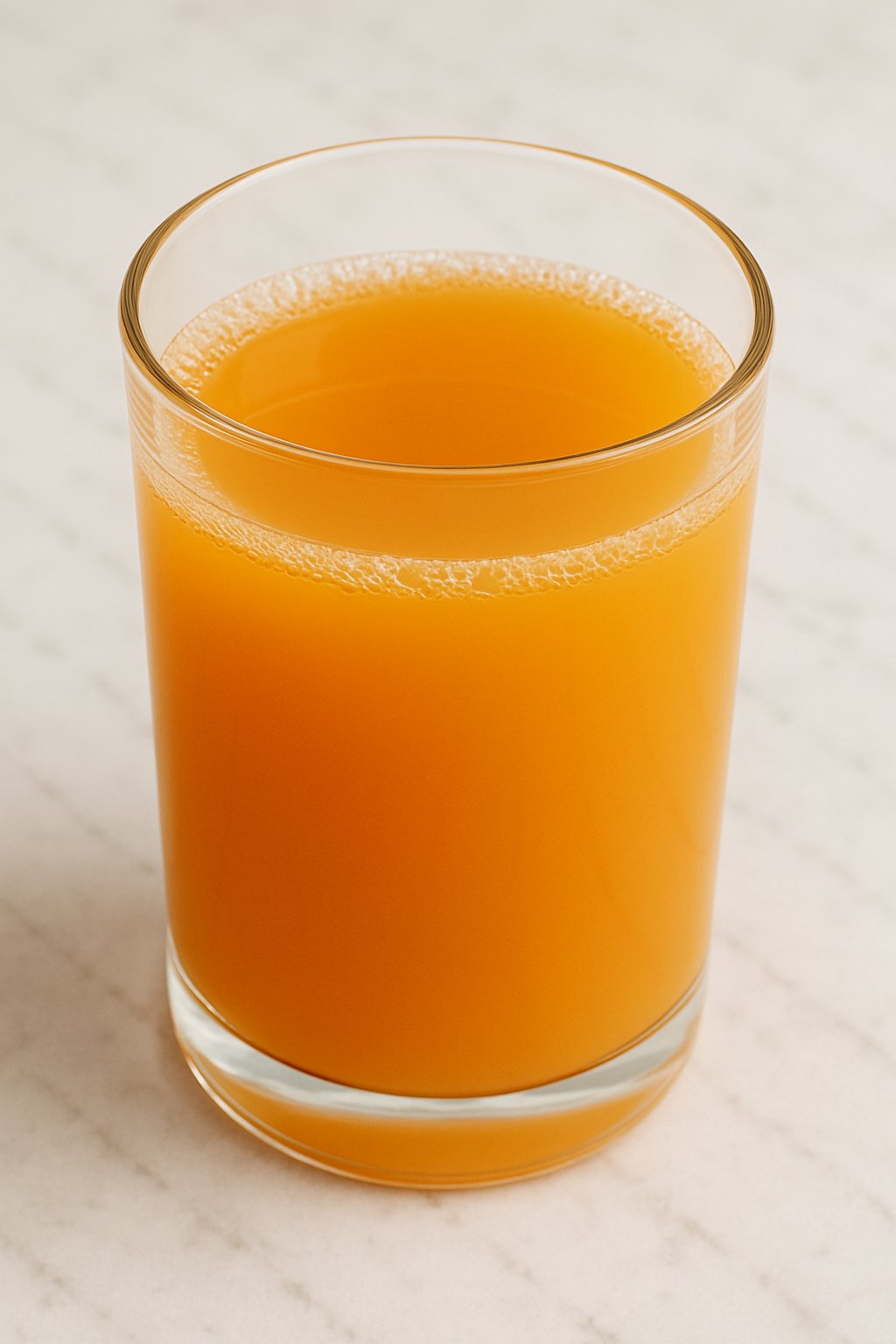
Peach juice

Fruity juice from peaches with natural sweetness

Wiki about peach juice Nutri-Score B Vegan Yes Gluten-free Yes Lactose-free Yes Nut-free Yes
NUTRITION / 100 ml
57 kcal 0.4 g Protein 13.5 g Kohlenhydrate 0.1 g Fett

Introduction

A glass of peach juice with fresh peach slices
I still remember the first sip of pure peach juice I consciously noticed: a warm late-summer day, the glass slightly fogged in my hand, and that unexpectedly velvety aroma that immediately reminded me of an orchard from my childhood. Peach juice has that rare ability to bring memories to the surface while remaining uncomplicated. It's not just a drink; it's a mood, a touch of sunshine in a glass and a handy ingredient that is surprisingly versatile in my kitchen.

When I think of peach juice, a few qualities that make it so lovable immediately come to mind:

  • Fruity, floral aroma: The scent is often more intense than that of whole fruit because the concentration of volatile aroma compounds becomes more apparent in juice form.
  • Natural sweetness: Peach juice brings sweetness that pairs well with acidic components like lemon juice or vinegar.
  • Versatility: Whether in cocktails, smoothies, dressings or as a marinade – peach juice works surprisingly well in both sweet and savory recipes.
A colleague of mine swears by making salad dressing with peach juice; I was skeptical until I tried it. The combination of peach juice, olive oil, a splash of white wine vinegar and a bit of mustard gives a simple leafy salad a sudden summer lightness. In another experiment I used peach juice to braise chicken thighs: the result was juicy, with a delicate fruity note that was neither intrusive nor cloying.

Practical tips I've adopted over the years:

  • When buying, check the ingredient list: the fewer additives, the better.
  • Dilute depending on intensity and use; pure is delicious, but often a little less is enough.
  • Combine with herbs like thyme or mint to refine the flavors.
To me, peach juice is one of those ingredients that is underestimated until you use it intentionally. It can brighten dishes, give cocktails a friendly note and even lend desserts an elegant fruitiness. Each glass invites you to get creative and start small culinary experiments.

Availability & types

Availability and types of peach juice

Peach juice is a fruity juice made from the soft, sweet fruits of the peach tree. It is easy to find in many countries and appears on store shelves in various forms. To give you a clear idea, here I explain where peach juice comes from, in which regions peaches are grown, which types of peach juice exist and how they differ.

Origin and growing regions
Peaches originally come from China, where people learned to cultivate them long ago. Today peaches are grown all over the world. Major growing regions include:

  • Europe: Countries like Spain, Italy and Greece produce many peaches. In warmer regions they ripen particularly well.
  • North America: In the USA states such as California and Georgia are known for peaches. Georgia is even often called the "Peach State" because of its peaches.
  • Asia: China is the largest producer, but other countries like Japan and South Korea also grow many peaches for fresh consumption and juice production.
  • South America: In countries like Chile peaches are often exported because the climate is favorable.
Peach trees like sun and warm weather. If it is too cold, the blossoms are harmed and there are fewer fruits. Farmers therefore choose locations with plenty of sun and good soil.

Available varieties and types of peach juice
Peach juice is not always the same. You can buy different types depending on how the juice was processed and which ingredients are added. Here are the main variants, explained simply:

  • Pure peach juice: This is juice made only from peaches. It can be pressed from fresh or frozen peaches. Pure juice tastes strongly of peach and is often thicker.
  • Peach nectar: Nectar contains peach juice but also water and sometimes sugar. It is somewhat thinner than pure juice and is often offered when the fruit does not yield much juice or is very pulpy.
  • Mixed drinks: These are juices mixed with other fruit juices, for example apple or orange. These drinks are often fresher in taste and suit people who do not want an intense peach flavor.
  • Concentrated peach juice (concentrate): In concentrate water is removed from the juice so that it becomes very thick and strong in flavor. Before drinking, it is mixed again with water. Concentrate requires less space during transport and is more shelf-stable.
  • With fruit pieces: Some bottles or jars contain small peach pieces. This makes the drinking experience more interesting because you can chew bits of fruit.
  • Organic peach juice: This juice comes from peaches grown without synthetic pesticides or fertilizers. Many people prefer organic products because they are often produced more sustainably.
What to look for when buying
When you buy peach juice, check the label. It will indicate whether it is pure juice, nectar or a mix. If it says "from concentrate," the juice was reconstituted after concentration. "No added sugar" means no extra sugar has been added — the juice then contains only the sugars naturally present in peaches.

So peach juice is versatile: it comes from many countries, is available in different intensities and processing types, and suits both children and adults. Whether neat in a glass, mixed with other juices or with pieces of fruit — there is a suitable variant for every taste.
Details & nutrition

Property Value
Unit ml
Calories per 100 57
Protein per 100 0.4
Carbohydrates per 100 13.5
Sugar per 100 12.5
Fat per 100 0.1
Saturated fat per 100 0.01
Monounsaturated fat 0.02
Polyunsaturated fat 0.04
Fiber per 100 0.2
Vitamin C (mg) per 100 8
Vitamin D (IU) per 100 0
Calcium (mg) per 100 8
Iron (mg) per 100 0.2
Nutri-Score B
CO₂ footprint 0.25
Origin Depending on the manufacturer, often the EU or the Mediterranean region
Gluten-free Yes
Lactose-free Yes
Nut-free Yes
Vegan Yes
Note Values refer to 100 ml of pure, non-fortified peach juice without added sugar; nutritional values may vary slightly depending on the manufacturer and processing.

Technical & scientific information

Peach juice is a fruit juice produced by maceration, pressing or blending of ripe peaches (Prunus persica). It contains the characteristic soluble and volatile compounds of the fruit that are responsible for aroma, taste and color. Typical raw materials for peach juice are yellow-fleshed and white-fleshed varieties; the choice of variety affects sugar, acid and aroma profiles as well as the content of carotenoids and polyphenols.

Chemical composition and constituents

  • Water: Peach juice is composed of about 85–90% water, making it a hydrating beverage.
  • Monosaccharides and disaccharides: Mainly glucose, fructose and sucrose; total sugar content typically varies between 8 and 14 g/100 ml, depending on ripeness and variety.
  • Acids: Mainly malic acid and citric acid, which together determine a pH of around 3.4–4.0 and influence the acidic taste and microbiological stability.
  • Phenolic compounds: Flavonoids, anthocyanins (in some varieties), chlorogenic acid and other polyphenols contribute antioxidant properties and affect color and astringency.
  • Volatile aroma compounds: Esters, aldehydes, terpenes and lactone compounds form the typical, complex peach aroma. Gamma-decalactone is considered an important aroma characteristic.
  • Vitamins and minerals: Mainly vitamin C in variable amounts, small amounts of vitamin A (as carotenoids), potassium, magnesium and trace elements.
  • Fiber: Low in clear juice; in nectar- or puree-based products the content is higher due to fruit solids.
Nutritional values

The calorie content of peach juice typically ranges between 40 and 60 kcal per 100 ml and is mainly due to the sugars present. Fat and protein contents are negligible. Nectars contain more fiber and micronutrients because of the higher fruit content and thus show slightly different nutritional values.

Processing methods

  • Harvest and preparation: Selection of ripe fruits, washing, pitting and chopping. Oxidation processes are minimized by gentle handling of the fruit and rapid processing.
  • Extraction: Mechanical pressing or pureeing; in industrial production juices, enzymatic treatment (e.g. pectinases) is often used to increase yield and reduce viscosity.
  • Clarification and filtration: Sedimentation, centrifugation or filtration can be used to remove solids and achieve color stability.
  • Heat treatment and preservation: Pasteurization is standard to inactivate microorganisms. For higher-quality products, gentler methods such as High Pressure Processing (HPP) are also used to reduce aroma and nutrient losses.
  • Preservation: Sugar addition, acidification, sterilization or addition of sulfites can be used to extend shelf life; labeling distinguishes between direct juice, fruit juice concentrate and drinks with fruit content.
Health aspects

Peach juice provides quickly available energy in the form of sugars as well as water-soluble vitamins and some plant secondary metabolites with antioxidant effects. Moderate consumption can be part of a balanced diet, but because of the sugar and calorie content, caution is advised with regular or high consumption, especially for people with diabetes or at risk of obesity. Clear juice contains little fiber compared to whole fruit, which reduces satiety.

Safety and quality

Essential quality parameters are sensory properties (taste, smell, color), microbiological purity and the presence of residues (e.g. pesticides). Industrial quality controls include spectrophotometric analyses, HPLC for determination of sugar and polyphenol profiles and GC-MS for analysis of volatile aroma compounds.

Overall, peach juice is an aromatic, nutritionally interesting product with specific chemical profiles and variable health effects depending on production method and consumption amount. Modern processing technologies aim to preserve sensory integrity and nutritional benefits while ensuring shelf life and food safety.

Wiki entry for: peach juice
Active now: 17 visitors of which 2 logged-in members in the last 5 minutes