Availability and types
Passion fruit juice comes from the passion fruit, which many people also call maracuja. Maracuja grows mainly in warm regions. Important countries of origin are Brazil, Colombia and Peru in South America. But it is also cultivated in Central America (for example Ecuador), Africa (for example Kenya) and in parts of Asia and Australia. It's similar to bananas or oranges: it does not grow everywhere, but where the climate is warm and often humid.
If you look for passion fruit juice, you will find it in different places:
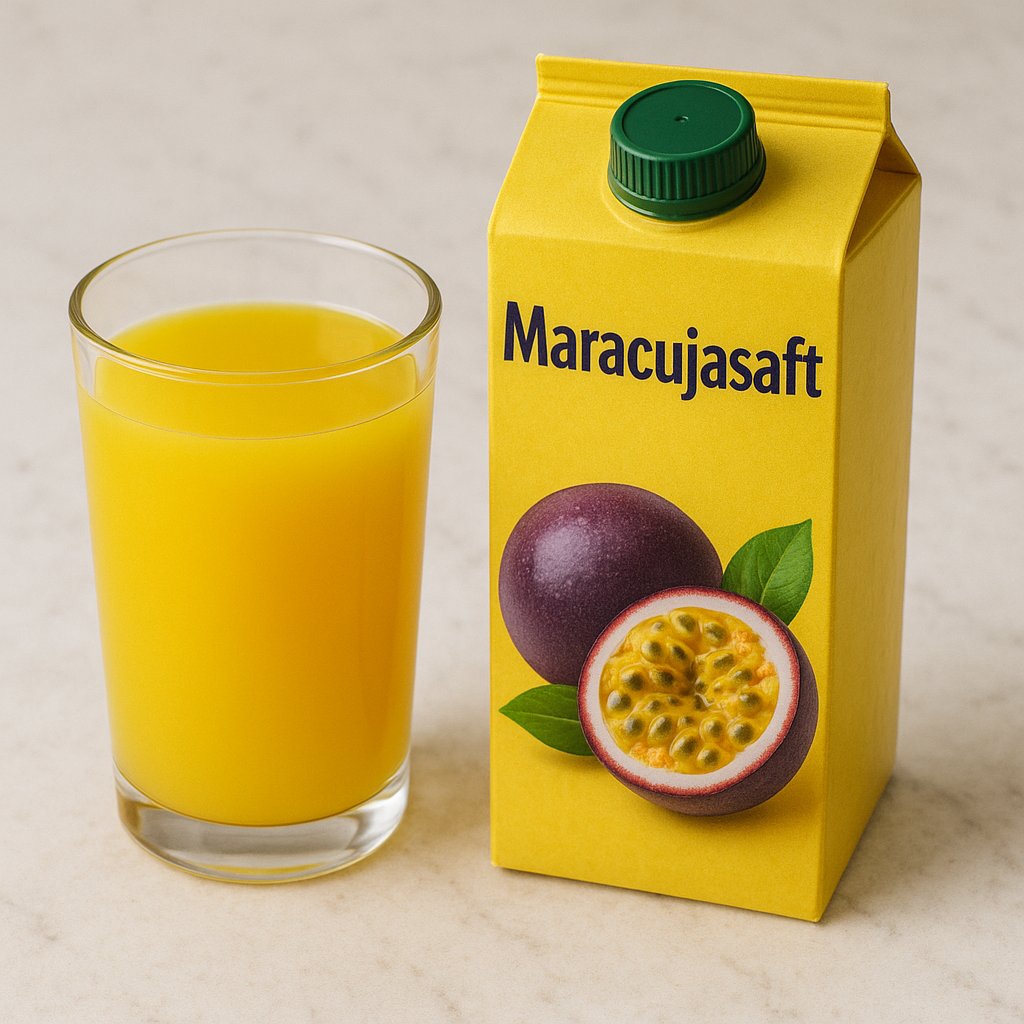
- in the supermarket among the juices,
- in the chilled section as fresh juice,
- in the freezer as fruit puree,
- in the beverage range as a mixed drink or lemonade,
- in health food stores or organic shops as an organic variant,
- online from specialist retailers or directly from producers.
Different kinds of passion fruit juice
- 100% pure passion fruit juice: This is juice made exclusively from passion fruit. It can taste intensely tart and very aromatic.
- Juice from concentrate: Here water is removed from the juice so that only a thicker, sweeter "syrup" remains. Water is added again before sale. It's like making lemonade concentrate at home and adding water.
- Nectar: Nectar is diluted juice, often with sugar or sweetener. It tastes milder and is cheaper. For children it is sometimes more pleasant because it is not so sour.
- Passion fruit puree or fruit pulp: Often still contains small seeds. This is very practical when you want to use the juice in cakes or desserts.
- Strained variants: In these products the seeds have been removed. They are smoother and suitable for drinks and fine sauces.
- Frozen puree: Convenient when fresh juice is not available – thaw and use.
Different fruit types
There are different passion fruit species that make the juice taste and look different. The best known are the yellow passion fruit (externally yellow, juice often very aromatic and somewhat more tart) and the purple/dark passion fruit (externally dark, flavor often more intense and somewhat sweeter). Sometimes juice from both varieties is blended so that it tastes good – similar to mixing concentrates to achieve the perfect flavor.
Quality and storage
Passion fruit juice can be pasteurized – that means it has been briefly heated so that no microbes remain. This makes it more shelf‑stable. Other variants are processed cold (e.g. cold‑pressed) to preserve more of the fresh taste. Check labels when buying: they indicate whether it is 100% juice, from concentrate or nectar. Fresh variants are kept in the chilled section, frozen purees in the freezer, and shelf‑stable packages stored dry and dark.
In summary: passion fruit juice comes in many variants – pure or mixed, with or without seeds, fresh or from concentrate. It mainly originates from warm countries such as Brazil or Kenya and is available year‑round in supermarkets, organic shops and online in various forms, so you can choose the right type depending on taste and use (drinking, cooking, baking).