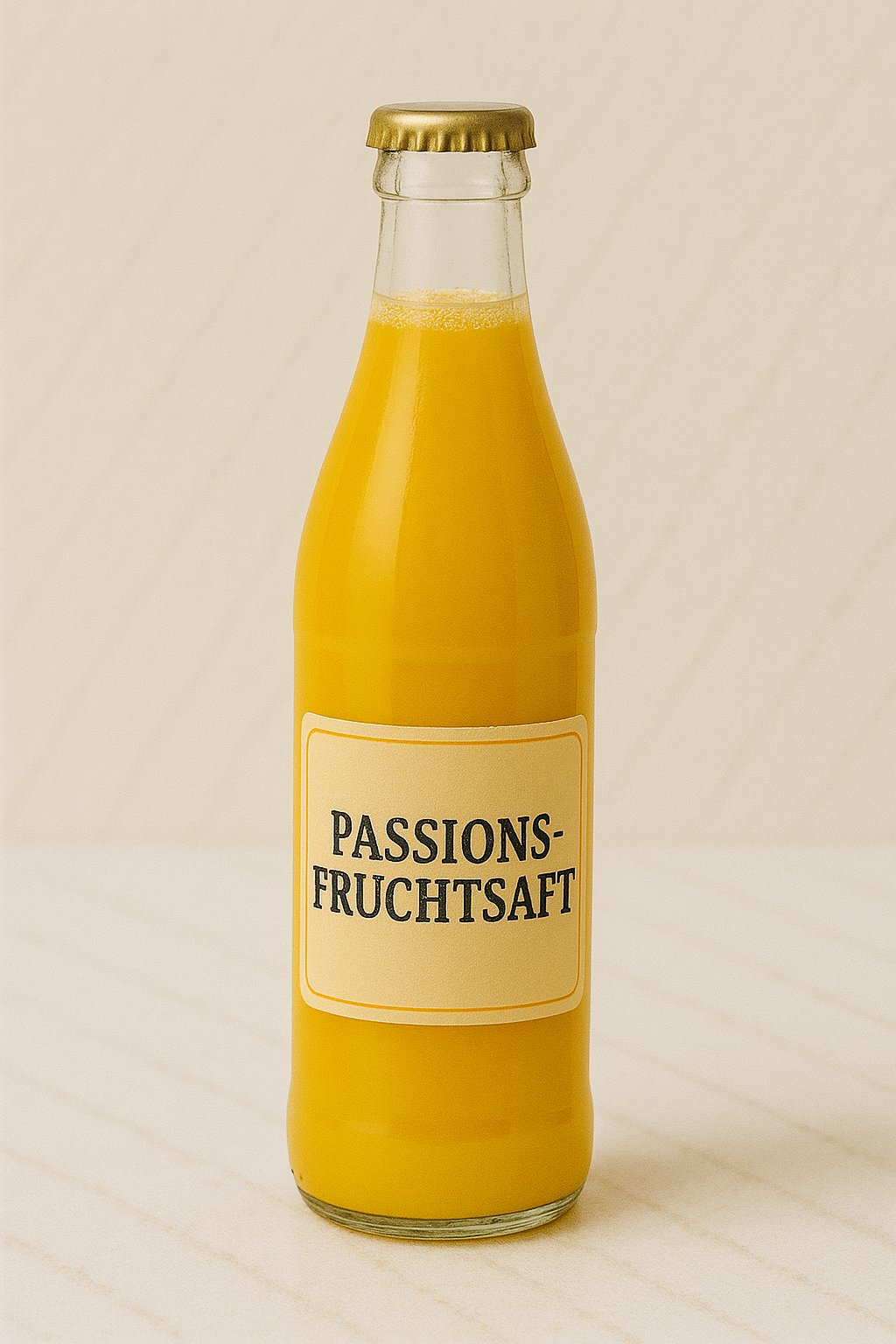
Passion fruit juice comes from the passion fruit, a tropical fruit with many small black seeds and juicy pulp. In this section I explain where the juice comes from, which varieties exist and which versions you can find in stores — all explained so simply that a 12‑year‑old can understand.
Origin and growing regions
The passion fruit is originally from South America. Today it is found in many warm regions of the world. Known growing regions include:
- Brazil, Peru and Ecuador in South America – these are large producers.
- Kenya, South Africa and Mozambique in Africa – it grows well there because it is warm.
- Australia, Hawaii and New Zealand – varieties adapted to the climate are also grown there.
- Spain and Israel also have plantations in some areas.
The plants like plenty of sun and warmth. In countries with cooler climates the fruit is often grown in greenhouses or does not grow at all.
Available varieties of passion fruit
There are several varieties that differ in appearance and taste. The main ones are:
There are several varieties that differ in appearance and taste. The main ones are:
- Purple passion fruit (Passiflora edulis) – dark outside, aromatic and intense inside. Many beverage makers like this variety for its strong scent.
- Yellow passion fruit (Passiflora edulis f. flavicarpa) – larger and juicier, often a bit more acidic and widely used for juices and concentrates.
- Granadilla (Passiflora ligularis) – has sweeter, milder pulp; tastes less acidic and is often eaten fresh.
Variants of passion fruit juice
The juice is available in many forms. Here are the most common, simply explained:
The juice is available in many forms. Here are the most common, simply explained:
- Direct juice / 100% juice – the pure juice, without added sugar. This is the most natural taste of the fruit.
- Concentrate – part of the water is removed to make the juice smaller and easier to transport. Water is added back later during bottling. It’s a bit like freezing orange juice and then thawing it, except that in concentrate the water was deliberately removed.
- Nectar – results when the juice is mixed with water and often some sugar. Nectar is sweeter and less intense than direct juice.
- Juice blends – passion fruit is often combined with other juices like mango, pineapple or orange. This creates a milder or fruitier drink.
- Frozen pulp / puree – the pulp is frozen and ideal for cocktails, smoothies or baking.
- Syrups and concentrates for cocktails – sweeter and strongly flavored, good for bar drinks or home use.
- Organic and Fair‑Trade products – from organic farming or with social certification; these variants are often more expensive because environmental and labor conditions are considered.
Availability and shopping tips
Fresh passion fruits are seasonal and sometimes not available everywhere. Juice, concentrate or frozen pulp can be found year‑round in supermarkets, health food stores or online. Pay attention to:
Fresh passion fruits are seasonal and sometimes not available everywhere. Juice, concentrate or frozen pulp can be found year‑round in supermarkets, health food stores or online. Pay attention to:
- The label: “100% juice” means no added sugar; “nectar” is usually sweetened.
- Aroma and color: good products smell fresh and fruity; color can range from pale yellow to deep orange depending on the variety.
- Storage: fresh fruits keep a few days to weeks in the fridge; frozen pulp lasts longer.
Overall, passion fruit juice is easy to find in many variants – from natural direct juice to sweet syrups – and pairs well with many recipes and drinks.