Menu & categories

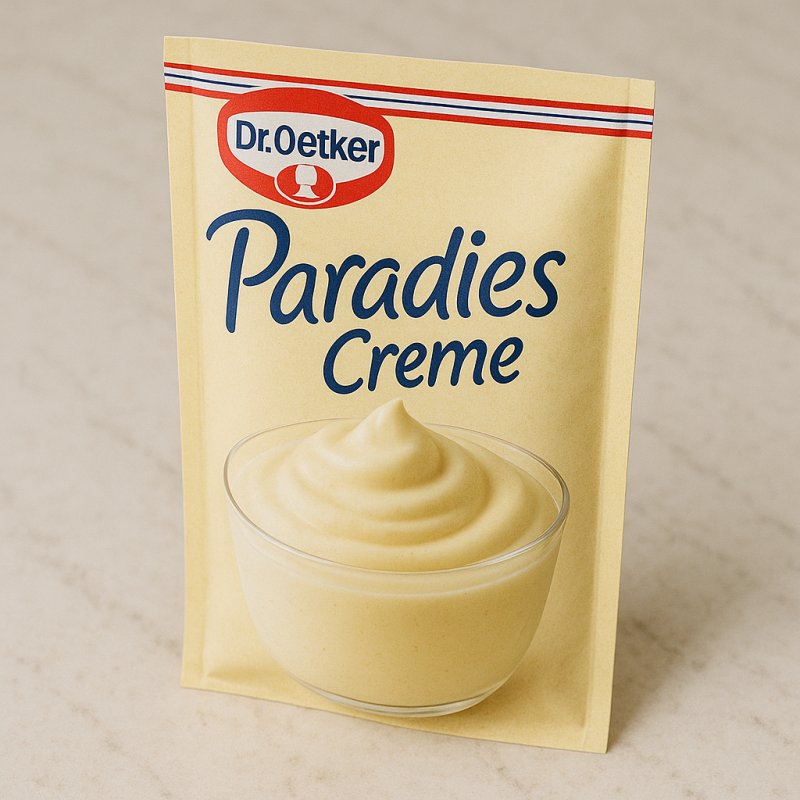
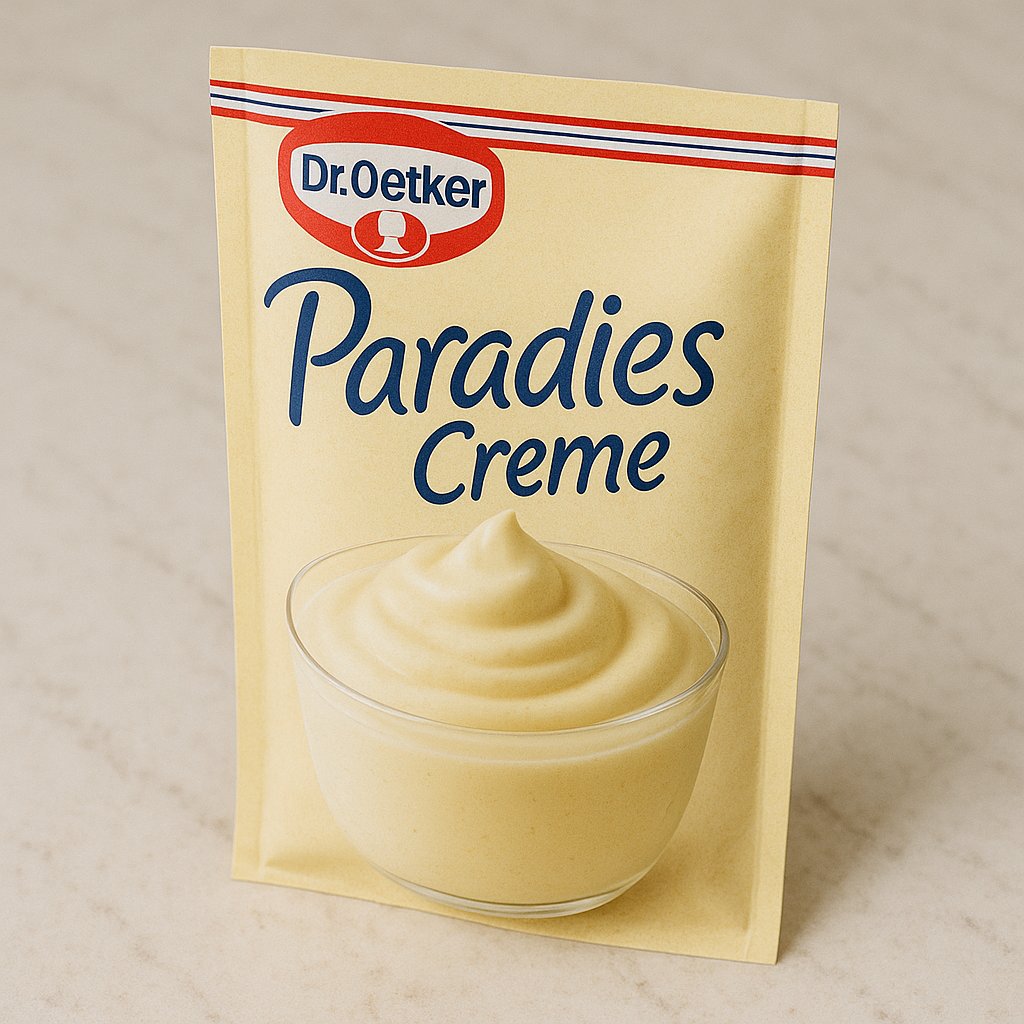
Paradies Creme

Creamy dessert powder to be mixed with milk.

Wiki about Paradies Creme Nutri-Score D Vegan No Gluten-free Yes Lactose-free No Nut-free Yes
NUTRITION / 100 g
410 kcal 4.5 g Protein 83 g Kohlenhydrate 8.0 g Fett

Introduction

Bowl with Paradies Creme dessert
I have a small weakness for uncomplicated desserts, and Paradies Creme has been part of my secret repertoire for years. When time is short and I still want something special on the table, I like to use this powder that becomes a light, creamy mousse when mixed with milk. I still remember a rainy Sunday afternoon when an unexpected visitor came and within ten minutes I whipped up a bowl of chocolate Paradies that surprised everyone.

What I like about Paradies Creme is its versatility. The product comes in several flavors and can be used in different ways, depending on whether I feel like a plain dessert or a creative cake. A colleague of mine was particularly delighted once when I served him my version with fresh berries and caramelized almonds.

Practical notes for preparation:

  • Paradies Creme is usually mixed with cold milk and briefly whipped until creamy.
  • For especially rich desserts I replace part of the milk with whipping cream.
  • The cream needs some chilling time to set, so I allow an extra 15–30 minutes depending on the occasion.
I like to experiment: sometimes I stir pureed fruit or a splash of liqueur-like flavor into the finished cream. Once I turned it into ice pops by filling molds with the cream and freezing them, which proved a hit with the children.

Paradies Creme is not a catch-all solution for every dessert problem, but it saves time and reliably provides a silky texture. When shopping I check the ingredient list and whether the variety is relevant for allergies, and I've learned that proper cooling is the secret to perfect consistency.

In the end it is always the combination of simplicity and taste that convinces me: a quick spoonful to finish a relaxed evening or the base for a more elegant creation that even hardcore sweet lovers find impressive.

Availability & types

Paradies Creme is a simple, quick dessert mix that many people like to prepare at home. In this section I explain where this product and its ingredients come from, where the raw materials are grown and which flavors and variants exist — explained so simply that even a 12‑year‑old can easily understand.

Origin
Paradies Creme is not a fruit or plant, but a ready pudding/dessert powder mix manufactured and packaged by companies. Such products are often produced in countries like Germany, because several large food manufacturers are based there. The packaging and the finished powder therefore come from factories. The individual ingredients in the powder, however, have very different origins: milk or milk powder usually comes from farms in Europe, sugar can come from sugar beets in Europe or from sugar cane in warmer countries, and flavors like vanilla or cocoa often come from more distant regions.

Growing regions of the main ingredients
Here are the main ingredients and where they usually come from — in simple words:

  • Milk and milk powder: Come from cows on farms. Many farms are located in Europe, in countries such as Germany, the Netherlands or France.
  • Cocoa (for chocolate varieties): Grows on cocoa trees, mainly in warmer countries near the equator. Many cocoa beans come from West Africa (for example Ghana or the Ivory Coast).
  • Vanilla: Is a plant considered expensive. Many vanilla beans come from Madagascar or Indonesia.
  • Fruit flavors (e.g. strawberry, lemon): Can come from real fruit or from concentrates. Fruit is grown where the climate fits — for example strawberries often in Europe in summer, citrus fruits in more southern countries.
  • Sugar: Is obtained from sugar beets (common in Europe) or from sugar cane (common in warmer countries).
Imagine: The factory is like a kitchen, the ingredients come from many different farms and plantations around the world.

Available flavors and variants
Paradies Creme is available in many flavors. Typical varieties you find in the store include, for example:

  • Vanilla – mild and creamy, like vanilla ice cream
  • Chocolate – chocolaty and dark
  • Strawberry – fruity and pink
  • Lemon – fresh and tart
  • Coconut, caramel or forest fruits – depending on the manufacturer
There are also different product variants:

  • Instant powder: The regular sachet that you mix with milk.
  • Ready cups: Sometimes there are pre-made cups available in the fridge.
  • Light or reduced-sugar: For people who want less sugar.
  • Plant-based/vegan variants: These are made without milk and with plant ingredients like soy or almonds.
  • Seasonal flavors: Special flavors sometimes appear only at certain times, for example in winter or at Easter.
Availability
You can find Paradies Creme and similar products in supermarkets, discounters, online shops or on international food shelves. They are widespread in many European countries and are usually inexpensive. If you are looking for something special — like a vegan version or an exotic flavor — it can help to search online or visit larger supermarkets.

In summary: Paradies Creme comes from factories, the ingredients come from different growing regions worldwide, and there are many flavors and variants — from classic vanilla to vegan mixes. That way almost everyone can find the dessert they like best.
Details & nutrition

Property Value
Unit g
Calories per 100 410
Protein per 100 4.5
Carbohydrates per 100 83
Sugar per 100 70
Fat per 100 8.0
Saturated fat per 100 6.0
Monounsaturated fat 1.5
Polyunsaturated fat 0.5
Fiber per 100 0.5
Vitamin C (mg) per 100 0
Vitamin D (IU) per 100 0
Calcium (mg) per 100 150
Iron (mg) per 100 0.2
Nutri-Score D
CO₂ footprint 2.2 kg CO2e/kg
Origin Germany (manufacture; ingredients may originate from EU/non-EU countries)
Gluten-free Yes
Lactose-free No
Nut-free Yes
Vegan No
Note Values refer to the dessert powder per 100 g; nutritional values of the prepared cream may vary depending on the milk used and the amount.

Technical & scientific information


Paradies Creme is a commercial powder blend for cold dessert creams and puddings that, by adding milk, forms a spreadable, gelled texture within a short time. Such products are mainly sold as ready mixes and are characterized by long shelf life in the dry state and quick preparation without cooking. The exact composition varies by manufacturer and flavor, while the functional principles remain comparable.

Typical ingredients and functions

  • Thickeners / gelling agents: Usually pregelatinized starch or other hydrocolloids (e.g. guar gum, carrageenan, modified starches). These components bind water and form a three-dimensional network that creates the typical consistency.
  • Starch and carbohydrates: In addition to starch, the powder often contains sucrose or invert sugar for sweetening and maltodextrins to control texture and volume.
  • Milk components: Milk powder or whey powder may be added to increase protein content, improve mouthfeel and flavor. These also supply amino acids that can influence the gel structure.
  • Emulsifiers and fat: Mono- and diglycerides, lecithin or small amounts of vegetable fat stabilize fine fat-water dispersions and improve creaminess.
  • Flavourings and colourings: Natural or artificial flavours and colourings determine taste and the visual appeal of the final preparation.
  • Acidity regulators, salt and preservatives: Small amounts are used for taste balance and product safety.
Manufacturing and processing principles

Industrial production includes weighing, mixing and sieving the dry ingredients in defined batches, followed by a homogeneous dry blend and filling into single‑portion sachets or cups. Many instant mixes are formulated to gel at room temperature by simply stirring or whisking with cold milk. Gelation is based either on the immediate hydration of pregelatinized starch or on the swelling and networking of hydrocolloids used. Emulsifiers help to distribute fat droplets finely, allowing the product to hold volume stably when whipped.

Nutritional values and nutritional aspects

In the dry state powder mixes mainly provide carbohydrates and relatively little fat or protein. Typical nutritional values are in the range of about 350–400 kcal per 100 g powder, with the majority coming from sugars and digestible starch. After preparation with milk the energy density per 100 g decreases because water content and milk components change the macronutrient proportions. These products are suitable for people with increased energy or sugar needs; for diabetics or people with restricted calorie intake the sugar content should be taken into account.

Allergens, shelf life and storage

Since powders frequently contain milk components they can be potential allergens; the label should be checked for allergens. Dry mixes are microbiologically stable; after reconstitution the shelf life is reduced considerably, so refrigerated storage and rapid consumption are recommended. Dry products should be stored cool, dry and airtight to avoid moisture uptake and quality loss.

In summary, Paradies Creme‑like products are technically formulated dry blends that, through the interplay of pregelatinized starch, hydrocolloids, emulsifiers, sweeteners and, where applicable, milk components, provide a quickly prepared creamy dessert texture. Consumers should pay particular attention to ingredient lists, allergen information and sugar content to adapt the use to individual dietary needs.

Wiki entry for: Paradies Creme
Active now: 17 visitors of which 2 logged-in members in the last 5 minutes