Menu & categories

Orange flavoring

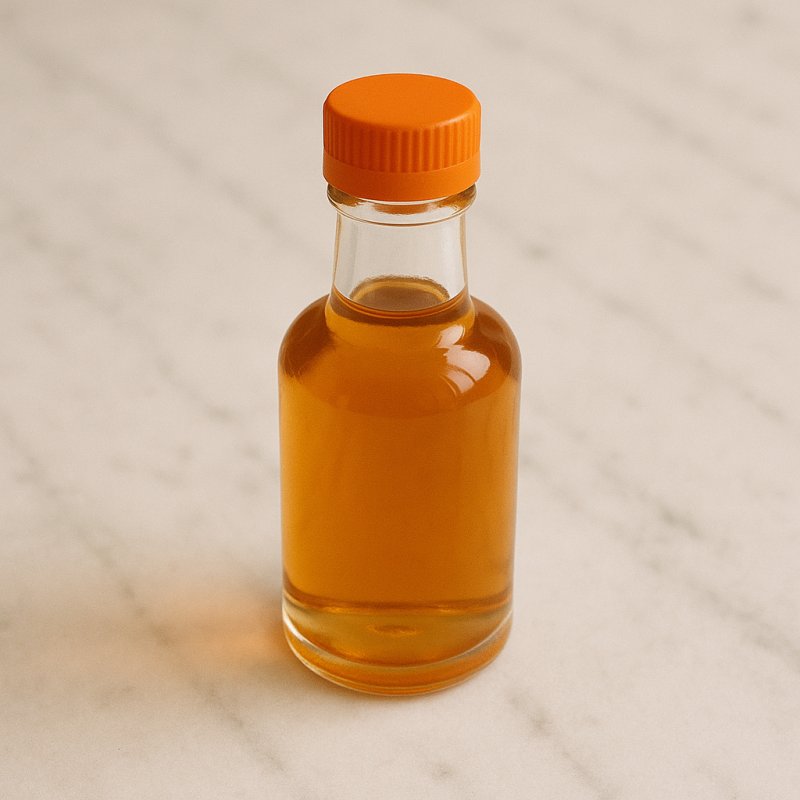
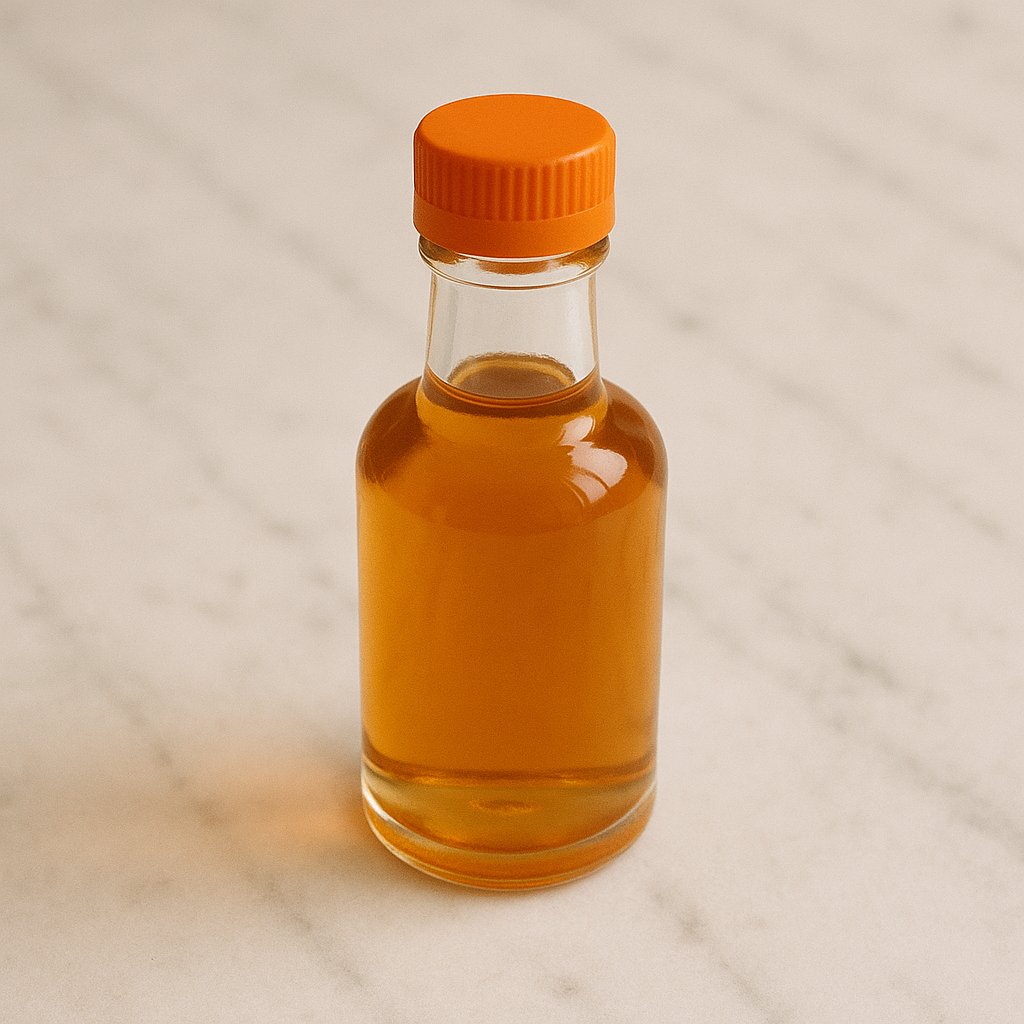
Orange flavoring for food and beverages

Wiki about orange flavoring Nutri-Score D Vegan Yes Gluten-free Yes Lactose-free Yes Nut-free Yes
NUTRITION / 100 ml
250 kcal 0 g Protein 0 g Kohlenhydrate 27 g Fett

Introduction

Small bottle of orange flavoring next to fresh oranges
I love orange flavoring because for me it always means a little bit of sunshine in a glass or on the baking tray. Even as a child I associated the scent of orange with festive moments: my grandmother's jam, warm spiced cookies at Advent and a small bottle of flavoring that she sparingly dripped into the dough. This concentrated, clear scent can lift an entire recipe without having to fill the whole kitchen with fresh fruit.

Orange flavoring comes in many facets: from bitter, herbal notes to sweet, floral highlights. I still remember an experiment where I added a few drops of flavoring to a lemon tart instead of fresh zest. The result surprised me — the tart gained depth without becoming cloying. Small kitchen experiments like that show how versatile orange flavoring can be.

When I use it I pay attention to a few simple rules that I like to pass on:

  • Dosage: Less is often more. A few drops are enough to define the flavor.
  • Compatibility: Orange flavoring harmonizes wonderfully with chocolate, vanilla, almonds and spices like cinnamon or cardamom.
  • Texture and temperature: In cold preparations the flavor seems more intense; in hot foods the volatile components evaporate more quickly.
A colleague of mine swears by using orange flavoring in his choux pastry — allegedly it gives the final kick that fresh zest sometimes doesn't achieve. I've also learned that synthetic and natural flavorings can differ in composition; sometimes I prefer the nature-identical flavor when I want a pure, fresh profile, and in other cases a more complex industrial flavor is practical because it is reliable and long-lasting.

To me orange flavoring remains a small kitchen secret: flexible, mood-lifting and surprisingly present. It's an ingredient I rarely leave unused in my pantry, because it often gives dishes exactly the last spark that makes them unforgettable.

Availability & types

Availability and types of orange flavoring

Orange flavoring is an aromatic and flavoring substance used in cooking, baking and in drinks. You can easily find it in supermarkets, drugstores or online. Sometimes the label simply says “orange oil”, “orange extract” or “orange flavoring” – these are different names for similar products. The important thing is: orange flavoring should bring the familiar, fresh taste of an orange even if no fresh fruit is present.

Origin
Orange flavoring usually comes from real oranges or from substances that smell like orange. When it comes from real fruit, the peel (peel = outer part of the fruit) is often used. The peel contains a lot of aromatic oil that smells strongly of orange. This oil can be pressed out, similar to how juice is pressed. There are also artificial flavorings: these are made in a laboratory and mimic orange taste. Artificial flavorings are not bad or dangerous; they are simply another way to create flavor.

Growing regions
Oranges grow best in warm, sunny countries. The main growing regions are:

  • Mediterranean region (e.g. Spain, Italy) – many oranges for juice and as fresh fruit come from there.
  • USA (especially Florida and California) – known for large orange groves and juice production.
  • South America (e.g. Brazil) – an important supplier of orange oil and juice.
  • Asia (e.g. China, South Africa) – many oranges are also grown and exported there.
Depending on where the oranges grow, the aromas can be slightly different – similar to apples: an apple from your garden may taste different from one from another country.

Available types and variants
Orange flavoring is available in several forms. Here are the main ones, explained simply:

  • Natural orange oil: It is pressed directly from the peel. It smells very fresh and intense, almost like a real orange. It's like freshly pressed orange juice, only more concentrated.
  • Orange extract: This is when the flavor is extracted from the peel with alcohol or water. Extracts are milder than pure oil and work well for baking because they mix easily into dough.
  • Artificial orange flavoring: Lab-made substances that smell like orange. They are often cheaper and very stable, so they have a long shelf life. Think of it as a recreated scent: it feels like orange but is not directly from the fruit.
  • Orange oil blends: Sometimes orange oil is blended with other oils (e.g. lemon or mandarin) to create new fruity combinations. It's like mixing orange juice with a little lemon juice to get a different flavor.
  • Orange flavoring in powder form: For some candies or instant drinks the flavoring is available as a powder. It's practical because it's easy to dose.
When you buy orange flavoring you can look for labels like “natural flavor” or “artificial flavor”. For cakes or drinks extracts and natural oils are very popular because they really taste like orange. Artificial flavorings are practical when you want something inexpensive and shelf-stable. That way you can easily find the orange flavoring that fits your recipe or taste.
Details & nutrition

Property Value
Unit ml
Calories per 100 250
Protein per 100 0
Carbohydrates per 100 0
Sugar per 100 0
Fat per 100 27
Saturated fat per 100 2
Monounsaturated fat 20
Polyunsaturated fat 5
Fiber per 100 0
Vitamin C (mg) per 100 0
Vitamin D (IU) per 100 0
Calcium (mg) per 100 0
Iron (mg) per 100 0
Nutri-Score D
CO₂ footprint 4.0
Origin Made from natural and/or nature-identical flavorings, mostly from the EU
Gluten-free Yes
Lactose-free Yes
Nut-free Yes
Vegan Yes
Note Nutritional values refer to the concentrated liquid orange flavoring on an oil or propylene glycol base; at normal consumption levels (drops), the contribution to nutrition is negligible.

Technical & scientific information

Orange flavoring refers to a synthetic or nature-identical flavor compound that reproduces the characteristic smell and taste of oranges. It is used in food and beverages as well as in baked goods, confectionery, perfumes and cosmetics. Orange flavorings differ from pure orange oil in that they are specifically optimized for sensory properties and often contain multiple chemical components in defined concentrations.

Chemical composition
The flavor is primarily based on a mixture of volatile organic compounds. Important single components are monoterpenes such as d-limonene (the most common compound), β-myrcene and α-pinene, as well as oxygenated compounds like citral (a mixture of neral and geranial), octanal, nonanal and various esters such as ethyl butyrate or octyl acetate. These substances affect olfactory receptors in different ways and together produce the typical orange profile, combining fruity, sweet and slightly peppery notes.

Production and processing methods
Orange flavorings are obtained by three main routes: direct extraction from fruits, distillation of orange oil and chemical synthesis or combination of nature-identical compounds. Extraction methods include cold pressing (for essential oil), steam distillation or solvent- and CO2-extraction. For industry, nature-identical flavor compounds are often more cost-effective and stable. In flavor production individual components are analyzed in laboratories, sensorily evaluated and combined into formulas that consider stability, volatility and interaction with the food matrix.

Ingredients and nutritional values
Orange flavoring does not provide significant macronutrients such as proteins, fats or carbohydrates and therefore contributes little to calories at typical usage levels. It generally contains trace amounts of volatile organic compounds that have no nutritional relevance. If the flavoring is derived from natural orange oil, traces of secondary plant compounds like flavonoids may be present, but these are at concentrations low enough to be negligible.

Safety and health aspects
Most compounds used in orange flavorings have been evaluated by food authorities and are considered safe at permitted levels. Still, some people can be sensitive to certain terpenes; d-limonene can cause skin irritation or allergic reactions at high concentrations. Oxidized orange oil can form hydroperoxides that are more sensitizing. Therefore flavors are stabilized and protected with antioxidants. Consumers with a citrus allergy should note that synthetic orange flavorings do not contain fruit proteins and are therefore often better tolerated, but cross-reactions can occur in cases of sensitization to terpenes.

Technical and functional aspects
In production, flavors must meet several requirements: stability to heat, light and pH fluctuations, compatibility with fat and water phases, and the ability to remain perceptible when diluted in complex formulations. For this reason aromatic oils are sometimes microencapsulated to reduce volatility and control release. In beverages water-soluble flavor dispersion forms are commonly used, while heat-stable esters are preferred in baked goods.

Regulation and labeling
The declaration of orange flavoring follows food law requirements. In the EU a distinction must be made between natural flavors (obtained from oranges) and artificial or nature-identical flavoring substances. In processed foods the label “orange flavoring” is permissible; additional information about origin or individual components is voluntary or mandatory only for specific claims.

Overall, orange flavoring is a technically versatile ingredient whose composition and application are tailored to sensory and production requirements. For consumers it is important to know the origin (natural vs. synthetic) and possible sensitivities, while manufacturers ensure the desired perception and safety through targeted formulation and stabilization.

Wiki entry for: orange flavoring
Active now: 17 visitors of which 2 logged-in members in the last 5 minutes