Menu & categories

Oil

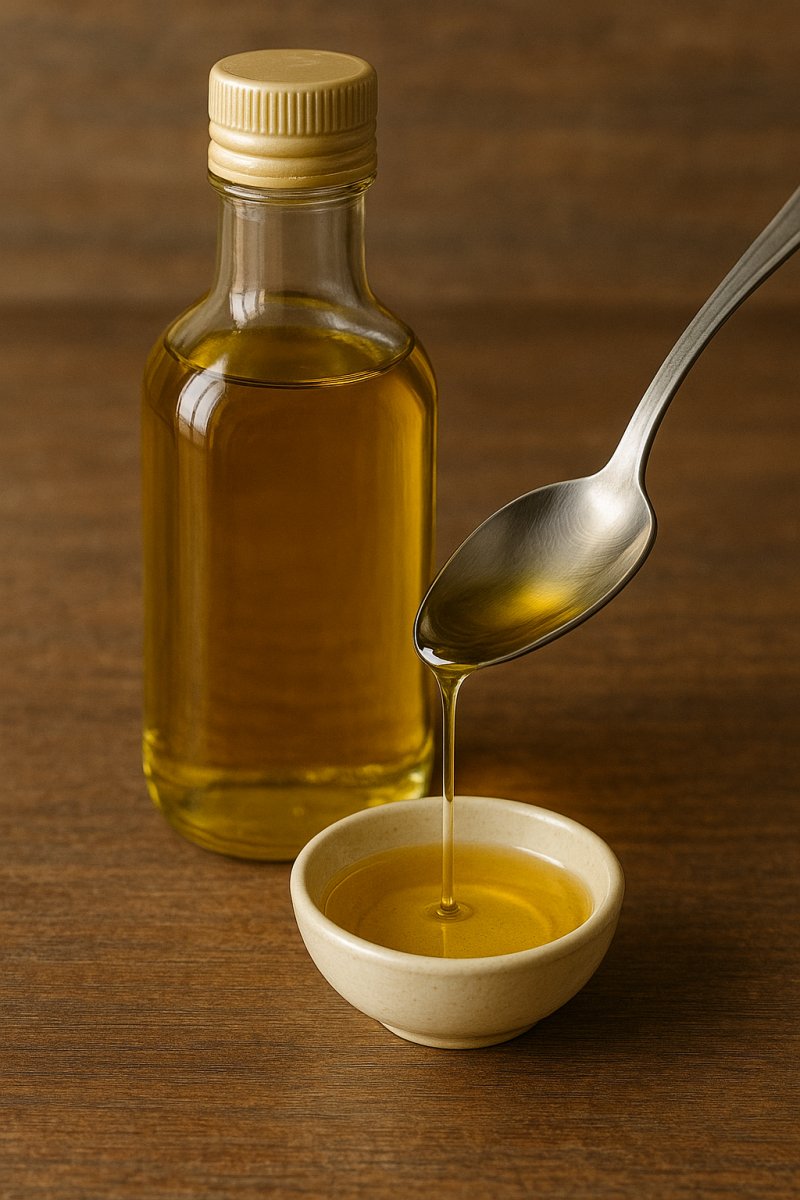
Pure fat for frying, baking and seasoning.

Wiki about oil Nutri-Score C Vegan Yes Gluten-free Yes Lactose-free Yes Nut-free No
NUTRITION / 100 g
884 kcal 0 g Protein 0 g Kohlenhydrate 100 g Fett

Introduction

Oil
Oil is for me much more than just an ingredient in the cupboard; it is an adventure in a jar, a small flavor explosion that can turn simple ingredients into great things. I still remember a market stall where an old man eagerly dripped his home-pressed oil into a glass and said, "Try this, it tells you stories." Since then I pay attention to origin, color and smell, because oil shapes memories and kitchen decisions alike.

I love the variety: olive oil brings Mediterranean warmth, sunflower and rapeseed oil are reliable all-rounders, and sesame or peanut oil instantly give Asian dishes character. When frying I watch the smoke point; an experiment with oil that was too hot once gave me a completely new starter — browned, slightly bitter-smoky aromas — that went down surprisingly well with friends.

Oil determines not only flavor but also texture and health. Cold-pressed oils retain more aromas and polyphenols, while refined oils are more neutral and heat-stable. I like to explain this with an anecdote: a colleague of mine insisted on frying everything in extra virgin olive oil until he noticed that the oil lost its delicate notes at high heat. Since then we use it more as a finishing touch.

  • For dressing: extra virgin olive oil or sesame oil.
  • For frying: rapeseed oil or refined avocado oil.
  • For baking: neutral oils like sunflower oil.
Oils should be stored cool and dark, as light and heat accelerate oxidation. Sustainability also matters to me: regionally produced oils and fair production processes are a good reason to buy. I like to try different oils, mix them into dressings or drizzle a good oil at the end over grilled vegetables — it often acts like a small, aromatic final applause.

In the end oil remains for me a versatile companion in the kitchen that with a few drops transforms dishes and tells stories, if you taste closely.

Availability & types

Availability and types of oil – that may sound complicated, but it's quite simple: oil is a liquid ingredient used in many kitchens around the world. You can find oil almost everywhere: in the supermarket, at the weekly market, in organic shops or online. There are different varieties because oils are made from different plants or fruits and depending on the type they taste different and are used differently.

Where does oil come from? Oils mostly come from plants or fruits. Some important places of origin are:

  • Olive oil – often comes from countries around the Mediterranean such as Spain, Italy and Greece. Olives grow on trees and the oil is pressed from the fruit.
  • Sunflower oil – is made from the seeds of sunflowers. Large growing regions include Eastern Europe, Russia, Argentina and parts of Germany.
  • Rapeseed oil (sometimes called canola) – comes from yellow rapeseed fields; much of it is grown in Europe, Canada and China.
  • Soybean oil – produced from soybeans, widely cultivated in the USA, Brazil and Argentina.
  • Palm oil – comes from the fruit of the oil palm and is mainly produced in Indonesia and Malaysia. It is very productive, but production can cause problems for wildlife and forests.
  • Coconut and sesame oil – come from tropical regions or parts of Asia and Africa.
  • Avocado oil – comes from countries like Mexico and Peru, where many avocados are grown.
What variants are there? Oils differ not only by plant but also by how they are produced. Here are a few simple explanations:

  • Extra virgin / Virgin oil – this is oil that is very gently pressed from the fruit, for example extra virgin olive oil. It tastes robust and is good for salads or dipping. It's like freshly pressed juice.
  • Cold-pressed – means that little heat was used during pressing so the flavor is preserved.
  • Refined – here the oil has been purified and sometimes heated. It smells and tastes more neutral and tolerates higher temperatures when cooking, for example when frying.
  • High-heat oils – some oils, like rapeseed or sunflower oil, are good for frying because they can get hot without smoking.
  • Flavored oils – e.g. garlic or chili oil, to which flavors have been added to help with seasoning.
In supermarkets you often see different bottles and price ranges: small glass bottles for special oils, large plastic bottles for everyday use. Organic shops often offer organic oils – that means the plants were grown without certain chemicals. For palm oil look for indications like "sustainably produced", because that helps you avoid products that have destroyed rainforest.


For storage: oils don't like direct sunlight or heat. Put the bottle in a cool, dark place. If an oil smells rancid (sour or musty), it's better not to use it anymore. When cooking it helps to have different oils for different purposes: a good virgin oil for flavor and a refined oil for frying. That way you find the right oil for each meal.
Details & nutrition

Property Value
Unit g
Average weight per piece 1000
Calories per 100 884
Protein per 100 0
Carbohydrates per 100 0
Sugar per 100 0
Fat per 100 100
Saturated fat per 100 7
Monounsaturated fat 63
Polyunsaturated fat 28
Fiber per 100 0
Vitamin C (mg) per 100 0
Vitamin D (IU) per 100 0
Calcium (mg) per 100 0
Iron (mg) per 100 0
Nutri-Score C
CO₂ footprint 2.7 kg CO2e/kg
Origin Varies depending on the type of oil (e.g. EU and worldwide)
Gluten-free Yes
Lactose-free Yes
Nut-free No
Vegan Yes
Note Nutritional values refer to a typical vegetable oil. Fatty acid profile and Nutri-Score may vary depending on the type of oil (e.g. olive, rapeseed, sunflower, peanut or sesame oil).

Technical & scientific information


Oil denotes, in the food and technical sectors, a group of organic liquids that consist predominantly of fats in triglyceride form. Oils are usually liquid at room temperature, hydrophobic and have a density slightly below that of water. Chemically they consist mainly of triglycerides, i.e. glycerol esters with three fatty acid residues, whose composition determines characteristic physical and nutritional properties.

Chemical composition and constituents. The most important fraction is formed by fatty acids, which are classified into saturated, monounsaturated (MUFA) and polyunsaturated fatty acids (PUFA). Common fatty acids are palmitic acid (C16:0), oleic acid (C18:1, MUFA), linoleic acid (C18:2, omega‑6) and alpha‑linolenic acid (C18:3, omega‑3). In addition, natural oils contain secondary components such as sterols (e.g. beta‑sitosterol), tocopherols (vitamin E), phytochemicals such as phenols, carotenoids, as well as traces of phospholipids and free fatty acids.

Nutritional values and physiological significance. Oils are energy-dense at about 9 kilocalories per gram. They provide essential fatty acids that the body cannot synthesize and fat-soluble vitamins. The type of fatty acids influences lipid metabolism and cardiovascular risk: a high proportion of saturated fatty acids can raise LDL cholesterol, while MUFA and certain PUFA, particularly omega‑3 fatty acids, show favorable effects on blood lipids and inflammatory markers.

Processing methods. Oils are obtained and refined by physical or chemical processes. Important methods include:

  • Mechanical pressing (cold pressing, extraction): a gentle process that preserves more secondary plant compounds.
  • Solvent extraction (e.g. with hexane): economical for high yield, but subsequent refining is required.
  • Refining: includes degumming, neutralization, bleaching and deodorization to remove odor, free fatty acids and unwanted contaminants.
  • Hydrogenation and interesterification: chemical or catalytic modifications to change melting points or stability; partial hydrogenation can create trans fatty acids.
Quality, shelf life and safety. Oils are susceptible to oxidation, which leads to rancid odor and degradation products that may be harmful to health. Quality indicators include the peroxide value, free fatty acids (FFA), the iodine value (degree of unsaturation) and the anisidine value. Storage in dark, airtight containers at low temperature extends shelf life.

Health aspects. The health assessment depends on fatty acid composition and processing level. Unrefined cold-pressed oils provide accompanying antioxidant compounds, whereas highly refined oils may lose these. Trans fats and highly oxidized oils are associated with increased risk of cardiovascular disease. From a nutritional perspective a balanced ratio of omega‑6 to omega‑3 is recommended and oils high in MUFA, such as olive oil, are preferred.

Applications. Oils are used in the kitchen for frying, baking and as dressings, where smoke point and oxidative stability determine suitability. Industrially, oils serve as feedstocks for biofuels, lubricants and cosmetic products.

In summary, oils are complex lipid mixtures with a central role in nutrition, technology and industry. Their properties are determined by fatty acid profile, minor constituents and processing methods, so choice, storage and use have a direct impact on flavor, nutritional value and health compatibility.

Wiki entry for: oil
Active now: 11 visitors of which 2 logged-in members in the last 5 minutes