Menu & categories

Oat flour

Finely milled flour from oat kernels, rich in fiber and plant-based protein

Wiki about oat flour Nutri-Score A Vegan Yes Gluten-free No Lactose-free Yes Nut-free Yes
NUTRITION / 100 g
380 kcal 13.0 g Protein 60.0 g Kohlenhydrate 7.0 g Fett

Introduction

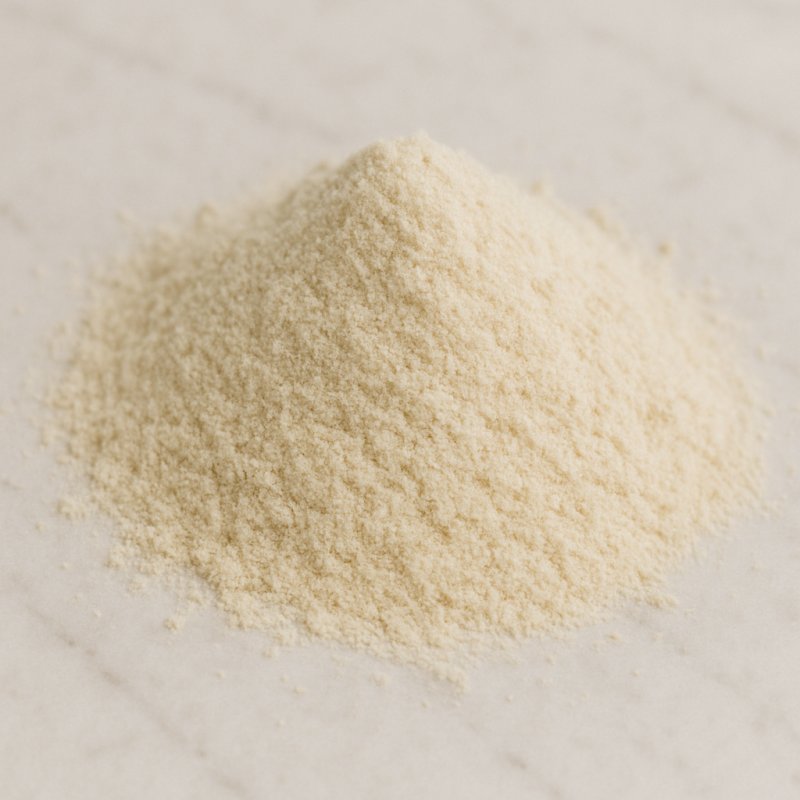
Fine oat flour in a bowl with oat flakes beside it
I have a secret relationship with oat flour that tastes more like cozy Sundays than scientific rigor. The first time I consciously used oat flour was in a tiny kitchen with a squeaking blender and a recipe that demanded more trust than measuring cups. A colleague of mine spontaneously brought oat cookies that were so tender and nutty that I immediately wanted to know: what is this magical ingredient? The answer was simple: finely ground oats.

To me oat flour is the versatile, unassuming ingredient that works equally well in sweet and savory dishes. It has a mild, slightly nutty flavor and a pleasant texture that makes baked goods moister. I like to use it to make pancakes fluffier, in bread for more bite, or as a binder in vegetarian patties. Once I replaced part of the wheat flour with oat flour at the last minute and was surprised at how much depth the result gained.

Nutritionally, I value oat flour for its fiber content; it keeps you full for a long time and supports stable digestion. For people who need to avoid gluten, pure oat flour is often a good alternative, provided it is certified gluten-free. I remember a reader question asking whether oat flour could replace Flour X — in most recipes it is possible, but you need to adjust the liquid amount.

Practical tips I have collected over time:

  • Moisture balance: Oat flour absorbs more liquid than wheat flour; often a little more liquid is needed.
  • Mixes: Combine oat flour with other flours for better structure in cakes and breads.
  • Freshness: I grind oats fresh when I want especially aromatic baked goods.
  • Storage: Store in a dark, cool place to preserve the nutty aroma.
For me oat flour is not a trend but a kitchen basic with character. It is the ingredient that forgives small mistakes, refines textures and makes recipes warmer — like a familiar pastry on a rainy afternoon. If you haven't experimented with oat flour yet, my advice is: try it, start small and be surprised.

Availability & types

Availability and types of oat flour

Oat flour comes from oat kernels that are milled until they have a flour-like consistency. Oats grow in fields, mainly where the climate is somewhat cooler and wetter. Major growing regions are in Europe (for example Germany, Russia and Scandinavia), in North America (especially Canada) and in parts of Australia. You can imagine it like a large field with many green stalks, with small grains at the top — these grains are harvested and processed into oat flour.

Oat flour can be found in many supermarkets and health food stores, sometimes on the baking shelf, often in the natural foods section. There are also online shops where you can order different varieties. Oats are relatively popular because they are considered healthy and suitable for people who want to avoid wheat. Oat flour is also often used as an ingredient in bread, pancakes, cookies or in cereal bars.

Important varieties and variants

  • Whole-grain oat flour: This flour is made from the whole oat kernel – that is, from the endosperm, the germ and the bran fragments. It is darker and tastes somewhat nuttier. Whole-grain means nothing has been discarded, so it contains many fibers and nutrients.
  • Finely milled oat flour: Here the grains are ground very finely, almost like regular wheat flour. It is well suited for baking when you want a smooth dough structure.
  • Coarsely milled oat flour: This flour contains larger pieces and resembles oats that have been very finely chopped. It gives breads and cookies a coarser texture and more bite.
  • Gluten-free oat flour: Oats themselves do not contain gluten like wheat, but they are often processed in factories that also handle wheat. Gluten-free oat flour comes from specially controlled cultivation and is processed separately to prevent traces of wheat. This is important for people with celiac disease (a condition where gluten is harmful).
  • Organic oat flour: Organic oats are grown without synthetic pesticides or artificial fertilizers. For many people this is a conscious choice because they prefer to buy foods from ecological agriculture.
  • Oat flour from oat bran or oat groats: Some products additionally contain the outer parts of the oats or coarse fractions that provide more fiber. These variants are often somewhat more fibrous in mouthfeel.
A helpful comparison: imagine oats like an apple. Whole-grain oat flour would then be like applesauce with the peel – everything is included. Finely milled flour is like a very smooth applesauce, while coarsely milled oat flour is more like apple chunks in a compote.

If you want to buy oat flour, check the packaging: it often states whether it is whole-grain, gluten-free or organic. In many countries oats are easy to obtain; in some areas, especially where oats are not grown, they may be less common or more expensive. Overall, oat flour is a versatile and readily available ingredient offered in different forms and suitable for many recipes.
Details & nutrition

Property Value
Unit g
Calories per 100 380
Protein per 100 13.0
Carbohydrates per 100 60.0
Sugar per 100 1.0
Fat per 100 7.0
Saturated fat per 100 1.3
Monounsaturated fat 2.7
Polyunsaturated fat 3.0
Fiber per 100 10.0
Vitamin C (mg) per 100 0
Vitamin D (IU) per 100 0
Calcium (mg) per 100 55
Iron (mg) per 100 4.5
Nutri-Score A
CO₂ footprint 0.8
Origin Varies by manufacturer, typically Europe or North America
Gluten-free No
Lactose-free Yes
Nut-free Yes
Vegan Yes
Note Nutritional values may vary slightly depending on processing (whole grain, refined flour) and manufacturer; may contain traces of other gluten-containing cereals.

Technical & scientific information

Oat flour is a finely milled product made from whole oat kernels (Avena sativa), used in food production as a flour alternative and thickening agent. It is produced by drying and milling oat kernels or oat flakes; depending on the milling degree, coarse, medium and finely milled oat flours are distinguished. Industrially, oat flour is made from both hulled oats (whole-grain oats) and dehulled oats, with processing affecting nutrient content, texture and shelf life.

Chemical composition and nutritional values
Oat flour is characterized by a relatively high proportion of carbohydrates (typically 60–70 g per 100 g), a moderate protein content (about 10–17 g/100 g) and a higher fat content than most cereal flours (around 6–8 g/100 g), with the fat fraction mainly consisting of unsaturated fatty acids. Oats contain soluble fibers, in particular beta-glucans, whose content in the flour varies depending on milling and starting material, often in the range of 3–8 g/100 g. In addition, oat flour provides minerals (e.g. magnesium, phosphorus, iron) and water- and fat-soluble vitamins, such as B vitamins and small amounts of vitamin E.

Functional constituents
Beta-glucans are functionally important: they form viscous solutions in aqueous environments, increase the viscosity of doughs and can influence the absorption of glucose and cholesterol in the intestine. Other important components are avenanthramides, a group of phenolic compounds with antioxidant properties, and proteins with a high content of the amino acid histidine. The lipid fraction also contains phospholipids that have emulsifying properties.

Processing methods
Production includes cleaning, dehulling/hulling, optionally steaming or heating to inactivate enzymes, drying and milling. Heat treatments (e.g. short steaming) reduce lipoxygenase activity and thus extend shelf life by slowing oxidation of the contained fats. For gluten-free applications, selecting gluten-free raw materials and cross-contamination-controlled processing is crucial.

Technological properties
Oat flour affects dough structure differently than wheat flour because it does not contain gluten. In baked goods it contributes, through its water binding capacity and the viscous effect of beta-glucans, to moisture and crumb, but additives such as binders (e.g. xanthan, guar gum) or egg white are often necessary to compensate for structural losses. In sauces and porridges, oat flour serves as a natural thickener and creates a silky texture.

Health aspects
Regular consumption of oat products is associated with several health benefits. Clinical studies show that beta-glucans can lower LDL cholesterol concentration in the blood when consumed in sufficient amounts (typically ≥3 g/day). Soluble fibers contribute to satiety and modulate postprandial glucose response, which is relevant for people with insulin resistance. Avenanthramides show anti-inflammatory and antioxidant effects in vitro, although systemic effects in humans are still under investigation. Oats are controversial for people with celiac disease: pure, certified gluten-free oats are often tolerated, but some individuals react to oat molecules (avenin). Therefore, medical advice is advisable.

Storage and quality
Because of the higher fat content, oat flour is more susceptible to oxidation and rancidity than pure wheat flour. Stored cool, dry and protected from light, its shelf life is extended. Sensory changes such as a bitter odor indicate fat degradation. Microbiologically, oat flour is comparatively stable when properly dried, yet it should still be protected from insect infestation.

Applications
Oat flour is used in baked goods, breakfast cereals, bars, infant foods, soups and as a binder in vegetarian/vegan products. Its nutritional and technological properties make it a valuable ingredient in reform and functional food formulations.

Wiki entry for: oat flour
Active now: 24 visitors of which 2 logged-in members in the last 5 minutes